Introduction
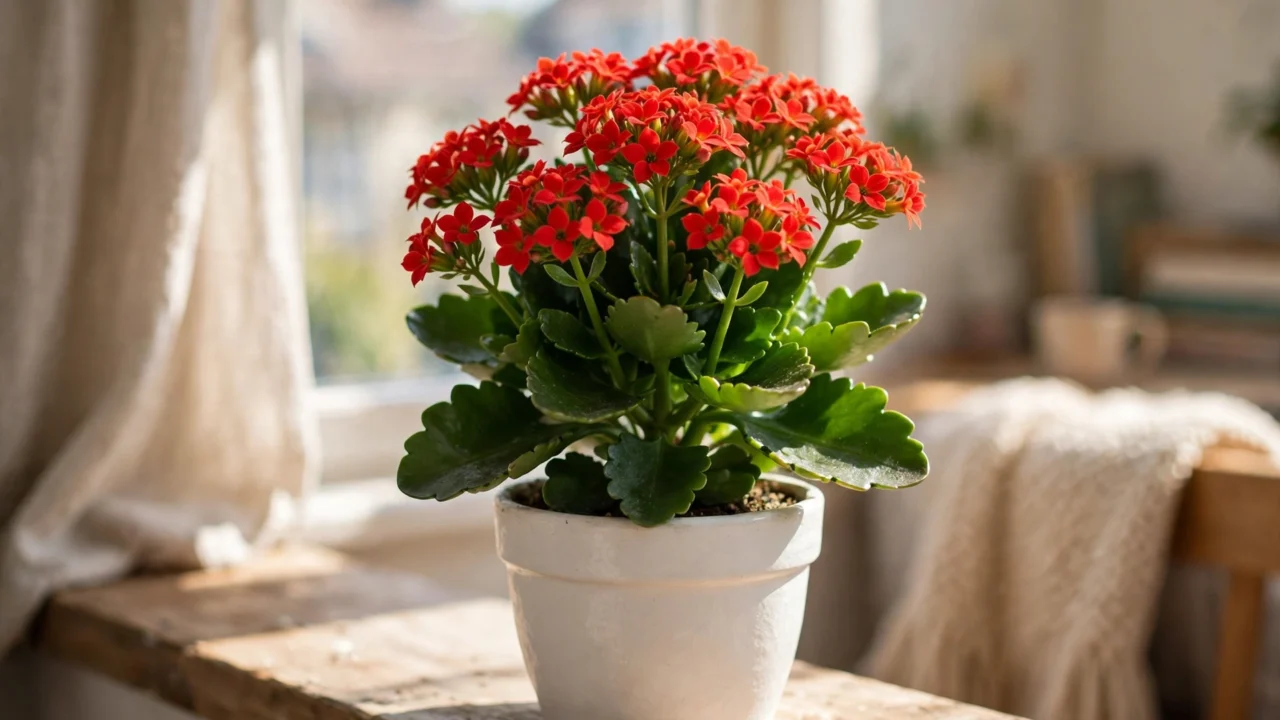
These 10 kalanchoe care tips will help you keep a flowering kalanchoe healthy and covered in blooms for weeks, even on a small windowsill. Kalanchoe is one of the easiest flowering houseplants you can own: a compact succulent with thick, glossy leaves and clusters of tiny flowers in red, pink, orange, yellow, or white, fitting happily on a desk, a shelf, or a narrow sill.
These 10 kalanchoe care tips are built around a simple truth: bright light, a light watering hand, and patience after flowering. Most kalanchoe problems start when owners treat it like a thirsty tropical plant instead of the succulent it is. Overwatering, dim corners, and cold drafts cause most of the trouble, and all three are easy to avoid.
In this guide, these 10 kalanchoe care tips show you how to water, feed, prune, and rebloom your kalanchoe, and how to fix the most common problems before they spread. Follow these 10 kalanchoe care tips and your plant will reward you with fresh blooms year after year.
Table of Contents
What Makes Kalanchoe Special
The florist’s kalanchoe is a flowering succulent from Madagascar, bred to bloom heavily in a small pot. It stays compact, usually under a foot tall, with thick leaves that store water. That succulent habit is the key to its care, and the first idea behind the 10 kalanchoe care tips below: it would rather be a little dry than a little wet, and it forgives a missed watering far more easily than a soggy pot.
The flowers are the real draw. Each stem carries a cluster of small, star-shaped blooms, and a healthy plant can hold its colour for six to eight weeks or more. Red is the classic colour, with pink, orange, yellow, and white also available. The species most often sold is Kalanchoe blossfeldiana, grown for windowsills for decades.
Because it stays small and blooms for so long, it is a natural fit for apartments, desks, and windowsills, and it sits happily beside other holiday favourites. If you enjoy Christmas cactus care, you will find kalanchoe even easier, since it needs less humidity and no special chilling to flower. That is why the 10 kalanchoe care tips below focus on the basics done well.
10 Kalanchoe Care Tips
These 10 kalanchoe care tips cover light, water, feeding, pruning, and reblooming, and they work for every common florist kalanchoe. Take them one at a time.
Tip 1: Give It Bright, Indirect Light
Kalanchoe blooms best in bright, indirect light, so a sunny windowsill with a sheer curtain is ideal. An east-facing window is a great choice; a south- or west-facing window works too if the midday sun is softened. A little morning sun is fine, but strong afternoon sun can scorch the leaves and fade the flowers faster.
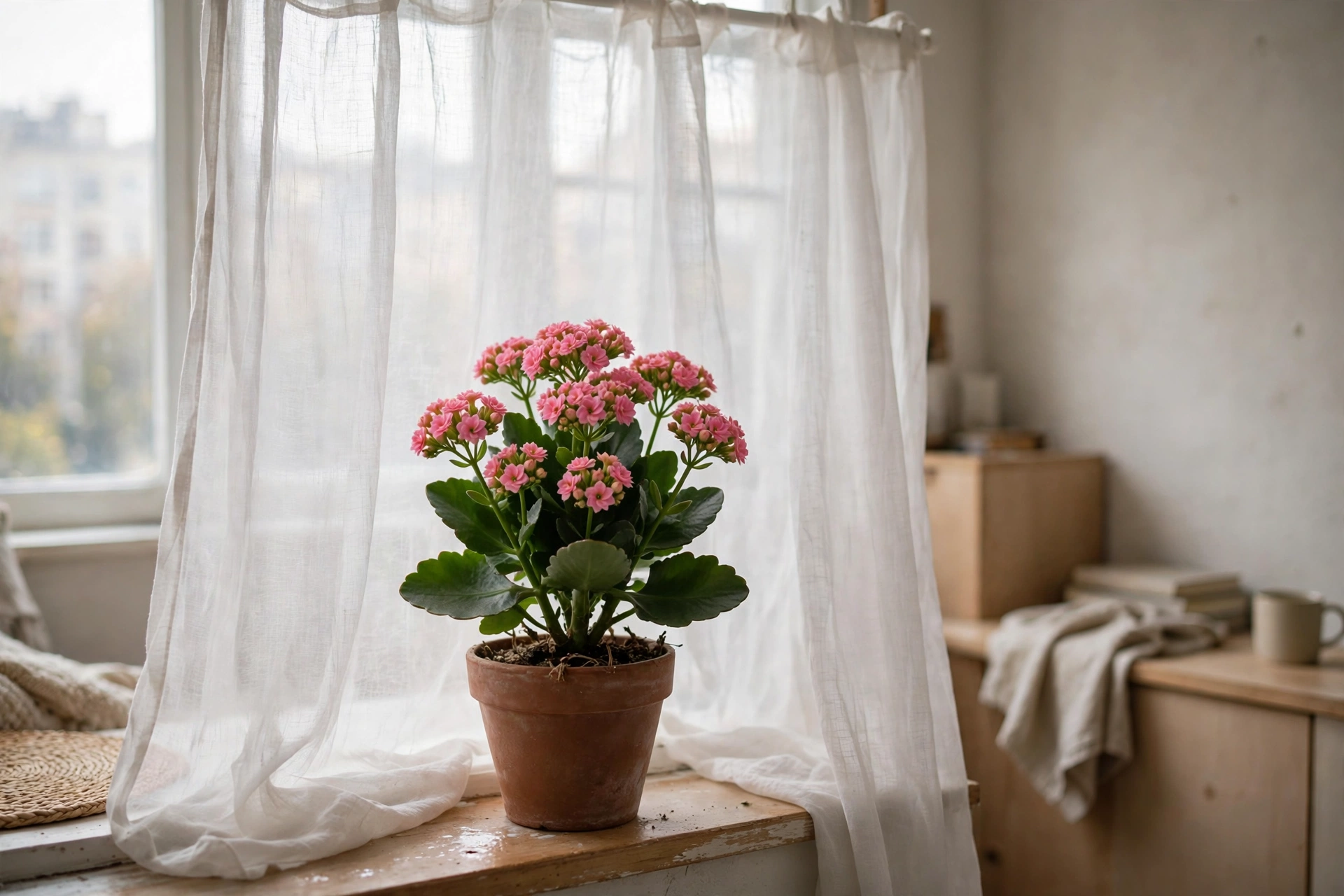
If your kalanchoe stretches tall with wide gaps between the leaves, the light is too weak. Move it closer to the window and new growth will come in tighter. Of all the 10 kalanchoe care tips in this guide, this one shapes the plant most: good light means short stems, deep green leaves, and more flower buds.
Tip 2: Water Only When the Soil Is Dry
Watering is where most kalanchoe owners go wrong, so this is one of the most important of the 10 kalanchoe care tips. As a succulent, it stores water in its leaves and needs far less than a leafy tropical plant. Wait until the top inch or two of soil feels dry, then water until a little runs out of the drainage holes. Empty the saucer so the pot never sits in water.
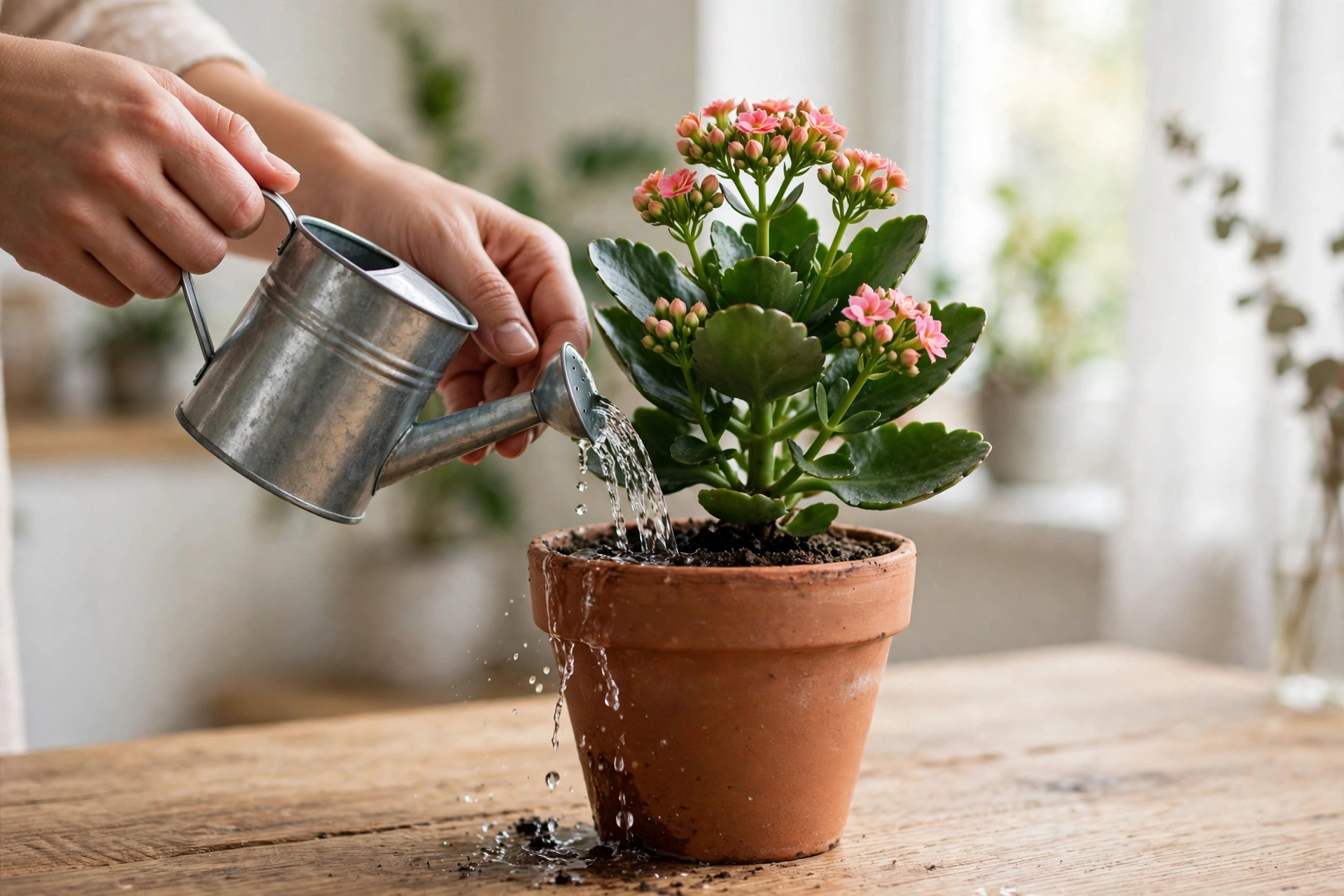
In winter, when growth slows, your plant needs even less: a small kalanchoe in a cool room may go two to three weeks between waterings. Your winter watering routine should be lighter than your summer one, and the finger test beats any fixed schedule. If the soil feels damp, wait a few more days.
Tip 3: Always Use a Pot With Drainage Holes
A pot without drainage is the fastest way to kill a kalanchoe, because water pools at the bottom and rots the roots. Always choose a pot with at least one drainage hole, and never let it sit in a saucer full of water. A simple clay pot is a good pick: it dries faster than plastic and helps prevent soggy soil.
If your kalanchoe came foil-wrapped from the shop, check underneath: the foil often hides a pot with no drainage at all. Remove it and set the plant in a saucer you can empty after watering. This small step supports every other one of the 10 kalanchoe care tips, because healthy roots are the base of healthy blooms.
Tip 4: Feed Lightly in Spring and Summer
Kalanchoe is not a heavy feeder, and too much fertiliser does more harm than good. In spring and summer, feed once a month with a balanced liquid fertiliser diluted to half strength. Stop feeding in autumn and winter, when growth slows and the plant rests. Feeding a resting plant can burn the roots and push soft, weak growth, which is why the 10 kalanchoe care tips say to feed only in the growing season. If it blooms happily without fertiliser, skip feeding for a season.
Tip 5: Deadhead Spent Blooms
When a flower cluster fades, snip it off at the base of its stem. This is called deadheading: it keeps the plant tidy and pushes energy into new buds instead of old flowers. Use clean, sharp scissors, or pinch the stem off with your fingers, taking care not to tear the leaves below.
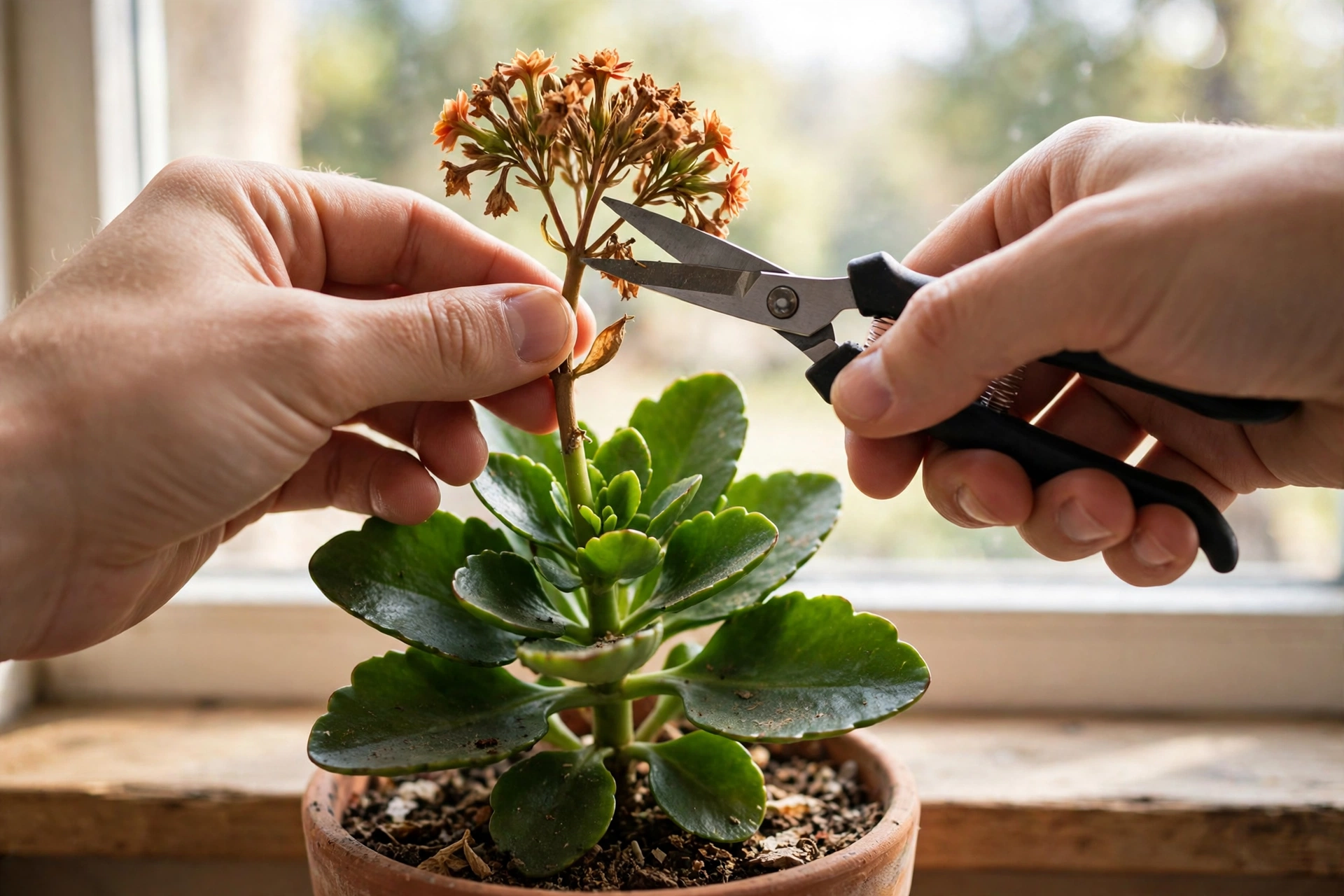
Deadheading is one of the simplest of the 10 kalanchoe care tips, and it shows within days. A plant with faded blooms removed looks fuller and greener, and it often pushes out side shoots that carry the next round of flowers. Check it once a week while it blooms and remove anything brown or papery.
Tip 6: Keep It Warm and Away From Drafts
Kalanchoe likes normal room temperatures, roughly 60 to 85 degrees Fahrenheit, and it hates cold air. Keep it away from draughty windows, exterior doors, and air-conditioning vents, and never leave it outside once nights turn cold. A sudden chill can spot leaves and stop buds opening.
The same goes for hot, dry air from radiators and heaters. Above a radiator, leaves may dry at the edges and blooms will fade quickly. Move it a few feet away and it will settle. Steady, mild temperatures are all this plant wants, and they cost nothing — one of the easiest of the 10 kalanchoe care tips to follow.
Tip 7: Prune After Flowering to Keep It Compact
Once the last flowers have faded, prune your kalanchoe back to keep it compact. Cut the flower stems to just above a pair of healthy leaves, and trim long, bare stems by a third. The plant will look smaller for a week or two, then push out fresh, bushy growth from the leaf joints.
Pruning feels harsh the first time, but a kalanchoe never pruned grows tall and bare at the base, with flowers only at the tips. A yearly trim keeps the plant dense and full, and gives you cuttings to root in water or soil. That separates a one-season plant from one that returns stronger each year, and it is one of the most useful of the 10 kalanchoe care tips.
Tip 8: Repot Only When It Outgrows Its Pot
Kalanchoe is happy in a snug pot, so do not rush to repot it. Wait until roots show at the drainage holes, or the plant dries out far faster than it used to, then move it up just one pot size. A pot far too big holds wet soil the roots cannot use, which invites rot.
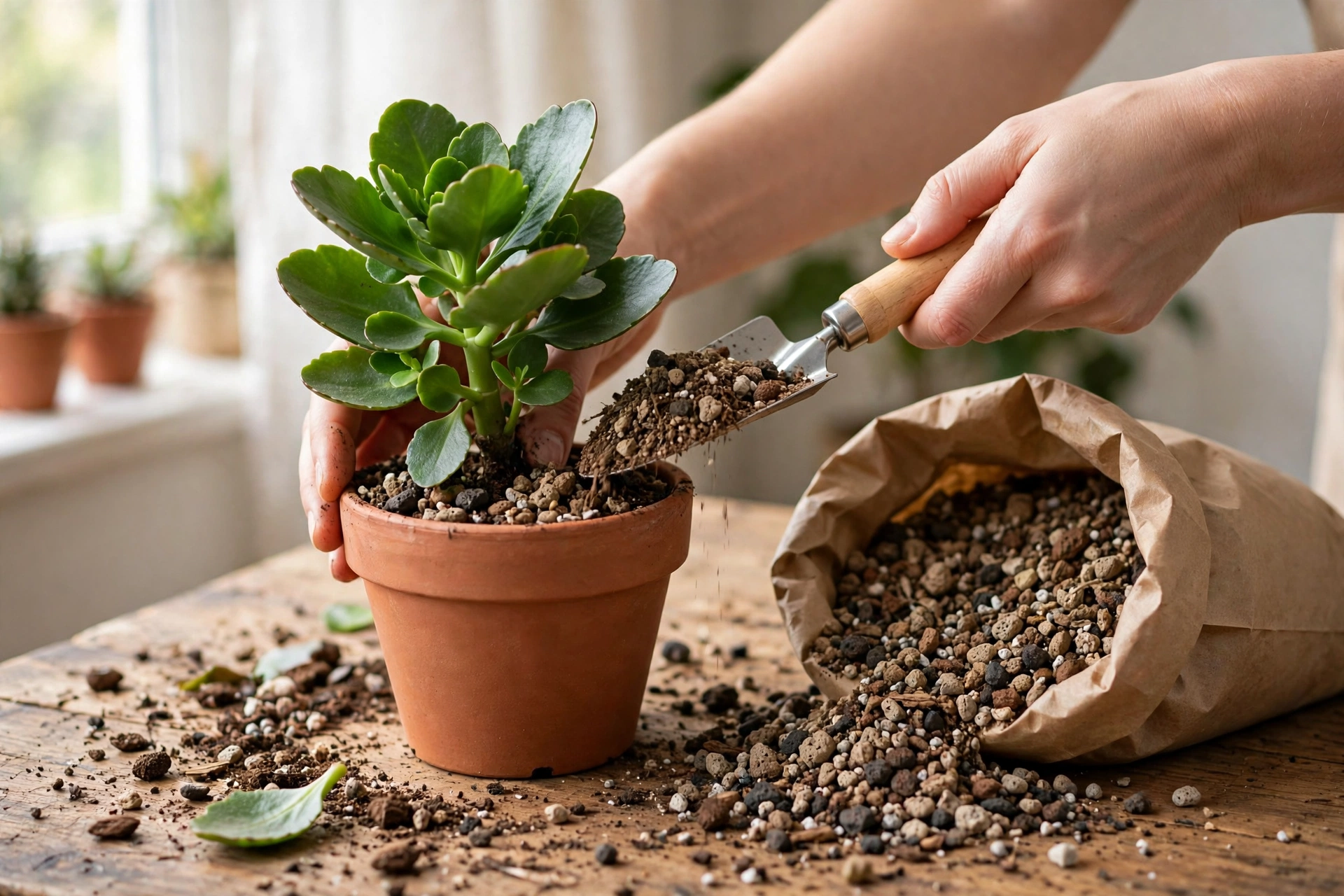
When you do repot, use a free-draining cactus or succulent mix, or add perlite to ordinary potting soil. Spring is best, just as growth picks up. Set the plant at the same depth as before, water lightly, and leave it alone for a week. Following these 10 kalanchoe care tips means repotting rarely, and only when the plant clearly asks for it.
Tip 9: Watch for Mealybugs and Aphids
Kalanchoe is rarely troubled by pests indoors, but mealybugs and aphids can appear, especially on stressed or crowded plants. Mealybugs look like tiny tufts of white cotton in the leaf joints, while aphids cluster on soft new growth and flower buds. Check the undersides of leaves and the stem joints every couple of weeks.
If you spot pests, act early — catching them fast is one of the sharpest of the 10 kalanchoe care tips. Dab mealybugs with a cotton swab dipped in rubbing alcohol, or rinse aphids off with a gentle spray of water. For a bigger outbreak, insecticidal soap made for houseplants will clear them. Keep an affected plant away from your others until the pests are gone.
Tip 10: Rotate the Pot for Even Growth
Kalanchoe leans toward the light, so a plant that never moves grows lopsided, with one side full and the other bare. Give the pot a quarter turn every week or two and it will grow straight and even. It takes five seconds and shows within a month.
Rotation also helps the flowers open evenly, since buds on the shaded side get their turn in the light. Mark the pot if you forget which way you turned it last. Of the 10 kalanchoe care tips here, this is the easiest one to start today, and the one most owners skip.
Common Kalanchoe Problems and Fixes
Yellow leaves are the most common complaint, and they usually mean too much water. Let the soil dry out fully before you water again, and check that the pot drains freely. A few yellow leaves at the base of an older plant are normal, but widespread yellowing with soft stems points to root rot, which needs a dry-out and a check of the roots.
Mushy, translucent leaves are another sign of overwatering. Stop watering, improve drainage, and remove any leaves that have turned to mush. If the stem feels soft at the base, take a cutting from the top and root it in fresh soil — the main plant may not recover. Kalanchoe belongs to a large genus of succulents that share the same dislike of wet feet, as the Kalanchoe genus page shows.
Leggy stems with few leaves almost always mean too little light, so move the plant to a brighter spot and prune the stretched stems back. A kalanchoe that refuses to bloom is usually short of light too, or fed too much, which pushes leaves instead of flowers. Fix the light first, ease off the fertiliser, and give it time. Follow the 10 kalanchoe care tips in this guide and most of these problems never appear.
How to Get Your Kalanchoe to Rebloom
A kalanchoe that has finished flowering will not bloom again straight away, and that is normal. The plant needs a rest and a cue, and the cue is darkness. Kalanchoe is a short-day plant: it sets flower buds when nights are long, about 14 hours of darkness each night for around six weeks. That is how growers timed its blooms, and you can do the same at home.
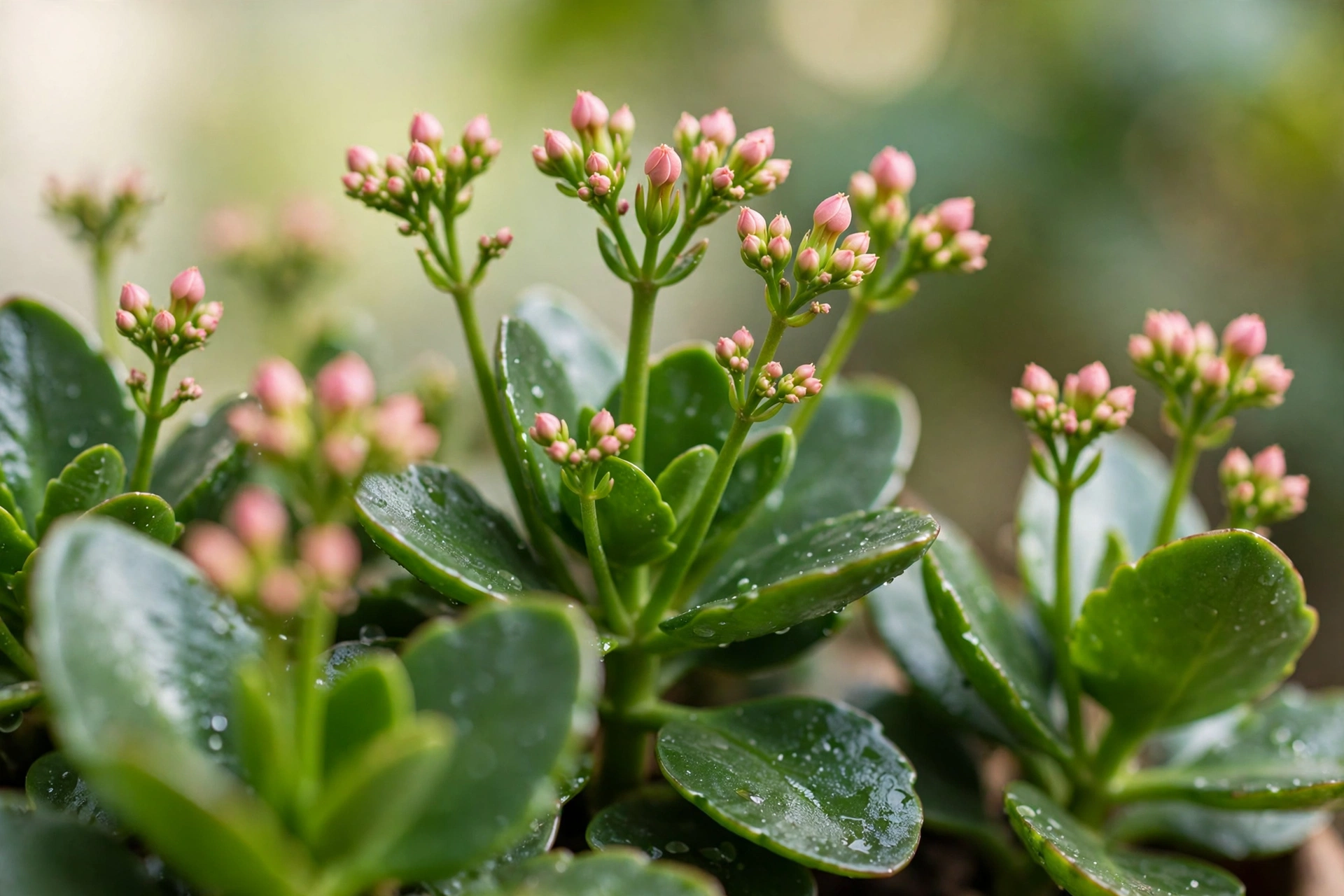
Start in early autumn, after a few months of steady growth since flowering. Each evening, move it into a dark cupboard or cover it with a cardboard box, then bring it back into bright light each morning. The dark period must be unbroken: no peeking with a lamp, no streetlight leaking through. After about six weeks, tiny buds should appear at the stem tips, and they will open over the next few weeks once the plant is back in its normal spot.
If your plant does not rebloom, check the two usual causes: weak daylight, or nights not dark enough. A plant in a room where lights stay on late never gets its 14 hours of dark. Give it truly dark nights, bright days, and patience, and most healthy kalanchoes flower again when you follow the 10 kalanchoe care tips above. A poinsettia care routine uses the same long-night trick.
Kalanchoe Care FAQs
How often should I water my kalanchoe?
Water only when the top inch or two of soil feels dry — usually every one to two weeks in summer and every two to three weeks in winter. Water thoroughly until a little drains out, then empty the saucer. If in doubt, wait a few more days, because kalanchoe forgives dry soil far more easily than wet roots — the first of the 10 kalanchoe care tips for a reason.
Are these 10 kalanchoe care tips good for beginners?
Yes, these 10 kalanchoe care tips were written for beginners, and kalanchoe is one of the most forgiving flowering houseplants you can start with. The plant tells you what it needs: soft leaves mean too much water, stretched stems mean too little light, and faded blooms mean it is time to deadhead. Follow them in order and you will learn its rhythm within weeks.
Why is my kalanchoe not blooming?
The most common reason is too little light, so move the plant to your brightest windowsill first. A plant fed heavily may also be growing leaves instead of flowers, so stop feeding and let it rest. If it flowered before and has not bloomed since, it probably needs the long-night treatment above: about six weeks of 14-hour nights will trigger new buds, and the 10 kalanchoe care tips in this guide explain exactly how.
Is kalanchoe safe around cats and dogs?
No, kalanchoe is toxic to cats and dogs if eaten, so keep it out of reach of pets that chew plants. It contains compounds that can cause vomiting and an upset stomach. If you have a curious cat or a puppy, place the kalanchoe on a high shelf or in a room your pets cannot enter, and choose a pet-safe plant for floor level instead.
How long do kalanchoe blooms last?
A healthy kalanchoe in bloom holds its flowers for six to eight weeks, sometimes longer in cool, bright conditions. Deadheading faded clusters keeps the plant fresh and encourages side shoots to flower — one of the quiet wins of the 10 kalanchoe care tips. Once the last blooms fade, prune the plant back and let it rest.
Your Kalanchoe, Blooming Again Next Year
Kalanchoe earns its place on a small windowsill. It stays compact, blooms for weeks, and asks for little more than the 10 kalanchoe care tips in this guide: bright light, careful watering, and a yearly trim. The mistakes that spoil it are easy to avoid: soggy soil, dim corners, cold drafts, and a pot with no drainage.
Start with the simplest of the 10 kalanchoe care tips — bright light and a light watering hand — and add the rest one by one. Deadhead the spent blooms, prune after flowering, and give the plant its long nights in autumn. Do that, and the plant that brightened your home this winter will flower again next year.