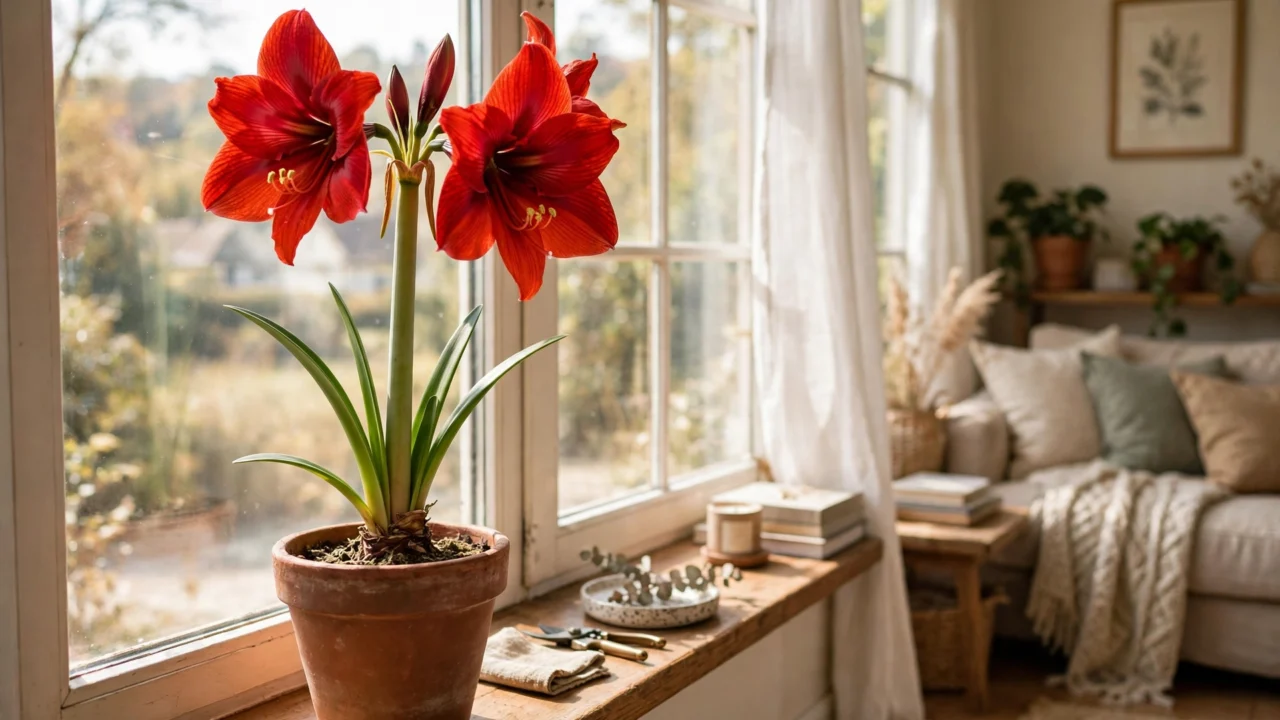
10 amaryllis care tips can turn a single bulb into the biggest flowers of the winter, with trumpet blooms the size of your hand. The amaryllis is one of the easiest holiday plants to grow, because the bulb already holds the flower inside it, and your main job is to avoid rotting it before it opens. Plant it in early to mid-November, and it should bloom in six to eight weeks, right in time for Christmas.
These 10 amaryllis care tips cover planting, light, water, and the simple summer routine that makes the same bulb bloom again next year. A snug pot, a bright window, and a little restraint with the watering can are enough, even in a small apartment.
In This Guide
Table of Contents
Why Amaryllis Care Is Different
The amaryllis is not like your other houseplants, and these 10 amaryllis care tips start from that difference. The plant sold as an amaryllis is usually a Hippeastrum hybrid, a tropical bulb from South America, and it lives in seasons: a burst of flowers, months of leafy growth that refills the bulb, then a cool, dry rest that resets the clock. Care that ignores the season, like feeding a resting bulb, does more harm than good.
The flower bud is already formed inside the bulb when you buy it, packed away like a gift waiting to be opened. That is why a healthy bulb can bloom even in a plain pot with no fertilizer at all, and why the most common beginner mistake is watering too much before the roots and shoots appear. A bulb with no leaves uses almost no water, so a soggy mix is the fastest way to lose it.
The amaryllis is also one of the few holiday plants that rewards you with bigger flowers the second time around, if you let the leaves work through summer and give the bulb its autumn rest. That whole cycle is what these 10 amaryllis care tips walk you through, from the day you pot the bulb to the day it blooms again next winter.
How to Pick a Healthy Amaryllis Bulb
The first of the 10 amaryllis care tips is really about shopping: choose a bulb that feels firm and heavy for its size, like a fresh onion, with dry outer scales and no soft spots, mold, or cuts. Bigger bulbs are better, since large ones often send up two flower stalks instead of one, and a firm base plate means the roots will grow quickly once the bulb is potted.
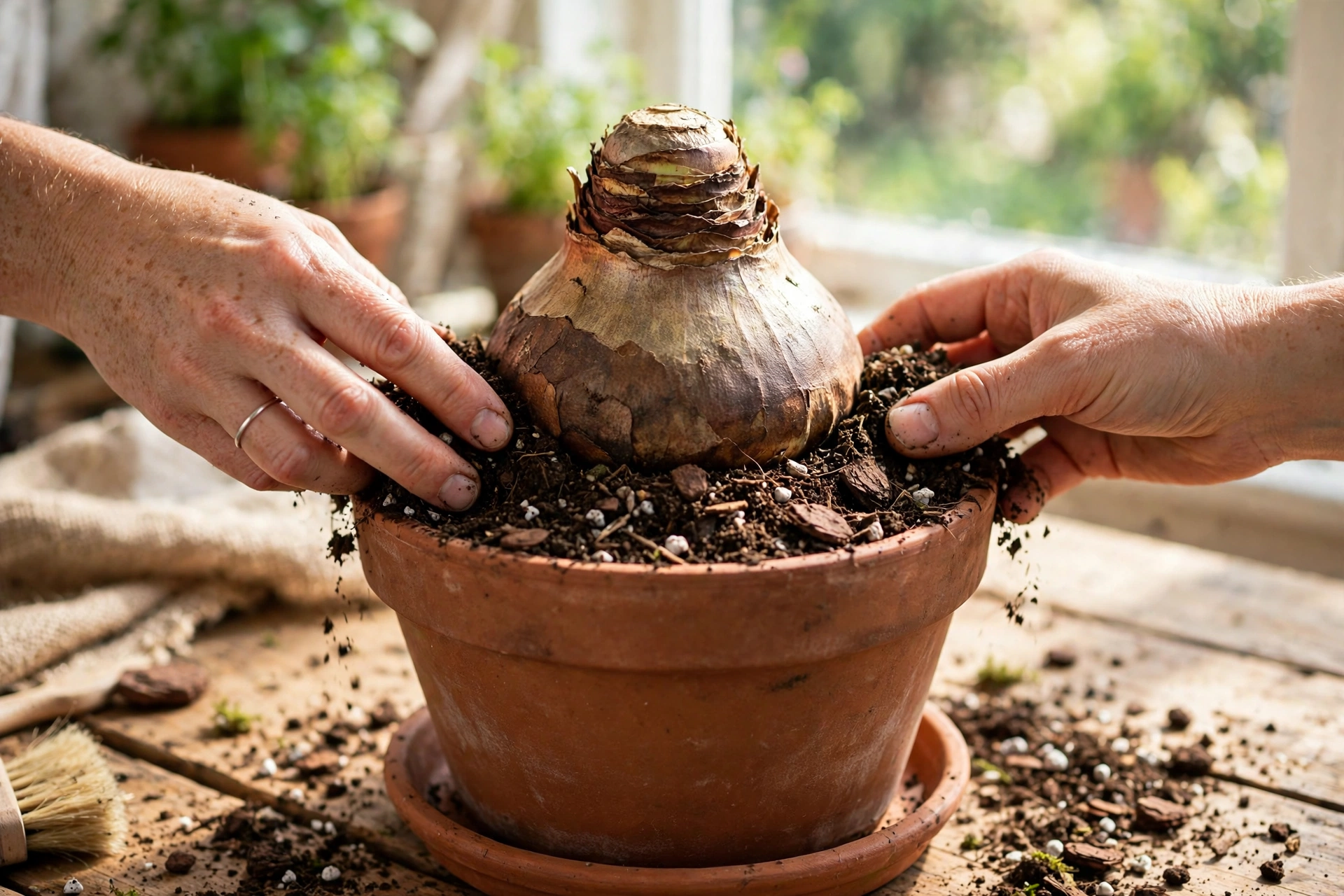
Skip any bulb that feels soft, shriveled, or light, since those are signs it has dried out or started to rot in storage. If you buy a waxed bulb, the rules are different: it needs no soil and no water at all, and it will bloom on its own, so treat it as a decoration and enjoy it while it lasts.
For a regular bulb, buy from an indoor display and keep it somewhere cool and dry in a paper bag until planting day, never sealed in plastic, where condensation breeds mold.
Once home, check the bulb once more before you pot it, and trim away any loose, papery scales or dead roots with clean scissors. The christmas cactus care tips guide gives the same advice for another holiday favorite, and these 10 amaryllis care tips build on that good start.
10 Amaryllis Care Tips
These 10 amaryllis care tips walk you through the whole cycle, from potting the bulb to resting it for next year. Work through them in order the first time.
1. Plant the Bulb With Its Top Third Above the Soil
The first of the 10 amaryllis care tips is the planting depth, and it matters more than almost anything else. Set the bulb in a heavy pot only one or two inches wider than the bulb, with a drainage hole, and add potting mix around it until the top third, the shoulders, sits above the surface. A snug pot keeps the bulb slightly rootbound, which it likes, and a heavy pot keeps the tall stalk from tipping over later.
Use a fresh, free-draining mix, two parts houseplant potting mix to one part perlite, and skip garden soil, which packs down and stays soggy indoors. Fill the pot partway, rest the roots on the soil, firm the mix gently around the bulb so it does not wobble, and leave about an inch below the rim for watering. Plant in early to mid-November for Christmas blooms, since most bulbs flower about six to eight weeks after potting.
2. Give It Bright Light and Turn the Pot Often
The second of the 10 amaryllis care tips is light, and the bulb wakes fastest in the brightest window you have. A south or west facing window is ideal, with at least four hours of direct sun while the plant is growing, and an east window works too. The stalk leans toward the light as it grows, so turn the pot a quarter turn every day or two to keep it straight.
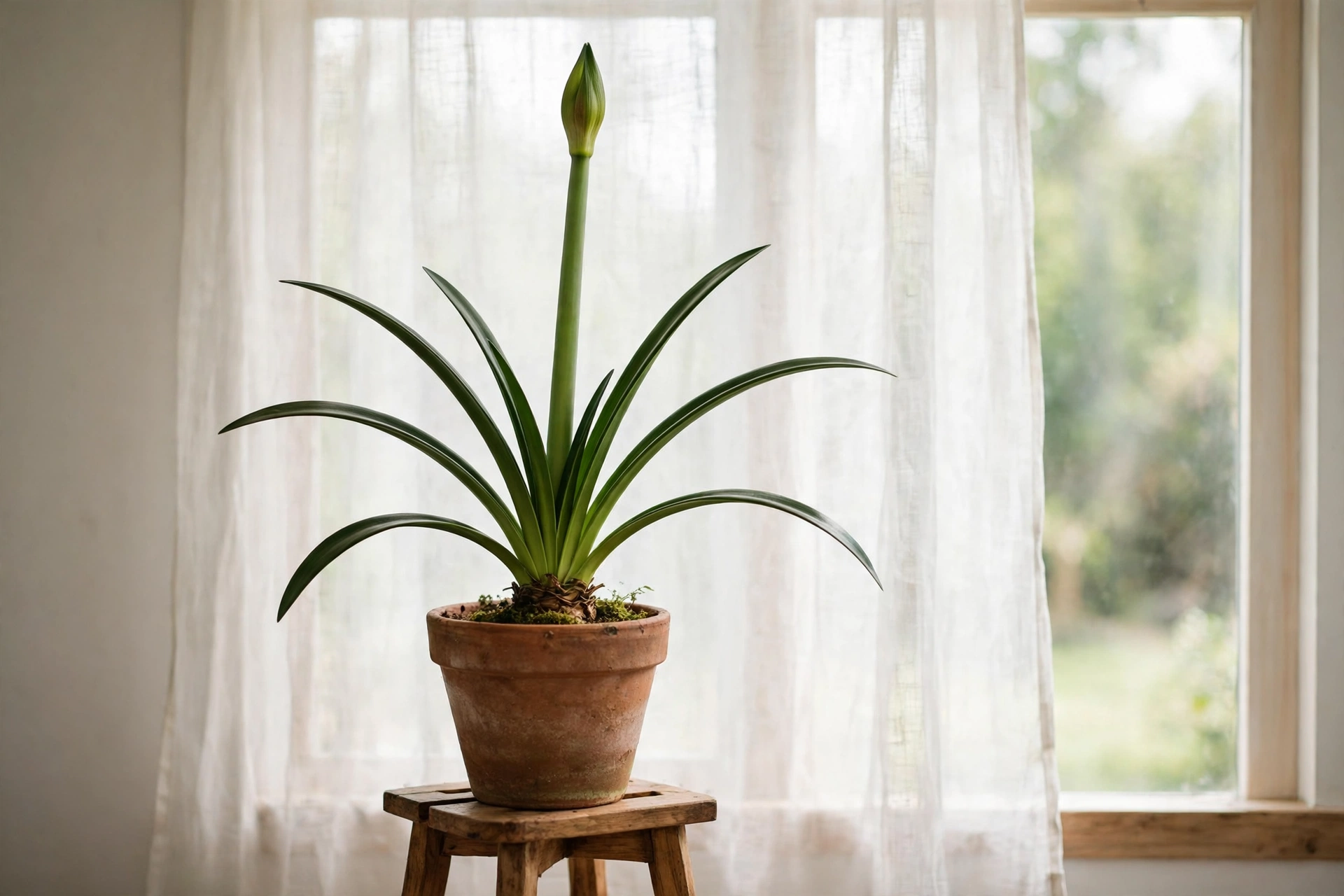
Too little light gives you a tall, weak stalk and fewer flowers, while a bright spot keeps the growth short and sturdy. If your brightest window is taken, a grow light on a timer can fill the gap. Once the buds open, move the pot out of direct sun, since shade helps the blooms last longer.
3. Water Sparingly Until the Stalk Appears
The third of the 10 amaryllis care tips is about watering, and it is the one most people get wrong. Water once, thoroughly, right after planting, and let it drain completely, then hold off until you see green growth. With no leaves yet, the bulb uses almost no water, and heavy watering before roots and shoots appear is the most common reason new bulbs turn soft and fail.
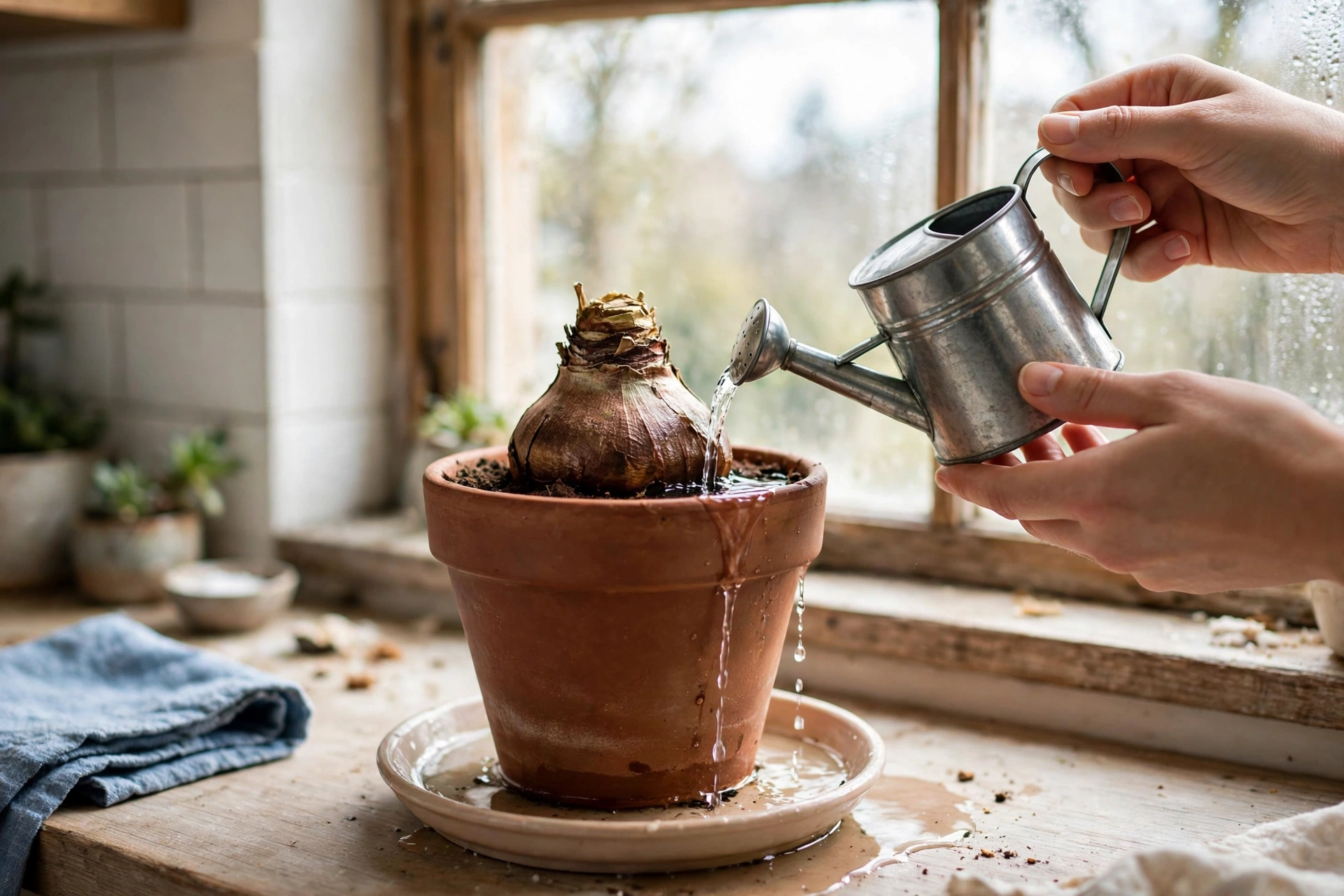
Once the stalk is up and growing, water more freely, soaking the mix until water runs from the drainage hole, then let it dry out before watering again. The winter watering tips for houseplants guide explains the same check for other indoor plants, and it works because most houseplants need less water in winter than in summer. Always empty the saucer after watering, and never let the pot sit in standing water.
4. Keep It Warm While It Grows
The fourth of the 10 amaryllis care tips is about warmth: a newly potted bulb wakes fastest in a warm room, around 68 to 75 degrees, until roots form and growth starts. A cold windowsill slows it down, so keep the pot in the warmest bright spot you have for the first few weeks, away from drafts and cold glass.
If the plant is developing too quickly for your Christmas plans, move it somewhere cooler and ease off the water, and if it is too slow, move it somewhere warmer. Small changes in temperature are the easiest way to steer the bloom date.
5. Stake the Stalk Before It Leans
The fifth of the 10 amaryllis care tips is to stake the stalk early, before it leans. A flower stalk can grow two feet tall and carry several heavy blooms at the top, and a heavy head on a tall stalk tips easily, especially in a light pot. Push a slim bamboo stake into the mix when the stalk is still short, and tie it loosely with soft twine in two places.
Do not wait until the stalk is already bending, since a bent stalk rarely straightens and can snap at the base. These 10 amaryllis care tips are about preventing problems, and a stake costs almost nothing.
6. Move It to a Cooler Spot Once It Blooms
The sixth of the 10 amaryllis care tips is to cool the plant down once the flowers open. Move the pot to a room around 60 to 65 degrees, out of direct sun, and the blooms will last noticeably longer than they would in a warm, sunny window. A north-facing bedroom or a cool entryway is often just right in December.
Heat and strong sun fade the petals fast, so move it out of the bright window once it is in flower.
7. Cut the Flower Stalk After the Blooms Fade
The seventh of the 10 amaryllis care tips is to cut the flower stalk once the blooms fade, but to leave the leaves alone. Snip the stalk an inch or two above the bulb once the last flower wilts, and let the cut end dry. The leaves are the part that matters now, since they feed the bulb for next year.
Do not cut the leaves off, and do not stop watering, since the plant has months of leafy growth ahead of it. The 10 amaryllis care tips in this guide all build toward the rebloom, and the leaves are the biggest part of it.
8. Feed It While the Leaves Grow
The eighth of the 10 amaryllis care tips is to feed the plant while the leaves are growing, from spring through summer. Use a balanced liquid fertilizer at half strength every two to four weeks, and water first so the mix is damp before you feed. The leaves are refilling the bulb for next winter, and food now is what makes next year’s flowers bigger.
Never feed a bulb with no leaves, since it has nothing to use the food with, and skip fertilizer entirely while the plant is resting in autumn. If you can, move the pot to a sheltered spot outdoors for the summer, and bring it back inside before the first cold nights of autumn.
9. Give It a Cool, Dry Rest in Autumn
The ninth of the 10 amaryllis care tips is the autumn rest, and it is the step most people skip. In early autumn, stop watering and let the leaves yellow and die back on their own, then store the bulb in its pot somewhere cool, dark, and dry, around 50 to 55 degrees, for eight to ten weeks. A garage shelf, a cool basement, or a spare room cupboard works well.
The rest resets the clock, and a bulb that never rests rarely blooms again. The rest is what turns a one-season decoration into a plant that flowers for years. Do not water during the rest.
10. Repot Only Every Few Years
The last of the 10 amaryllis care tips is to repot only every two to three years, right after the dormancy rest ends. The amaryllis likes a snug pot and blooms best when slightly rootbound, so a bigger pot too soon gives you leaves and no flowers. In the years you do not repot, just replace the top few inches of mix with fresh compost.
When you do repot, choose a pot only one size larger, with drainage holes, and set the bulb at the same depth, with the top third above the soil. Check the roots as you go, and trim away any that are soft or black. Fresh mix and a snug fit start the cycle again.
How to Get Your Amaryllis to Bloom Again
Getting an amaryllis to bloom again takes patience, and these 10 amaryllis care tips give you the whole routine. Keep the leaves growing through spring and summer, in bright light with regular water and feeding, and give the bulb its cool, dry rest in autumn. When the rest ends, bring the pot back into a warm, bright room, water once, and wait for the green tip to appear.
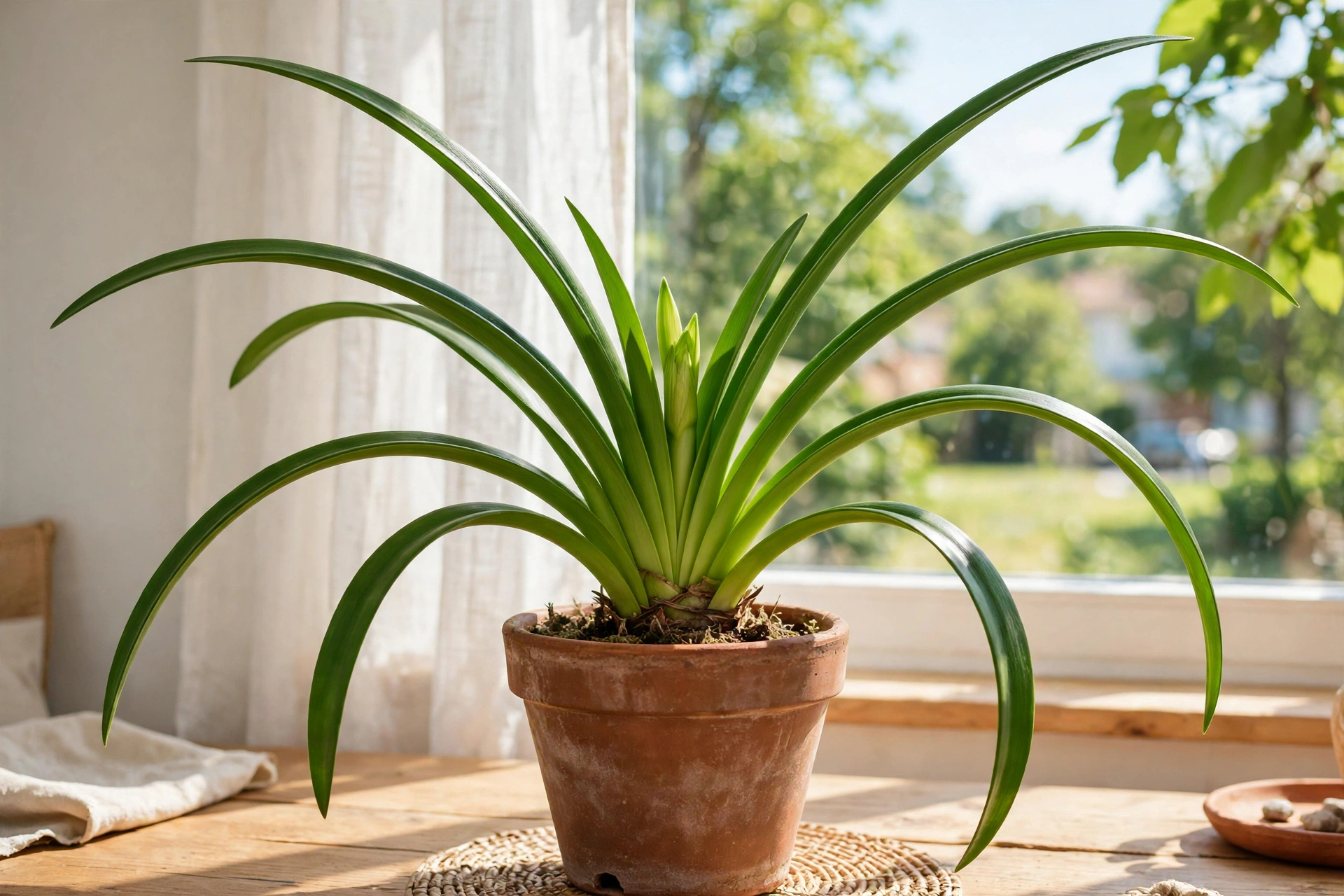
If the bulb sends up leaves but no flower stalk, the usual cause is a skipped rest or a summer with too little light, since the bulb needs both to set a flower bud. The poinsettia care tips guide covers a different kind of seasonal routine for another holiday plant, and like the poinsettia, the amaryllis rewards a grower who respects its seasons.
Feed the leaves well, rest the bulb properly, and try again next year rather than giving up. A well-kept bulb can bloom for twenty years or more.
Amaryllis Care Mistakes to Avoid
Most amaryllis problems come from a short list of mistakes, and all of them are easy to avoid. Planting the bulb too deep rots it, watering before growth starts rots it, and a pot with no drainage rots it. A leaning stalk that was never staked snaps, and a bulb that never rests never blooms again. Each one is covered in the 10 amaryllis care tips above.
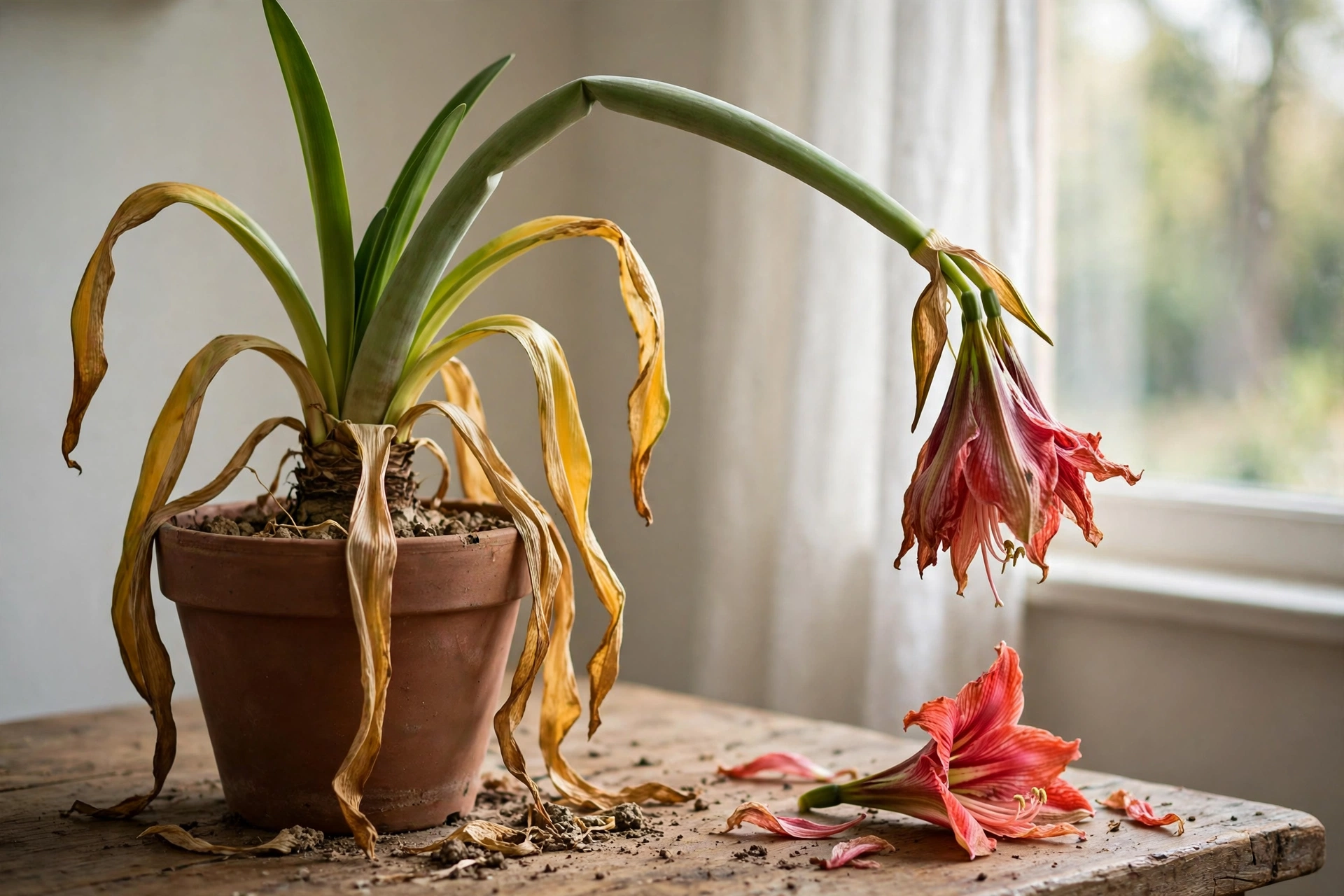
Watch for red blotch, a fungal disease that shows as red streaks on the leaves and stalk, and remove affected leaves with clean scissors. Keep the bulb away from cats and dogs, since it is toxic to pets if chewed.
FAQs About 10 Amaryllis Care Tips
How long does an amaryllis take to bloom after planting?
Most bulbs bloom six to eight weeks after potting, though warmth and light can speed things up or slow them down. Plant in early to mid-November for Christmas flowers.
Why is my amaryllis not blooming?
The usual causes are a skipped autumn rest, too little light during the summer leaf growth, or a pot that is too large. Give the leaves a full summer of sun and feeding, rest the bulb for eight to ten weeks, and try again.
How do I keep my amaryllis from falling over?
Use a heavy pot only one or two inches wider than the bulb, and stake the stalk early with a bamboo cane tied loosely in two places. Turn the pot every day or two so the stalk grows straight.
Can I keep my amaryllis after Christmas?
Yes, and it is worth trying. Cut the flower stalk, keep the leaves growing through summer, rest the bulb in autumn, and bring it back into warmth and light. Many gardeners keep the same bulb blooming for years.
What are the easiest 10 amaryllis care tips to remember?
Plant the top third of the bulb above the soil, water once and wait for growth, give it bright light, keep it warm, and rest it cool and dry in autumn. Get those five right and the rest of the 10 amaryllis care tips are just fine-tuning.
Conclusion
These 10 amaryllis care tips are simple on their own, and together they turn a plain bulb into weeks of huge winter flowers and a plant that comes back year after year. Plant it at the right depth, water with restraint, give it light and warmth, and let it rest in autumn.
Pot a bulb this week, while the shops are full of them, and try the routine for yourself. A flower the size of your hand in the middle of winter is a small triumph, and it starts with the care you give it now.