10 snake plant propagation tips can turn the one snake plant on your windowsill into a whole collection of free plants. Snake plants are famously tough, and just as generous when it comes to making new plants. One healthy leaf can become several new plants, and one crowded pot can be split into two or three.
These 10 snake plant propagation tips cover the three methods that work best at home: water, soil and division. You do not need special tools or a greenhouse. A clean pair of scissors, a jar of water and a small pot of gritty mix are enough to get started.
In This Guide
Why Snake Plants Are So Easy to Multiply
Snake plants grow from thick underground stems called rhizomes, and every leaf holds the power to grow roots and new shoots. That is why 10 snake plant propagation tips work so well even for people who have never propagated a plant before. The plant does most of the work while you wait, and the complete snake plant care guide covers the simple routine that keeps the mother plant strong.
A snake plant stores water in its stiff upright leaves. Known botanically as Dracaena trifasciata, it keeps a cutting alive for weeks while it grows roots, and it means cuttings forgive a missed watering far more easily than most houseplants.
These 10 snake plant propagation tips work because a mature plant keeps sending up new shoots, called pups, from its base. When the pot gets crowded, lift the plant out and separate those pups. A single leaf cut into sections also gives you several cuttings. Either way, you end up with more plants for no extra cost.
3 Ways to Propagate a Snake Plant
These 10 snake plant propagation tips use three methods, each suited to a different kind of grower. Water propagation lets you watch the roots grow, which reassures beginners. Soil propagation skips the move from water to soil, so the new plant never has to adjust. Division is fastest, because each pup already has roots. All three are forms of plant propagation, growing new plants from parts of a parent plant.
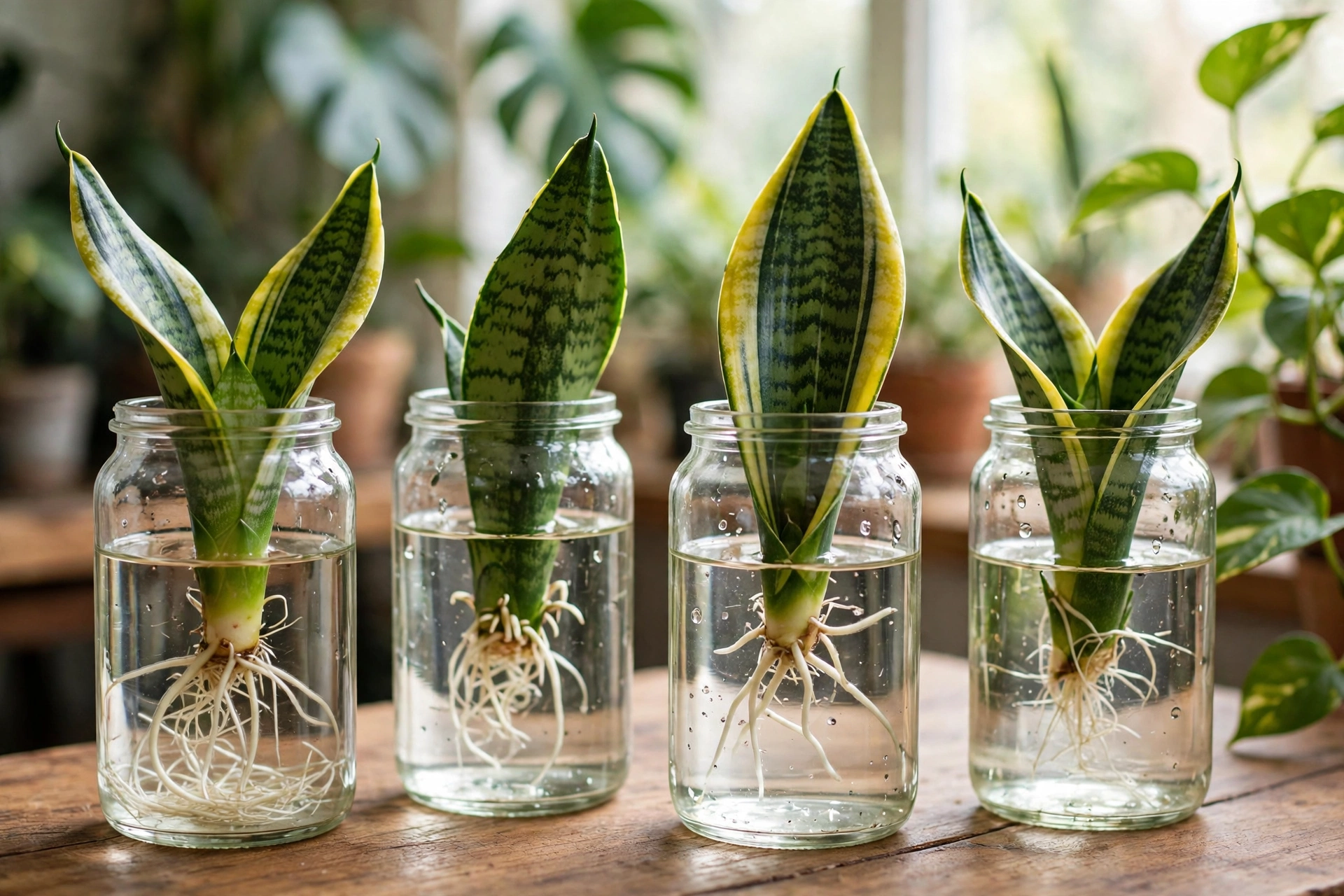
Water Propagation
For the water method in these 10 snake plant propagation tips, cut a healthy leaf into sections, let the cut ends dry for a day, then stand the sections in a jar with the bottom end down. Keep the water level low, just covering the bottom inch. Roots usually appear within a few weeks, and small pups follow at the base after that.
Soil Propagation
For the soil method in these 10 snake plant propagation tips, push the calloused end of a leaf section about an inch into a light, gritty potting mix and water sparingly. The cutting roots out of sight, so you will know it worked when you feel gentle resistance on a light tug, or when a tiny pup breaks the surface. Soil cuttings often grow stronger roots because they never need to adapt to a new medium.
Division
Division, the fastest of the 10 snake plant propagation tips, starts by lifting the whole plant from its pot and gently pulling the root ball apart into sections, each with at least one leaf and some roots. A clean knife helps with tangled roots. Pot each section in fresh mix at the same depth it grew before.
10 Snake Plant Propagation Tips
These 10 snake plant propagation tips walk you through the whole process, from choosing a leaf to potting up new plants. Use them in order the first time you propagate to avoid the mistakes that cause most cuttings to fail.
1. Start With a Healthy Mother Plant
The first of the 10 snake plant propagation tips is to pick the right leaf: firm and upright, with no soft spots, brown patches or pest damage. A healthy leaf holds the energy to grow roots and a pup, while a weak leaf often rots before it roots.
Take cuttings only from a plant growing well for a few months. If the mother plant is stressed or freshly repotted, give it time to recover first, since strong cuttings root faster.
2. Cut Leaves Into 3–4 Inch Sections
Cut one long leaf into sections about three to four inches long. Each section can grow into its own plant, so one tall leaf can give you four or five cuttings. Use clean, sharp scissors for a smooth cut that does not crush the tissue.

Short sections root just as well as long ones and fit neatly into small jars and pots. Pieces shorter than two inches hold less stored water and can struggle, so stay in the three to four inch range.
3. Mark Which End Goes Down
Snake plant cuttings only root from the bottom end, the end nearest the base of the leaf. Plant a section upside down and it will not root. This is the easiest of the 10 snake plant propagation tips to forget, and it causes more failures than any other mistake.
Mark the bottom of each section as you cut, with a small angled cut at the bottom and a straight cut at the top. The angled edge gives roots more surface to grow from. Pick one marking method and use it every time.
4. Let Every Cutting Callous First
Set fresh cuttings in a dry spot for one to two days before they touch water or soil. The cut end dries and forms a thin callous, and that callous keeps rot out. Cuttings put straight into wet soil often turn soft and mushy at the base.
Check the cut end before you plant: it should feel dry and slightly firm, not wet or sticky. In a humid room, give cuttings an extra day. This short wait is one of the most useful 10 snake plant propagation tips because it stops the top cause of failure.
5. Try the V-Cut for Faster Roots
Cut a small V shape into the bottom end of each leaf section instead of a straight cut. The V gives the cutting more edge to grow roots from, so roots often appear a little sooner. Many growers swear by this trick for water propagation.
The V-cut also shows the bottom from the top at a glance, solving the upside-down problem from tip three. Keep the V shallow, about half an inch deep, since a deep notch can weaken the cutting and let water creep too far up.
6. Change the Water Every Few Days
Fresh water keeps cuttings healthy, so these 10 snake plant propagation tips call for a water change every three to five days, or sooner if it looks cloudy. Stale water runs low on oxygen and invites rot, so rinse the jar each time you change the water.
Use room temperature water, and leave tap water out overnight so chlorine can escape. Keep the water low, covering only the bottom inch of the cutting. One of the quietest 10 snake plant propagation tips is that less water is better than more.
7. Use a Light, Gritty Soil Mix
Snake plant cuttings rot fast in heavy, wet soil, so these 10 snake plant propagation tips use a light mix: potting soil with perlite or coarse sand, about half and half, so water drains through quickly. A cactus or succulent mix straight from the bag also works well.
Choose a small pot with a drainage hole. A pot that is too big holds wet soil around a tiny cutting for too long. A three or four inch pot suits one or two sections, and you can move the plant up later when it outgrows it.
8. Give Cuttings Bright Indirect Light
Place cuttings where they get bright light without direct sun. A spot near an east or west facing window is ideal, or a few feet back from a bright south window. Light drives root growth, and cuttings in a dim corner root slowly or not at all.
Direct sun is too harsh for a fresh cutting and can scorch the leaf or heat the water in a jar. If your only bright spot gets direct sun, hang a sheer curtain or move the jar back. Steady, gentle light is what these 10 snake plant propagation tips rely on most.
9. Divide Crowded Plants at Repotting Time
Division is the fastest way to multiply a snake plant, and repotting day is the best time to do it. Lift a crowded plant from its pot and you will see pups attached to the mother plant by thick underground stems, each able to become a separate plant.
Tease the pups apart by hand where you can, and use a clean knife only where roots are tightly tangled. Pot each division in fresh mix at the same depth it grew before, then water lightly. Division skips the waiting period, so it is the best choice when you want full plants quickly.
10. Be Patient and Leave Cuttings Alone
The last of the 10 snake plant propagation tips is also the hardest: wait. Snake plants are slow growers, and roots can take weeks to appear even when everything is right. Checking or tugging a cutting every few days disturbs the tiny roots as they form.
Check once a week instead of once a day. Top up the water or give the soil a light watering only when it is dry. Patience is what turns a cutting into a plant, and most failed cuttings were simply disturbed too soon.
How Long Does Snake Plant Propagation Take?
Water cuttings usually show roots in three to six weeks, and small pups often appear at the base six to eight weeks after that. Soil cuttings work on a similar schedule, though you cannot see progress until a pup breaks the surface. Division is instant, since each pup already has roots.

Warmth and light speed things up, so cuttings started in spring or summer generally root faster than winter ones. If your cutting shows no roots after two months, check that the base is firm and green rather than soft. A firm cutting is alive and working, even when nothing is visible yet.
These 10 snake plant propagation tips are built for real homes, not greenhouses, so the timing above is honest rather than optimistic. Some cuttings root in three weeks and some take ten. The plant sets the pace, and your job is to keep conditions steady.
Snake Plant Propagation Mistakes to Avoid
The most common mistake is skipping the callousing step and putting a fresh cut straight into water or wet soil. The open wound soaks up water, turns soft and rots. Always let cuttings dry for a day or two first. This one step is the most important of all the 10 snake plant propagation tips.

The second mistake is planting cuttings upside down. Mark the bottom end as you cut, and double check before each section goes into water or soil. A cutting planted the wrong way up will sit unchanged for weeks.
The third mistake is too much water. Water cuttings need only an inch of water, and soil cuttings need soil that dries out between light waterings. Soggy soil is the fastest way to lose a cutting, so if you are unsure, water less and wait longer.
A pot without drainage holes traps water and rots roots, so always use a pot that drains. Cold draughts slow rooting, so keep cuttings away from cold windows in winter. Leaf cuttings from a variegated snake plant usually grow plain green pups, since the yellow edge does not pass on through leaf cuttings, so use division to keep the variegation. For a reminder of healthy watering, see these common snake plant watering mistakes.
Caring for Your New Snake Plant Pups
Once a pup has a few roots and stands about three inches tall, it is ready for its own pot — the payoff these 10 snake plant propagation tips lead to. Move water-rooted cuttings into gritty mix when the roots reach about two inches long. Plant the pup at the same depth it grew, firm the soil gently and water lightly.

New pups need the same care as a grown snake plant, only gentler. Give them bright indirect light and water only when the top inch of soil is dry. Hold off feeding for the first couple of months, since fresh mix already holds enough nutrients. Following these 10 snake plant propagation tips through to potting day gives new plants the best start.
Keep new plants away from pets and small children while they establish, since snake plants are mildly toxic if chewed. Once your pups are settled and growing, they need very little attention. For more ways to grow new plants from the ones you already own, see these indoor plant propagation tips.
FAQs About Snake Plant Propagation
Can I use these 10 snake plant propagation tips on any snake plant?
Yes, these 10 snake plant propagation tips work for the common types, including Laurentii, Moonshine and Hahnii. Leaf cuttings work for all of them, though cuttings from variegated types usually grow plain green pups. Use division for new plants that look exactly like the mother plant.
How long does it take for snake plant cuttings to root in water?
Most water cuttings show roots in three to six weeks in bright indirect light, and pups usually appear at the base six to eight weeks after the roots. Warmth helps, so spring and summer cuttings often root faster than winter ones.
Why is my snake plant cutting rotting in water?
Rot usually means the cutting went into water before the cut end calloused, or the water sat unchanged for too long. Trim off any soft, mushy part with clean scissors, let the fresh cut dry for two days, then start again with clean water and change it every few days.
Can I propagate a snake plant from a single leaf?
Yes, one healthy leaf cut into sections can give you several new plants. Cut the leaf into three to four inch pieces, mark the bottom end of each piece, let them callous, then root them in water or soil. Each section can grow its own roots and pup.
Do snake plant cuttings need rooting hormone?
No, rooting hormone is not needed for snake plants. Clean cuts, a calloused end, fresh water or gritty soil, and bright indirect light are enough. Some growers use it for a small boost, but healthy cuttings root well without it.
Conclusion
10 snake plant propagation tips are all you need to turn one plant into many. Start with a healthy leaf, cut it into sections, let the ends callous, and give the cuttings bright indirect light and a little patience. Water, soil and division all work, so pick the method that fits your space.
Try one cutting this weekend and watch what happens over the next few weeks. Before long you will have new snake plants to pot up, share with friends or place around your home.