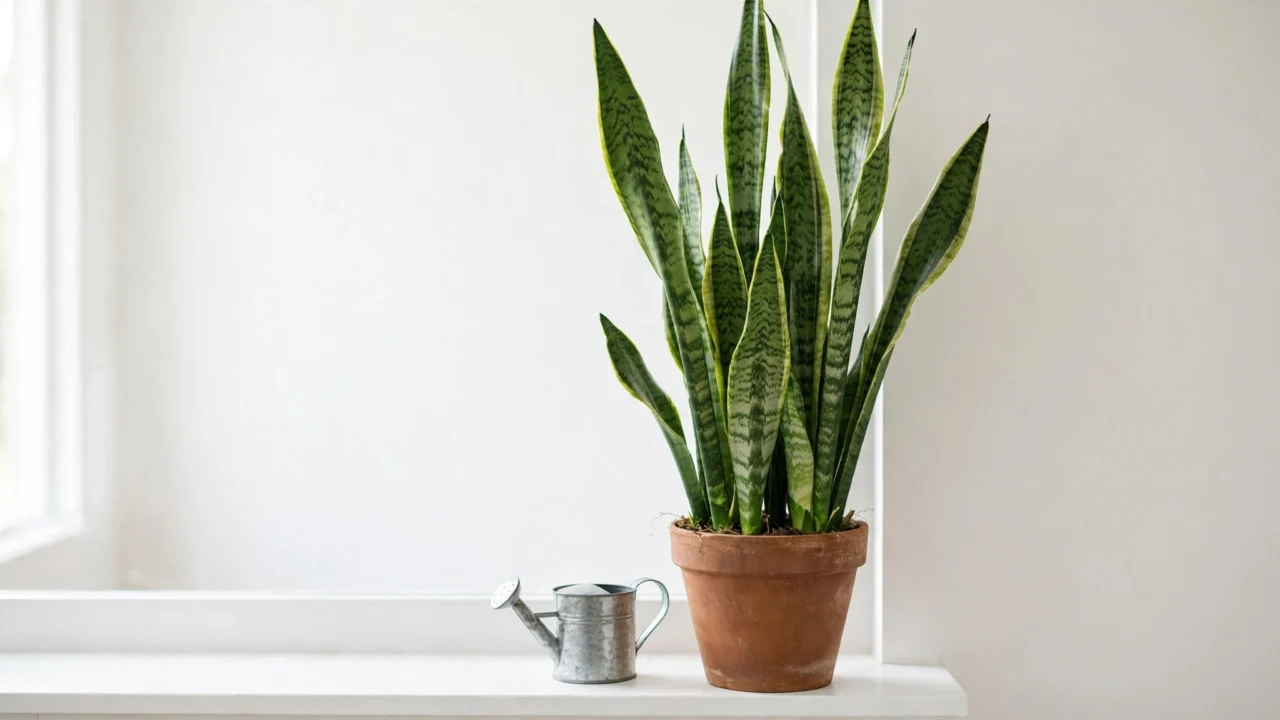
10 snake plant watering mistakes are the reason most snake plants die indoors, and almost every one comes down to giving the plant too much water too often. Snake plants are famous for surviving neglect, yet the one thing they cannot survive is wet feet. Their thick leaves store water for weeks, so they need far less water than most houseplants.
If your snake plant has yellow leaves, soft mushy bases, or leaves that flop over for no clear reason, the cause is almost always water. The good news is that every one of the 10 snake plant watering mistakes below is easy to fix, and most plants recover once the routine changes.
Table of Contents
Why Snake Plants Forgive So Little When It Comes to Water
Snake plants come from dry regions of West Africa, where they grow in rocky, fast-draining soil and go long stretches between rains. Their thick, upright leaves are water tanks, storing moisture the plant draws on slowly. That desert background is the key to the 10 snake plant watering mistakes in this guide: a plant built for drought treats constant moisture as an emergency, not a kindness.
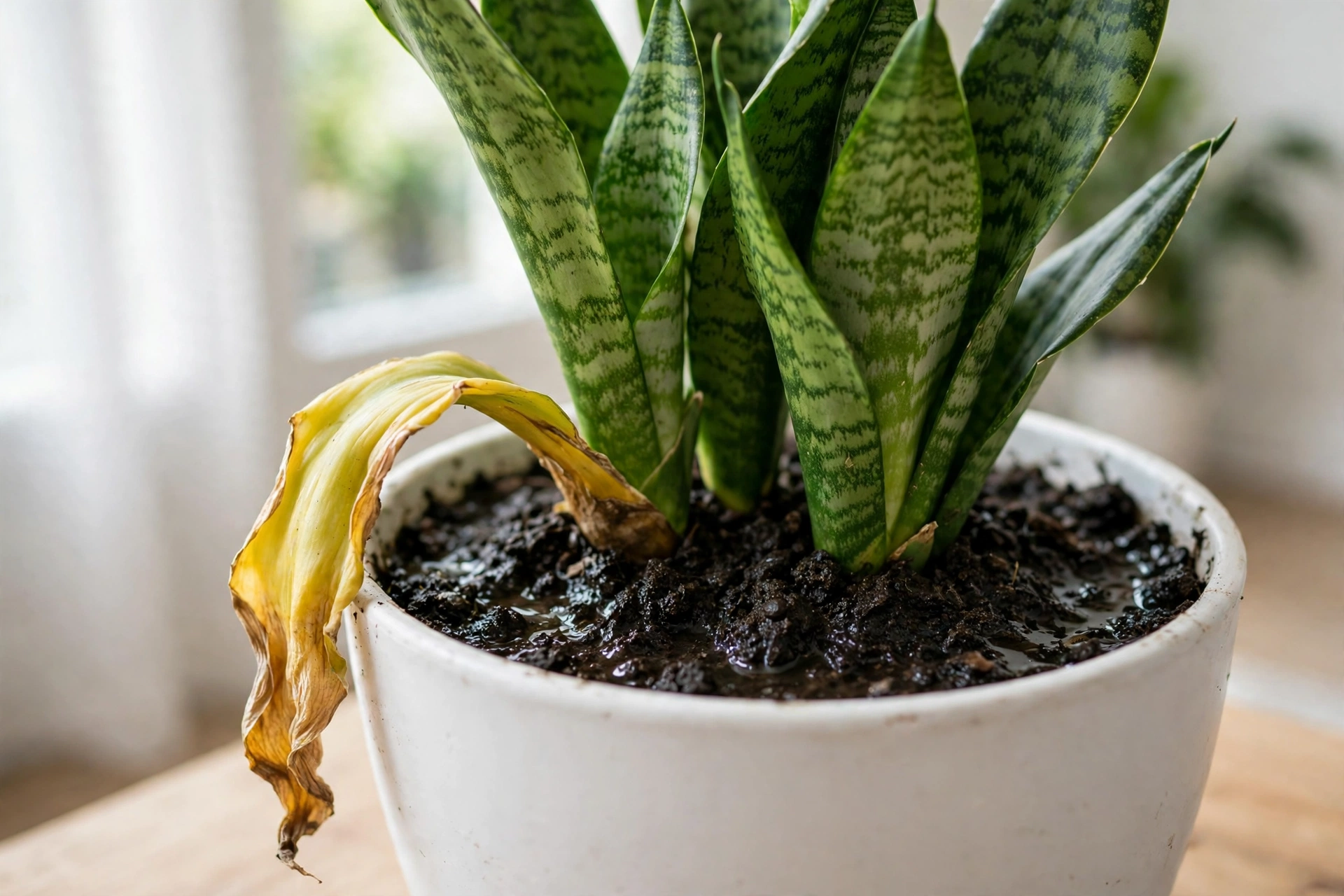
When soil stays wet, the roots cannot breathe. Air pockets in the soil fill with water, the roots suffocate, and fungi that cause root rot move in. The first signs show in the leaves, not the roots. A leaf turns yellow from the base, feels soft instead of firm, or leans and falls because the base has rotted away.
The good news is that snake plants are forgiving in the other direction. They tolerate low light, missed waterings, dry air, and a pot that is a little too small. If you learn the complete snake plant care guide basics — bright light when you can give it, a pot that drains, and watering based on dry soil — a snake plant will thrive on less attention than almost any other houseplant.
10 Snake Plant Watering Mistakes to Avoid
The 10 snake plant watering mistakes below are the ones that show up again and again in struggling plants. Read the full list even if you think your routine is fine, because the mistake doing the damage often looks like good care.
1. Watering on a Schedule Instead of Checking the Soil
The first of the 10 snake plant watering mistakes is watering on a fixed schedule, such as every Saturday, no matter what the soil feels like. A schedule ignores everything that changes how fast soil dries: the season, the light, the pot size, and the room temperature. Soil that dries in ten days in a sunny July window can stay damp for a month in a dim January corner.

The fix takes ten seconds. Push a finger two inches into the soil before you water, or pull out a wooden skewer and check whether it comes out damp. If the soil feels cool and moist, wait. Water only when the soil is dry all the way down, not just dry on the surface.
2. Watering a Little Bit Every Few Days
The second of the 10 snake plant watering mistakes is giving little sips of water every few days instead of one deep watering. A splash wets the top inch of soil and leaves the deeper roots dry, so the plant grows shallow roots and stays stressed even though you water constantly. The top of the soil never fully dries either, which invites fungus gnats.
The fix is to water deeply and rarely. Pour slowly and evenly over the soil until water runs out of the drainage holes, then stop and let the pot drain fully. A deep watering reaches every root and flushes out built-up salts. The long dry stretch that follows is exactly what a snake plant wants.
3. Letting Water Sit in the Saucer
Leaving water in the saucer is the third of the 10 snake plant watering mistakes, and it quietly undoes a perfect watering. After a deep watering, the excess drains into the saucer or the outer decorative pot. If it sits there, the bottom of the soil stays soaked and the lowest roots sit in standing water for days.
That is where root rot starts. Root rot is a fungal disease that turns healthy roots brown and mushy, and once it takes hold it spreads upward into the leaves. The fix takes thirty seconds: wait fifteen minutes after watering, then tip out whatever has collected in the saucer and check the outer pot too.
4. Using a Pot Without Drainage Holes
The fourth of the 10 snake plant watering mistakes is using a pot with no drainage holes. Without a way out, every watering adds water that collects at the bottom of the pot where you cannot see it. The top of the soil can look dry while the bottom is a soggy layer, and the roots sitting in that layer rot first.
The fix is to give the water an exit. Drill a hole in the pot if the material allows it, or keep the plant in a plain nursery pot with holes and set that inside the decorative pot as a cover. With the nursery-pot trick, you can lift the plant out, water it in the sink, let it drain, and put it back dry.
5. Watering in Winter Like It Is Summer
Watering in winter the same way you water in summer is the fifth of the 10 snake plant watering mistakes, and it catches owners who did everything right all summer. In winter, short days and weak light slow growth to almost nothing, and cool rooms mean the soil dries far more slowly. A plant that needed water every two weeks in July may not need it again for six weeks in January.
The fix is to change the routine with the seasons. From late autumn through winter, check the soil the same way you always do, but expect to water far less often, sometimes only once a month. A good winter watering routine for houseplants treats the calendar as a hint and the soil as the decision-maker.
6. Pouring Water Over the Leaves and Into the Crown
The sixth of the 10 snake plant watering mistakes is pouring water over the leaves and letting it run down into the crown, the tight rosette where the leaves meet at the base. Water that pools in the crown has nowhere to drain and nowhere to evaporate quickly, especially indoors. It sits against the newest, softest growth, and the tissue softens and rots.
The fix is to water the soil, not the plant. Hold the watering can low, aim at the soil surface around the base, and keep the stream away from the leaves. If water does splash into the crown, tip the pot gently and blot the centre dry. Snake plants never need their leaves sprayed or showered.
7. Using Heavy, Moisture-Holding Soil
Using heavy, moisture-holding soil is the seventh of the 10 snake plant watering mistakes, because even perfect watering habits cannot save a plant whose soil never dries. Regular potting mix is made to hold moisture for thirsty plants, and it stays damp for far too long around snake plant roots. Peat-heavy mixes are the worst: they hold water like a sponge once wet.
The fix is a fast-draining mix. Use a cactus or succulent soil, or mix regular potting soil half and half with perlite, pumice, or coarse sand so water runs through quickly. The mix should feel gritty, not smooth, and water poured on top should drain within seconds rather than puddling.
8. Watering Right After Repotting
The eighth of the 10 snake plant watering mistakes is watering right after repotting. Repotting always damages some fine roots, even when you are gentle, and those tiny wounds need a few days to dry and seal. Watering immediately soaks the fresh mix around damaged roots and gives rot fungi an open door.
The fix is to wait. After repotting a snake plant into dry, fast-draining mix, leave it alone for five to seven days before the first watering. The plant will not suffer, because its leaves hold plenty of stored water. When you do water, water deeply, let it drain fully, and then go back to checking the soil first.
9. Ignoring Light, Pot Size, and the Season
The ninth of the 10 snake plant watering mistakes is ignoring light, pot size, and the season when deciding how much to water. These three factors decide how fast soil dries, and they change all the time. A snake plant in bright light drinks faster than one in a dark corner, and a small pot dries in days while a large pot can stay damp for weeks.
The fix is to water each plant on its own schedule, set by its own soil. Check every pot separately before watering, and remember that low light plus a big pot is the combination that needs the least water of all. If a plant is in a dark spot, move it closer to a window if you can, because better light helps the soil dry.
10. Watering a New or Stressed Plant Too Soon
The tenth of the 10 snake plant watering mistakes is watering a new or stressed plant too soon. Plants from a shop are often already soaking wet, because sellers water heavily to keep stock looking fresh. A plant that has just been moved, repotted, or knocked over is stressed and drinking slowly, so watering it again adds moisture it cannot use.
The fix is to check first and wait. When you bring a new snake plant home, push a finger into the soil before you do anything else, and if it is damp, put the watering can away for a week or two. The same rule applies after a move or a repotting. A stressed snake plant needs dry soil and time, not a drink.
How to Water a Snake Plant the Right Way
Once you know the 10 snake plant watering mistakes, the right routine is almost boringly simple, and that is the point. Check the soil first by pushing a finger two inches deep or using a wooden skewer. If the soil is dry all the way down, water deeply and slowly until water runs from the drainage holes. Let the pot drain for fifteen minutes, tip out the saucer, and leave the plant alone until the soil is dry again.
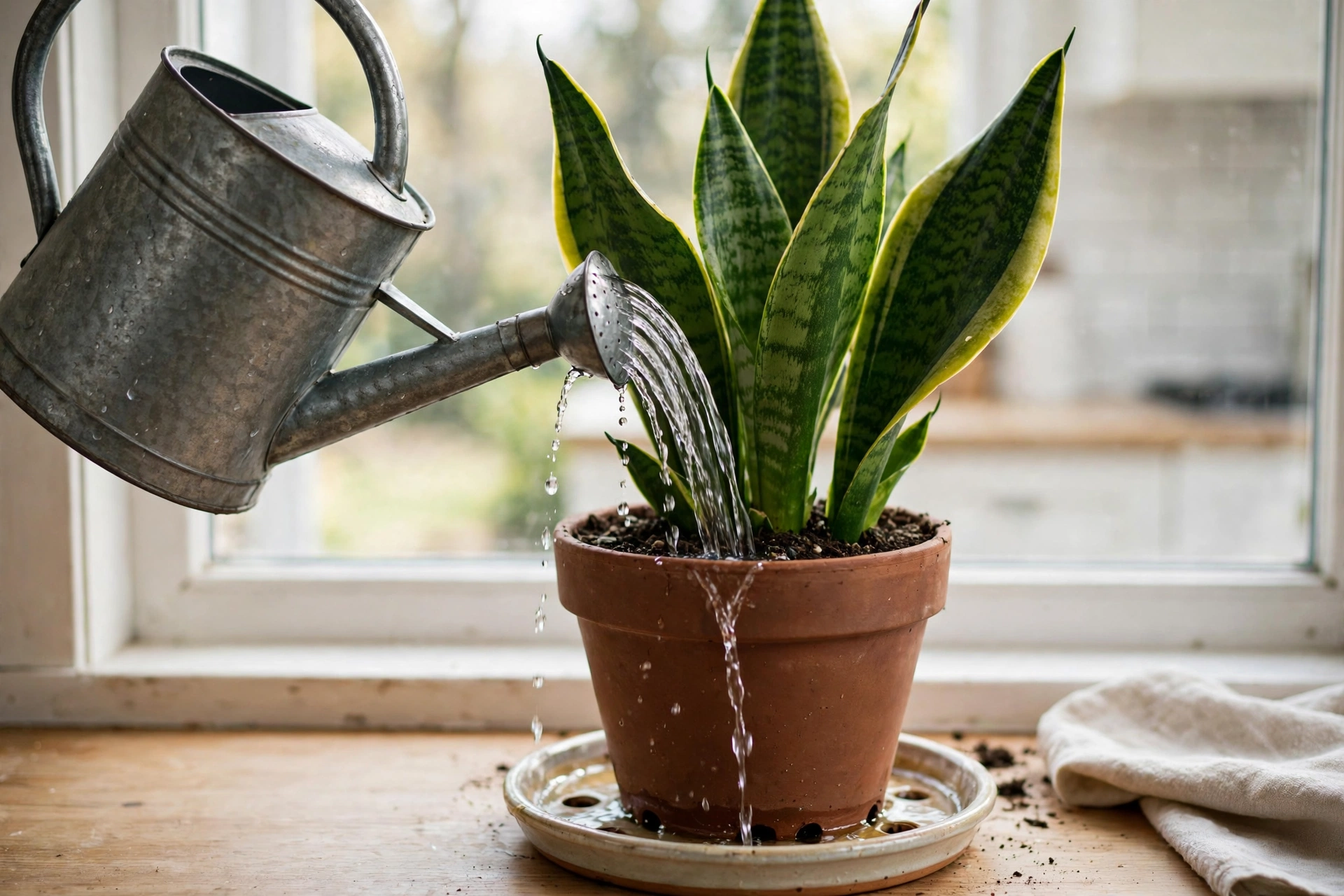
This routine avoids all 10 snake plant watering mistakes at once. In a bright room in summer that may mean watering every two to three weeks, and in a dim room in winter it may mean once a month or less. Water in the morning so any splashes dry during the day, and use room-temperature water rather than cold water straight from the tap.
If you remember only one rule, make it this one: when in doubt, wait another week. A thirsty snake plant recovers in days, while a rotted one often does not recover at all. Dry soil is not a crisis for this plant. It is the normal state it evolved to handle.
How to Save an Overwatered Snake Plant
If you have already made one of the 10 snake plant watering mistakes, do not give up on the plant. Start by taking it out of its pot and looking at the roots. Healthy roots are firm and pale, while rotted roots are brown, soft, and mushy, often with a sour smell. Cut away every rotted root and any leaf that is soft at the base, then let the cut ends dry for a day.
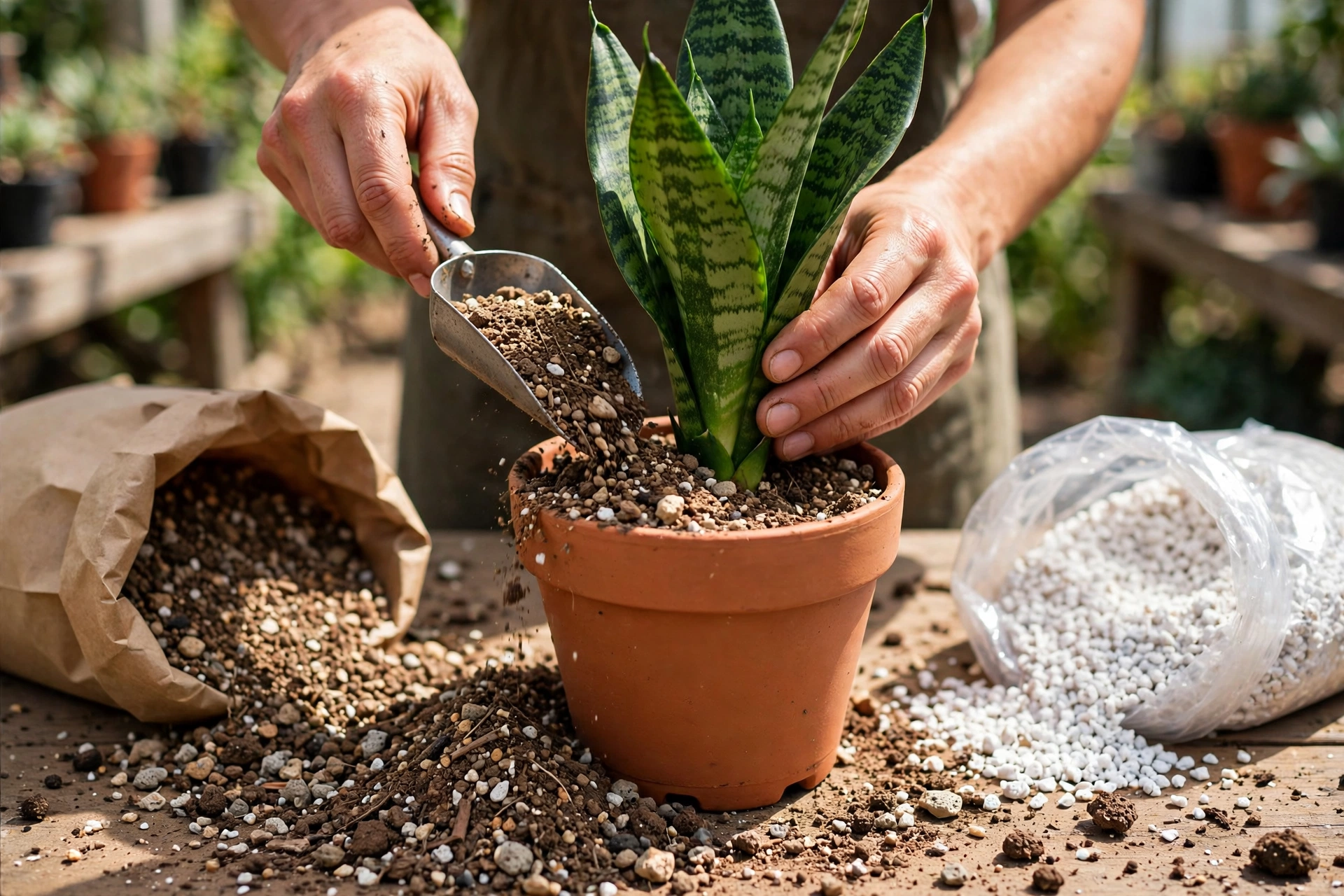
Repot what is left into fresh, dry cactus mix in a clean pot with drainage holes, and wait a week before watering. If some leaves are still firm and healthy, you can also propagate the healthy leaves as a backup, so the plant lives on even if the original rosette does not make it.
Keep the rescued plant in bright, indirect light and water only when the soil is fully dry. Recovery is slow, but a plant with even a few healthy roots often pulls through.
Snake Plant Watering FAQs
What is the most common of the 10 snake plant watering mistakes?
The most common of the 10 snake plant watering mistakes is watering on a fixed schedule without checking the soil. Owners water every week because the calendar says so, while the soil is still damp from the last watering. The fix is to check the soil with a finger or a skewer before every watering and to water only when the soil is dry two inches down.
How often should I water a snake plant?
There is no single answer, because it depends on light, pot size, soil, and season. Most indoor snake plants need water every two to four weeks in spring and summer, and every four to eight weeks in autumn and winter. Check the soil rather than counting days, and remember that underwatering a snake plant is far safer than overwatering it.
Can a snake plant recover from overwatering?
Yes, if you catch it early. Remove the plant from its pot, cut away soft brown roots and mushy leaves, let the cuts dry, and repot into fresh dry cactus mix. Wait a week before watering, keep the plant in bright indirect light, and water only when the soil is fully dry. Plants with some healthy roots left usually recover from the 10 snake plant watering mistakes, though new growth can take several weeks to show.
Should I mist my snake plant?
No. Snake plants come from dry climates and do not need misting, and water sitting on the leaves or in the crown can cause rot. They are comfortable in normal household humidity, and a quick wipe of the leaves with a dry cloth now and then is all the cleaning they need.
Why are my snake plant leaves turning yellow and mushy?
Yellow, soft, mushy leaves almost always point to one of the 10 snake plant watering mistakes: too much water, too often. Check the soil: if it is wet, stop watering, take the plant out of its pot, and look at the roots. Cut away anything brown and mushy, repot into dry fast-draining mix, and do not water again until the soil is dry.
Conclusion: A Simple Routine Beats Guesswork
The 10 snake plant watering mistakes all share one root cause: treating a desert plant like a thirsty one. Snake plants ask for very little — a pot that drains, gritty soil, and water only when the soil is truly dry — and they reward that small care with years of upright, sculptural growth.
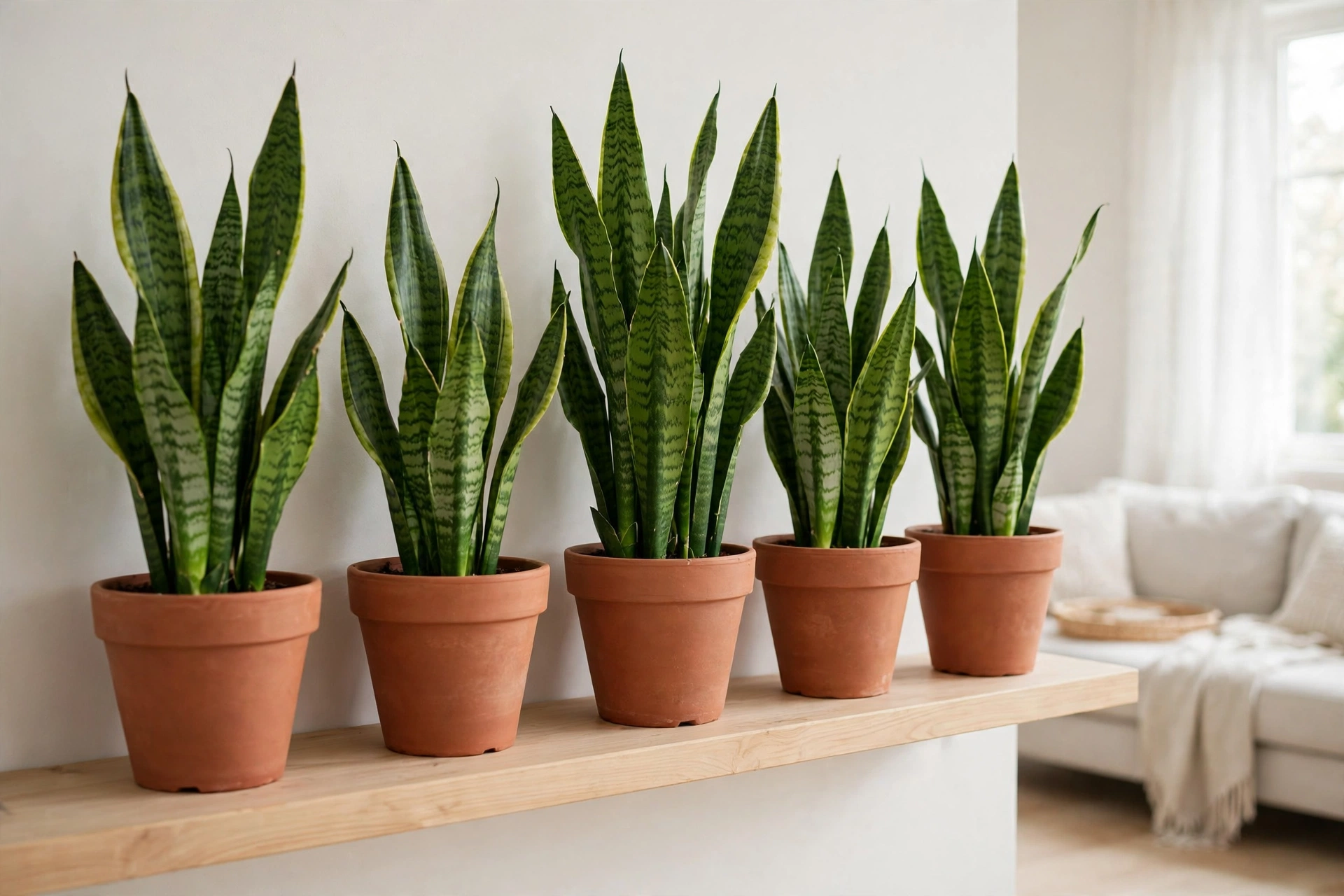
Once you stop making the 10 snake plant watering mistakes, the routine takes less than a minute a week, and the plant does the rest. Start today by checking your soil before you reach for the watering can, and put the 10 snake plant watering mistakes behind you for good. Fix the drainage, swap in a faster mix at the next repotting, and let the dry stretches do their work.