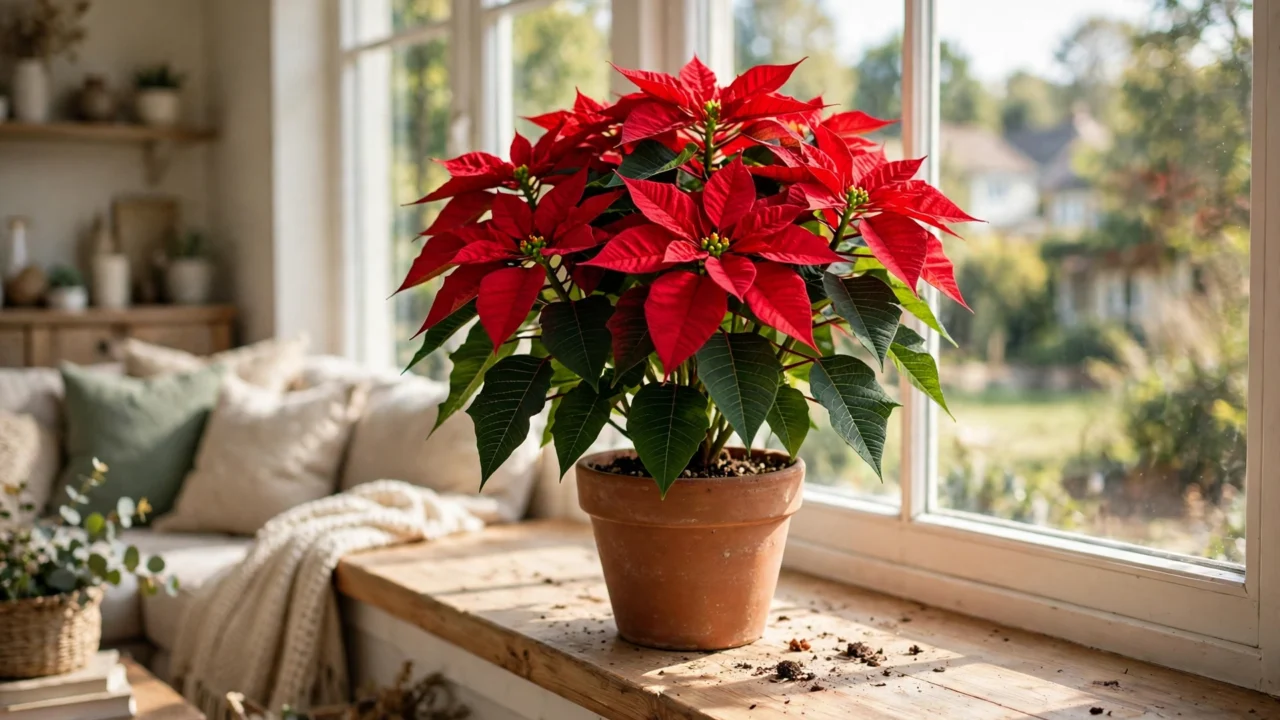
10 poinsettia care tips can turn a holiday plant that usually ends up in the bin by January into a bright tradition that comes back year after year. The poinsettia looks like a flower, but the red petals are actually colored leaves, and the real flowers are the tiny yellow buds in the center. Once you know what this warm-climate plant wants, it is one of the easiest holiday plants to keep.
These 10 poinsettia care tips cover light, water, temperature, and the simple autumn routine that makes the color come back. A bright window, a pot that drains, and a little patience are enough, even in a small apartment. Follow them in order the first time, and your plant should stay bright well past the holidays.
In This Guide
Table of Contents
Why Poinsettia Care Is Different
The poinsettia comes from the warm hills of Mexico, where it grows as a shrub in bright, sheltered spots, and these 10 poinsettia care tips start from that origin. In its home it gets warm days, mild nights, and a dry season that tells it when to color up. Cold drafts and soggy soil are the two fastest ways to lose one indoors.
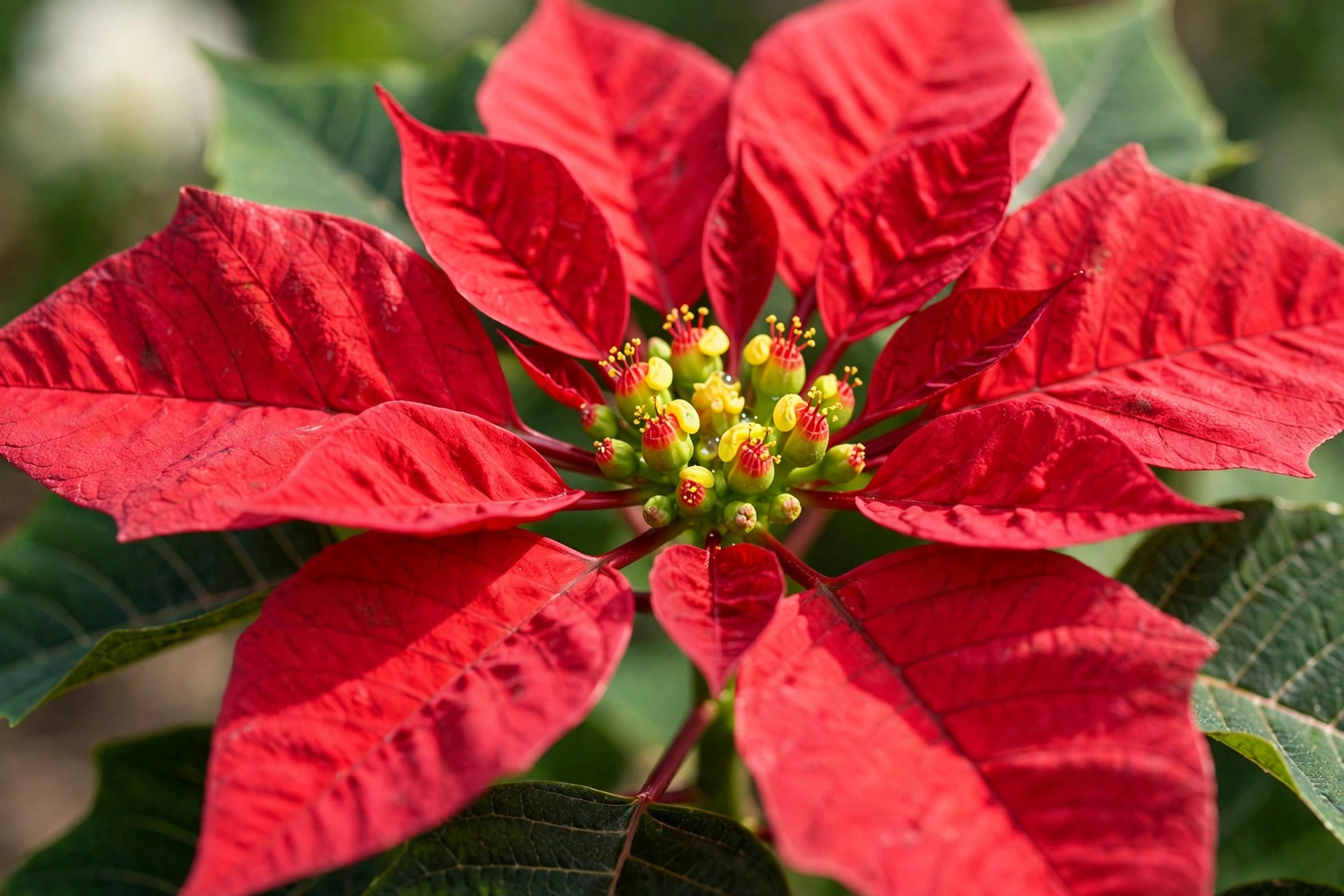
The red parts are not flowers at all. They are colored bracts, modified leaves that turn red when the days shorten, while the true flowers are the tiny yellow-green buds, called cyathia, in the center. That is why a plant with fresh, tight cyathia is still young and will last longer than one whose center buds have already opened or dropped.
The poinsettia is also a short-day plant, which means it needs long, dark nights to turn red. That single fact drives most of these 10 poinsettia care tips, from where you put the plant in autumn to why a hallway light left on all night can stop the color from forming. Give it the dark nights it expects, and the red bracts will follow.
How to Pick a Healthy Poinsettia
The first of the 10 poinsettia care tips is really about shopping: choose a plant with dark green leaves all the way down the stems, bright bracts, and small, tight yellow-green buds in the center. Pass on any plant with wilting leaves, bare lower stems, or fading bracts, since those are signs it has been stressed or kept too cold.
Buy your poinsettia from an indoor display, never from a rack by the doors or outside the shop. Ask for it to be wrapped in paper for the trip home, and take it straight into a warm car, since even a short walk in freezing air can blacken the leaves. The christmas cactus care tips guide gives the same advice for another holiday plant: tropical plants hate sudden cold.
Once home, take the plant out of its sleeve right away and set the pot on a saucer, then check that the soil is neither soaking wet nor bone dry. Remove the decorative foil or punch holes in it so water can drain, since a plant that starts out healthy will hold its color for weeks longer than one that arrives waterlogged, and these 10 poinsettia care tips build on that good start.
10 Poinsettia Care Tips
These 10 poinsettia care tips walk you through the whole season, from picking a bright spot to getting the red color back next year. Work through them in order the first time, and the plant will tell you what it needs by how it grows.
1. Give It Bright, Indirect Light
The first of the 10 poinsettia care tips is light, and it matters more than almost anything else. Give the plant at least six hours of bright, indirect light a day, near a sunny window but not pressed against the glass. An east-facing window is ideal, with gentle morning sun, while a spot a few feet back from a south or west window works just as well.
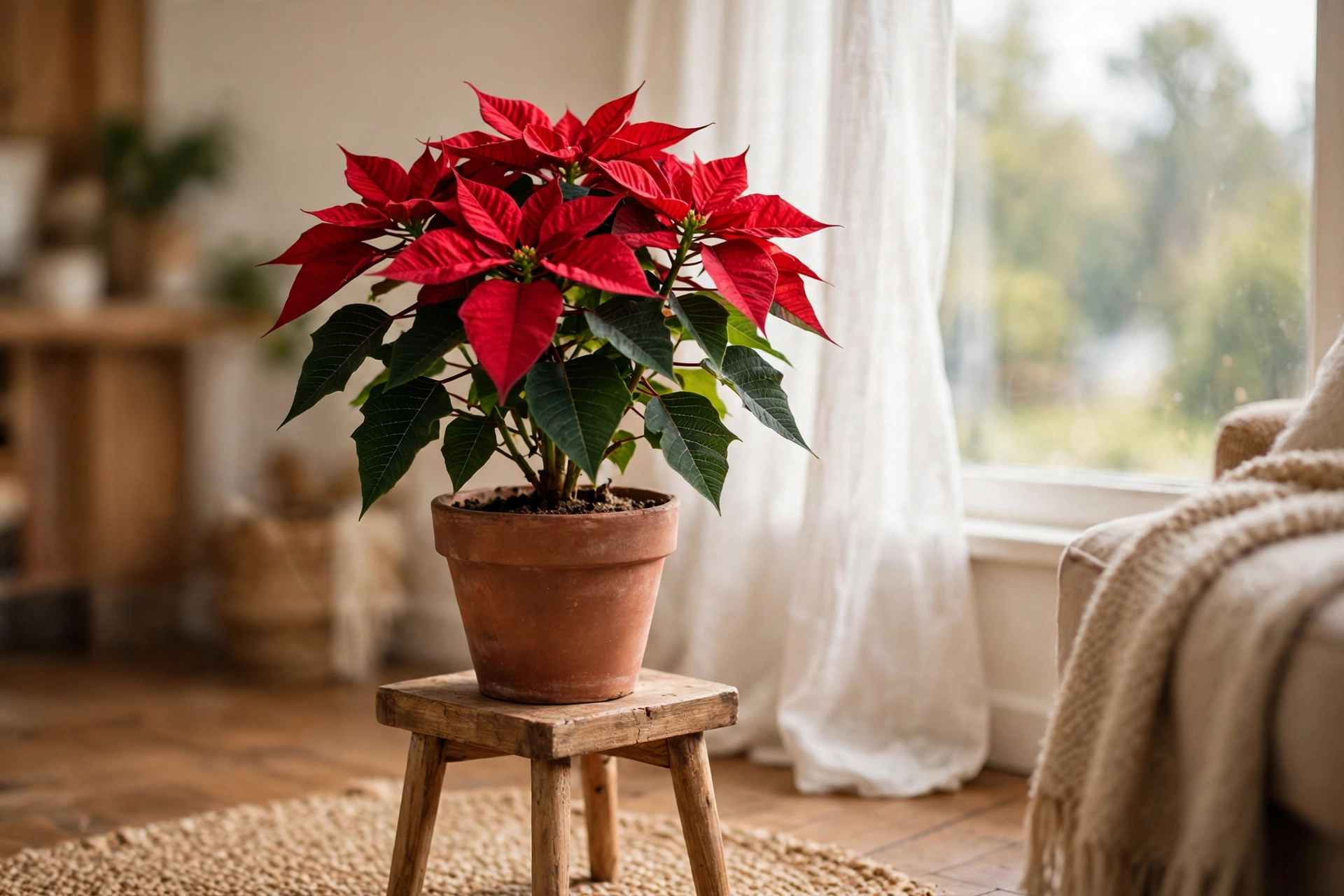
Direct sun can fade the bracts and scorch the leaves, especially through glass, while too little light makes the plant drop leaves and lose its color fast. If your brightest window is taken, a simple grow light on a timer can fill the gap through the short winter days. Watch the leaves: deep green and firm means the light is right.
2. Water Only When the Top Inch of Soil Is Dry
The second of the 10 poinsettia care tips is about watering, and it is the one most people get wrong. Poinsettias hate wet feet, and overwatering is the most common reason they drop leaves. Water only when the top inch of soil feels dry, then water thoroughly until it runs out of the drainage holes, usually about once a week in a warm room.
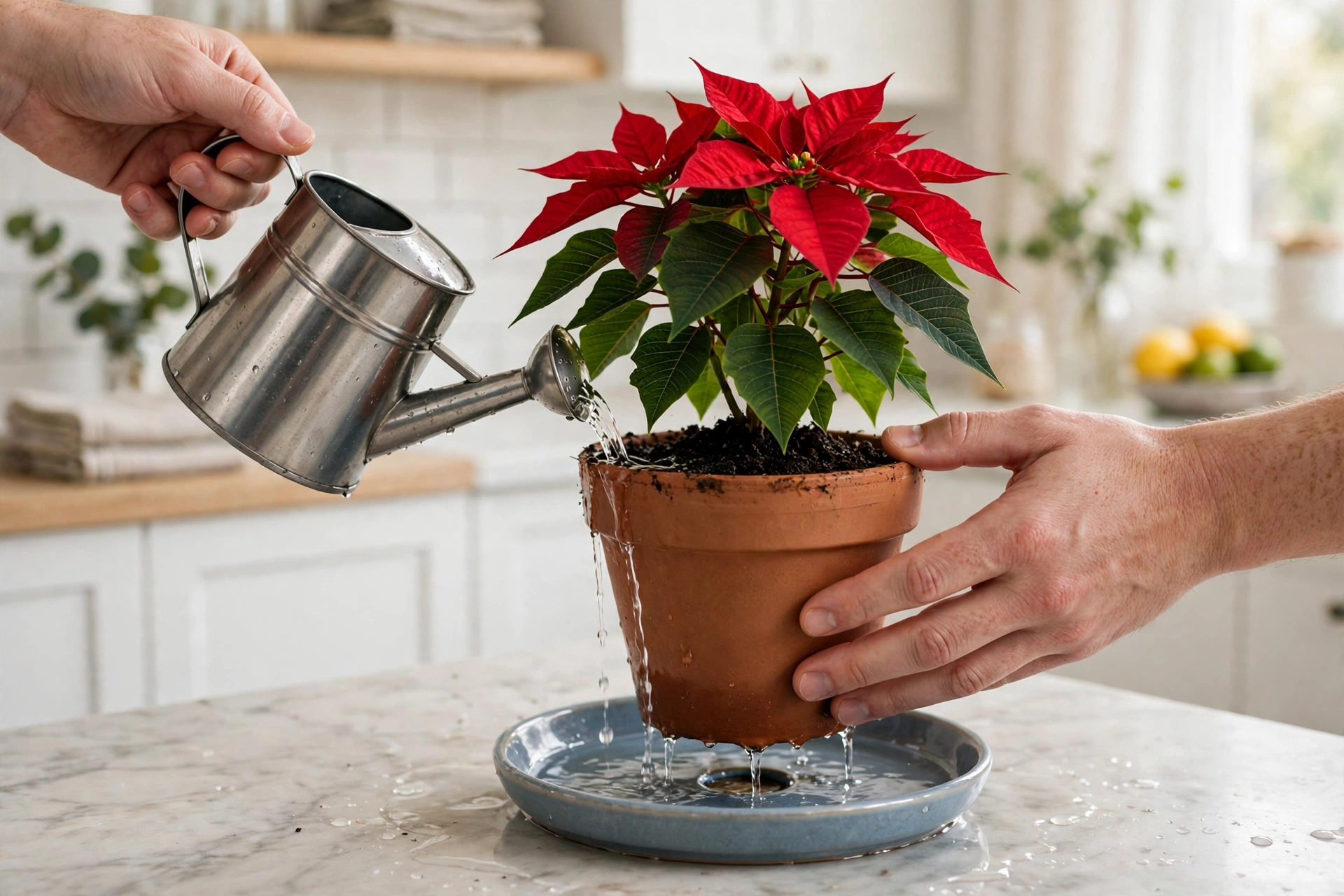
Always empty the saucer after watering, and never let the pot sit in standing water, since wet roots rot fast in winter. The winter watering tips for houseplants guide explains the same check for other indoor plants, and it works because most houseplants need less water in winter than in summer. If the leaves wilt but the soil is wet, the roots are already in trouble.
3. Keep It Warm and Away From Drafts
The third of the 10 poinsettia care tips is about warmth: poinsettias like steady temperatures, roughly 60 to 70 degrees by day and no lower than about 55 at night. Keep the plant away from exterior doors, cold windows, heat vents, fireplaces, and space heaters, since anything that swings the temperature stresses it and triggers leaf drop.
Damage below 50 degrees can blacken leaves in hours, so never leave a poinsettia in a cold car or by an open door while you bring in the shopping. If the bracts touch cold glass on a freezing night, move the pot a few inches back from the window. Steady warmth is what keeps the color bright for weeks.
4. Remove the Foil and Let It Drain
The fourth of the 10 poinsettia care tips is the simplest: remove the foil and let the plant drain. Most poinsettias arrive wrapped in decorative foil, and that foil holds water around the roots, so a plant left sitting in it can rot from the bottom up. Take the plant out of the foil before you water, or punch holes in it so water can escape.
Use a pot with drainage holes, and never use a sealed decorative pot with water pooling at the bottom. After watering, wait ten minutes, then tip out whatever has collected in the saucer. Dry roots between waterings are what keep this plant alive through the holidays.
5. Use a Light, Well-Draining Potting Mix
The fifth of the 10 poinsettia care tips is about the soil: a poinsettia needs air around its roots, so a heavy garden soil or dense peat mix is a bad home for it. A light houseplant mix with added perlite drains well and still holds enough moisture between waterings, and if the mix stays wet for days, it is too heavy.
Repot only in spring, after the color has faded and new growth starts, and choose a pot only one size larger. Fresh mix every year or two keeps the roots healthy and the plant growing. Never repot while the plant is in full color, since the shock can make it drop its bracts.
6. Skip Fertilizer While It Is in Color
The sixth of the 10 poinsettia care tips is to skip the fertilizer while the plant is in color. It was fed at the nursery before you bought it, and extra fertilizer now can burn the roots and shorten the display. Hold off until spring, when new growth starts and the plant can actually use the food.
When spring growth appears, feed once a month with a balanced liquid houseplant fertilizer at half strength. Stop feeding again in early autumn, when the plant needs to rest and set color rather than push out soft new leaves. Less is more with this plant.
7. Give It Humidity, Not Wet Leaves
The seventh of the 10 poinsettia care tips is about humidity: winter heating dries indoor air, and dry air can crisp the edges of the bracts. Set the pot on a shallow tray of pebbles and water, with the pot above the water line, so moisture rises around the plant, and grouping plants together helps too.
Do not mist the bracts themselves, since water sitting on the color can spot it and invite rot. A small humidifier in the room is the easiest fix if your air is very dry. Aim for comfortable room humidity, not a greenhouse, and the plant will be happy.
8. Don’t Move It Once the Buds Form
The eighth of the 10 poinsettia care tips is to leave the plant alone once the buds form. Poinsettias are fussy about change, and moving the plant once buds appear is the most common reason they fall before they open, so pick its spot when you bring it home and leave it there.
The same rule applies to drafts and sudden temperature changes, which can make a healthy plant shed leaves overnight. If you must move it for a party or a photo, keep it brief and return it to its usual spot. The plant notices every change, even ones that seem small to us.
9. Prune It Back in Spring
The ninth of the 10 poinsettia care tips is to prune the plant back in spring, once the color has faded. Cut the stems to about four to six inches above the soil; it looks harsh, but fresh, bushy growth appears within weeks, and pruning keeps the plant compact instead of tall and leggy.
Wear gloves when you prune, since the milky sap can irritate skin. Let the cut ends dry for a day, then water lightly and wait for new shoots. Each new shoot can be pinched back once in summer to make the plant bushier still.
10. Give It Long Nights to Turn Red Again
The last of the 10 poinsettia care tips is the secret to next year’s color. From early October, give the plant 14 hours of complete darkness every night for about eight weeks, with bright light during the day. A closet or a cardboard box over the plant each evening works, as long as not a crack of light gets in.
Even a hallway light or a streetlamp through the window can be enough to stop the color from forming, so be strict about the dark hours. Once the bracts start to color, move the plant back to its bright spot and enjoy the show. These 10 poinsettia care tips work as a set, and the dark nights are the part most people skip.
How to Get Your Poinsettia to Bloom Again
Getting a poinsettia to color up again takes patience, and these 10 poinsettia care tips give you the whole routine. Keep the plant growing through spring and summer, in bright light with regular water and monthly feeding, and let it enjoy a summer outdoors in a sheltered spot if you can.
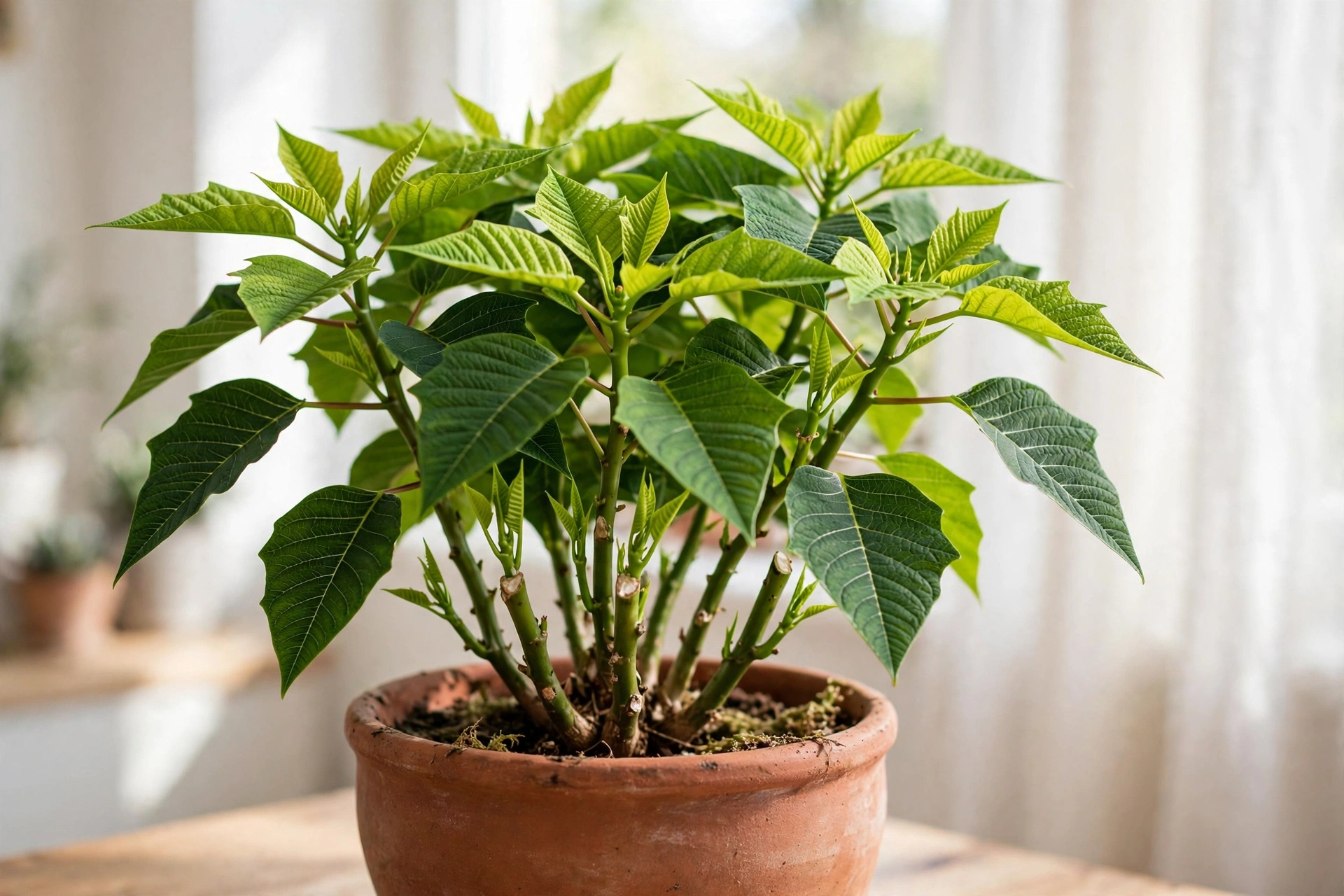
From early October, start the long-night routine described above, and keep the plant warm and steady while the color forms. The winter indoor plant care tips guide covers the same steady-warmth rules for other houseplants, since cold nights undo weeks of careful dark treatment. Color usually shows within eight to ten weeks.
If the plant stays green, the usual cause is light leaking in during the dark hours, or nights that were too warm. Fix the darkness first, since that is the trigger, and try again next year rather than giving up. A poinsettia kept well can live and color up for many winters.
Poinsettia Care Mistakes to Avoid
Most poinsettia problems come from a short list of mistakes, and all of them are easy to avoid. Overwatering rots the roots, cold drafts blacken the leaves, and moving the plant drops the buds. Dry air crisps the bract edges, and fertilizer while the plant is in color burns the roots. Each one is covered in the 10 poinsettia care tips above.
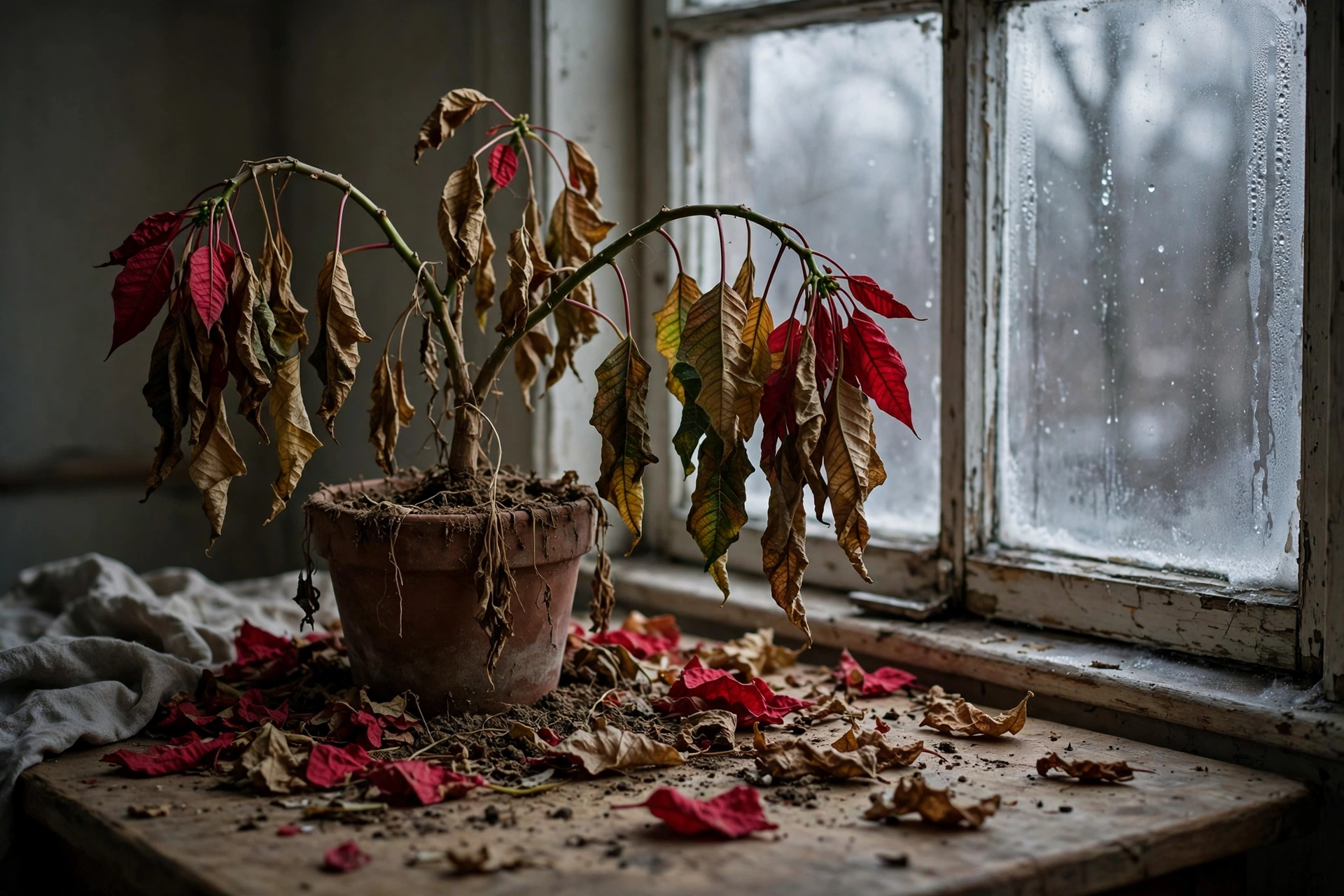
Watch for whiteflies on the undersides of the leaves, and wash them off with a gentle spray of water or insecticidal soap. Keep the plant away from pets and small children who might chew the leaves, since the milky sap can irritate mouths and stomachs. A little attention now saves a bare plant in January.
FAQs About 10 Poinsettia Care Tips
How long will a poinsettia last indoors?
With good care, a poinsettia holds its color for six to eight weeks, often into late winter. After the color fades, the plant itself can live for years if you keep watering it and give it the dark-night routine each autumn.
Why are my poinsettia leaves falling off?
Leaf drop usually means cold drafts, overwatering, or a sudden move. Check the temperature first, then the soil: if it is wet and the leaves are falling, let it dry out and move the plant somewhere warm and still.
Are poinsettias poisonous to pets?
Poinsettias are only mildly toxic, but the milky sap can irritate the mouth, stomach, and skin of pets and people. Keep the plant out of reach of pets and children who might chew the leaves, and wash your hands after pruning.
Can I keep my poinsettia after Christmas?
Yes, and it is worth trying. Prune it back in spring, keep it growing through summer, and give it long dark nights from early October. Many gardeners keep the same plant going for years, and it colors up again each winter.
What are the easiest 10 poinsettia care tips to remember?
Bright indirect light, water only when the top inch is dry, steady warmth, no drafts, and long dark nights in autumn. Get those five right and the rest of the 10 poinsettia care tips are just fine-tuning.
Conclusion
These 10 poinsettia care tips are simple on their own, and together they keep a holiday plant bright for weeks and alive for years. Buy healthy, keep it warm and bright, water only when the soil is dry, and give it dark autumn nights. That is the whole secret.
Pick up a poinsettia this week, while the shops are full of them, and try the routine for yourself. A plant that colors up again next winter is a small triumph, and it starts with the care you give it now.


1 comments