10 paperwhite care tips can turn a handful of plain brown bulbs into a cloud of sweet-smelling white flowers in just a few weeks, right on your windowsill. Paperwhites are the easiest bulbs you can grow indoors, because they need no cold period, no special soil, and almost no experience. Plant them in November, and they bloom in time for the holidays, filling a small room with scent.
These 10 paperwhite care tips cover choosing bulbs, forcing them in water or soil, watering, light, and the trick that keeps tall stems from flopping over. A shallow bowl, a sunny window, and a little patience are enough, even in the smallest apartment.
In This Guide
Table of Contents
Why Paperwhites Are the Easiest Winter Bulb
The paperwhite, Narcissus papyraceus, is a Mediterranean daffodil relative that blooms without the cold winter most other bulbs demand. Tulips and hyacinths need weeks of chilling before they will flower, but paperwhites skip that step entirely. Buy bulbs in autumn, plant them the same day, and see flowers in three to five weeks. That short wait is what makes them a favourite holiday plant, and the first reason these 10 paperwhite care tips work for complete beginners.
Paperwhites are part of the Narcissus genus, the same group as the daffodils that bloom outdoors in spring, but they flower indoors with far less fuss. They are compact, cheap, and happy in a bowl of pebbles and water, with no garden bed or special equipment. A cluster of five or six bulbs in a shallow dish looks far more generous than it costs. The flowers are white, star-shaped, and strongly scented, so one bowl can perfume a whole room.
The scent is worth a warning, too: some people love it, while others find it strong in a small, closed room. If you are sensitive to fragrance, grow your paperwhites in a larger room or near a window you can crack open. The rest of these 10 paperwhite care tips is straightforward, and most of it comes down to two things: enough light, and not too much water.
10 Paperwhite Care Tips
Follow these 10 paperwhite care tips in order, and your bulbs should bloom on schedule. Each tip fixes one common mistake, so even remembering three or four of them will help your flowers.
1. Pick Big, Firm Bulbs
Start with the biggest, firmest bulbs you can find, because the size of the bulb decides the size of the show. A large bulb holds more stored food, so it throws up more stems and more flower clusters than a small one. Squeeze each bulb gently before you buy it: it should feel solid and heavy, with dry, papery skin and no soft spots or mould. Getting this choice right is the foundation of these 10 paperwhite care tips.
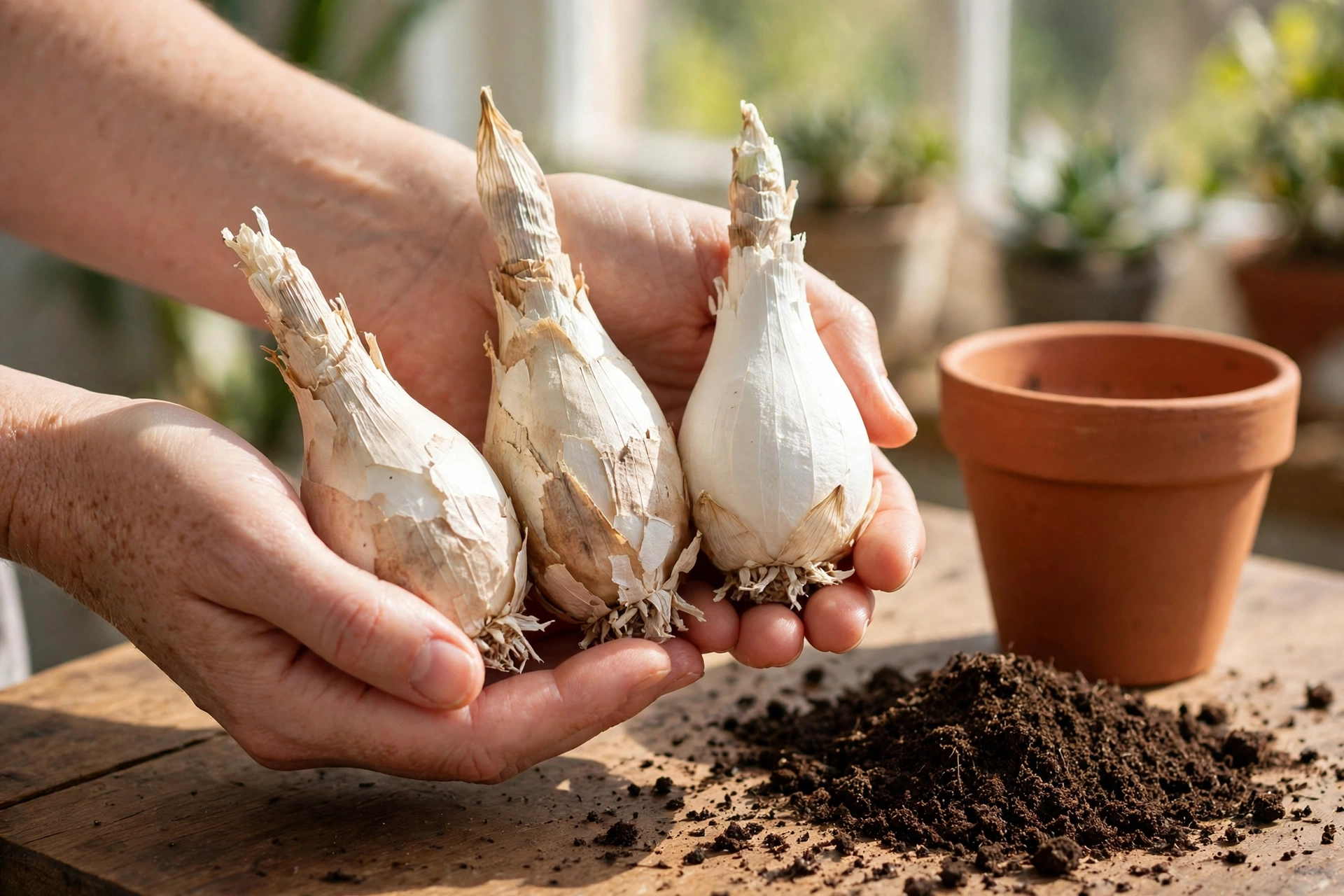
Skip bulbs that feel light, squishy, or damp, and any with nicked skin, since cuts invite rot. Three to five large bulbs fill a small bowl nicely, and five to seven make a fuller display in a wider dish. If you want a second round of blooms, buy a second bag and plant it two weeks later. Like the bulbs in our amaryllis care tips, paperwhites do best when you start with healthy stock, so this first choice matters more than anything else you do afterwards.
2. Plant Early for Holiday Blooms
Paperwhites take three to five weeks from planting to flowering, so count backwards from the day you want blooms. For Christmas flowers, plant in the last two weeks of November; for New Year blooms, the first week of December still works. Planting in stages stretches the show: put one bowl in now, another a fortnight later, and you get fresh flowers through January instead of one short burst. Getting the date right is one of the easiest of the 10 paperwhite care tips to follow.
Keep unplanted bulbs in a cool, dry, dark place until you are ready for them. Warmth and damp wake them up early, and shoots grown in the bag snap easily. Once a bulb has sprouted, plant it straight away. These 10 paperwhite care tips work on the same simple calendar every year, so mark your planting date and the timing takes care of itself.
3. Force Paperwhites in Water With Pebbles
Forcing paperwhites in water is the classic method, and the prettiest, because you can watch the roots grow. Fill a shallow bowl with pebbles about two inches deep. Set the bulbs on top, pointed end up, close together. Add water until it just reaches the base of the bulbs, no higher, so the bottom touches water while the rest stays dry. This classic method sits at the heart of these 10 paperwhite care tips, because it shows you exactly what the plant is doing.
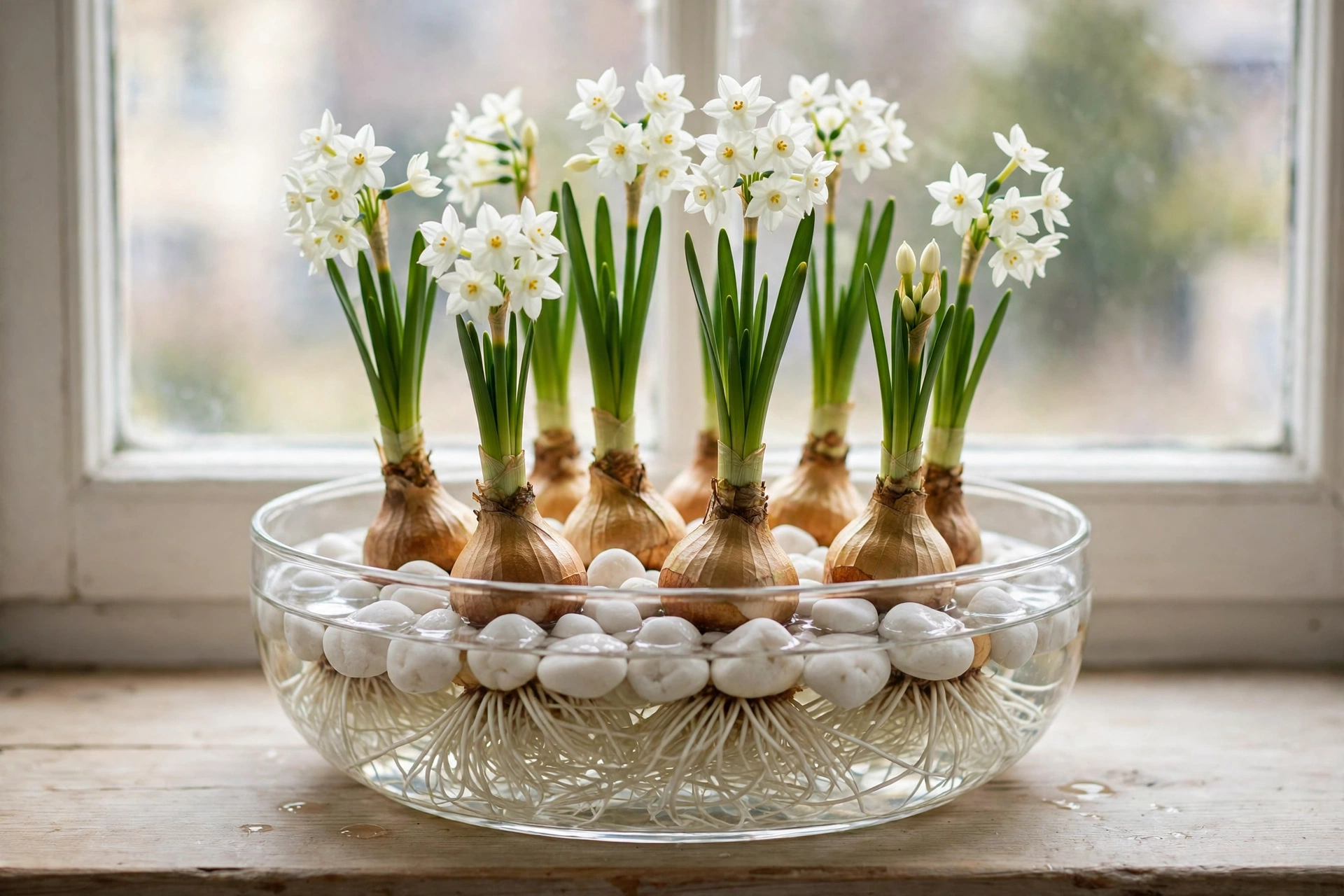
Top the water up as it evaporates, and change it completely once a week to keep it fresh. Within a week you should see white roots threading between the pebbles. Keep the bowl out of direct sun until the shoots are about two inches tall, then move it to your brightest window. The trick is the water level: too high and the bulbs rot, too low and the roots dry out. Check it every couple of days, and these 10 paperwhite care tips will keep your water-grown bulbs healthy from the start.
4. Or Grow Them in Soil for Sturdier Stems
Soil-grown paperwhites tend to stand up better than water-grown ones, so choose soil if you have had floppy stems before. Use free-draining potting mix in a pot with drainage holes, and plant each bulb with its pointed nose just above the surface. Space them about an inch apart, since a crowded pot looks fuller. Water once, until a little runs out of the bottom, then leave the pot alone until the top inch of mix feels dry. If you are new to bulbs, these 10 paperwhite care tips suggest soil as the forgiving first try.

A pot of soil also holds the bulbs steady once the stems grow tall and top-heavy. If your container has no holes, use it as a cache pot and keep the bulbs in a plain plastic pot inside it, lifting the inner pot out to water and drain. The soil method forgives a missed watering better than the water method. Either way, these 10 paperwhite care tips give you the same flowers; soil simply gives you a sturdier plant.
5. Give Them Bright, Indirect Light
Light decides whether your paperwhites grow short and sturdy or tall and weak. Once shoots appear, move the bowl or pot to the brightest window you have, ideally one facing south or west. Bright light keeps the stems compact and the clusters full. In a dim room, stems stretch towards the nearest light, grow thin, and fall over under the weight of the blooms. That balance is the quiet centre of these 10 paperwhite care tips.
Turn the container a quarter-turn every couple of days so the stems grow straight. If your only window faces north, a small grow light a foot above the plants for a few hours a day helps. Avoid hot, direct sun through glass, which can scorch leaves, but do not hide paperwhites in a dark corner either. Plenty of bright, indirect light is one of the simplest of these 10 paperwhite care tips, and it prevents more problems than any other single habit.
6. Water Just Enough — Never Let Bulbs Sit Deep
Overwatering is the fastest way to lose paperwhites, because a bulb sitting in deep water rots from the bottom up. For water-grown bulbs, keep the level at the base of the bulb only. For soil-grown bulbs, water when the top inch of mix feels dry, and always empty the saucer afterwards so the pot never stands in water. In a cool room this may mean watering just once a week. Sticking to it is one of the 10 paperwhite care tips that saves more bulbs than any other.
The same restraint applies through the winter, when indoor air is dry but small pots stay damp longer than you expect. Check with a finger before you reach for the watering can, and water in the morning so splashes dry before night.
If a bulb feels soft or smells sour, take it out at once so the rot cannot spread to its neighbours. Our winter watering tips for houseplants explain the same habit for your other indoor plants: a little water, often checked, beats a big soak. This is one of the 10 paperwhite care tips that beginners get wrong most often, so it is worth slowing down for.
7. Use the Alcohol Trick to Keep Stems Short
Paperwhite stems can shoot up to two feet tall and then flop, but a weak alcohol solution keeps them shorter and sturdier. Once the shoots are about two inches tall, replace the plain water with one part 40-proof spirit, such as vodka, to seven parts water. The alcohol mildly stresses the plant, so stems grow about a third shorter while the flowers stay the same size.
Start the alcohol water only after roots have formed and the shoots are growing, never on a freshly planted bulb. It works best for water-grown paperwhites, since the mix is harder to control in soil. Skip it entirely if you prefer, and rely on bright light and cool air instead. It is a small, odd-sounding step, and it is the one in these 10 paperwhite care tips that surprises people most.
8. Support Tall Stems Before They Flop
Even with good light, paperwhite stems can grow tall and top-heavy once the flower clusters open. Support them early, before they bend, because a stem that has already flopped rarely straightens. Thin bamboo stakes, garden twigs, or decorative branches pushed into the pebbles all work. Tie stems loosely with soft twine, leaving room for the stem to thicken.
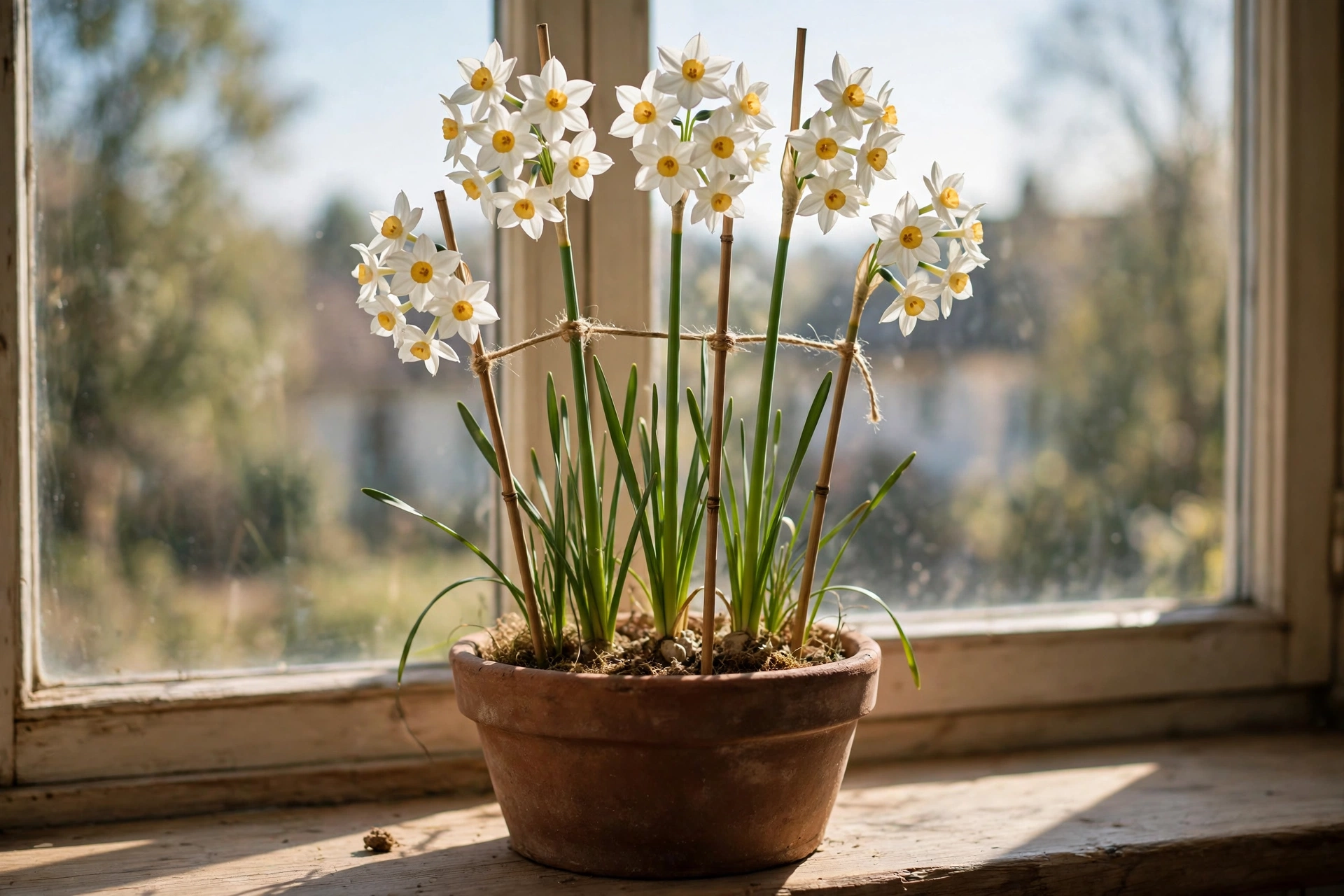
For a bowl of several bulbs, a simple grid of twigs across the top of the container holds the whole cluster upright at once. Place the supports when the shoots are about six inches tall, while they are still flexible. Waiting until the flowers open means fighting gravity with a heavy, brittle stem. Among these 10 paperwhite care tips, this one is pure prevention, and it takes five minutes.
9. Keep the Air Cool for Longer Blooms
Cool air is the secret to paperwhite flowers that last for weeks instead of days. The ideal spot is between 50 and 65 degrees Fahrenheit, cooler than most living rooms but easy to find near a window or in a hallway. Warmth speeds everything up: stems stretch, flowers open fast, and the whole display fades within a week. That is why these 10 paperwhite care tips keep coming back to cool air.
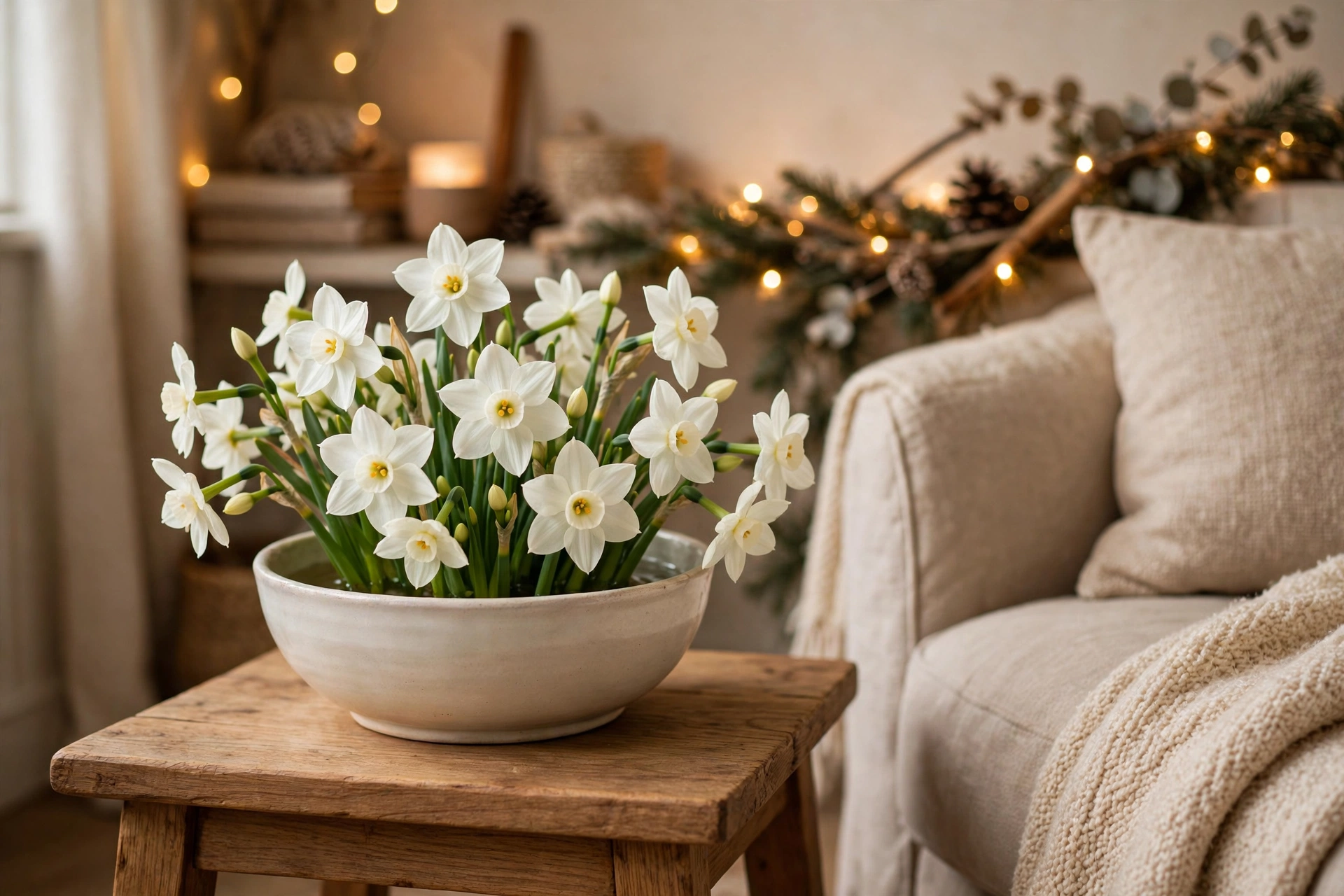
Move the bowl to a cooler spot at night, and keep it away from radiators and heating vents. The same cool air also softens the scent, which helps if you find it strong. Once the flowers open, move the display to a warmer spot to enjoy it, then return it to the cool window overnight. These 10 paperwhite care tips treat temperature as a tool: cool while growing, and cool while blooming, for the longest show.
10. Feed Lightly — or Skip Feeding Altogether
Paperwhite bulbs carry their own food inside, so they do not need feeding to bloom. The bulb was fed in the field, and that stored energy is enough for one full display. Adding fertiliser will not make the flowers bigger, and a strong feed can burn the new roots in water-grown bulbs.
If you are growing in soil and plan to keep the bulbs after flowering, a single half-strength liquid feed once the flowers fade is plenty. For water-grown bulbs, skip feeding entirely and change the water weekly instead. This last of the 10 paperwhite care tips is the easiest to follow, because doing nothing is the right answer.
Paperwhite Care After the Flowers Fade
When the flowers fade, snip off the spent blooms but leave the green leaves alone. The leaves keep feeding the bulb for a few weeks. In water, the bulbs are usually spent after one flowering and are best composted. That is normal for forced bulbs. These 10 paperwhite care tips end where the flowers do, but the leaves still have a job.
In warm regions, zones 8 to 10, you can plant the bulbs outdoors after the last frost and they may bloom again in later years. In colder regions they will not survive, because paperwhites are not frost-hardy. Many gardeners simply compost them and buy fresh bulbs each autumn, which is the simplest choice. If you like holiday plants that return year after year, our christmas cactus care tips cover a plant that reblooms with a little patience.
Paperwhite Care FAQs
Do these 10 paperwhite care tips work if I grow paperwhites in water?
Yes. Every one of these 10 paperwhite care tips works for water-grown bulbs, and the alcohol trick in tip 7 was designed for them. Keep the water at the base of the bulbs, change it weekly, and give the bowl bright light once shoots appear. Water-grown paperwhites bloom just as well as soil-grown ones.
How long do paperwhites take to bloom?
Paperwhites usually bloom three to five weeks after planting. Warm rooms speed them up, and cool rooms slow them down, and these 10 paperwhite care tips are built around that short window. For Christmas flowers, plant in the second half of November; bulbs planted in early December generally bloom in early January. Planting a second bowl two weeks after the first gives you a longer season.
Why are my paperwhite stems falling over?
Tall, floppy stems usually mean too little light, too much warmth, or both. Move the plant to your brightest window, keep the room cool, and use the weak alcohol solution once shoots are two inches tall. Add twig supports while the stems are still short. Stems that have already bent will not straighten. Fix the light first, and the rest of these 10 paperwhite care tips will do their job.
Do paperwhites come back every year?
Rarely indoors. A forced bulb uses up its stored food in one flowering, and seldom has enough left to bloom again. In warm climates, zones 8 to 10, bulbs planted outdoors after flowering may bloom again in later years. In cold climates, treat paperwhites as a one-season plant.
Are paperwhites toxic to pets?
Yes. Paperwhite bulbs contain lycorine, which is toxic to cats and dogs if eaten, and the sap can irritate skin. Keep bulbs and plants out of reach of curious pets, wash your hands after handling bulbs, and call your vet if a pet eats part of one.
Conclusion
These 10 paperwhite care tips prove that a beautiful winter display does not need a garden, a greenhouse, or years of experience. Pick firm bulbs, plant them in November, give them bright light and cool air, and keep the water low. In a few weeks you will have white, sweet-smelling flowers on a windowsill that held nothing a month ago. Share these 10 paperwhite care tips with a friend who has a bare windowsill.