
10 pothos care tips for beginners can turn a single trailing vine into a full, healthy plant for a shelf, a desk, or a small flat. Pothos is one of the easiest houseplants to keep, with heart-shaped leaves that grow fast and forgive a missed watering. You do not need experience, a large room, or special tools to grow it well.
Many beginners lose a plant by watering too much, or by placing it where it gets no light at all. The 10 pothos care tips for beginners below keep care simple: check the soil, give it soft light, and trim it now and then to keep it full.
These 10 pothos care tips for beginners cover light, water, soil, feeding, pruning, and propagation in plain steps. Start with one plant, follow the tips in order, and add more plants once you feel sure.
Table of Contents
What Pothos Needs to Grow Well
Pothos needs soft, indirect light, a pot with drainage, and soil that dries a little between waterings. A spot a few feet from a bright window suits it well, and it can cope with lower light than many houseplants.
The plant also needs a little space to trail or climb. A high shelf, a hanging basket, or a small trellis all suit it, as long as the stems are not crushed behind furniture. Give the leaves room to open, and turn the pot every couple of weeks so growth stays even.
Pothos grows in standard houseplant mix, and it suits a Pothos grower who wants visible progress. New leaves appear often in warm, bright months, and growth slows when days shorten.
10 Pothos Care Tips for Beginners
The 10 pothos care tips for beginners below are simple on purpose, and these 10 pothos care tips for beginners work in any small room. Each tip tells you what to do, who it suits, and what to avoid, so you can care for your plant without guessing. Read them in order, then keep the ones that fit your room and routine.
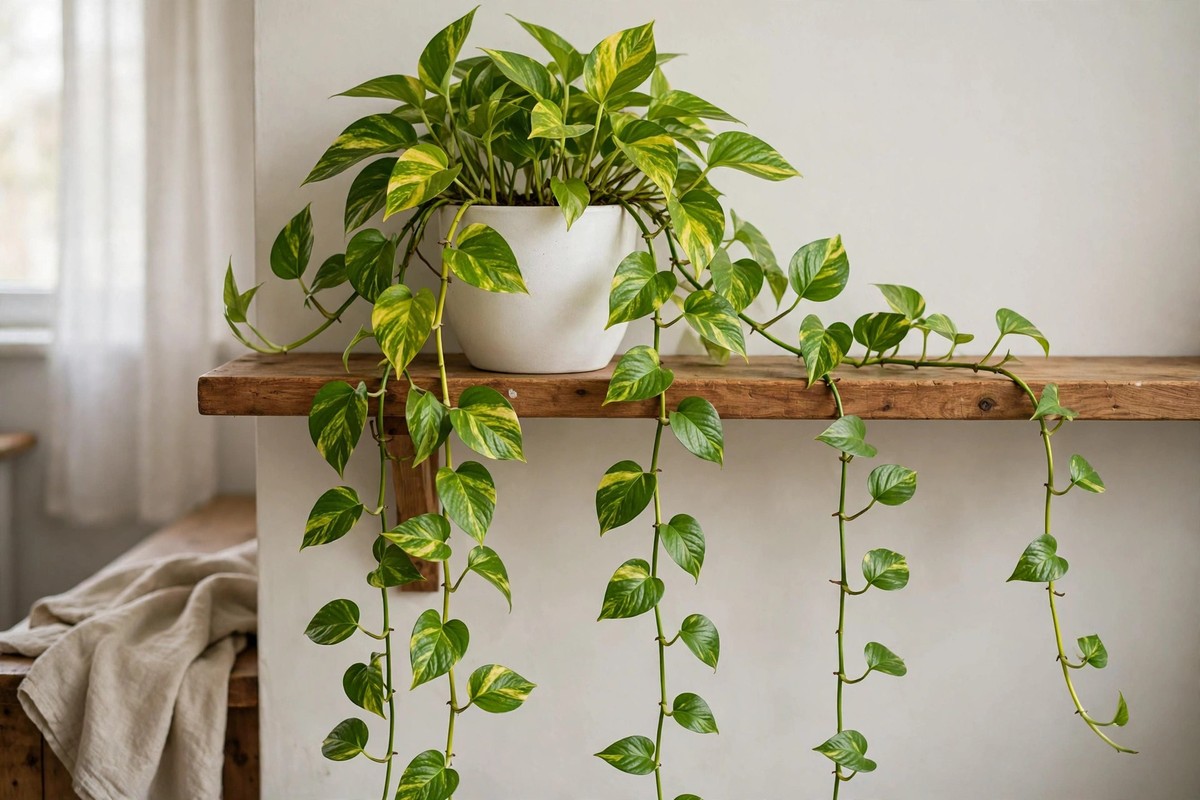
1. Give It Soft, Indirect Light
Soft, indirect light is the first of the 10 pothos care tips for beginners, because light shapes how fast and how full the plant grows. Place it near a bright window, but out of direct midday sun. An east-facing window suits it, and a north-facing window works if the room is bright.
This tip suits small flats, desks, and shelves near a window. Green pothos copes with lower light, while golden and white varieties keep their colour best in brighter spots. If new leaves are small and far apart, the plant may want a brighter place.
Pro tip: move the plant closer to the window in short steps over a week. Mistake to avoid: placing it in a room with no daylight, where growth stalls and leaves fade.
2. Water When the Top Inch Feels Dry
Water when the top inch of soil feels dry, then water well until it drains from the bottom. This tip suits beginners, because it replaces a fixed schedule with a simple finger test. Push a finger into the soil, and water only if it feels dry.
Among the 10 pothos care tips for beginners, this one matters most for healthy roots. Empty the saucer after watering, so the pot never sits in water. In cooler months, the soil dries more slowly, so check first and water less often.
Pro tip: water in the morning with room-temperature water. Mistake to avoid: watering a little every day, which keeps the top wet while the roots stay dry below.
3. Use a Pot With Drainage
Use a pot with a drainage hole and a saucer, one size larger than the root ball, as one of the 10 pothos care tips for beginners. This tip suits renters and small rooms, because a pot without drainage can hold water at the bottom and rot the roots. A pot that is far too large also stays wet for too long.
A light plastic pot suits a hanging basket, while a ceramic pot suits a shelf or a desk. Set the pot inside a cover pot if you like the look, but lift it out to water and let it drain fully. Repot in spring when roots fill the pot.
Pro tip: check the drainage hole each time you repot, so it is not blocked by soil. Mistake to avoid: using a pot with no hole and hoping a layer of stones at the bottom will drain it, because it will not.
4. Plant in Loose Houseplant Mix
A loose mix, one of the 10 pothos care tips for beginners, lets air reach the roots and lets extra water drain away. Use standard houseplant mix with a handful of perlite or bark mixed in, which keeps the soil open. This tip suits anyone who has lost a plant to wet soil before.
The mix should feel light and crumbly, not dense or sticky. When you water, it should drain within a minute or two. Refresh the top few inches of soil each spring if you do not repot, and use fresh mix when you do.
Pro tip: mix the perlite in before you plant, rather than adding it on top. Mistake to avoid: using heavy garden soil, which packs down and holds too much water indoors.
5. Trim Long Stems to Keep It Full
Trim long, bare stems in spring to keep pothos full and bushy, following the 10 pothos care tips for beginners. Cut just above a leaf node with clean, sharp scissors, and the plant will often branch below the cut. This tip suits small spaces, because it stops one stem from trailing across the room.
You can also pinch the growing tip of a young stem to encourage side shoots. The cuttings can be placed in water to grow roots, which is an easy way to make a second plant.
Pro tip: trim the longest stem first, then step back and check the shape. Mistake to avoid: letting stems grow long and bare for a year, then cutting them all back at once.
6. Guide Stems Up or Let Them Trail
Pothos can trail from a shelf or climb a small trellis, and both shapes suit a small space, so the 10 pothos care tips for beginners cover both shapes. Let it trail if you have a high shelf, or guide it up a pole if you want it to take up less room. This tip suits owners who want a plant that fits the furniture they already have.
To climb, tie the stem loosely to a small trellis or moss pole with soft ties. To trail, let the stems hang and trim them when they reach the floor or a work surface. Either way, keep the stems free of tangles, so leaves can open.
Pro tip: rotate the pot every couple of weeks, so trailing stems grow evenly. Mistake to avoid: tying stems tightly to a support, which can pinch the stem as it thickens.
7. Feed Lightly in Spring and Summer
Feed lightly in spring and summer, when pothos is growing, and skip feeding in cooler months. Use a balanced houseplant feed at half the strength on the label, once a month. This tip suits beginners who want steady growth without pushing the plant too hard.
Feeding supports new leaves, but it cannot fix poor light or wet soil. If the plant is struggling, fix light and water first, then feed once new growth appears. Feed after watering, never on dry soil, so the roots are not burned.
Pro tip: mark feeding days on a calendar, so you do not feed twice by mistake. Mistake to avoid: feeding every week or at full strength, which can burn leaf edges.
8. Wipe the Leaves and Check for Pests
Wipe the leaves gently with a damp, soft cloth every few weeks, which removes dust and lets in more light, as the 10 pothos care tips for beginners suggest. This tip suits homes near a busy road, homes with pets, and anyone who wants glossy leaves. Cleaning also gives you a chance to check the undersides for pests.
Look for small insects, sticky leaves, or fine webs, and act early if you see them. Wash the leaves with plain water, and remove a badly affected leaf if needed.
Pro tip: clean the leaves on the same day you water, so care stays in one routine. Mistake to avoid: using a rough cloth or scrubbing hard, which can scratch the leaves.
9. Propagate Cuttings in Water
Pothos is easy to propagate, which makes it a good plant for beginners who want more plants, and the 10 pothos care tips for beginners include propagation. Cut a stem just below a leaf node, remove the lowest leaf, and place the cutting in a jar of water. This tip suits small spaces, because a jar on a windowsill takes up almost no room.
Change the water every week, and roots should appear within a few weeks. When the roots are a few inches long, plant the cutting in loose houseplant mix and water well. You can also plant several cuttings in one pot for a fuller plant.
Pro tip: take cuttings in spring, when growth is fastest. Mistake to avoid: leaving cuttings in the same water for weeks without changing it, which can turn the water stale.
10. Repot in Spring When Roots Fill the Pot
Repot in spring when roots circle the bottom, grow from the drainage hole, or water runs straight through, as the 10 pothos care tips for beginners advise. Move up one pot size, use fresh loose mix, and set the plant at the same depth. This tip suits owners who want to catch problems early, before growth stalls.
Among the 10 pothos care tips for beginners, repotting is the one to plan ahead. Water well after repotting, and give the plant a week or two in its usual spot to settle. Hold off feeding until new growth starts, so the roots can settle first.
Pro tip: repot on a tray or old towel, so soil stays off the floor. Mistake to avoid: repotting in the middle of a cold spell, or moving up two pot sizes at once.
How to Follow 10 Pothos Care Tips for Beginners at Home
The 10 pothos care tips for beginners in this guide work best as a short weekly check, and these 10 pothos care tips for beginners take only a few minutes. Check the soil, look at the leaves, and turn the pot once a week. That short routine catches dry soil, dust, and long bare stems before they become problems.

For more seasonal care ideas, see our guide to winter indoor plant care tips.
Mistakes That Hurt Pothos
The most common mistake is overwatering. For the 10 pothos care tips for beginners, the warning is the same each time: wet soil rots roots fast, and yellow leaves often follow. Let the soil dry, check the drainage hole, and hold back on water until the plant recovers.
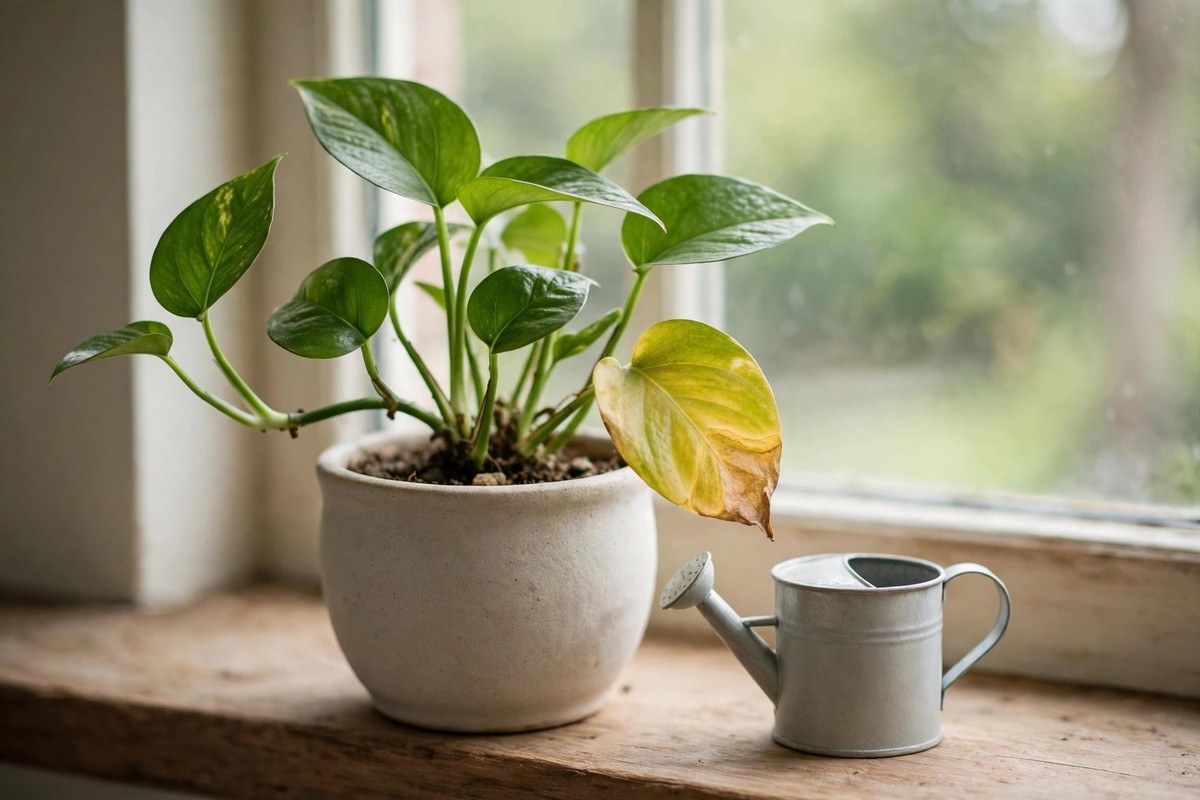
The second mistake is too little light. A pothos in a dark corner grows slowly, and new leaves stay small and far apart on long stems. Move it to the brightest indirect spot you have for a few weeks, and watch for new growth before you change anything else.
The third mistake is never trimming it. Without a trim, stems grow long and bare at the base, and the plant looks thin even when the ends are full. Trim in spring, pinch the tips, and use the cuttings to fill the pot, so the plant stays bushy.
Where to Place Pothos in a Small Space
Start with the brightest indirect spot you have: a few feet from a bright window, on a high shelf, or in a hanging basket near a window. That is the safest home for pothos, and it keeps new leaves coming. Keep it away from radiators, cold draughts, and direct sun through glass.

Use height to save floor space. A small trellis on a desk suits a plant you want to grow upward, and it keeps the stems tidy. Group it with other plants as a small houseplant display that shares the same light.
Think about daily life, too. A plant you see each day gets watered and checked, while one behind a door gets forgotten. Put your pothos where you will notice it, but leave room for its stems to trail or climb. If you like trailing plants, our hanging planter ideas show more ways to use the same high spots.
Frequently Asked Questions About 10 Pothos Care Tips for Beginners
Do 10 pothos care tips for beginners work for golden pothos?
Yes. The 10 pothos care tips for beginners in this guide suit golden, green, marble, and neon pothos. Golden and variegated types keep their colour best in brighter indirect light, while plain green types cope with lower light.
How often should I water pothos as a beginner?
Water when the top inch of soil feels dry, which may be once a week in warm months and less often in cooler months. Check the soil with your finger, rather than watering on the same day each week.
Why are my pothos leaves turning yellow?
Yellow leaves often mean too much water, especially if the soil feels wet. Check the soil, empty the saucer, and let the plant dry out before watering again. An old lower leaf can also turn yellow as the plant grows, so look at the whole plant first.
Can pothos grow in water only?
Pothos can grow in water for a while, and cuttings root well in a jar.
How do I make my pothos bushier?
Trim long stems in spring, pinch the growing tips, and plant rooted cuttings back into the same pot. Bright, indirect light also helps, because it keeps new leaves close together on the stem.
Conclusion: Grow a Full Pothos in a Small Space
The 10 pothos care tips for beginners in this guide show that pothos does not need experience or a large room to thrive. Soft light, careful watering, loose soil, and a spring trim are enough to keep it full, green, and growing in a small space.

Start with light and water, then add trimming and propagation as you feel sure. Check the soil each week, wipe the leaves now and then, and repot in spring when the roots need room. With those steady steps, your pothos can become a favourite part of your home, so see our easy houseplants for low light for more plants that suit the same bright, sheltered spots.


