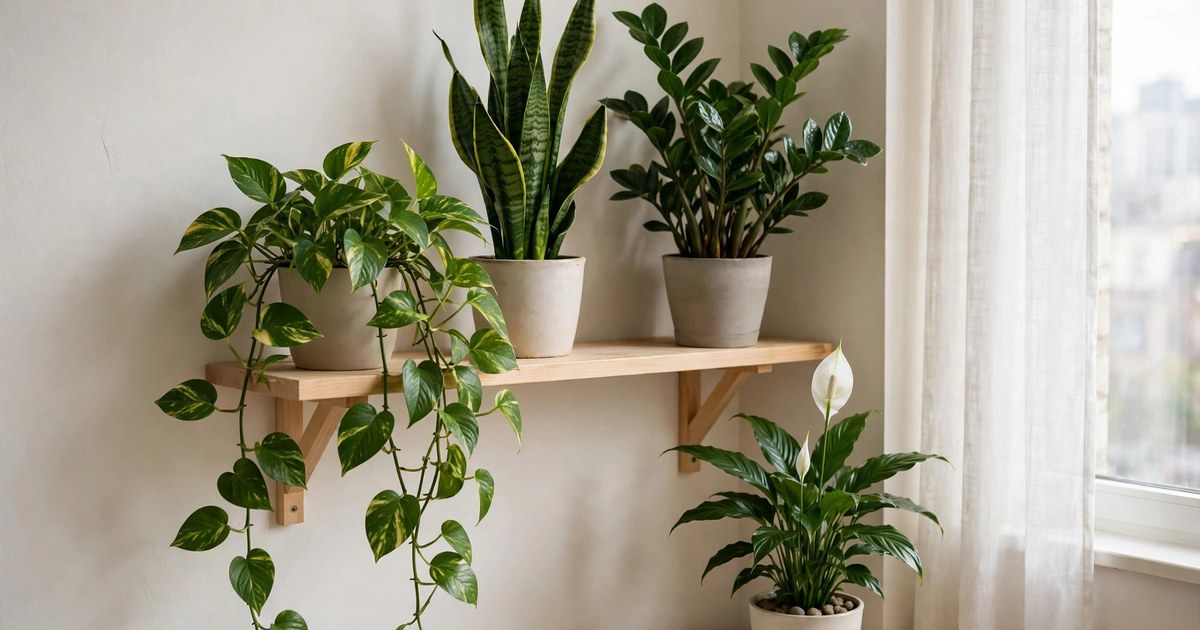
10 easy houseplants for low light can turn a dim corner, a north-facing room, or a small flat with few windows into a green, lived-in space. You do not need a sunroom, a grow light, or years of practice. You need the right plant for the light you actually have, a pot with drainage, and a watering habit you can keep.
Many homes have less light than their owners think. A room can feel bright to our eyes and still be low light for a houseplant. The 10 easy houseplants for low light below were chosen because they cope with shade, forgive a missed watering, and stay a sensible size for a shelf, a desk, or a floor corner.
This guide gives you ten plants you can trust, with clear care notes for each one. Pick one to start, then add more once you feel sure.
Table of Contents
What Counts as Low Light for Houseplants?
Low light means a spot a few feet from a window, a north-facing window, or a room lit mainly by a window across the room. The plant gets soft, indirect light for part of the day, but no direct sun. If you can read comfortably in the spot during the day, many of the 10 easy houseplants for low light can manage there.
Try the shadow test. Hold your hand a foot above white paper in the spot at midday. A faint shadow means low light, a sharp shadow means brighter light, and no shadow may be too dark even for the toughest plants here.
Light also changes with the seasons. Winter days are shorter, so a spot that works in summer may be darker in winter. Watch new growth in the first month, because slow, pale, or stretched growth often means the plant wants a brighter spot, not more water or food.
10 Easy Houseplants for Low Light
The 10 easy houseplants for low light below are grouped by habit, not by difficulty, because all ten are forgiving. Some trail, some stand upright, and some fill a wide pot with soft leaves. Read the notes for each plant, then choose the shape that fits your shelf, desk, or floor space.
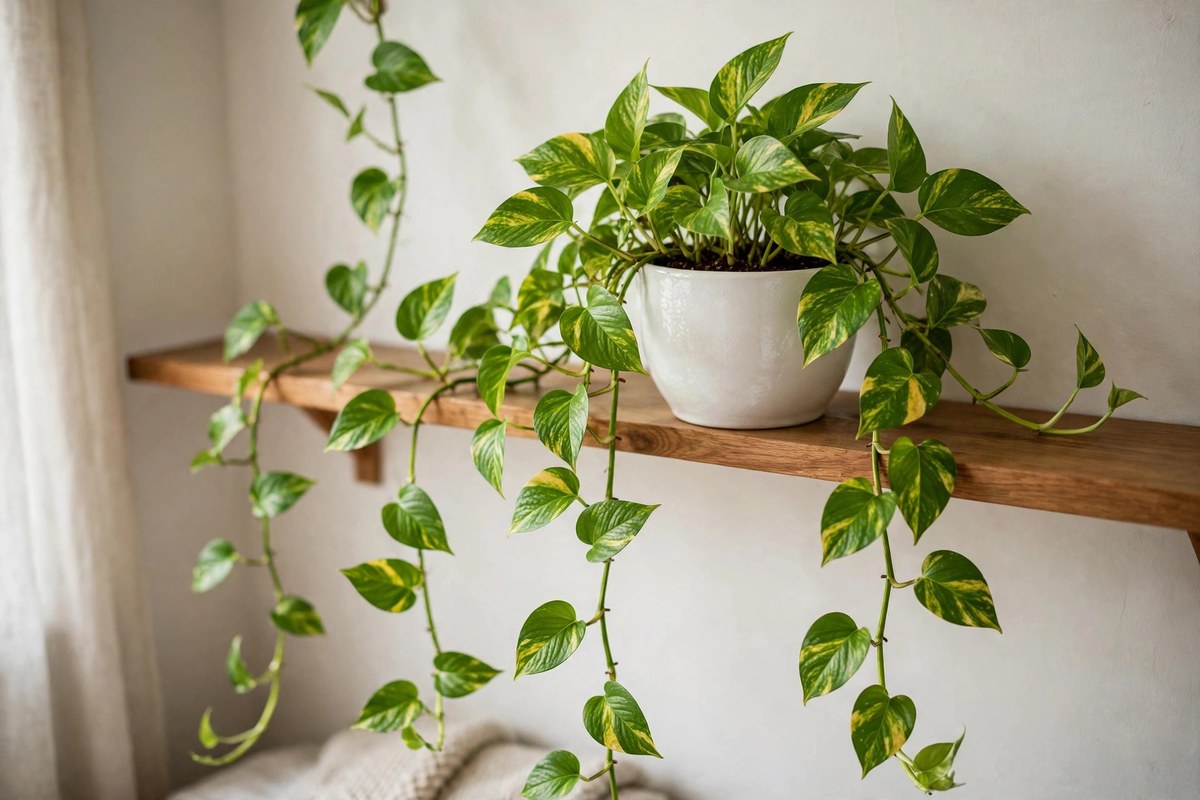
1. Pothos
Pothos is a trailing vine with heart-shaped leaves, often green or splashed with gold, cream, or white. It suits beginners and renters who want fast, visible growth without much work. A single stem can trail over a shelf edge in a few months.
Among the 10 easy houseplants for low light, pothos is one of the fastest growers. Give it soft, indirect light and water when the top inch of soil feels dry. It grows in standard houseplant mix, in a hanging basket or on a high shelf, so trim long stems in spring to keep it full.
Pro tip: rotate the pot every couple of weeks so growth stays even. Mistake to avoid: watering on a fixed schedule without checking the soil, because wet soil in low light rots the roots.
2. Snake Plant
Snake plant, one of the 10 easy houseplants for low light, has stiff, upright leaves in green, silver, and yellow. It suits busy people and small rooms, because it stores water in its thick leaves and needs little attention. Its upright shape fits narrow gaps beside a desk or door.
Place it in low to bright indirect light and water only when the soil is fully dry. Use a free-draining mix and a pot with a drainage hole, and water even less in winter. It grows slowly, so repot it rarely.
Pro tip: turn the pot a quarter turn each month so the leaves stay upright. Mistake to avoid: watering into the centre of the rosette, where trapped water rots the leaves.
3. ZZ Plant
ZZ plant has glossy, dark green leaflets on arching stems that rise from thick underground stems. It suits offices and shaded bedrooms, and anyone who forgets to water. It looks neat and modern, and it keeps its shape with almost no pruning.
Among the 10 easy houseplants for low light, the ZZ plant copes best with shade and dry soil. Give it low to medium indirect light and water only when the soil has dried out. Use a pot with drainage and avoid heavy soil that stays wet.
Pro tip: wipe the leaves with a damp cloth now and then to keep them glossy. Mistake to avoid: watering weekly out of habit, because the ZZ plant stores water and rots in constantly damp soil.
4. Peace Lily
Peace lily, one of the 10 easy houseplants for low light, has deep green leaves and white, sail-shaped flowers that appear in good conditions. It suits people who want flowers indoors and a plant that shows when it needs water. Its leaves droop clearly when thirsty, then recover after watering.
Keep it in low to medium indirect light and keep the soil lightly moist, not wet. Water when the top inch feels dry. It likes a little humidity, so a bathroom with a window suits it well.
Pro tip: remove spent flowers at the base to keep the plant tidy. Mistake to avoid: placing it in direct sun, which scorches the leaves, or letting it sit in a saucer of water.
5. Spider Plant
Spider plant, one of the 10 easy houseplants for low light, has arching, striped leaves and produces small plantlets on long stems. It suits hanging baskets and anyone who likes a plant that makes more plants. The plantlets can be potted on, so one plant can fill several small spaces.
Give it soft, indirect light and water when the top inch of soil feels dry. It does well in a hanging pot or on a shelf where the stems can hang down. Brown leaf tips often follow dry air or salts in tap water.
Pro tip: pot the plantlets while still attached to the parent plant. Mistake to avoid: keeping it in a corner with no daylight at all, which slows growth and fades the stripes.
6. Philodendron
Philodendron is a broad group, and the heartleaf type is one of the 10 easy houseplants for low light. It has soft, heart-shaped leaves on trailing stems that suit shelves, bookcases, and hanging pots. It suits beginners who want a pothos-like plant with a softer look.
Give it low to medium indirect light and water when the top inch or two of soil feels dry. It likes a loose, free-draining mix. Let it trail, or support it on a small trellis if you want it to climb.
Pro tip: pinch the growing tips in spring to encourage branching. Mistake to avoid: using a pot far too large, because the extra soil stays wet and the roots suffer.
7. Cast Iron Plant
Cast iron plant, one of the 10 easy houseplants for low light, has broad, dark green leaves that rise straight from the soil on stiff stems. It suits shaded rooms and hallways, because it is tough and slow to complain. It is one of the best choices for a truly dark corner that still gets some daylight.
Give it low light and water when the top few inches of soil feel dry. It grows slowly and needs little feeding. Keep it away from direct sun, which can bleach the leaves.
Pro tip: divide a large plant in spring if it outgrows its pot. Mistake to avoid: overwatering in winter, when growth slows and the soil takes longer to dry.
8. Chinese Evergreen
Chinese evergreen has broad leaves in green, silver, and pink, depending on the variety. It suits people who want colour without flowers, and it works well on a desk or a side table. It stays compact, so it fits small rooms without taking over.
Give it low to medium indirect light and water when the top inch of soil feels dry. It likes steady warmth and does not like cold draughts, so keep it away from doors that open to cold air in winter.
Pro tip: choose a variety with silver or pink markings for a brighter look in a dark corner. Mistake to avoid: placing it next to a radiator or a cold window, which can mark the leaves.
9. Parlor Palm
Parlor palm is a small, slow-growing palm with soft, feathery fronds. It suits desks, side tables, and floor corners in shaded rooms. It has a calm, classic look and does not need the height or light larger palms need.
Give it low to medium indirect light and keep the soil lightly moist. Water when the top inch feels dry, and empty the saucer after watering. It grows slowly, so buy the size you want rather than waiting for fast growth.
Pro tip: group it with a trailing plant so the shelf or corner looks layered. Mistake to avoid: letting the soil dry out completely, which turns the leaf tips brown.
10. English Ivy
English ivy, one of the 10 easy houseplants for low light, is a trailing plant with small, lobed leaves, often green or edged in cream. It suits hanging baskets, high shelves, and small trellises, and it looks neat when trimmed regularly.
Give it low to medium indirect light and keep the soil lightly moist. It likes cooler rooms and good air movement, so water when the top inch feels dry. Check the leaves often, because dry air can attract spider mites.
Pro tip: trim long stems to keep the plant bushy. Mistake to avoid: letting it dry out completely, then soaking it, because that cycle stresses the roots and drops leaves.
How to Care for 10 Easy Houseplants for Low Light
The 10 easy houseplants for low light in this guide share a simple care pattern: soft light, careful watering, and a pot that drains. Most problems come from too much water, not too little light. In low light, soil dries slowly, so check before you water.
Push a finger into the top inch of soil. If it feels damp, wait, and if it feels dry, water well and let the excess drain away.

Use a standard houseplant mix with some perlite or bark for drainage. Most of these plants need feeding only in spring and summer, at half the strength on the label. Skip feeding in winter, and wipe dusty leaves, because dust blocks light.
Repotting is simple. Move up one pot size when roots fill the pot or water runs straight through, ideally in spring. For more seasonal care ideas, see our guide to winter indoor plant care tips.
Mistakes That Hurt Low-Light Houseplants
The most common mistake is watering on a calendar instead of checking the soil. For the 10 easy houseplants for low light, low light slows growth and drying, so a weekly water can be too much in winter. Yellow leaves, soft stems, and a musty smell often point to wet roots, so let the soil dry, check the drainage hole, and hold back on water until the plant recovers.

The second mistake is placing a plant in a spot with no daylight at all. A hallway with no window or a bathroom with no window is too dark for most plants, even the tough ones here. Move the plant to the brightest spot you have for a few weeks.
The third mistake is feeding a struggling plant. Fertiliser does not fix low light, wet soil, or cold draughts, and it can burn roots. Fix light and water first, then feed lightly once new growth appears.
Where to Place Low-Light Plants in a Small Space
Start with the brightest low-light spot you have: a few feet from a north-facing window, beside a window with a sheer curtain, or across the room from a large window. That is the safest home for most of the plants in this guide. Keep the toughest plants, such as cast iron plant and ZZ plant, for the darker corners.

Use height to make a small room feel green without losing floor space. Trailing plants belong on shelves and in hanging baskets, while upright plants suit a desk or a narrow floor stand. Group two or three plants together as a small container garden to raise humidity a little.
Think about daily life, too, because a plant on a kitchen bench gets noticed and watered, while one behind a door gets forgotten. That is true for all 10 easy houseplants for low light, so put a plant where you will see it each day, but away from radiators, cold draughts, and direct sun through glass. If you also grow herbs indoors, our indoor herb garden ideas for winter show how to use the same bright, sheltered spots.
Frequently Asked Questions About 10 Easy Houseplants for Low Light
Do 10 easy houseplants for low light need any direct sun?
No. The 10 easy houseplants for low light in this guide grow best in soft, indirect light. A little gentle morning sun can suit some of them, but direct midday sun can scorch the leaves.
Which low-light houseplant is easiest for a complete beginner?
Among the 10 easy houseplants for low light, pothos and snake plant are the easiest places to start. Pothos grows quickly and shows you when it needs water, while snake plant needs very little water and copes with neglect. Both suit small rooms and forgive a missed watering.
How often should I water low-light houseplants?
There is no fixed schedule that suits every home. Water when the top inch of soil feels dry, and less often in winter. In low light, soil dries slowly, so checking the soil matters more than watering on the same day each week.
Can low-light houseplants live in a room with no windows?
No, not for long. Even the toughest low-light plants need some daylight to grow. A windowless room needs a grow light for plants to stay healthy.
Why are the leaves on my low-light houseplant turning yellow?
Yellow leaves often mean too much water, especially in low light. Check the soil, empty the saucer, and let the plant dry out before watering again. Cold draughts or old age can also turn a lower leaf yellow, so look at the whole plant first.
Conclusion: Start With One Plant and Grow From There
The 10 easy houseplants for low light in this guide prove that a dim room is not a reason to give up on plants. Choose one plant that fits your space, place it where it will get soft daylight, and water it only when the soil needs it. That simple routine is enough for most of these plants to settle in and grow.

Start with pothos or snake plant if you want the easiest win. Add a peace lily for flowers, a ZZ plant for a dark corner, or a spider plant for a hanging basket once you feel confident. Among the 10 easy houseplants for low light, these are the simplest first steps, and small, steady steps build a collection that lasts, so see our small space garden ideas for winter for more ideas for compact rooms.


