
10 monstera care tips can help a bold, split-leaf plant stay healthy on a shelf, a desk, or a small floor stand. Monstera is loved for its large green leaves, but it does not need a large room. With the right light, a steady watering habit, and a pot that fits your space, it can grow well in a flat or a small house.
A monstera in a small space needs a plan. Left alone, it can grow wide, lean toward the window, and outgrow its corner in a season. The 10 monstera care tips below show how to keep it compact, upright, and full of new leaves, without giving up half your living room.
These 10 monstera care tips cover light, water, soil, support, pruning, and feeding in plain steps. Pick the tips that fit your room, then use them week by week.
Table of Contents
What a Monstera Needs in a Small Space
A monstera needs bright, indirect light, a pot with drainage, and room for its leaves to open. In a small space, the best spot is a few feet from a bright window, where the sun never falls hard on the leaves.
The plant also needs air around its leaves. Crowding it against a wall or behind furniture can trap damp air and slow new growth. Give it a few inches of space on each side, and turn the pot every couple of weeks so it grows evenly.
Soil matters, too. A loose mix that drains well suits a Monstera better than heavy garden soil, which stays wet and can rot the roots.
10 Monstera Care Tips
The 10 monstera care tips below work as a set, but you can start with two or three of these 10 monstera care tips. Light and water matter most, while support, pruning, and cleaning keep the plant neat as it grows. Read each tip, then choose the shape and size that fits your room.
1. Give It Bright, Indirect Light
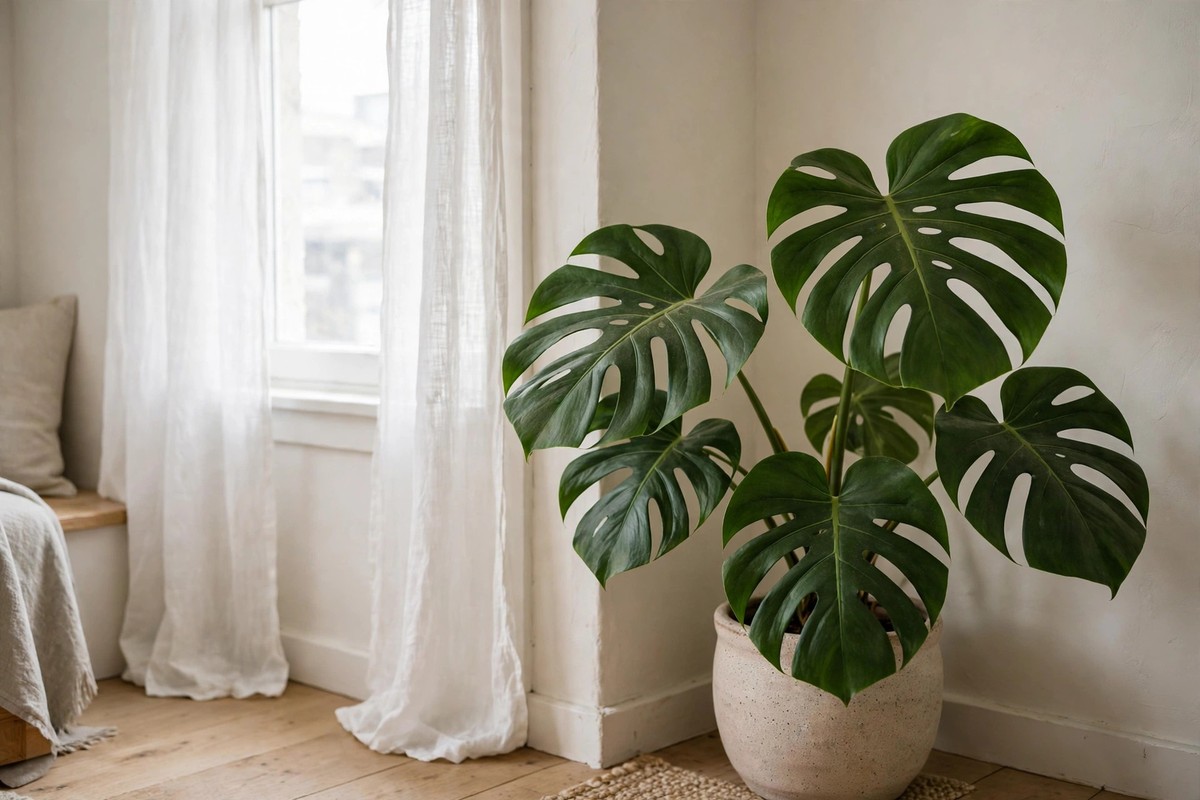
Bright, indirect light is the first of the 10 monstera care tips, because light sets the pace for new leaves. Place the plant near a bright window, but out of direct midday sun. An east-facing window suits it well, and a south-facing window works if a sheer curtain softens the light.
This tip suits small flats with one bright window and anyone who wants faster growth. Watch the leaves for a few weeks. Deep green leaves and steady new growth mean the light is right, while pale leaves or long, bare stems often mean the plant wants a brighter spot.
Pro tip: move the plant closer to the window in short steps over a week, rather than all at once. Mistake to avoid: placing it in a dark corner, where growth stalls and new leaves stay small and solid.
2. Water Only When the Top Soil Feels Dry
Water when the top two inches of soil feel dry, then water well until it runs from the drainage hole. This tip suits busy owners, because it replaces a fixed schedule with a simple check. In a small pot, soil dries faster, so check it once or twice a week.
Among the 10 monstera care tips, this one prevents the most common problem: wet roots. Empty the saucer after watering, so the pot never sits in water. In cooler months, the soil dries more slowly, so water less often and always check first.
Pro tip: use room-temperature water and water in the morning, so the leaves dry by night. Mistake to avoid: watering a little every day, which keeps the top wet while the roots stay dry or soggy below.
3. Choose a Pot That Fits the Plant
Choose a pot one size larger than the root ball, with a drainage hole and a saucer, as one of the 10 monstera care tips for small rooms. This tip suits renters and small rooms, because a pot that is too large holds wet soil and takes up floor space for no reason. A pot that is too small dries out fast and tips over as the plant grows.
Use a sturdy pot, since monstera leaves are heavy and the plant can lean. A wide, low pot suits a young plant on a table, while a taller pot suits a floor plant with a support. Repot in spring when roots fill the pot or water runs straight through.
Pro tip: set the pot inside a slightly larger cover pot for a tidy look, and lift it out to water. Mistake to avoid: repotting into a pot much larger than the old one, because the extra soil stays wet.
4. Use a Loose, Free-Draining Soil Mix
A loose mix, one of the 10 monstera care tips, lets air reach the roots and lets extra water drain away. Mix standard houseplant soil with bark chips and perlite in roughly equal parts, or buy a mix made for aroids. This tip suits anyone who has lost a plant to wet soil before.
The mix should feel light in your hand and hold its shape without packing down. When you water, it should drain within a minute or two, not sit in a puddle on top.
Pro tip: add a handful of bark to the mix when you repot, for extra air around the roots. Mistake to avoid: using dense garden soil or a mix with no drainage material, which can suffocate the roots.
5. Add a Moss Pole or Small Trellis
A moss pole or small trellis gives a monstera something to climb, which keeps it upright in a small space. Tie the main stem loosely to the pole with soft ties, and guide new growth upward as it appears. This tip suits small rooms, because a climbing plant takes up less floor space than a sprawling one.
Choose a pole that fits the pot and the height of your room. A short pole suits a table plant, while a taller pole suits a floor plant. Keep the pole lightly damp if you can, so aerial roots can grip it, but do not soak the soil to wet the pole.
Pro tip: add the support at repotting time, so you do not damage the roots later. Mistake to avoid: tying the stem too tightly, which can mark or pinch the stem as it thickens.
6. Prune to Keep It Compact
Prune in spring to keep a monstera compact and full, following the 10 monstera care tips for small spaces. Cut a long, bare stem just above a leaf node, using clean, sharp scissors. This tip suits small spaces, because it stops one stem from reaching across the room and encourages side growth.
You can also remove a yellow or damaged leaf at its base, which keeps the plant tidy. Cut stems can be placed in water to grow roots, which gives you a second plant for a shelf.
Pro tip: prune the longest stem first, then step back and look at the shape before cutting more. Mistake to avoid: pruning in the middle of a cold, dark spell, when the plant recovers slowly.
7. Clean the Leaves Often
Large monstera leaves collect dust, which blocks light and dulls their shine, so the 10 monstera care tips include regular cleaning. Wipe each leaf gently with a damp, soft cloth every few weeks. This tip suits homes near a busy road or with pets, where dust builds up fast.
Cleaning also gives you a chance to check the undersides of the leaves for pests or damage. Hold the leaf from below with one hand and wipe with the other, so you do not bend or tear it.
Pro tip: clean the leaves on the same day you water, so care stays in one simple routine. Mistake to avoid: using a rough cloth or scrubbing hard, which can scratch the leaf surface.
8. Feed Lightly in Spring and Summer
Feed lightly in spring and summer, when the plant is growing, and skip feeding in the cooler months. Use a balanced houseplant feed at half the strength on the label, once a month. This tip suits owners who want steady growth without pushing the plant too hard.
Feeding supports new leaves, but it cannot fix poor light or wet soil. If the plant is struggling, fix light and water first, then feed once new growth appears.
Pro tip: feed after watering, never on dry soil, so the roots are not burned. Mistake to avoid: feeding every week or at full strength, which can burn leaf edges and damage roots.
9. Watch Humidity Without Overdoing It
Monstera likes a little humidity, but it does not need a damp room, and the 10 monstera care tips keep humidity simple. Normal indoor air suits most plants, as long as the leaves are not next to a hot radiator or a cold draught. This tip suits small flats, where a humidifier may not fit or may not be wanted.
Group the monstera with one or two other plants to raise the air moisture a little around the leaves.
Pro tip: keep the plant away from radiators and air vents, which dry the air fast. Mistake to avoid: misting the leaves every day, which can leave water sitting on the leaves and invite spots.
10. Check the Roots and Repot in Spring
Check the roots each spring by lifting the plant gently from its pot. If roots circle the bottom or grow from the drainage hole, move up one pot size. This tip suits owners who want to catch problems early, before the plant stalls.
Among the 10 monstera care tips, repotting is the one to plan ahead. Use fresh mix, set the plant at the same depth, and water well after repotting. Give it a week or two in its usual spot to settle, and hold off feeding until new growth starts.
Pro tip: repot on a tray or old towel, so soil stays off the floor in a small room. Mistake to avoid: repotting in the middle of a cold spell, or moving up two pot sizes at once.
How to Follow 10 Monstera Care Tips at Home
The 10 monstera care tips in this guide work best as a weekly routine, not a one-off fix. Following the 10 monstera care tips, check the soil, turn the pot, and look at the leaves once a week. That short check catches dry soil, dust, and leaning stems before they become problems.

For more seasonal care ideas, see our guide to winter indoor plant care tips.
Mistakes That Hurt a Monstera in Small Spaces
The most common mistake is overwatering. For the 10 monstera care tips, the warning is the same each time: wet soil in a small pot rots roots fast. Yellow leaves, soft stems, and a musty smell often point to too much water, so let the soil dry, check the drainage hole, and hold back until the plant recovers.

The second mistake is too little light. A monstera in a dark corner grows slowly, and new leaves may stay small without splits. Move it to the brightest indirect spot you have for a few weeks, and watch for new growth before you change anything else.
The third mistake in the 10 monstera care tips is letting the plant sprawl. Without a pole or pruning, stems lean, leaves crowd, and the plant takes over a small room. Add support early, prune in spring, and guide new stems upward, so the plant grows tall instead of wide.
Where to Place a Monstera in a Small Space
Start with the brightest indirect spot you have, as the 10 monstera care tips suggest: a few feet from a bright window, beside a window with a sheer curtain, or across the room from a large window. That is the safest home for a monstera, and it keeps new leaves coming. Keep it away from radiators, cold draughts, and direct sun through glass.

Group it with a trailing plant so the corner looks layered, as a small houseplant display that shares the same light.
Think about daily life, too. A plant you see each day gets watered and checked, while one behind a door gets forgotten. Put your monstera where you will notice it, but leave space for its leaves to open. If you want more ideas for compact rooms, our small space garden ideas for winter show how to use the same bright spots.
Frequently Asked Questions About 10 Monstera Care Tips
Do 10 monstera care tips work for a small monstera in a pot?
Yes. The 10 monstera care tips in this guide suit a young plant in a small pot as well as a larger floor plant. Start with light, water, and a pot that fits, then add a short support as the plant grows taller.
How often should I water a monstera in a small space?
Water when the top two inches of soil feel dry, which may be once a week in warm months and less often in cooler months. In a small pot, soil dries faster, so check the soil rather than watering on the same day each week.
Why does my monstera have no splits in its leaves?
Young monstera leaves often have no splits, and splits appear as the plant matures in bright, indirect light. If an older plant still makes solid leaves, it may need a brighter spot, a larger pot, or more time to settle after repotting.
Can a monstera grow in a room with low light?
It can survive in low light for a while, but it will grow slowly and make small, solid leaves. For the best shape and growth, give it the brightest indirect light you have, and move it closer to the window in short steps.
When should I repot my monstera?
Repot in spring when roots fill the pot, grow from the drainage hole, or water runs straight through. Move up one pot size, use fresh loose mix, and water well after repotting.
Conclusion: Grow a Healthy Monstera in a Small Space
The 10 monstera care tips in this guide show that a monstera does not need a large room to thrive. Bright, indirect light, careful watering, loose soil, and a simple support are enough to keep it upright, full, and growing in a small space.
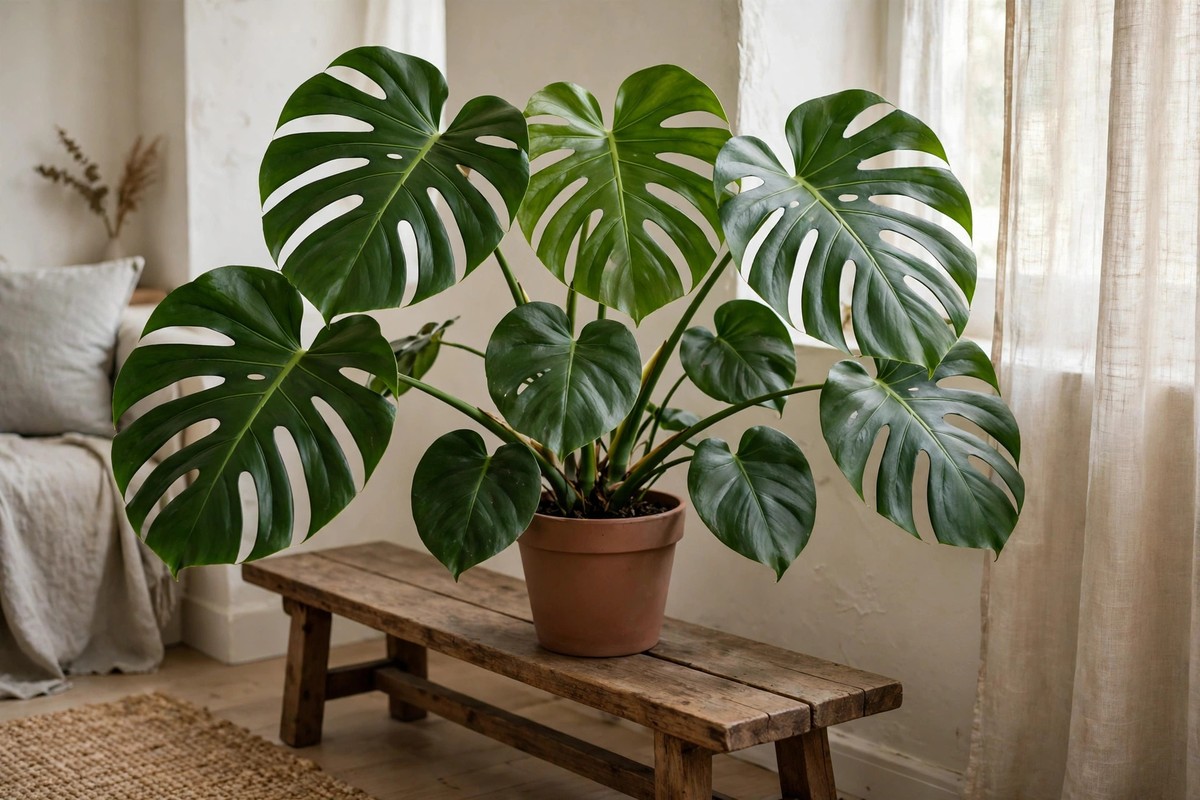
Start with light and water, then add pruning and a moss pole as the plant grows. Check the soil each week, clean the leaves now and then, and repot in spring when the roots need room. With those steady steps, your monstera can stay a favourite part of your home, so see our easy houseplants for low light for more plants that suit the same bright, sheltered spots.


2 comments