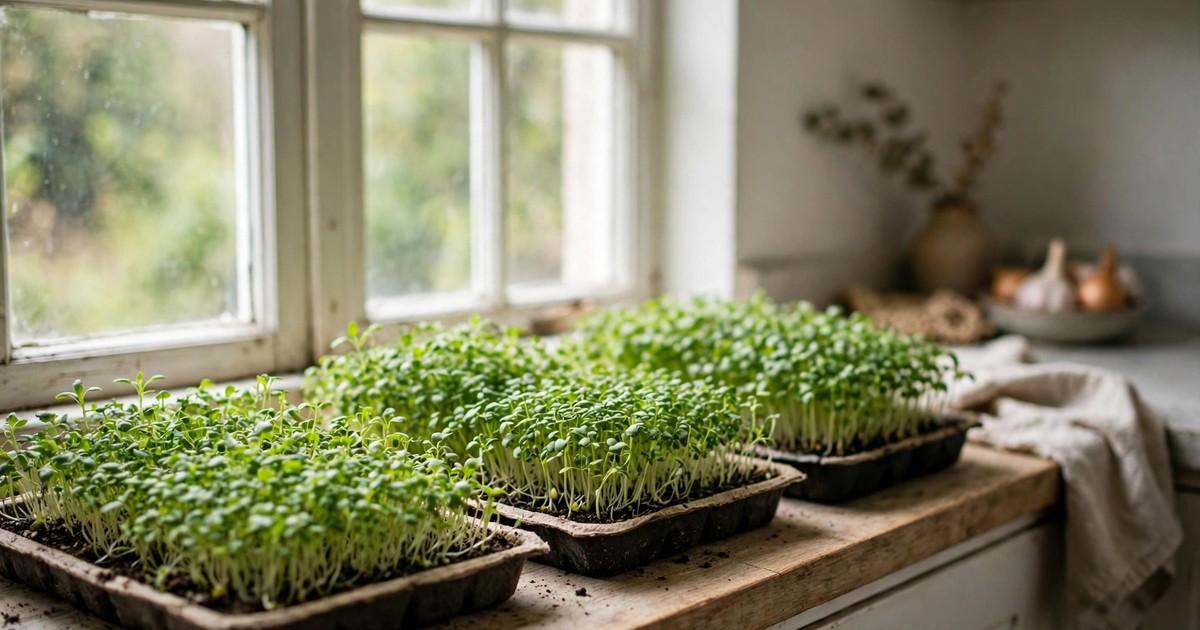
10 microgreens to grow indoors can give you fresh, tender leaves for salads, sandwiches, and garnishes in a week or two. Microgreens are young microgreen seedlings, cut when they are just a few inches tall, and they grow well in a shallow tray on a windowsill. You do not need a garden, a large pot, or much experience to grow them.
Many people think growing food indoors needs a lot of space, but microgreens prove the opposite. The 10 microgreens to grow indoors below fit a small flat, a kitchen bench, or a sunny shelf, and most need only a tray, some seed-starting mix, and water.
These 10 microgreens to grow indoors cover sowing, watering, light, and harvest in plain steps. Pick one or two greens to start, then try more once you see how fast they grow.
Table of Contents
How to Grow Microgreens Indoors
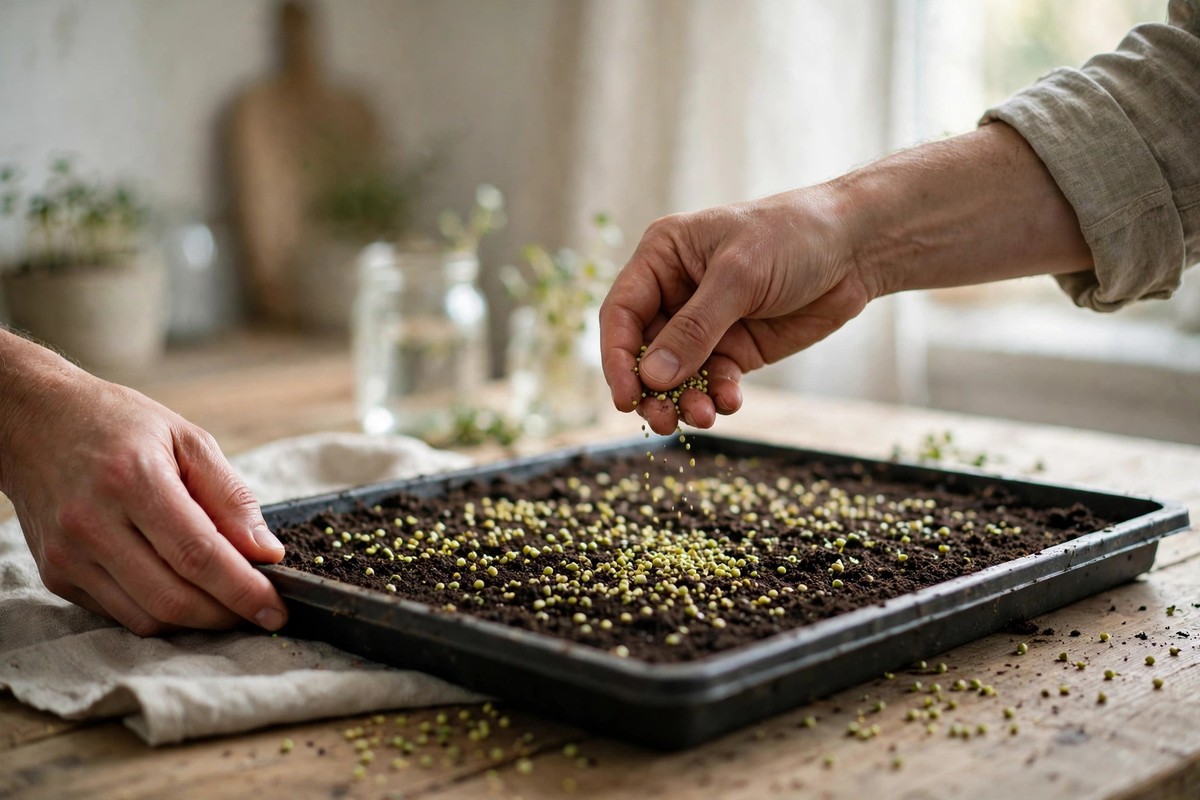
Microgreens grow in a shallow tray with drainage holes, filled with a few inches of fine seed-starting mix. Sow the seeds thickly on the surface, press them gently into the mix, and mist them with water. Cover the tray for a day or two, then move it to a bright spot once the seeds sprout.
Light matters most after sprouting. A bright windowsill suits most microgreens, and a few hours of sun helps them grow sturdy and green. If the light is weak, the stems can grow long and pale, so move the tray to your brightest spot.
Water from below when you can, by setting the tray in a shallow dish of water for a few minutes. That keeps the leaves dry and the roots damp. Harvest with clean scissors when the first true leaves appear, which is usually one to three weeks after sowing.
10 Microgreens to Grow Indoors
The 10 microgreens to grow indoors below are chosen for flavour, speed, and ease in a small space, and these 10 microgreens to grow indoors suit a first try. Some are mild, some are peppery, and some add colour to a plate. Read each one, then choose the flavours you will actually use in the kitchen.
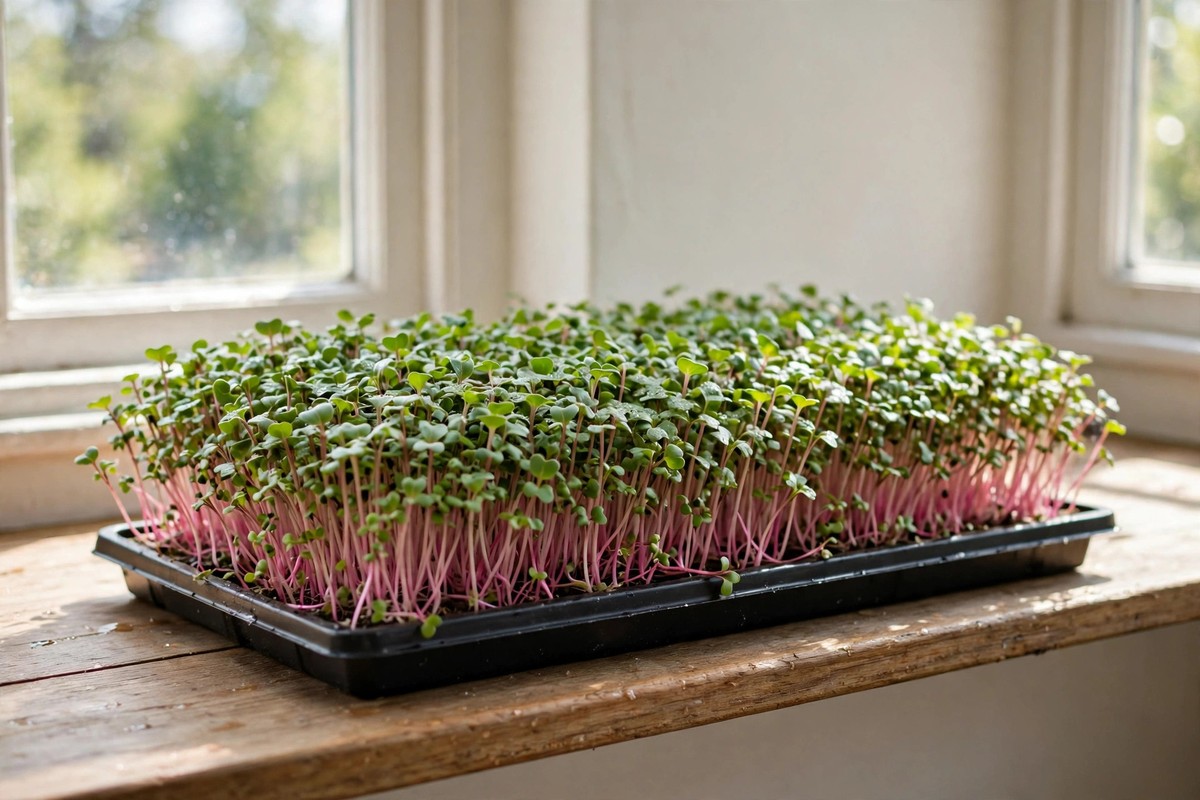
1. Radish Microgreens
Radish microgreens, one of the 10 microgreens to grow indoors, are fast, peppery, and easy to grow, with green leaves and pink stems. They suit beginners and small kitchens, because they sprout in a day or two and are ready to cut in about a week. Their sharp flavour suits salads, sandwiches, and tacos.
Sow the seeds thickly on damp mix, cover the tray for two days, then move it to a bright windowsill. Water from below, and keep the mix lightly moist, not wet. Cut just above the soil when the leaves are open and green.
Pro tip: sow a small tray every week, so you always have a fresh batch. Mistake to avoid: sowing too thickly, which can crowd the stems and trap damp air.
2. Broccoli Microgreens
Broccoli microgreens are mild, fresh, and tender, with small green leaves. They suit salads, smoothies, and sandwiches, and they are one of the easiest microgreens for a first try. They grow steadily in a bright spot and are ready in about ten days.
Among the 10 microgreens to grow indoors, broccoli is a good place to start. Sow the seeds on damp mix, press them in lightly, and mist them. Keep the tray in bright, indirect light, and water from below when the mix feels dry on top.
Pro tip: harvest in the morning, when the leaves are crisp. Mistake to avoid: letting the tray dry out completely, which can wilt the young stems.
3. Sunflower Microgreens
Sunflower microgreens, one of the 10 microgreens to grow indoors, are large, crunchy, and nutty, with thick stems and broad leaves. They suit sandwiches, salads, and snacking, and they feel more filling than smaller greens. They need a little more space than most, so use a wider tray.
Soak the seeds overnight, then sow them on damp mix and cover the tray for two or three days. Move the tray to a bright spot once the shoots appear, and water from below. Harvest when the leaves open and the stems are still tender.
Pro tip: use a tray at least two inches deep, so the roots have room. Mistake to avoid: leaving the cover on too long, which can make the stems pale and weak.
4. Pea Shoot Microgreens
Pea shoots are sweet, tender, and crisp, with curling tendrils and soft leaves. They suit stir-fries, salads, and sandwiches, and they are a favourite for a first indoor crop. They grow fast in a bright spot and are ready in about two weeks.
This is one of the sweetest 10 microgreens to grow indoors for a small kitchen. Soak the peas overnight, sow them on damp mix, and cover the tray for two days. Move it to a bright windowsill, water from below, and cut the shoots just above the soil.
Pro tip: harvest the top few inches, and some plants will regrow for a second cut. Mistake to avoid: sowing peas too deep, which can slow sprouting.
5. Kale Microgreens
Kale microgreens, one of the 10 microgreens to grow indoors, are mild, tender, and deep green, with a softer taste than full-grown kale. They suit salads, smoothies, and garnishes, and they grow well in a shallow tray. They are ready in about ten days in a bright spot.
Sow the seeds thickly on damp mix, press them in lightly, and mist them. Keep the tray in bright, indirect light, and water from below when the top feels dry. Cut just above the soil when the first true leaves appear.
Pro tip: mix kale with radish microgreens for colour and flavour. Mistake to avoid: keeping the tray in a dark corner, where the stems grow long and pale.
6. Mustard Microgreens
Mustard microgreens are peppery and bright, with green or purple leaves. They suit salads, sandwiches, and garnishes where you want a little heat. They grow fast, and they are ready in about a week in a bright spot.
Among the 10 microgreens to grow indoors, mustard is one of the fastest. Sow the seeds on damp mix, cover the tray for a day, then move it to a bright windowsill. Water from below, and keep the mix lightly moist, not wet.
Pro tip: sow a small amount at first, to test how much heat you like. Mistake to avoid: letting the tray stay wet, which can invite mould on the seeds.
7. Arugula Microgreens
Arugula microgreens, one of the 10 microgreens to grow indoors, are peppery and nutty, with small, lobed leaves. They suit salads, pizzas, and sandwiches, and they add a fresh bite to a plate. They grow well in a shallow tray and are ready in about a week.
Sow the seeds thickly on damp mix, press them in lightly, and mist them. Keep the tray in bright, indirect light, and water from below when the mix feels dry. Cut just above the soil when the leaves are open and green.
Pro tip: harvest young, while the flavour is mild and fresh. Mistake to avoid: waiting too long to cut, which can make the leaves tough and bitter.
8. Beet Microgreens
Beet microgreens, one of the 10 microgreens to grow indoors, are earthy and mild, with deep red stems and green leaves. They suit salads and garnishes, where their colour stands out. They grow a little more slowly than radish or mustard, and they are ready in about two weeks.
Soak the seeds for a few hours, then sow them on damp mix and cover the tray for two days. Move the tray to a bright spot once the shoots appear, and water from below. Cut just above the soil when the leaves open.
Pro tip: use a tray with good drainage, so the soil does not stay wet. Mistake to avoid: sowing too thickly, which can crowd the stems and slow growth.
9. Cilantro Microgreens
Cilantro microgreens are fresh and citrusy, with soft, feathery leaves. They suit tacos, salads, and noodle dishes, and they are a good choice if you cook with cilantro often. They grow more slowly than most, and they are ready in about two to three weeks.
This is one of the most useful 10 microgreens to grow indoors for a kitchen garden. Sow the seeds on damp mix, cover the tray for a few days, then move it to a bright windowsill. Water from below, and keep the mix lightly moist.
Pro tip: crush the seed husks gently before sowing, so they sprout more evenly. Mistake to avoid: keeping the tray in hot, direct sun, which can dry the mix fast.
10. Basil Microgreens
Basil microgreens, one of the 10 microgreens to grow indoors, are sweet and fragrant, with small green leaves. They suit salads, pasta, and sandwiches, and they bring a familiar herb flavour to a plate. They grow well in a warm, bright spot and are ready in about two weeks.
Sow the seeds on damp mix, press them in lightly, and mist them. Keep the tray warm and bright, and water from below when the top feels dry. Cut just above the soil when the first true leaves appear, and use them fresh.
Pro tip: grow basil microgreens in a warm spot, such as a kitchen windowsill. Mistake to avoid: sowing in a cold room, where the seeds sprout slowly or not at all.
How to Follow 10 Microgreens to Grow Indoors at Home
The 10 microgreens to grow indoors in this guide work best with a simple weekly routine. Sow one tray, water it from below, and move it to your brightest spot. While it grows, sow the next tray, so you always have a fresh batch coming.
Start with a fast green, such as radish or mustard, then add a slower one, such as pea shoots or cilantro. Use clean trays and fresh mix each time, and wash your hands and scissors before you harvest. That short routine keeps the trays clean and the greens fresh.
Keep the trays where you will see them each day, so watering becomes a habit. For more ideas for growing food indoors, see our guide to indoor herb garden ideas for winter.
Mistakes That Hurt Microgreens
The most common mistake is overwatering. For the 10 microgreens to grow indoors, the warning is the same each time: wet soil and damp leaves can invite mould, especially in a covered tray. Water from below, keep the leaves dry, and let the mix dry a little between waterings.
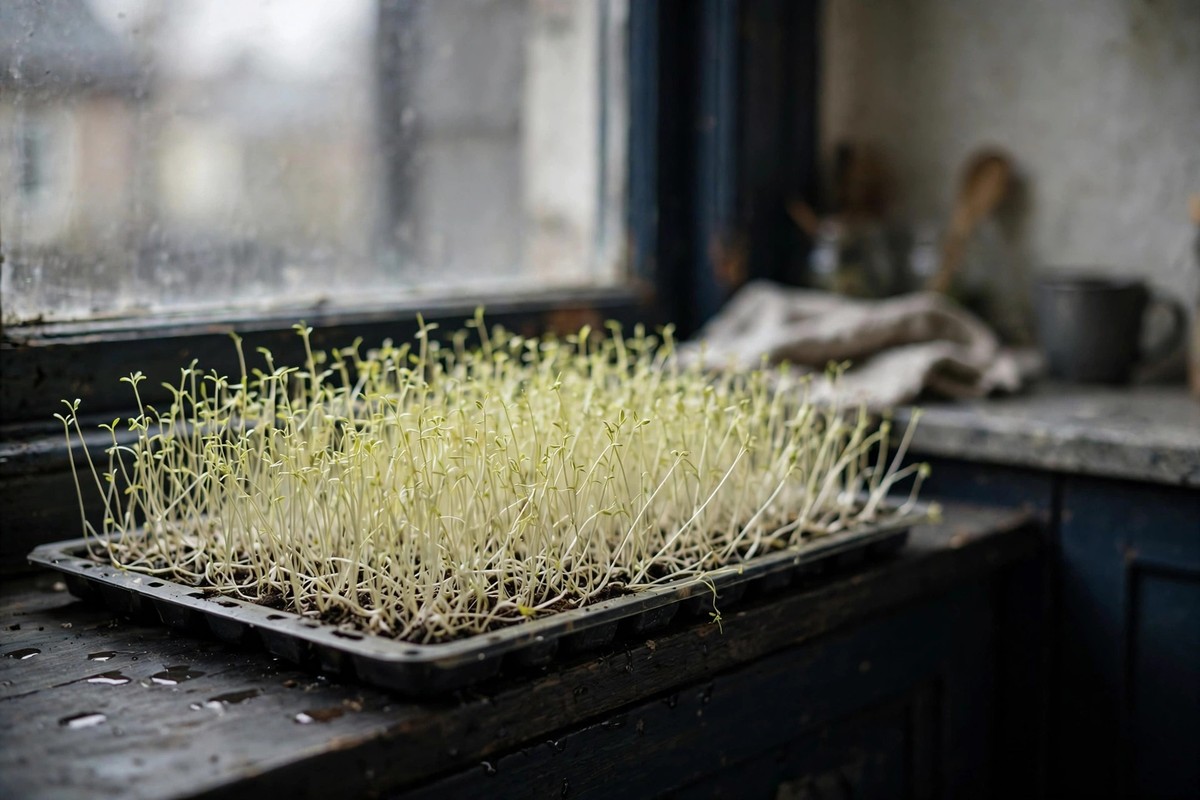
The second mistake is too little light. Microgreens in a dark spot grow long, pale, and weak, and they fall over easily. Move the tray to your brightest windowsill, and turn it every day or two, so the stems grow straight.
The third mistake is waiting too long to harvest. Microgreens taste best when they are young and tender, and they can turn tough or bitter if left for weeks. Cut them when the first true leaves appear, and sow a new tray the same day.
Where to Grow Microgreens in a Small Space
Start with the brightest windowsill you have, or a shelf near a bright window. That is the safest home for most microgreens, and it keeps growth fast and sturdy. Keep trays away from radiators and cold draughts, which can dry the mix or chill the seeds.
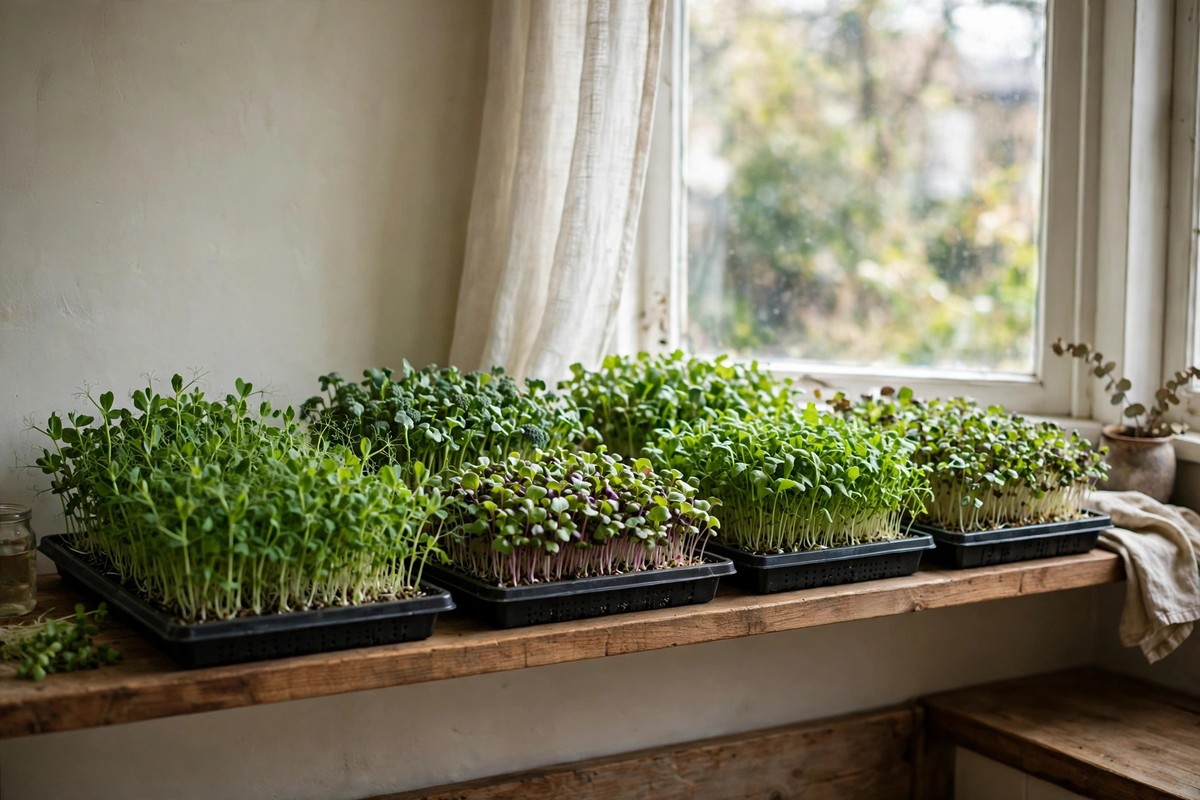
Use a shelf or a small rack to hold several trays at once. A kitchen bench suits herbs you use daily, while a spare shelf suits a weekly sowing routine. Group trays together as a small herb garden, so they share light and are easy to water.
Think about daily life, too. A tray you see each morning gets watered, while one hidden in a cupboard gets forgotten. Put your trays where you will notice them, and keep a spray bottle nearby. If you also grow herbs in pots, our herbs to grow indoors in winter show how to use the same bright spots.
Frequently Asked Questions About 10 Microgreens to Grow Indoors
Do 10 microgreens to grow indoors need soil?
Yes, most of the 10 microgreens to grow indoors in this guide grow best in a shallow layer of fine seed-starting mix. Some can grow on a damp mat, but soil gives the roots room and makes watering easier for beginners.
How long do microgreens take to grow?
Most microgreens are ready in one to three weeks. Fast types, such as radish, mustard, and arugula, are ready in about a week, while slower types, such as pea shoots, cilantro, and basil, take two to three weeks.
How often should I water microgreens?
Water from below when the top of the mix feels dry, which is often once a day for a small tray in a bright spot. Keep the leaves dry, and do not let the tray sit in water for hours.
Can I regrow microgreens after cutting them?
Most microgreens do not regrow well after cutting, because they are cut at the base. Pea shoots are an exception, and they can sometimes give a second cut. For most types, it is easier to sow a new tray.
What is the best tray for growing microgreens indoors?
A shallow tray with drainage holes, about one to two inches deep, suits most microgreens. Use a second tray underneath to catch water, and choose a tray that fits your windowsill or shelf.
Conclusion: Grow Fresh Microgreens in a Small Space
The 10 microgreens to grow indoors in this guide show that fresh greens do not need a garden or a large room. A shallow tray, some seeds, and a bright windowsill are enough to grow radish, broccoli, pea shoots, and more in a week or two.
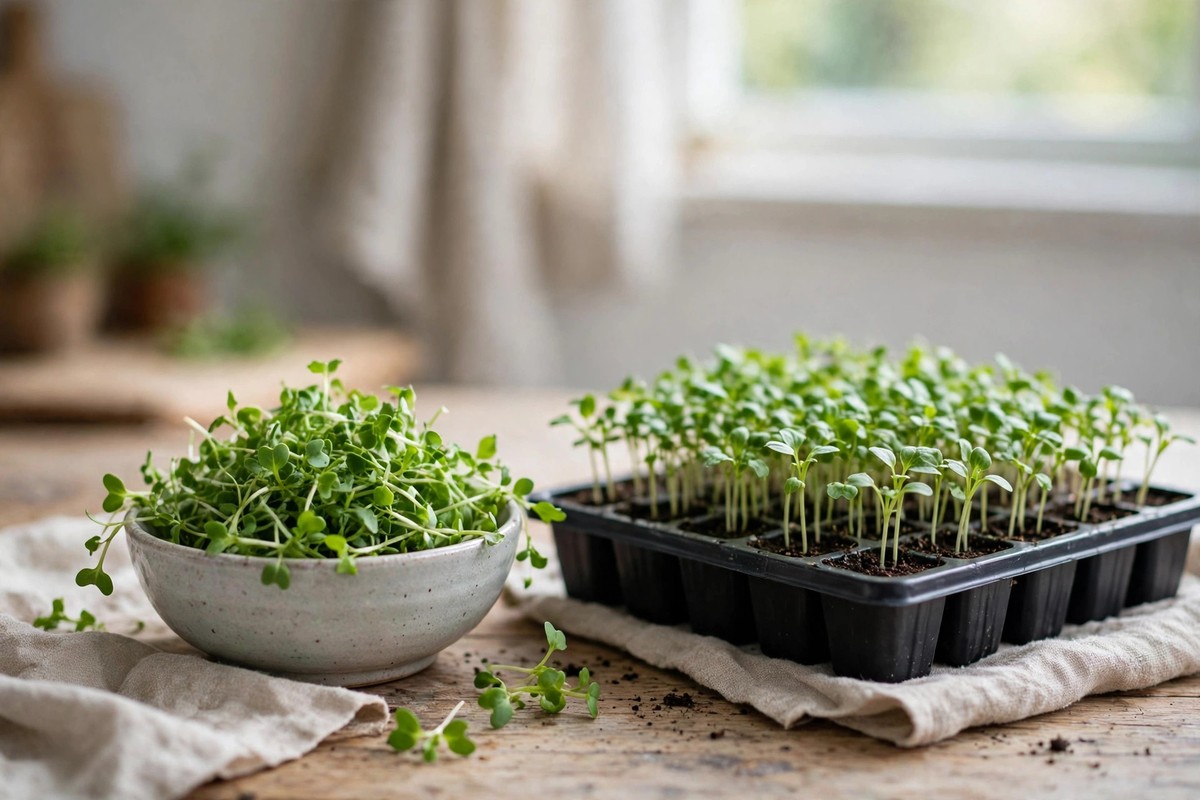
Start with one fast green, such as radish or mustard, then add a second tray each week. Water from below, give the trays bright light, and cut the greens when they are young and tender. With that simple routine, your small space can give you fresh leaves for salads and sandwiches, so see our winter indoor plant care tips for more ideas for growing indoors.


2 comments