
10 herbs to grow indoors in winter can keep fresh flavor close at hand when the garden outside is resting. A sunny windowsill, a few small pots, and steady care are often enough to start. This guide covers ten reliable choices, with clear growing notes for each one.
Winter herbs do best when you match each plant to the light and space you have. Some need a bright sill, while others manage with a grow light and a cooler spot. You will find practical help here for watering, feeding, and harvesting without fuss.
Use this list to pick two or three herbs you cook with most, then add more as you learn their habits. Small starts are easier to keep healthy through the cold months. By spring, you will know which herbs earn a permanent place in your kitchen.
Table of Contents
Why Grow Herbs Indoors in Winter?
A winter herb garden saves trips to the store and keeps flavor fresh for everyday cooking. Fresh leaves also make it easy to season food lightly, a little at a time. For many cooks, that simple habit is reason enough to keep pots by the window.
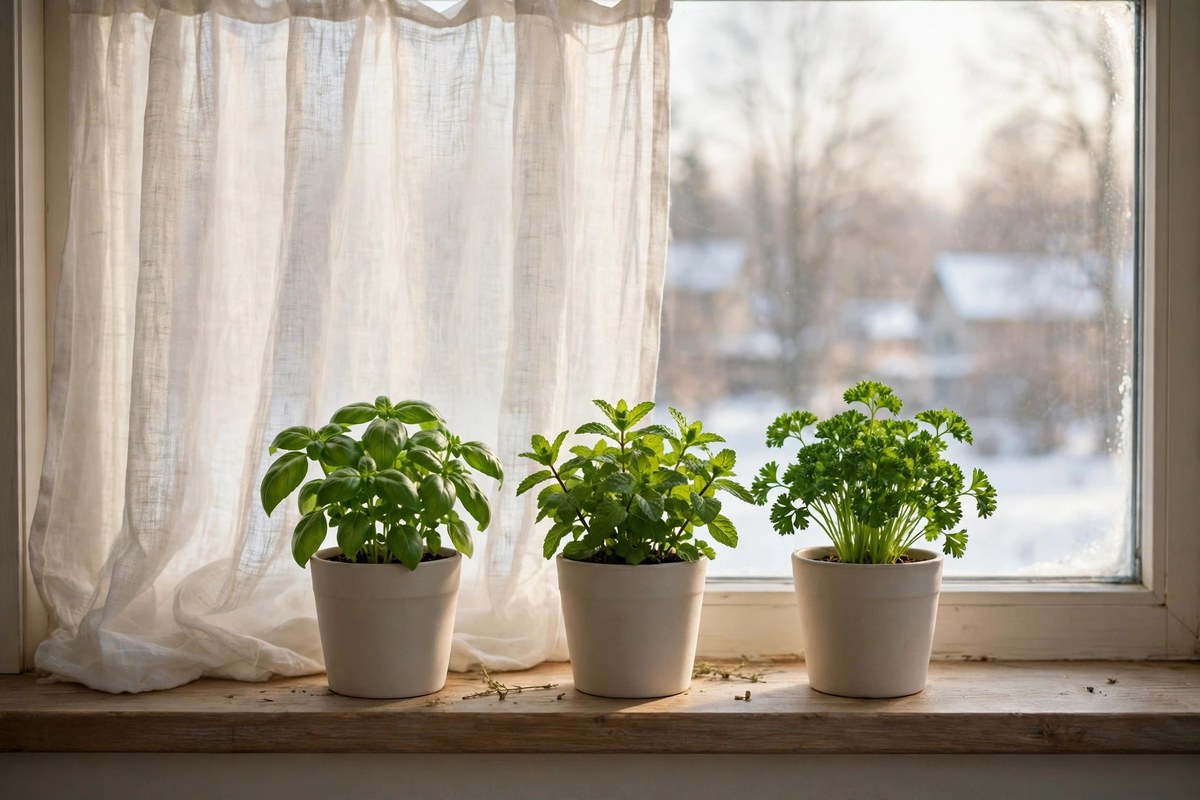
The 10 herbs to grow indoors in winter in this guide were chosen for steady growth in pots and for kitchen use. They do not need a greenhouse or special skill to do well. With bright light and careful watering, most will give you leaves to pick for weeks.
If you want more layout ideas, these indoor herb garden ideas for winter can help you plan a small sill or shelf setup. Start with the space you have, not the space you wish you had. A tidy row of three pots often works better than a crowded shelf.
A small herb garden brings green life into a quiet winter room. Its scent and color can lift a kitchen in the darker months. Choose plants you enjoy touching, smelling, and using, and care becomes part of the routine.
10 Herbs to Grow Indoors in Winter
The 10 herbs to grow indoors in winter below cover soft leaves for salads, woody stems for roasts, and gentle flavors for teas. Each entry explains what the herb is, who it suits, how to grow it, and what to watch for. Read through the list, then pick the herbs that fit your cooking and your light.

1. Basil
Among the 10 herbs to grow indoors in winter, basil is a warm-loving herb with soft, sweet leaves for pasta, salads, and sandwiches. It suits cooks who use it often and can give it a warm, bright spot. Pick a compact variety if your sill is small.
Grow basil in a pot with drainage holes and light, free-draining potting mix. Give it six hours of bright light or a grow light, and keep the soil lightly moist. Pinch the top leaves often to keep the plant bushy.
Pro tip: harvest from the top down so side shoots fill in. Mistake to avoid: letting basil sit in cold air near a drafty window, which can slow growth and mark the leaves.
2. Mint
Mint is a fast-growing herb with cool, fresh leaves for teas, desserts, and salads. It suits beginners because it grows quickly and forgives a missed watering now and then. Give it its own pot, since it spreads fast.
Mint earns its place among the 10 herbs to grow indoors in winter because it stays productive with simple care. Grow it in moist potting mix with bright light and room for new shoots. Pinch the tips often to keep it full instead of leggy.
Pro tip: pick leaves in the morning, when their scent is strongest. Mistake to avoid: planting mint with other herbs, since it can crowd them out in a shared pot.
3. Parsley
Parsley is a mild, fresh herb with flat or curly leaves for soups, salads, and garnishes. It suits cooks who want a steady supply for everyday meals. It grows slowly at first, then picks up once it settles in.
Grow parsley in a deep pot, since it forms a long root. Give it bright light, even moisture, and room for leaves to spread. It is one of the 10 herbs to grow indoors in winter that copes well with cooler indoor spots.
Pro tip: soak seeds overnight before sowing to help them start faster. Mistake to avoid: letting the soil dry out fully, which can turn leaf edges brown.
4. Chives
Chives are a slim, onion-flavored herb with hollow green leaves for eggs, potatoes, and salads. They suit cooks who want a cut-and-come-again herb with little fuss. A small pot can supply snips for weeks.
Grow chives in bright light with moist, well-drained potting mix. Cut leaves from the outside, leaving the center to regrow. Among the 10 herbs to grow indoors in winter, chives are a good choice for a cooler windowsill.
Pro tip: snip with clean scissors instead of pulling leaves by hand. Mistake to avoid: letting the plant flower indoors, which can make the leaves tougher.
5. Cilantro
Cilantro is a bright, citrusy herb with soft leaves for tacos, curries, and salads. It suits cooks who use it fresh and often, since it grows fast and is best picked young. Sow small batches so you always have fresh leaves.
Grow cilantro in a deep pot with light, well-drained mix and bright, cool light. Keep the soil evenly moist, and harvest the outer leaves first. It is one of the 10 herbs to grow indoors in winter that dislikes hot, dry air.
Pro tip: sow a new pot every few weeks for a steady supply. Mistake to avoid: letting cilantro bolt in a warm room, which turns the flavor sharp.
6. Thyme
Thyme is a low, woody herb with small, savory leaves for roasts, soups, and stews. It suits cooks who want a tough herb that needs little water. Its scent is strong, so a little goes a long way.
Grow thyme in a small pot with gritty, well-drained mix and full, bright light. Water only when the mix feels dry, and let it drain fully. As one of the 10 herbs to grow indoors in winter, thyme copes well with drier indoor air.
Pro tip: trim lightly after picking to keep the plant compact. Mistake to avoid: keeping thyme in wet soil, which can rot the roots.
7. Rosemary
Rosemary is a woody herb with needle-like leaves for roasts, breads, and potatoes. It suits cooks who want a long-lived plant with a strong, pine-like scent. One plant can last for years with good care.
Grow rosemary in a pot with sandy, well-drained mix and as much bright light as you can give it. Water sparingly, and let the mix dry between waterings. Rosemary belongs among the 10 herbs to grow indoors in winter for cooks with a sunny sill.
Pro tip: rotate the pot so all sides get light and growth stays even. Mistake to avoid: overwatering in winter, which is the most common cause of trouble.
8. Oregano
Oregano is a warm, savory herb with small leaves for pizza, pasta, and tomato dishes. It suits cooks who like bold flavor from a small plant. It grows as a low mound and spreads slowly in a pot.
Grow oregano in bright light with light, well-drained potting mix. Water when the top of the mix feels dry, and pinch the tips to keep it bushy. It is one of the 10 herbs to grow indoors in winter that prefers a drier pot.
Pro tip: harvest before the plant flowers for the fullest flavor. Mistake to avoid: feeding oregano too often, which can push soft growth with less flavor.
9. Dill
Dill is a feathery herb with a soft, anise-like flavor for fish, pickles, and salads. It suits cooks who want a light, fresh herb for spring-style dishes in winter. It grows tall and thin, so give it a stable pot.
Grow dill in a deep pot with light potting mix and bright light. Sow seeds where they will grow, since dill dislikes being moved. Dill is one of the 10 herbs to grow indoors in winter that does best from seed sown in place.
Pro tip: support tall stems with a small stake if they lean toward the light. Mistake to avoid: sowing dill too thickly, which leaves seedlings crowded and weak.
10. Sage
Sage is a soft, gray-green herb with earthy leaves for stuffing, squash, and roast meats. It suits cooks who use it in small amounts for rich winter dishes. A little sage adds warmth without taking over the dish.
Grow sage in a pot with well-drained mix and bright light. Water only when the mix feels dry, and give the plant room for air to move. Sage rounds out the 10 herbs to grow indoors in winter with a steady, low-maintenance habit.
Pro tip: pick mature leaves from the lower stems first. Mistake to avoid: keeping sage in damp, still air, which can lead to mildew on the leaves.
How to Set Up Your Indoor Winter Herb Garden
Start with clean pots that have drainage holes and saucers to catch extra water. Use fresh potting mix, not garden soil, which can stay too wet indoors. A tray under the pots helps keep the sill tidy and dry.
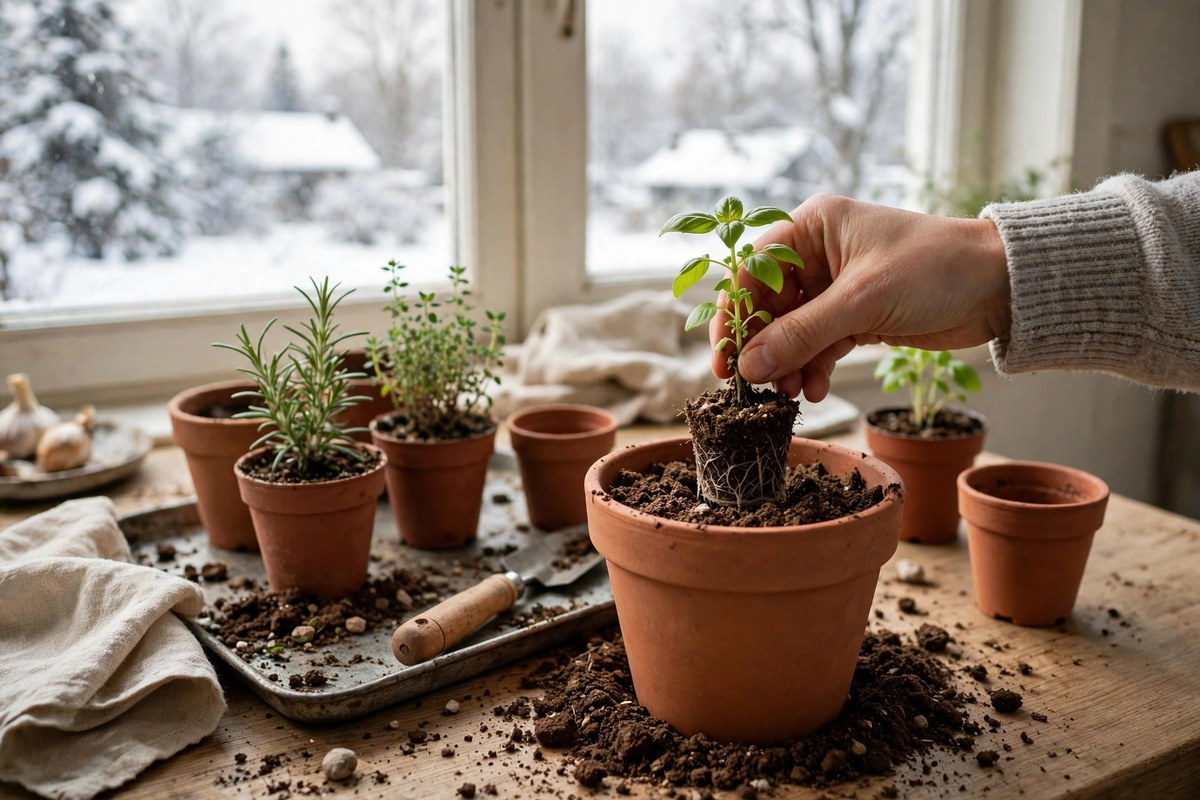
Place herbs where they get the brightest light you have, usually a south-facing window. Treat each herb as a houseplant that needs light, water, and air, not as a garden plant moved inside. For the 10 herbs to grow indoors in winter, a bright sill plus a small grow light on dark days works well.
Keep pots away from radiators and cold drafts, and leave space between them for air to move. Good air flow helps leaves dry after watering and lowers the risk of mildew. A small fan on a low setting can help in a still room.
If your other plants also need winter care, these winter indoor plant care tips cover light, humidity, and watering in one place. Apply the same steady routine to your herbs. Small, regular checks beat big fixes later.
Watering and Light for 10 Herbs to Grow Indoors in Winter
The 10 herbs to grow indoors in winter need steady light more than they need rich feeding. Most do best with four to six hours of bright light each day, with a grow light to fill the gaps. Turn pots a quarter turn every few days so growth stays even.
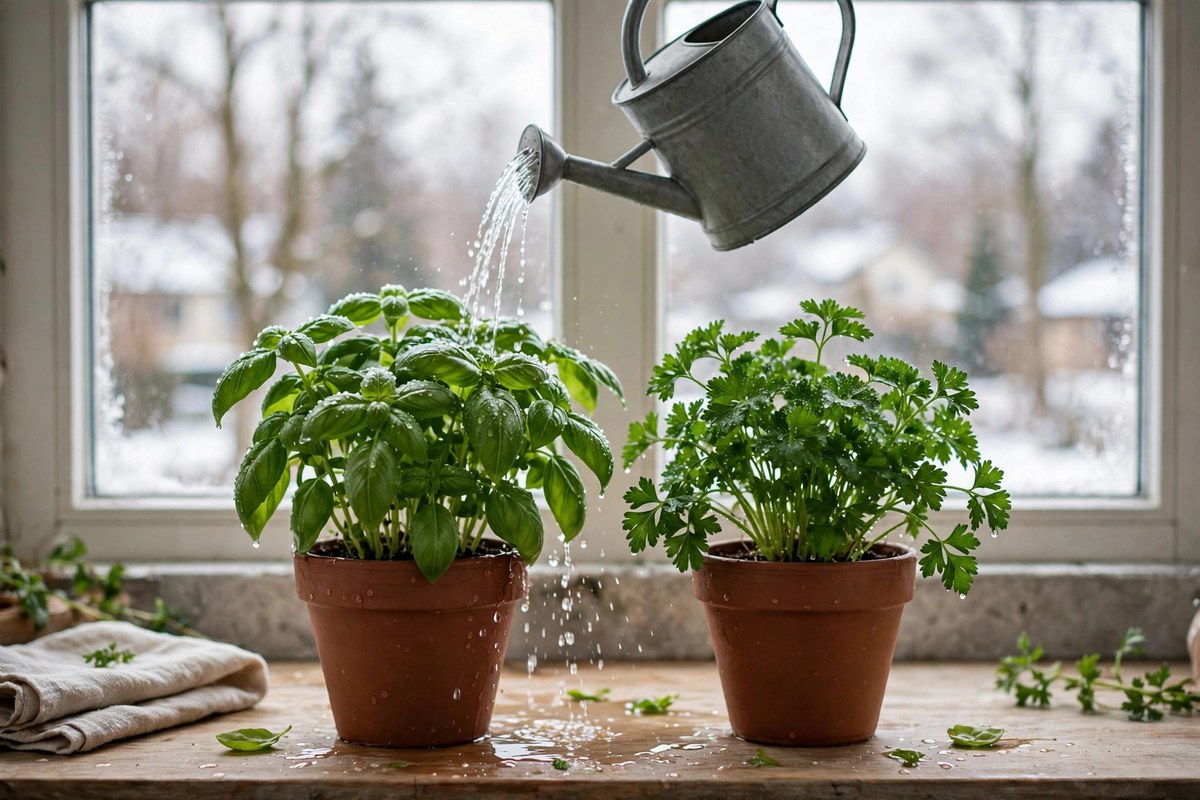
Water when the top inch of mix feels dry, and let extra water drain away. Empty saucers after watering so roots do not sit in water. In winter, most herbs need less water than they did outdoors in summer.
If your window is dim, these easy houseplants for low light show which plants cope with less sun. Herbs still need more light than most of them, so use a grow light when the sill stays dark. Place the light close enough to help, but not so close that leaves scorch.
Feed lightly, if at all, during winter. A weak liquid feed once a month is enough for most herbs in pots. Too much feed can push soft growth that tastes weak and flops over.
Common Mistakes to Avoid
Many winter herb problems come from too much water, too little light, or pots that are too large. Start with the basics, and fix one thing at a time. Healthy herbs usually recover once the cause is clear.
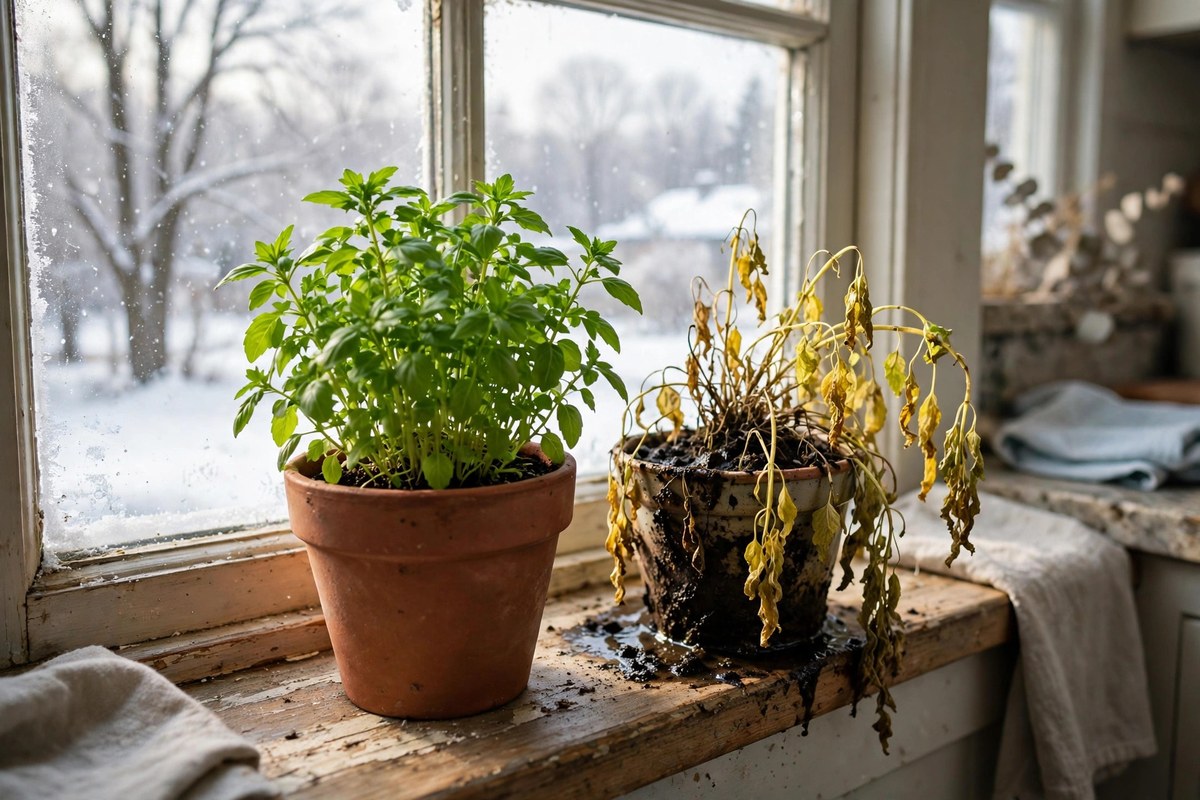
Overwatering is the most common mistake, and it shows as yellow leaves and soft stems. Check the soil before you water, and use pots with drainage. If the mix stays wet for days, let it dry out and water less often.
Another mistake is harvesting too much at once from a young plant. Take only a few leaves, and let the plant regrow before you pick again. For the 10 herbs to grow indoors in winter, light picking keeps plants strong through the season.
Crowding pots together can also cause trouble, since leaves stay damp and air cannot move. Give each pot room, and trim plants that touch their neighbors. A little space now saves pruning later.
Frequently Asked Questions
Which of the 10 herbs to grow indoors in winter is easiest for beginners?
Mint, chives, and parsley are good first choices because they grow steadily and forgive small mistakes. Start with one or two, and learn their watering needs before you add more. A bright sill and a pot with drainage will help all three.
How much light do indoor winter herbs need?
Most need four to six hours of bright light each day. A south-facing window is often best, and a small grow light helps on short, gray days. If stems stretch and leaves stay pale, move the plant closer to the light.
How often should I water herbs indoors in winter?
For the 10 herbs to grow indoors in winter, water when the top inch of potting mix feels dry, then let the pot drain fully. Most herbs need water less often in winter than in summer. Always empty the saucer so roots do not sit in water.
Can I grow herbs indoors in winter without a grow light?
Yes, if you have a bright, sunny window and choose herbs that cope with less light, such as mint, parsley, and chives. Growth may be slower, and leaves may be smaller. A grow light still helps, but it is not always required.
When can I start harvesting my indoor herbs?
The 10 herbs to grow indoors in winter are ready to pick once the plant has several sets of healthy leaves and looks settled in its pot. Then pick a few leaves at a time, and leave enough growth for the plant to recover. Light, regular picking often keeps herbs bushy.
Conclusion
The 10 herbs to grow indoors in winter make fresh cooking possible even when the garden is quiet. Start small, give them light and careful water, and pick a little at a time. Your kitchen will stay green, fragrant, and useful all season.
Pick your first two or three herbs today, and set them where you will see them each morning. Simple care, done often, is what keeps winter herbs going. Enjoy the fresh leaves, and let the habit grow with you.


