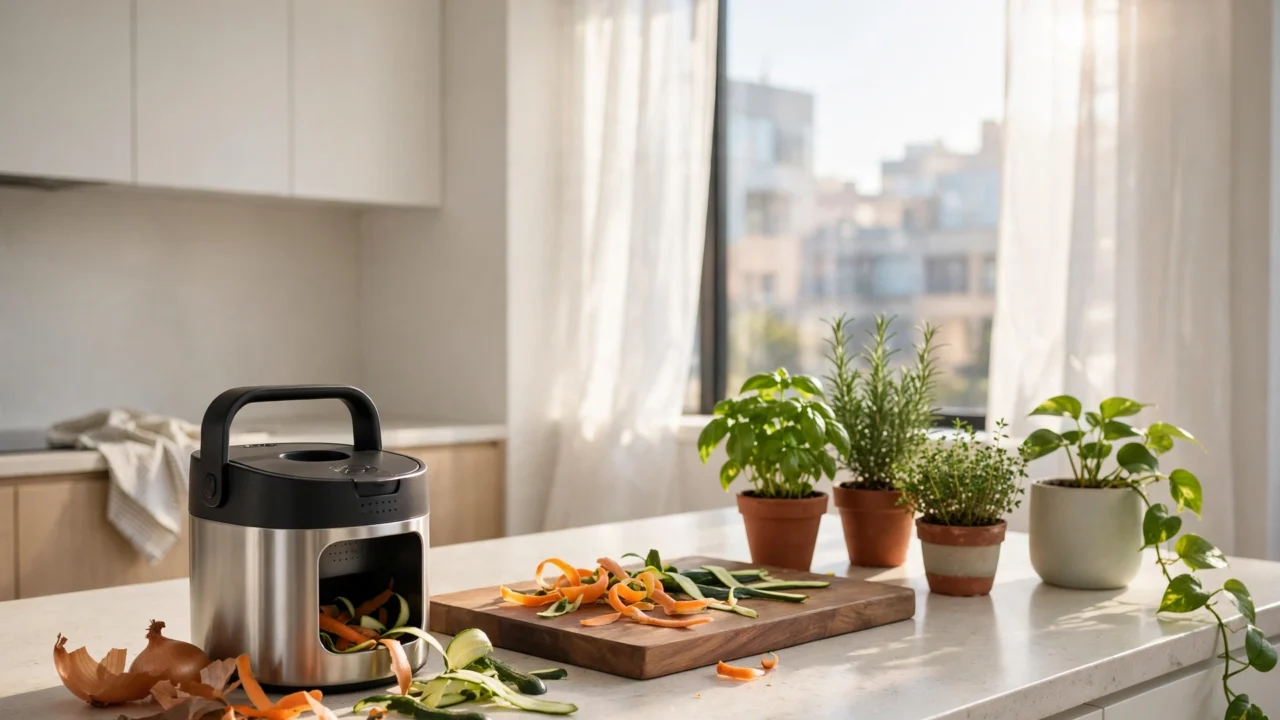
These 10 small space composting ideas turn kitchen scraps into rich food for your plants, even if you have no yard, no balcony, and barely a spare shelf. Composting sounds like a big-backyard job, but modern versions fit in a kitchen cabinet, under a sink, or on a small balcony.
A worm bin, a sealed bucket, or a small tumbler can handle a household’s peels, coffee grounds, and eggshells without smell or mess, and the finished compost feeds your plants for free. These 10 small space composting ideas prove you can start with whatever space you already have.
In This Article
Table of Contents
Why Small Space Composting Works
Compost is organic matter broken down into dark, crumbly material full of nutrients and helpful microbes. It is the same process that happens on a forest floor, just guided and sped up in a bin. Nothing about it needs a big garden.
The 10 small space composting ideas in this guide all work because they match the system to the space. A worm bin suits a kitchen. A sealed bucket suits a pantry shelf. A small tumbler suits a balcony. When the system fits, it stays out of the way and gets used every day, which is why these 10 small space composting ideas work in real apartments.
Composting at home also cuts what goes in your trash. Food scraps in landfill rot without oxygen and release methane. The same scraps in a bin become food for your plants instead, and the compost you make feeds everything from herbs to trays of greens — growing microgreens indoors is one of the fastest ways to use a fresh batch, and it is one more reason the 10 small space composting ideas pay off.
Winter is a good time to start. Indoor systems work all year because your home stays warm.
10 Small Space Composting Ideas
Every idea below fits in an apartment, a small house, or a balcony. You only need one to start, and you can always add a second system later. The 10 small space composting ideas are ordered from the easiest indoor setups to shared options that need no bin at all.
1. Start a Worm Bin Under the Sink
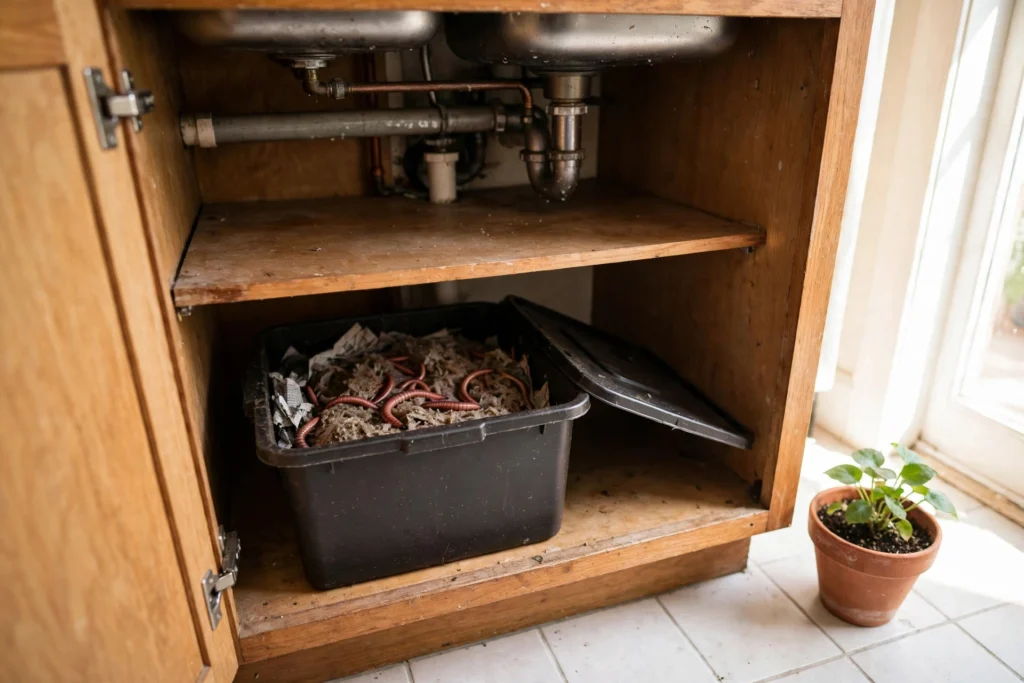
A worm bin is the classic small-space composter, and the easiest of the 10 small space composting ideas to set up. Red wiggler worms live in a shallow, lidded bin of damp shredded newspaper or coconut coir, and eat vegetable scraps, coffee grounds, and eggshells.
Setup takes about half an hour: add damp bedding and the worms to a lidded tote, and cover the surface with newspaper. Feed small handfuls every few days, buried under the bedding. Worm composting takes two to three months to give you a first harvest of castings.
Pro tip: Start with about half a pound of red wigglers, and feed lightly for the first month.
2. Try a Bokashi Bucket in the Pantry
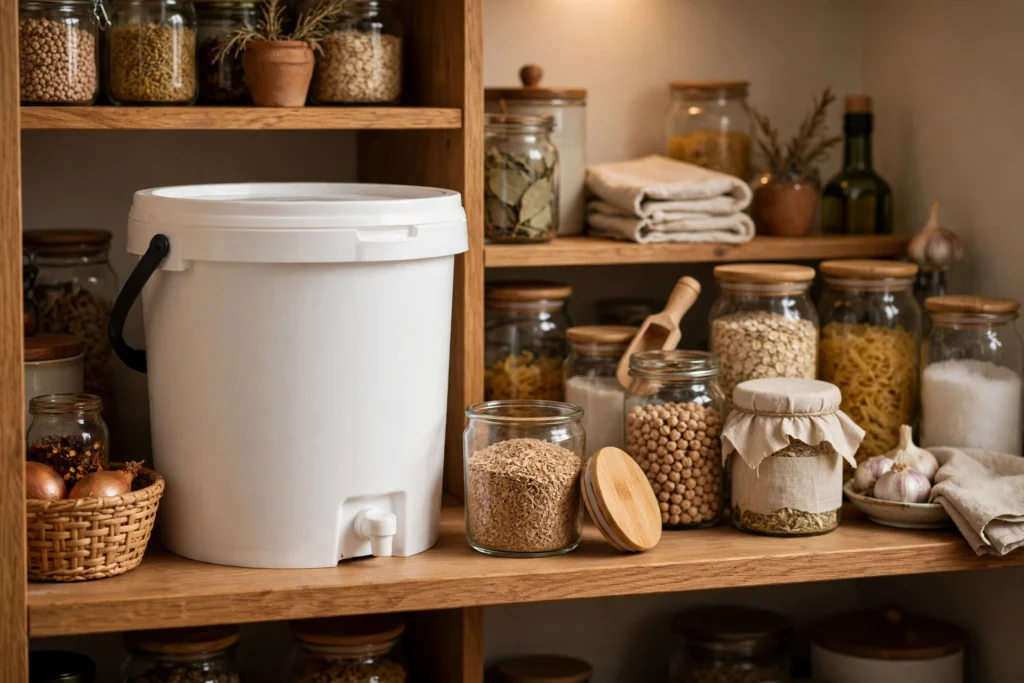
Bokashi is fermentation, not rotting. You layer scraps in a sealed bucket with microbe-rich bran, press each layer down, and seal the lid. The airtight seal means no smell, and the bucket fits on a pantry shelf or in a cabinet.
This is the one indoor system that handles all food waste, including meat, dairy, and cooked leftovers. Drain the liquid every couple of days as a diluted plant feed. The fermented scraps then need two weeks buried in soil to become finished compost, which makes bokashi one of the most complete of the 10 small space composting ideas.
Mistake to avoid: Leaving the bucket open. Air lets the wrong microbes in and brings back the smell.
3. Use a Countertop Electric Composter
A countertop electric composter dries and grinds scraps into a dry, crumbly material in a few hours. It sits on the counter, runs quietly, and takes fruit peels, coffee grounds, and leftovers with no fuss. For busy households, it is the lowest-effort option of all the 10 small space composting ideas.
Know what you are buying. The output is dried, sterile material, not living compost. It still needs two weeks curing in soil before plants can use it, and works best mixed into potting soil. Units usually cost a few hundred dollars, use electricity each cycle, and need new carbon filters.
Pro tip: Run it overnight and empty it in the morning.
4. Freeze Your Scraps Until Bin Day
Of the 10 small space composting ideas, this one needs no bin at all. Keep a lidded container in the freezer and drop in peels, cores, coffee grounds, and eggshells as you cook. Frozen scraps cannot smell or attract flies.
This idea shines when paired with a drop-off point. Empty the frozen bag into a community compost bin, a farmers market collection, or a curbside organics cart once a week. It also works as a holding system for a worm bin: collect scraps all week, thaw, and feed in one go.
5. Put a Small Tumbler on the Balcony
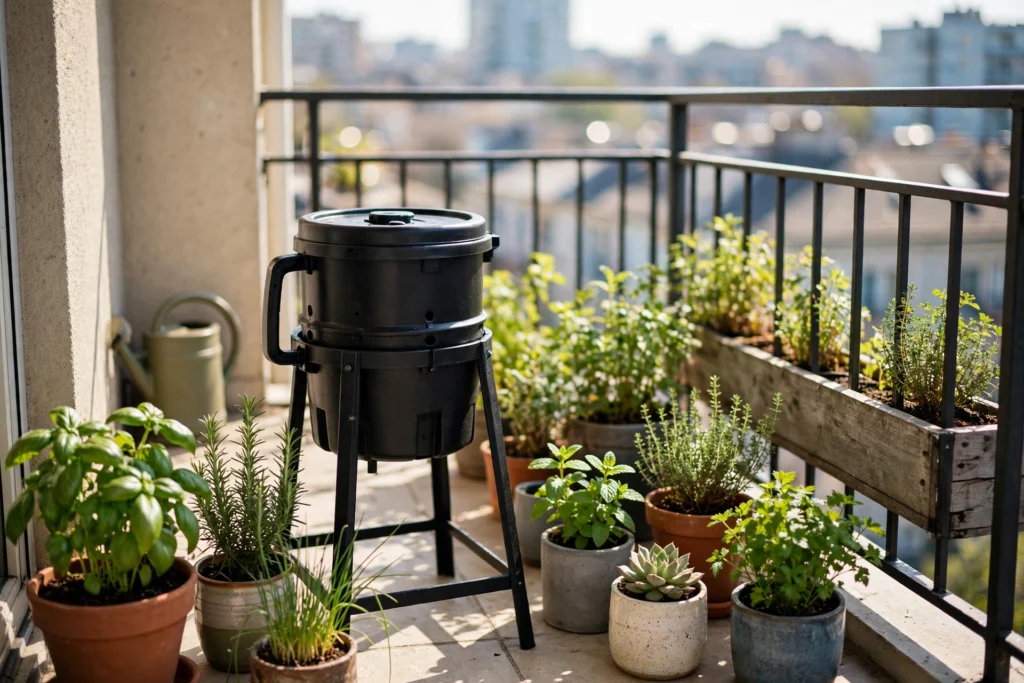
A compost tumbler is a sealed drum on a stand that you spin to mix the contents. It keeps scraps contained, keeps pests out, and turns food waste into compost faster than an open pile because the tumbling adds air. Small models hold five to ten gallons and fit against a balcony wall.
Load it with greens, like peels and coffee grounds, and browns, like shredded cardboard and dry leaves. Spin it every couple of days and keep the contents damp like a wrung-out sponge. In warm weather, you can have finished compost in six to eight weeks, and it is perfect for raised beds for small spaces on a balcony.
Mistake to avoid: Overfilling the drum. A tumbler needs empty space to mix, so fill it only about two-thirds full.
6. Bury Scraps in Your Planters
Trench composting skips the bin entirely, and it is one of the simplest of the 10 small space composting ideas because it needs no equipment at all. Dig a small hole in a large planter, drop in vegetable scraps, cover them with soil, and let soil microbes break them down.
Use only plant-based scraps — peels, cores, coffee grounds, and eggshells. Meat and dairy attract pests and smell in open soil. Bury scraps four inches deep so they stay covered, and rotate the spot so the whole container benefits over time.
Pro tip: Mark the spot with a small stick so you do not dig it up twice.
7. Make Leaf Mold in a Bag
Autumn leaves are free browns, and leaf mold is one of the best soil improvers for containers. Fill a sturdy bag or a small bin with damp leaves, punch a few air holes, and leave it in a sheltered corner of the balcony or a closet. Fungi break the leaves down slowly into dark, crumbly leaf mold.
Leaf mold takes six months to a year, but asks for nothing in return: no feeding, no turning, no smell. Shred leaves first to speed things up, then use the finished leaf mold as mulch or mix it into potting soil for better moisture holding. It is the slowest of the 10 small space composting ideas, and the easiest.
8. Brew Compost Tea for Houseplants
Compost tea turns a small amount of finished compost into a gentle liquid feed. Put a cup of finished compost in a cloth bag or an old pillowcase, steep it in a bucket of water for a day, then strain and use the liquid to water your plants. It delivers nutrients and helpful microbes straight to the roots.
Use it within a day or two, while the microbes are active. Water the soil, not the leaves, and use it on plants that are actively growing. A weak tea every few weeks is plenty — houseplants in winter need very little feeding, so save the stronger brews for spring and summer. Only brew tea from finished, earthy-smelling compost — the 10 small space composting ideas all end with finished compost, not fresh scraps.
9. Join a Drop-Off or Curbside Program
No bin, no problem. Many cities, farmers markets, and community gardens now run food scrap drop-off points, and curbside organics collection keeps expanding. You collect scraps at home and someone else does the composting, which makes this the easiest of all the 10 small space composting ideas to start.
Check your city waste department’s website, then look for farmers markets and community gardens. Some services charge a small monthly fee and provide a sealed caddy and weekly pickup, ideal for apartments.
Keep a small sealed caddy on the counter and empty it every two or three days. The system works because it is easy, so never let the caddy become a chore you avoid.
10. Share a Bin With Your Building
A shared compost bin splits the cost, the space, and the work — the most social of the 10 small space composting ideas. Talk to neighbours about a worm bin in a shared laundry room, a tumbler in a courtyard, or a collection point everyone uses. Many buildings already have the space — it just needs someone to organise it.
Agree on the rules before the first scrap goes in. Decide what goes in the bin, who empties it, and who takes the finished compost. A printed list on the bin lid prevents most arguments, and a small rota shares the work. Shared bins also make bigger systems affordable, since a good tumbler costs far less split five ways.
Pro tip: Start with a trial month. If the bin stays clean, make it permanent.
What to Compost — and What to Leave Out
Good compost needs a balance of greens and browns. Greens are wet and nitrogen-rich: fruit and vegetable scraps, coffee grounds, tea leaves, and fresh grass clippings. Browns are dry and carbon-rich: shredded newspaper, cardboard, dry leaves, and straw. Aim for two parts browns to one part greens by volume, and your bin will stay sweet-smelling and active.
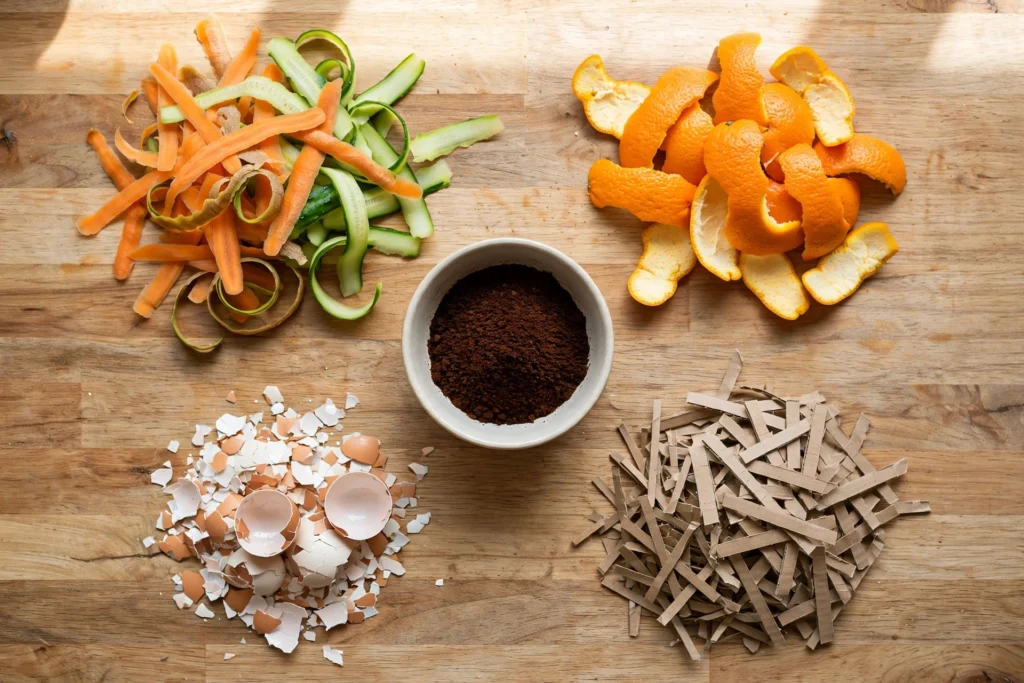
Some things belong in every indoor system: fruit and vegetable peels, cores and rinds, coffee grounds and paper filters, eggshells, and shredded plain cardboard. These break down fast and rarely cause problems. Tea bags are fine too, but only if they are plastic-free and the staple is removed. This short list covers most of what the 10 small space composting ideas ask you to save.
Keep out meat, fish, and dairy from worm bins and tumblers, along with oily foods, pet waste, diseased plants, and anything treated with chemicals. Citrus and onions go in only in small amounts for worm bins, since worms dislike them — a small rule the 10 small space composting ideas all share.
Using Your Finished Compost on Houseplants
Finished compost is dark, crumbly, and smells like fresh earth. If it still smells sour or you can still recognise the scraps, it needs more time in the bin. The 10 small space composting ideas all end at this step: turning finished compost into healthier houseplants.
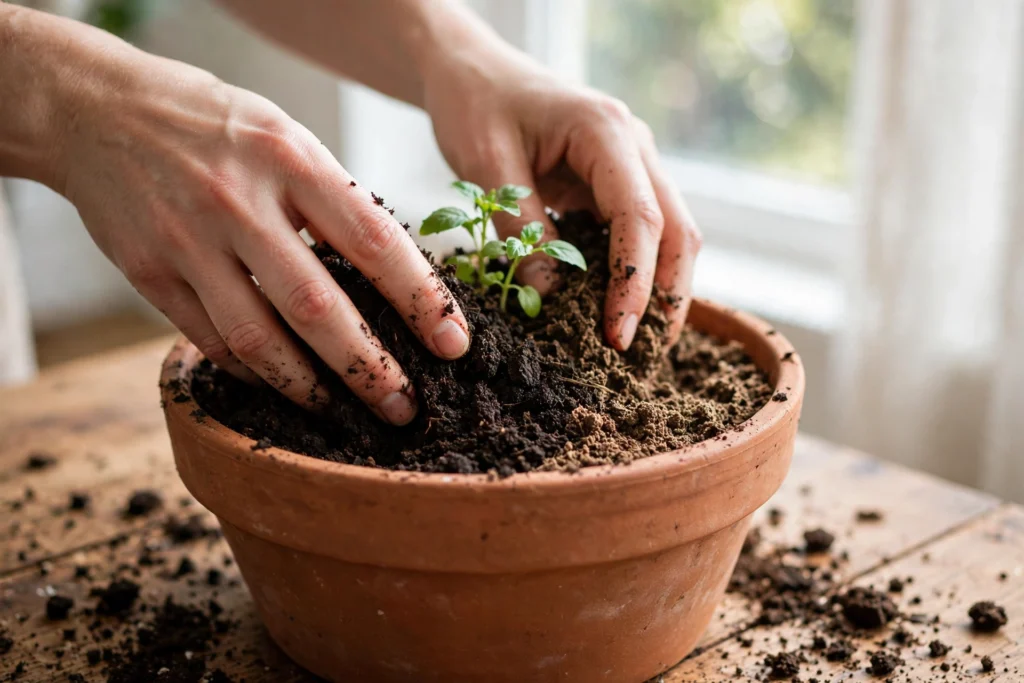
Mix one part compost into three parts potting mix when repotting, or spread a thin layer on top of the soil as a mulch and let watering carry the nutrients down. A little goes a long way — too much can hold water and suffocate small roots, so the 10 small space composting ideas all say to use compost sparingly.
In winter, feed lightly and only when plants are growing. In winter, plants drink slowly, so keep your winter watering routine for houseplants steady and feed only when the soil is dry and the plant is pushing new growth. Spring is the season to use compost generously.
Small Space Composting Mistakes to Avoid
These six mistakes cover nearly every problem a beginner hits, and the 10 small space composting ideas work best when you avoid them from the start.
1. Making the bin too wet. A soggy bin smells and stalls. Add dry browns when the contents look wet, and drain bokashi liquid regularly.
2. Feeding too much, too fast. A new worm bin or a small tumbler cannot handle a week’s worth of scraps at once. Feed small amounts and wait until the last batch has shrunk.
3. Skipping the browns. Greens alone turn into a slimy mat. Keep shredded cardboard or dry leaves beside the bin.
4. Ignoring fruit flies. Flies mean exposed food. Bury scraps under bedding, keep lids closed, and set a vinegar trap nearby.
5. Choosing a bin that is too big. A huge bin for one person never fills up, so it never heats up or finishes. Match the bin to your household.
6. Giving up after the first problem. Every composter gets a smell, a fly, or a slow batch. Each one has a simple fix, and the bin usually recovers within a week.
Frequently Asked Questions
Which of these 10 small space composting ideas is best for beginners?
A worm bin is the best first system for most beginners. It is cheap, quiet, fits under a sink, and the worms do the work. If you eat a lot of meat or dairy, start with a bokashi bucket instead.
Will small space composting make my apartment smell?
A well-run indoor system has almost no smell. Smells come from too much water, too little air, or exposed food. Add dry browns, bury fresh scraps, and drain liquids on schedule. That is the whole secret behind the 10 small space composting ideas staying smell-free.
How long does it take to get finished compost?
A worm bin takes two to three months for the first harvest. A balcony tumbler takes six to eight weeks in warm weather. Bokashi ferments in two weeks, then needs two more weeks buried in soil. Leaf mold is the slowest at six months to a year.
Can I compost in winter on a balcony?
Outdoor bins slow down a lot in the cold, and worms stop working below about 50°F (10°C). Move a worm bin indoors before the first hard frost — the 10 small space composting ideas all assume worms stay warm. A tumbler can keep going through mild winters if you keep feeding it, but expect it to pause in the coldest weeks.
Is composting allowed in a rented apartment?
In most cases, yes — indoor composting is no different from a kitchen bin. Check your lease for rules about food waste, and keep the system clean and contained. If your building has a rule against it, a drop-off program gives you the same result with no bin at home.
Conclusion
The 10 small space composting ideas above prove that composting has nothing to do with how much land you own. A worm bin under the sink, a bokashi bucket in the pantry, or a shared bin with your neighbours all turn the same kitchen scraps into free food for your plants.
Start with one of these 10 small space composting ideas this week. Set up the bin, feed it lightly, and give it a month. By spring, you will have dark, crumbly compost for repotting season — and a smaller trash bin to show for it.


