
Curb Appeal Ideas on a Budget: Your neighbor spent $12,000 on a full landscape overhaul. You have $200 and a Saturday afternoon. Here’s the good news: your house can still stop traffic.
Curb appeal isn’t about how much you spend, it’s about spending on the right five things instead of the wrong fifty. Most homeowners waste money on new plants before they’ve even cleaned the driveway or painted the door, which is like buying new curtains for a house with dirty windows. Below are 14 ideas, ranked roughly from free to a couple hundred dollars, that deliver the biggest visual payoff per dollar. Stick around for 7 It’s the one project every real estate photographer wishes more sellers would do before listing photos, and almost nobody does it.
Save this list before you start your next weekend project. You’ll want to come back to it.
Why Curb Appeal Matters More Than You Think
Curb appeal is the five-second judgment a visitor, buyer, or delivery driver makes before they ever touch your door handle. It’s not vanity, it shapes perceived home value, neighborhood trust, and even how carefully guests treat your space once they’re inside. And the projects that move the needle most are almost never the expensive ones. A pressure washer and a can of paint routinely outperform a $3,000 landscaping crew, because buyers and neighbors respond to intention, not cost. A yard that looks planned even a simple one reads as cared-for. A yard that looks expensive but random doesn’t.
That’s the filter for every idea on this list: does it make the house look intentional?
1. Power-Wash Everything First (Cost: $0–$40)
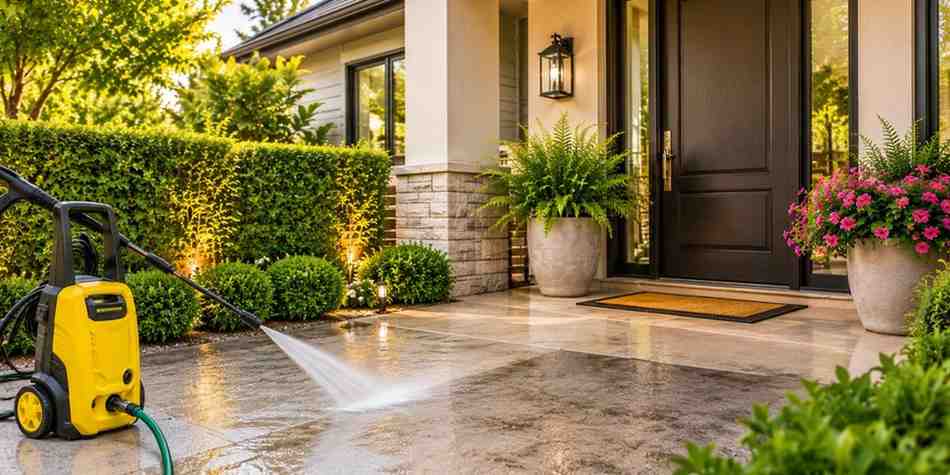
Before you spend a single dollar on anything new, clean what you already have. Siding, the driveway, walkways, porch railings, and the front door collect a fine layer of pollen, algae, and grime that dulls color without you noticing day to day. A rented pressure washer runs about $35–$40 for a few hours, or borrow one from a neighbor for free.
Save-worthy tip: Do this step first, always. Homeowners routinely repaint surfaces that only needed a wash; you might discover your “faded” trim was never faded at all.
2. Paint the Front Door a Bold, Confident Color (Cost: $25–$40)
This is the single highest-impact-per-dollar project on the entire list. A quart of exterior paint transforms a front door from forgettable to photograph-worthy in an afternoon. Deep navy, charcoal, forest green, and warm terracotta are the colors doing the most work in 2026 exterior palettes they read as intentional against nearly any siding color, unlike trendier pastels that can clash.
Two coats, a few hours of drying time, and new hardware (see #9) finish the look.
3. Refresh Mulch Beds But Edge Them First (Cost: $60–$100)
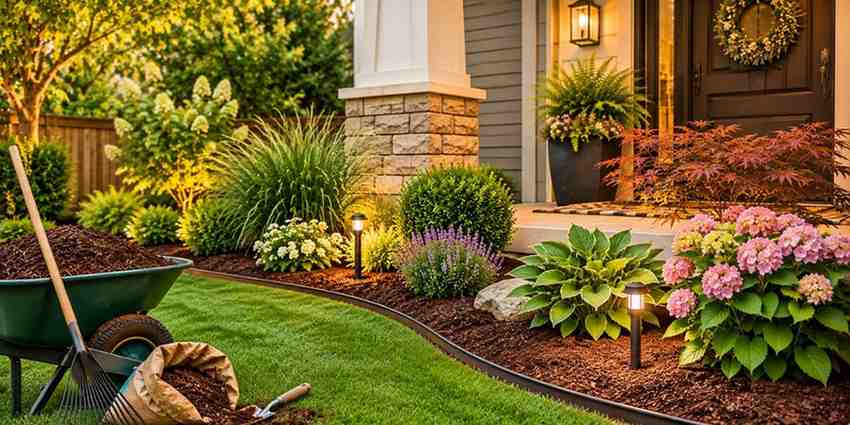
Fresh mulch is the fastest way to make existing plants look like they belong to a designed landscape rather than a neglected one. But mulch alone won’t fix a messy bed line. Cut a clean edge between grass and beds with a half-moon edger before you spread mulch this single step is what separates a yard that looks “maintained” from one that looks “recently dumped on.”
Two cubic yards, delivered, typically covers a standard front-yard bed at two inches deep.
Quick summary: Edge → mulch → done. Skip the edging step and even $200 of mulch looks sloppy.
Read More:16 Front Yard Privacy Ideas With No Fence Required
4. Add a Crisp, Hand-Cut Lawn Edge (Cost: $0–$20)
If you already own a lawn, you own the tool for this: a manual edger or flat spade. Cutting a defined trench between grass and hardscape (driveway, walkway, beds) is one of the few genuinely free projects that changes how the entire yard reads. Re-edge every few weeks during the growing season to keep the line sharp.
5. Upgrade the House Numbers (Cost: $15–$35)
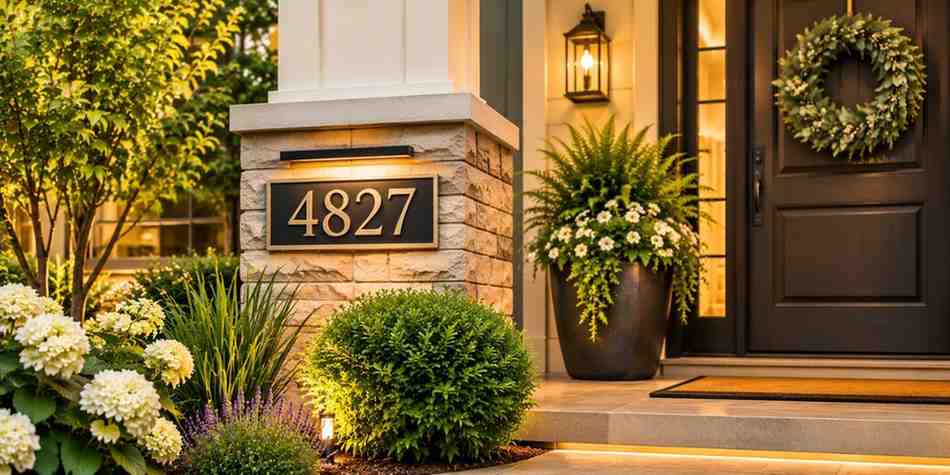
Builder-grade brass numbers from the 1990s are one of the most common “hiding in plain sight” curb appeal killers. Swap them for modern, oversized numbers in matte black, brushed nickel, or a color that pops against your siding. This is a 20-minute project with a screwdriver.
6. Give the Mailbox Its Own Mini Makeover (Cost: $10–$40)
A rusty, leaning mailbox post undercuts every other improvement you make, because it sits at eye level right at the property line. Sand off rust or peeling paint, apply a rust-inhibiting primer, and finish with exterior paint. Then plant a small ring of low-maintenance flowers, daylilies, black-eyed Susans, or drought-tolerant sedum around the base so mowing around it stops being a chore.
7. Fix the Lighting (Cost: $40–$150)
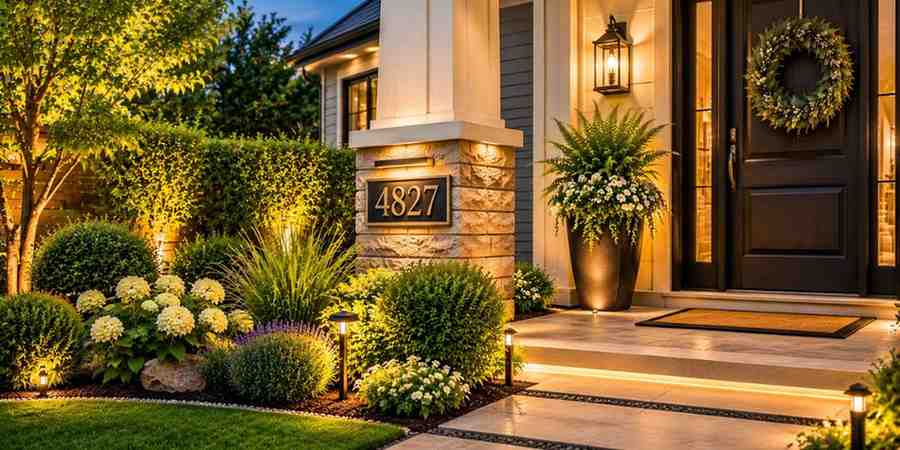
Here’s the project real estate photographers wish more homeowners did: most curb appeal advice stops at daylight, but a huge share of first impressions: delivery drivers, evening guests, buyers doing a drive-by after work happen after dark. A basic low-voltage path-light kit with six to eight fixtures runs $150–$200 DIY and installs without an electrician. Even simpler: solar stake lights along the walkway for $30–$50 total.
Uplighting a single tree or porch column adds architectural drama for under $40 in bulbs and fixtures.
Save this one for later. It’s the idea that competitors’ curb appeal lists tend to skip entirely, and it’s the difference between a house that disappears at 7 p.m. and one that still looks finished.
8. Define a Simple Walkway Border (Cost: $30–$100)
You don’t need to repair anything. Outline your existing path with brick pavers, landscape edging, or even large flat stones set into the soil. If there’s no formal path at all, a gravel or mulch trail bordered with timbers creates one instantly and costs far less than concrete or pavers installed by a pro.
9. Swap Out Door Hardware (Cost: $20–$60)
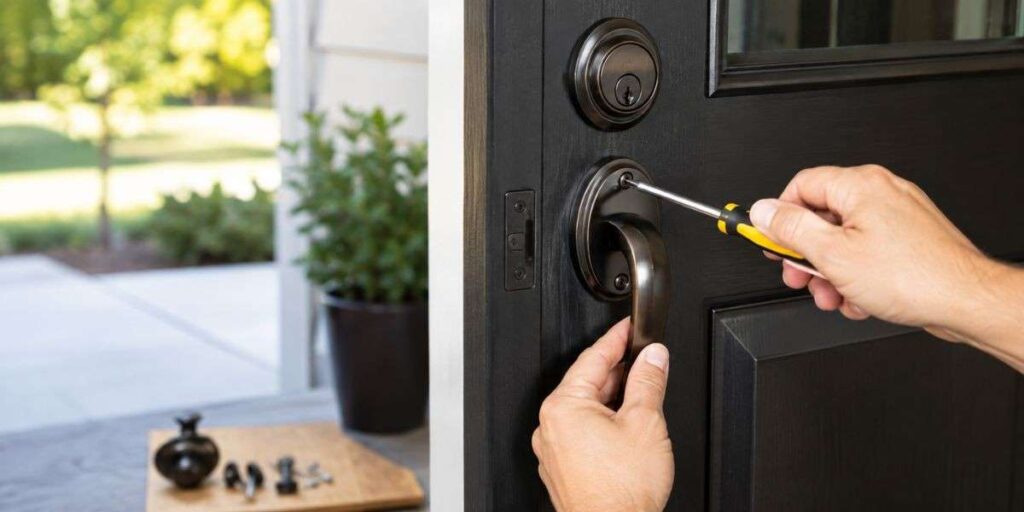
New house numbers deserve a matching kickstand: a modern doorknob, kickplate, or address plaque in the same finish ties the entry together. Coordinated black or brushed-brass hardware against a freshly painted door reads as a designed vignette rather than a pile of separate upgrades which is exactly the “intentional” effect buyers respond to.
10. Add Container Plants at the Entry (Cost: $30–$80)
Two matching large planters flanking the front door do more visual work than an entire flower bed scattered across the yard, because symmetry reads as designed. Stick to a tight color palette one accent color plus greenery so it looks curated instead of random. Containers can also be refreshed seasonally without ever touching the ground soil, which makes them one of the lowest-maintenance high-impact choices on this list.
11. Group Perennials in Odd Numbers (Cost: $40–$100)
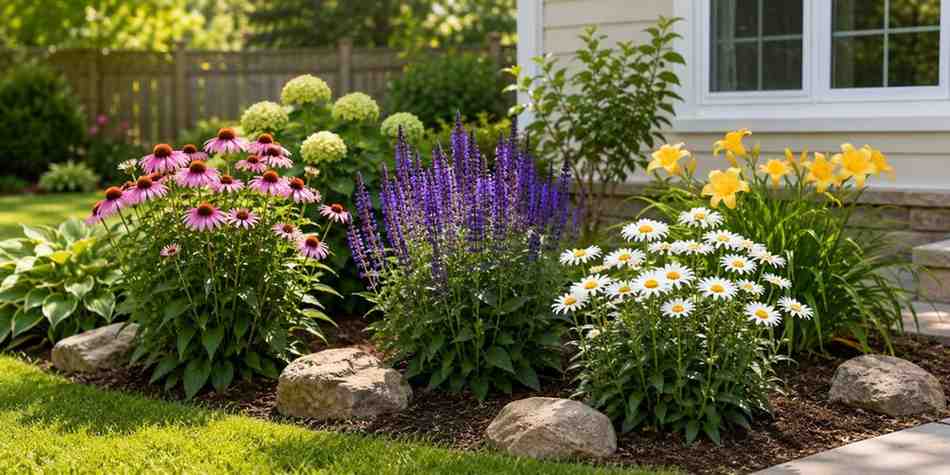
If you’re adding any new plants at all, buy perennials instead of annuals; they return year after year, which means this is a one-time cost rather than an annual one. Landscape designers consistently group plants in threes or fives rather than twos or fours; odd numbers read as intentional, even numbers read as accidental. This is a free design rule that costs nothing to apply.
12. Repurpose What’s Already in Your Garage (Cost: $0–$25)
An old ladder becomes a vertical plant display. Chipped crates stack into rustic plant shelving. A weathered garden tool, painted and mounted, becomes yard art. This is the most Pinterest-native idea on the list save-worthy precisely because it’s original and costs almost nothing, and it gives your yard a detail no neighbor’s front porch has.
13. Add a Simple Seating Moment (Cost: $0–$60)
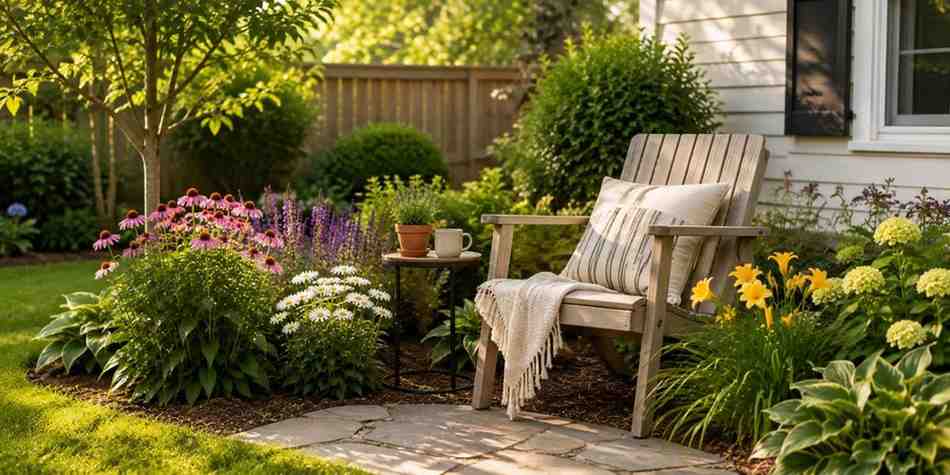
A single bench, a pair of bright folding chairs, or even a repainted vintage stool near the entry signals “welcome” in a way plants alone can’t. This doesn’t need to be a full porch furniture set with one intentional seat, positioned well, photographs better than three mismatched chairs crammed together.
14. Break the Yard Into Zones (Cost: $0, using what you already did above)
This is the finishing move that ties every other idea together, and it costs nothing beyond arrangement. Instead of one undefined patch of grass and plants, mentally (or physically, with edging) split the front yard into a welcoming entry zone, a flower display zone, and a low-maintenance green zone. A yard with zones looks larger and more designed than the same square footage left undivided. It’s the difference between a space that happened and a space that was planned.
Quick recap you can screenshot:
- Power-wash 2. Paint the door 3. Fresh mulch + edging 4. Crisp lawn edge 5. New house numbers 6. Mailbox refresh 7. Lighting 8. Walkway border 9. Door hardware 10. Entry planters 11. Perennials in odd groupings 12. Repurposed garage finds 13. One good seat 14. Zone the yard
Curb Appeal Ideas by Budget Tier
If you want a shopping-list version instead of working top to bottom:
- $0 projects: power-washing (if you own/borrow equipment), lawn edging, plant grouping rules, repurposing garage items, zoning the layout
- Under $50: house numbers, mailbox paint, solar lighting, door hardware
- $50–$150: front door paint, mulch, walkway border, container planters, low-voltage lighting kit
- $150–$300: combine 3–4 of the above in a single weekend for a full-front makeover
Frequently Asked Questions
What adds the most curb appeal for the least money?
Pressure washing and a painted front door consistently deliver the highest visual impact per dollar spent both are under $40 and take a single afternoon.
How much should I budget for a full curb appeal refresh?
A meaningful, visible transformation is achievable in the $200–$300 range if you prioritize cleaning, paint, mulch, and lighting over new plants or hardscaping.
What’s the one thing most curb appeal guides forget?
Evening lighting. Nearly every list focuses on how the house looks in daylight, but a huge share of real-world first impressions happen after dark.
Do I need a landscaper for any of this?
Not every idea on this list is designed to be completed by a homeowner with basic tools over one or two weekends.
Bringing It All Together
None of these 14 ideas require a landscaping crew, a design degree, or a five-figure budget. What they require is sequencing: clean first, fix the entry point (door, numbers, hardware, mailbox), then layer in plants, edging, and light. Do the projects in that order and even a $150 weekend will outperform a scattered $2,000 one.