
Flower Garden Ideas: Drive down any street and you can spot the houses people slow down for. It’s rarely the biggest lawn or the newest paint job, it’s almost always the flower garden out front, the one that looks like someone actually planned it instead of just mowing around it.
A front yard flower garden does something a backyard garden never has to: it introduces your house before anyone rings the doorbell. It’s the first impression, the thing neighbors notice on a walk, the detail that shows up in every listing photo if you ever sell.
The good news is that a genuinely impressive front yard doesn’t require a landscaper’s budget or a blank-slate lot. It requires picking a style that fits your house, choosing plants that actually thrive in your specific spot, and resisting the urge to do everything at once.
Stick with this list through number 9. It’s the layout most people overlook, and it solves the exact problem that makes so many front yard gardens look flat instead of full.
Save this guide before your next weekend of yard work, so you’re planting with a plan instead of just filling gaps.
Before You Plant: Three Things That Determine Everything
A few front yard basics matter more than almost any individual flower choice:
- Match the style to your house. A cottage garden softens a traditional home beautifully but can look out of place against a sleek modern facade and vice versa.
- Layer by height, tallest at the back or center, shortest at the front edge, so nothing gets hidden behind something else.
- Never block windows. It’s one of the most common front yard mistakes to check mature plant height before anything goes in the ground, not after.
Keep those three in mind, and almost any style below can be adapted to your specific yard.
1. Classic Cottage Garden
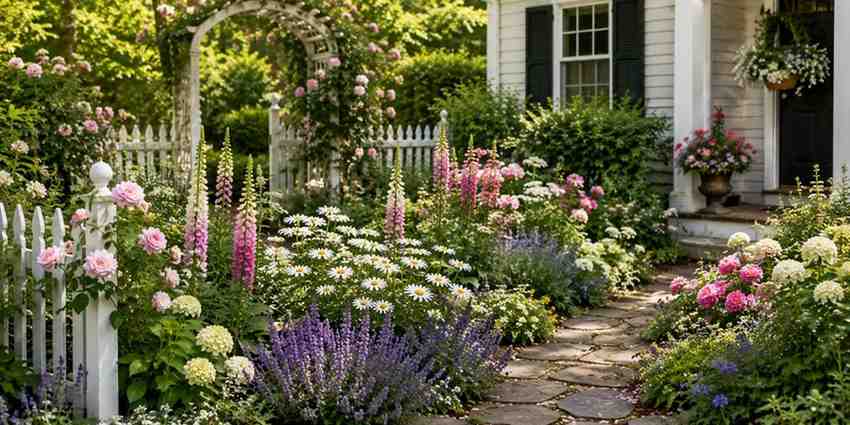
If you want a front yard that feels instantly warm and a little wild, a cottage garden is the most forgiving style to start with.
Mix perennials, annuals, and biennials loosely rather than in tidy rows think hollyhocks, foxglove, cosmos, and roses all growing slightly into each other. The informal, layered look is genuinely hard to get “wrong,” which makes it a favorite for first-time gardeners.
Save-worthy tip: let a few plants self-seed and spread naturally year to year the slightly imperfect, evolving look is part of what makes cottage gardens feel authentic rather than staged.
2. Border Flower Bed Along the Walkway
A defined border bed running along your front walkway is one of the simplest ways to add color without redesigning your entire yard.
Choose a single cohesive color palette or a repeating pattern of two or three flower types, and add clean edging brick, stone, or metal to keep the line crisp against the lawn. This style photographs beautifully and reads as polished even with relatively low-maintenance plants.
3. Island Flower Bed
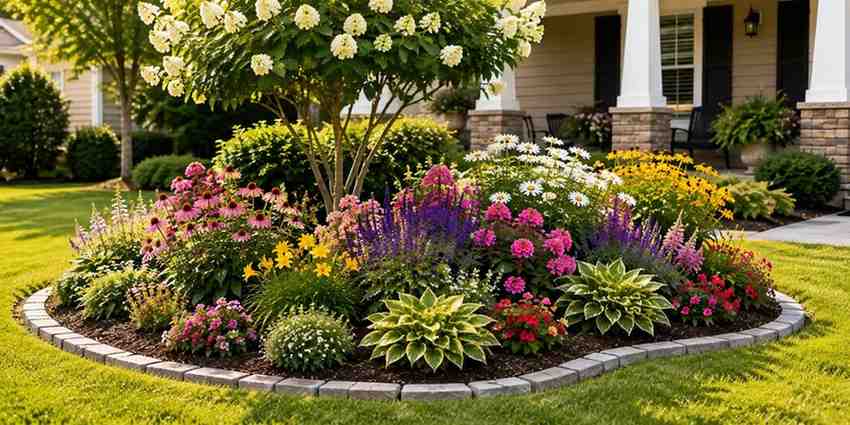
An island bed, a freestanding planting area surrounded by mulch or lawn on all sides creates depth and a genuine focal point rather than just a strip along the edge.
Position it somewhere the eye naturally lands, like the center of the yard or just off the front porch, and mound the soil slightly for visual interest. Because it’s viewed from multiple angles, plant it with height in the center, tapering down toward the edges on every side.
Read More: 14 Curb Appeal Ideas on a Budget (That Actually Look Expensive)
4. Rock Garden with Drought-Tolerant Flowers
For a front yard that needs to look sharp with minimal upkeep, a rock garden built around succulents and drought-tolerant blooms is one of the lowest-maintenance options on this entire list.
Layer river rocks or larger boulders as the structural backbone, then tuck in flowering succulents, sedum, or lavender in the gaps. Quick summary: this style genuinely thrives on neglect, making it a smart choice for anyone who travels often or simply doesn’t want a demanding garden.
5. Native Wildflower Meadow
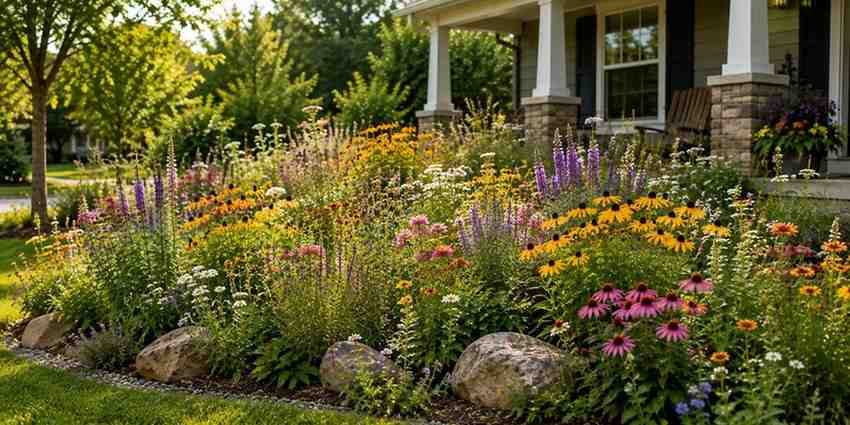
For a front yard that supports local pollinators while requiring far less water and fuss than a traditional bed, a native wildflower planting is worth serious consideration.
Choose species genuinely native to your region; they’re already adapted to your rainfall and soil, meaning less amending and less babying than imported ornamentals. A mix like butterfly milkweed and prairie dropseed keeps a structured, tidy look while still supporting monarchs and other pollinators.
6. Flowering Shrub Backbone
Rather than leading with annuals, a front yard built around flowering shrubs, hydrangeas, azaleas, peonies, and spirea gives you a garden with real, lasting structure.
Plant the largest shrubs first and space generously for their mature size, since overcrowding shrubs is one of the most common (and hardest to fix later) front yard mistakes. Fill the gaps between shrubs with low-maintenance perennials for color between bloom cycles.
7. Symmetrical Formal Garden
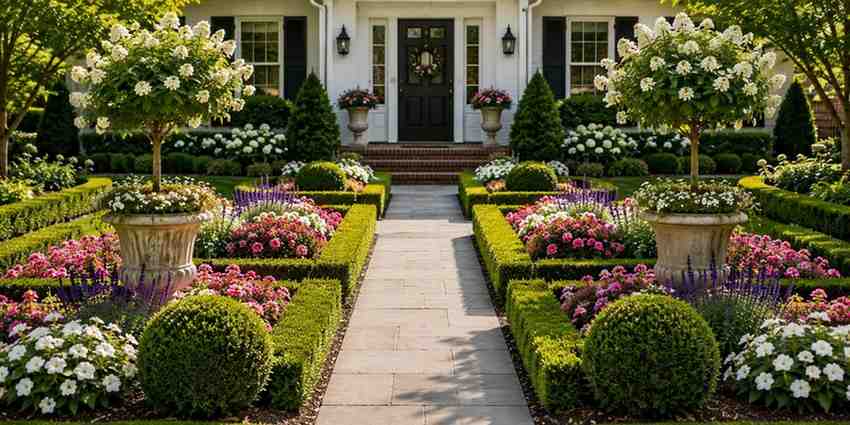
For a traditional or colonial-style home, a symmetrical planting on either side of the front door creates an instantly polished, intentional look.
Mirror the same plants, spacing, and colors on both sides of the entryway or front walk. This style rewards precision clean edges and evenly spaced plants matter more here than in almost any other approach on this list.
8. Asymmetrical Modern Garden
For a less traditional home, especially contemporary or mid-century architecture an asymmetrical planting arrangement tends to look far more intentional than a mirrored, formal one.
Group plants in odd-numbered clusters of varying heights and textures, weighted more heavily toward one side of the entrance rather than split evenly. Ornamental grasses paired with a few bold, architectural flowering plants suit this style particularly well.
9. Layered Tiered Bed by Porch Steps
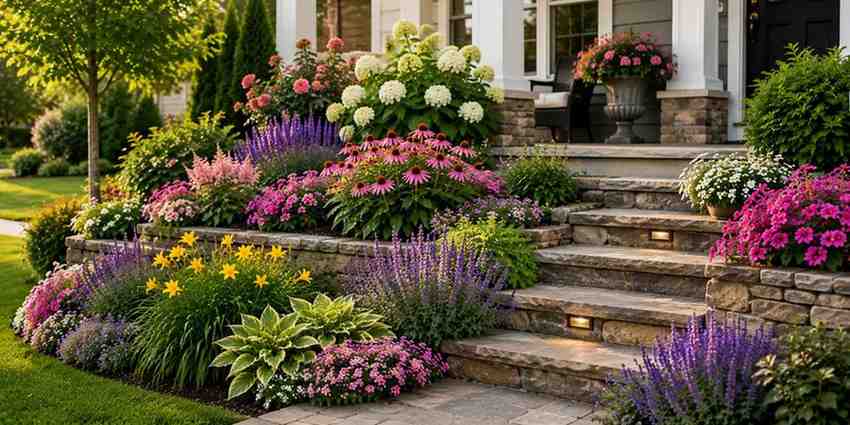
This is the layout most people skip past and it’s specifically the fix for a garden that looks flat instead of full.
Build a bed against the front of the porch or steps with three visible tiers: low ground cover or edging plants at the very front, mid-height perennials in the middle, and taller flowering shrubs or climbers against the house itself. That layered depth is what separates a front yard that reads as “professionally designed” from one that reads as a single flat row of the same flower.
10. Container Cluster by the Front Door
Not every front yard flower idea needs to go in the ground. A cluster of large potted plants flanking the front door adds instant color and can be swapped seasonally without disturbing any existing beds.
Vary pot heights and sizes slightly rather than matching everything exactly, and choose bushy, full flowering plants like hydrangeas or geraniums for maximum visual impact in a small footprint. This is also one of the easiest ideas to try in a rental, since nothing is planted permanently.
11. Climbing Vine on a Trellis or Arbor
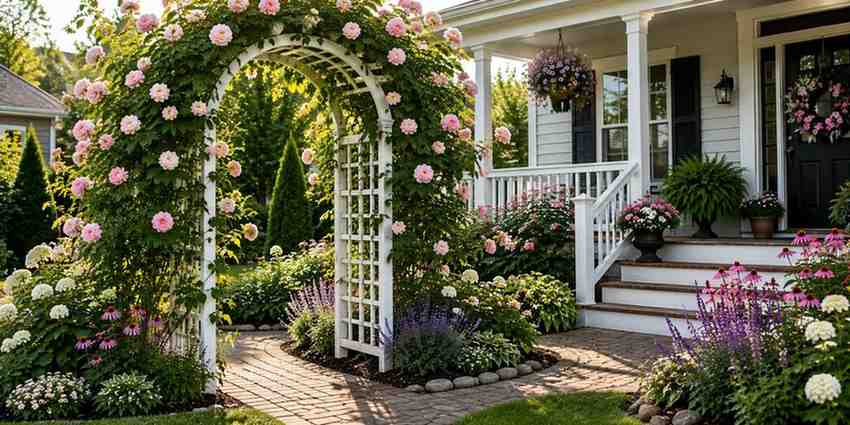
Adding vertical interest with a flowering climber clematis, climbing rose, or wisteria trained up a trellis or arbor near the entrance draws the eye upward and frames the doorway beautifully.
Give the vine a full season or two to establish before expecting dramatic coverage, and choose a support structure sturdy enough to handle the mature weight of the plant. Few single additions change a front entrance’s character as dramatically as a well-established flowering vine.
12. Seasonal Bulb Border
For color that returns reliably every year with minimal replanting, a border of spring bulbs, tulips, daffodils, crocuses planted in fall gives an early, cheerful burst right when the rest of the yard is still waking up.
Plant bulbs in loose, natural-looking clusters rather than rigid rows for a more organic look, and tuck perennials nearby to fill in once the bulb foliage fades. This is one of the lowest-effort ways to guarantee color at the very start of the growing season.
13. Monochromatic Color Palette Bed
For a front yard that feels calm, cohesive, and easy on the eye, sticking to a single color family all whites, all purples, all soft pinks creates a surprisingly sophisticated look.
Mix textures and bloom shapes within that one color range so the bed still has visual variety without competing colors. It’s a particularly good approach for smaller front yards, where too many colors can start to feel busy rather than intentional.
14. Ornamental Grass and Perennial Mix
For year-round structure that holds up through fall and winter, ornamental grasses mixed with flowering perennials add movement and texture even when nothing is in bloom.
Grasses like fountain grass or feather reed grass sway attractively in wind and catch low autumn light beautifully, extending your garden’s visual interest well past peak flower season. Pair with heat-resistant summer bloomers like dahlias for color during the warmer months.
Choosing the Right Style for Your Yard
A few quick pairings based on common situations:
- Traditional or cottage-style homes: cottage garden, flowering shrub backbone, bulb border
- Modern or mid-century homes: asymmetrical modern garden, monochromatic palette, ornamental grasses
- Low-maintenance priority: rock garden, native wildflower meadow
- Small front yards: border bed, container cluster, monochromatic palette
- Homes with a porch or steps: layered tiered bed, climbing vine trellis
Frequently Asked Questions
What flowers are best for front yard curb appeal?
Flowering shrubs like hydrangeas and azaleas provide lasting structure, while annuals like petunias and zinnias offer quick, vibrant color that’s easy to refresh each season.
How do I plan a front yard flower garden on a budget?
Starting plants from seed, dividing existing perennials from elsewhere in the yard, and buying marked-down plants at the end of the growing season are all effective ways to reduce cost.
What’s the easiest front yard garden style for beginners?
A cottage garden or a rock garden with drought-tolerant plants are both considered especially forgiving for first-time gardeners, since minor spacing or placement imperfections tend to blend into the overall look.
How do I avoid my front yard garden looking flat or overcrowded?
Layering plants by height shortest at the front, tallest at the back and spacing according to each plant’s mature size (not its size at planting) are the two most effective fixes for both problems.
Do front yard flower gardens increase home value?
While results vary by market, strong curb appeal from a well-maintained front yard garden is widely considered a meaningful factor in a home’s first impression and perceived value.
Your Front Yard’s First Impression
The most memorable front yard gardens aren’t the most expensive or the most complicated; they’re the ones with a clear point of view, whether that’s wild and cottage-inspired or clean and modern.
Pick one style from this list that genuinely matches your house, then build outward one bed or one season at a time. A front yard garden is never really finished, it’s just consistently getting better.