
A small backyard has a reputation problem. People assume “small” means “limited,” but the truth is, a compact space forces better design decisions than a sprawling one ever will. Every plant, path, and seating spot has to earn its place, and that’s exactly what makes a small garden feel intentional instead of empty.
Here are 12+ small backyard garden ideas that make a tight space feel twice its size and the third idea below is the one most people skip, even though it costs nothing.
1. Start With a Layout That Uses Every Inch
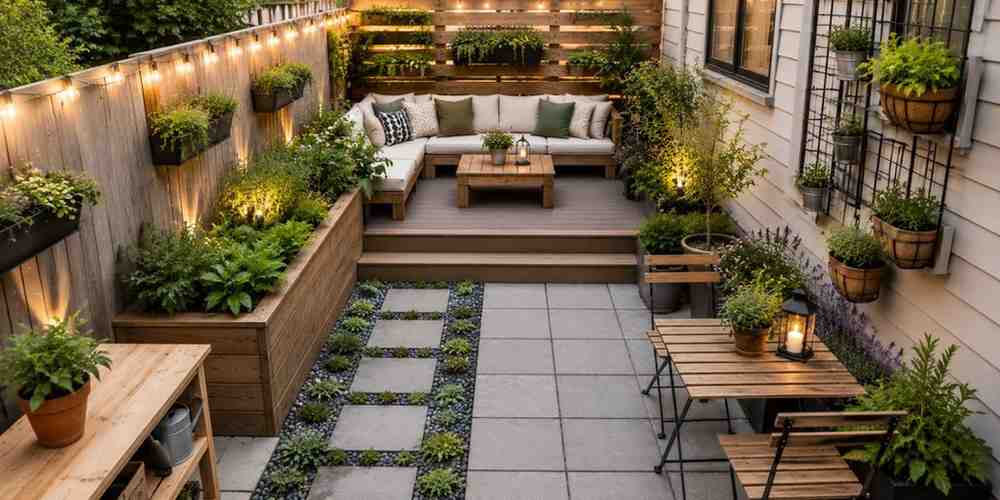
Before you plant anything, walk your space and decide what it needs to do: dining, lounging, growing food, or all three. A small backyard garden succeeds when it’s designed for function first and planted for atmosphere second.
Quick tip: Sketch three zones max. Trying to fit five purposes into a small footprint is how gardens end up feeling cluttered instead of cozy.
Map your sun exposure too most small-space plant failures come from guessing at light levels instead of tracking them for a day or two first.
2. Trick the Eye With Diagonal Lines and Curves
Here’s the design secret most small backyard guides skip entirely: straight lines running parallel to your house make a space feel exactly like it is small and boxy. Diagonal lines do the opposite.
Turning a paver patio 45 degrees to the house, or laying a curved (rather than straight) path through a bed, creates a longer visual line for the eye to follow. The result: your yard reads as deeper than it actually is, without changing a single square foot of real estate.
Removing a railing around a raised deck has the same effect: it lets your sightline extend past the edge instead of stopping short.
3. Go Vertical With Trellises and Wall Planters
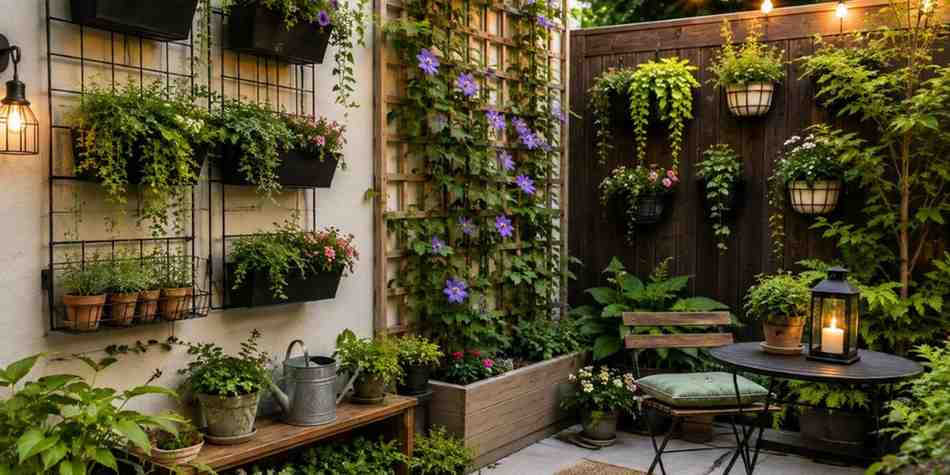
When you can’t expand outward, expand upward. Trellises, wall-mounted planters, and simple fence-mounted hooks let you grow tomatoes, climbing vines, or a full herb collection without giving up an inch of ground space.
Save this one: growing tomatoes up a vertical support instead of letting them sprawl can free up 3-4 square feet per plant, a massive win in a small yard.
Climbers like clematis or jasmine trained onto a fence or trellis also soften hard boundary lines and add privacy at the same time.
Read More: 13+ Flower Garden Ideas for Front Yards That Actually Boost Curb Appeal
4. Choose Dwarf and Compact Plant Varieties
Not every plant needs to be full-size to make an impact. Dwarf shrubs, compact perennials, and mini fruit trees give you the same seasonal color and structure as their full-size counterparts, without the years of pruning battles that come with planting something too big for the space.
- Dwarf evergreen shrubs hold structure and color through winter
- Compact flowering shrubs add seasonal color without overwhelming a bed
- Look for “patio” or “dwarf” varieties of vegetables and fruit trees many are bred specifically for container and small-space growing
5. Anchor the Space With One Small Tree
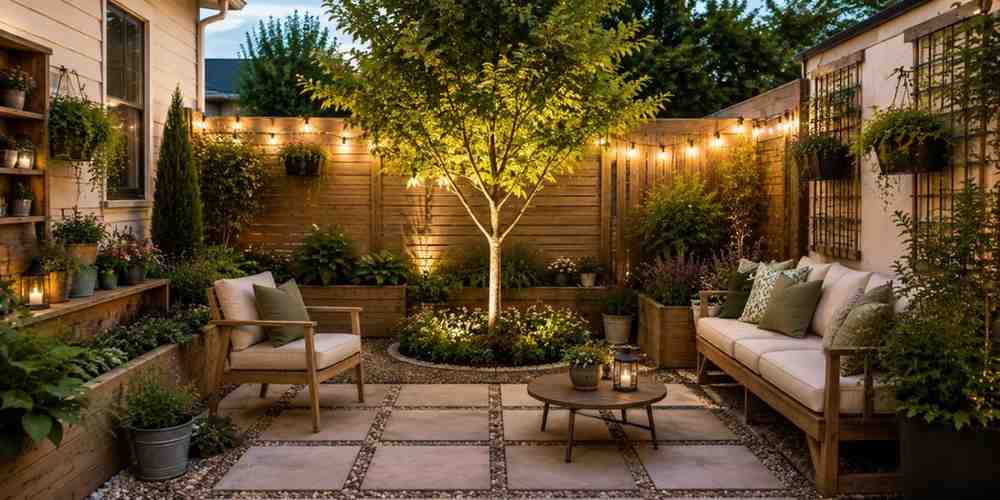
A single, well-placed small tree does more for a compact backyard than an entire bed of flowers. It creates structure, casts welcome shade, and gives your eye a natural focal point to land on which paradoxically makes the rest of the space feel calmer and larger.
Here’s the thing: a small backyard feels bigger when the eye has somewhere to travel, not when every corner is competing for attention. One tree, positioned in a corner rather than dead-center, does exactly that.
6. Build a Slim Layered Border Instead of Wide Beds
Wide, deep garden beds eat up ground space fast in a small yard. A slim border just 18-24 inches deep planted in layers (tall grasses at the back, flowering perennials in the middle, low ground cover at the front) gives you the same lush, full look with a fraction of the footprint.
Repeating the same 2-3 plant varieties along the border also reads as intentional and modern, rather than busy.
7. Add a Built-In Bench With Planting Behind It
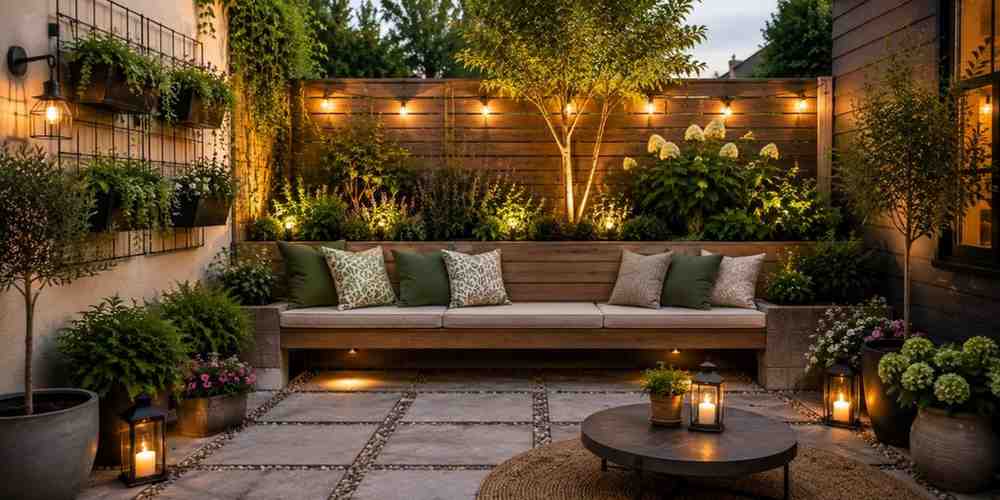
A built-in bench does double duty: it’s seating, and the planting behind it creates a sense of enclosure and privacy without the bulk of a full fence or hedge. It also saves the floor space that a freestanding bench and its surrounding “walk-around” clearance would otherwise take up.
But there’s a catch: keep the planting behind the bench dense but not overgrown onto the seat itself; a 12-inch buffer keeps it usable without losing the layered look.
8. Blend Herbs Into Your Patio Zone
Rather than dedicating a separate bed to herbs, tuck them directly into pots around your patio or dining area. It’s a small move that pays off constantly, fresh herbs steps from where you cook and eat, plus fragrance and texture right where you spend the most time.
Mixing a few ornamentals in with the herbs (like trailing nasturtiums or marigolds) keeps the zone from feeling purely utilitarian.
9. Install a Mini Greenhouse or Potting Corner
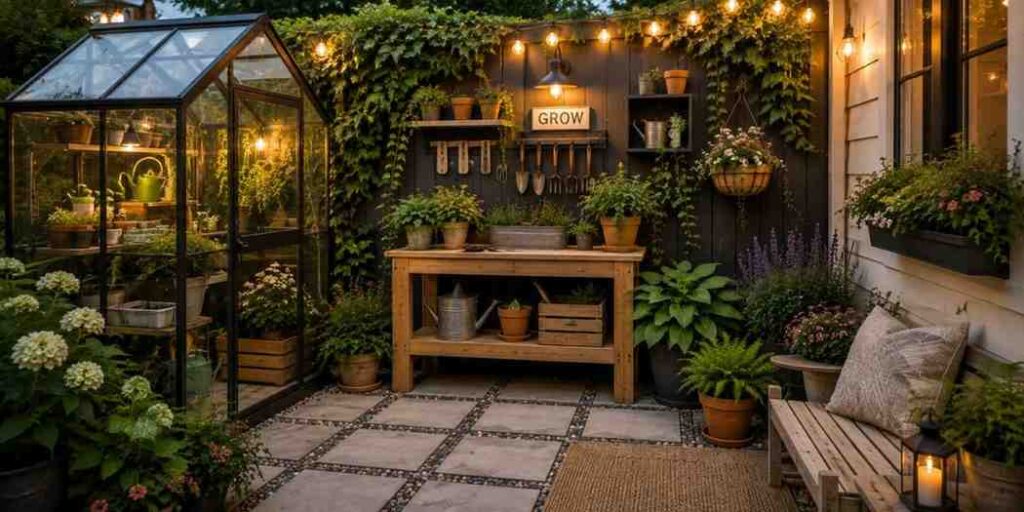
If you love growing things but your space is genuinely tight, a mini greenhouse or a simple wall-mounted potting bench with floating shelves gives you a dedicated growing zone without needing a full garden’s worth of room.
Quick tip: Tuck it against a side fence or garage wall an otherwise unused strip of a small backyard is usually the perfect footprint for a mini greenhouse.
This also solves a real small-yard problem: somewhere to actually start seedlings and pot up new plants without taking over the patio table.
10. Create Privacy With Climbers on Fences
Small backyards often mean close neighbors, and climbers solve that problem better than a taller fence would. Vines trained up an existing fence line clematis, climbing hydrangea, or grapes add a green, living privacy screen that also softens hard boundary lines.
This pairs naturally with idea #3 (vertical growing) the same trellis structure can serve both purposes at once.
11. Use a Gravel Patio for a Flexible Multi-Use Area
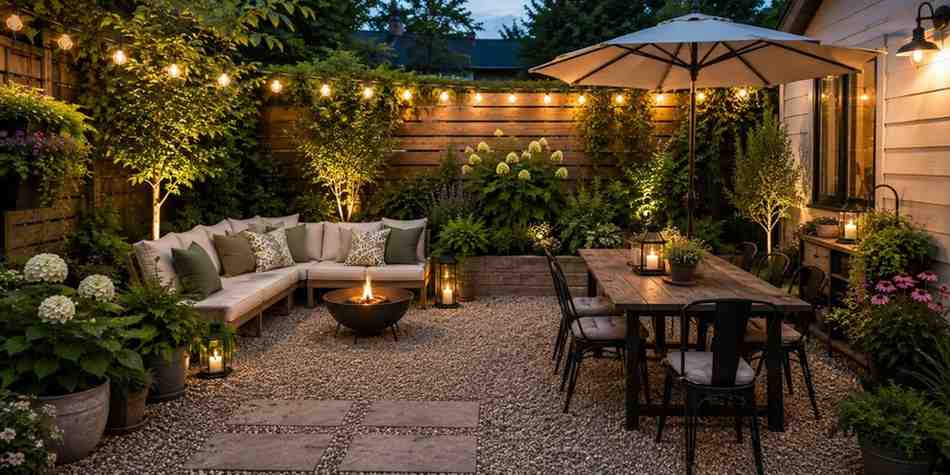
A gravel patio is one of the most budget-friendly and flexible hardscape choices for a small yard. Unlike poured concrete, it can be reshaped later if your needs change, and it pairs naturally with drought-tolerant plants like succulents or potted olive trees for a relaxed, low-maintenance feel.
- Lay landscape fabric first to keep weeds from pushing through
- Edge it with brick or pavers for a clean, defined border
- Add a hammock or a couple of chairs and it instantly becomes a lounging zone
12. Add String Lights for Evening Atmosphere
String lights draped along a fence line or overhead between two posts turn a small backyard into a genuine evening gathering space and they cost far less than any structural lighting upgrade. Pair them with a small rug and a couple of chairs to create an “outdoor living room” feel in a corner that might otherwise go unused after dark.
13. Include One Playful Focal Point
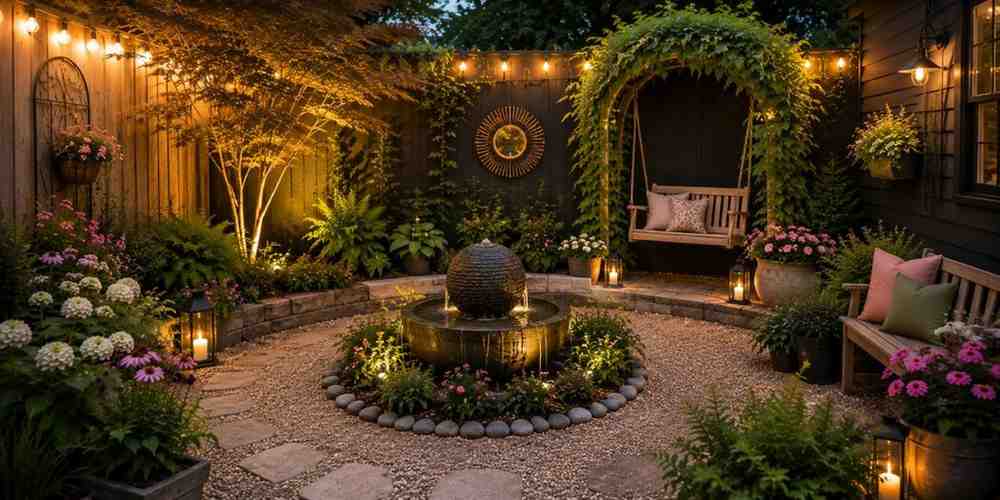
Every small backyard benefits from one unexpected detail that gives the eye somewhere to land a birdhouse matched to your home’s style, a piece of yard art, or, if you’ve got kids, a small designated play spot like a sandbox or a mounted chalkboard on the fence.
So what does this mean for you? Pick one. A small space with a single strong focal point reads as curated; the same space with five competing ones reads as cluttered.
Quick Recap: Small Backyard Garden Checklist
- Zone your space for 2-3 clear purposes, not five
- Use diagonal lines and curves to visually extend the yard
- Grow vertically wherever floor space is tight
- Choose dwarf or compact plant varieties
- Anchor the design with one small tree or one focal point
- Layer a slim border instead of building wide beds
- Finish with lighting, herbs near the patio, and one privacy feature
Frequently Asked Questions
How do I make a small backyard garden look bigger?
Diagonal lines, curved paths, layered plant heights, and a single strong focal point all trick the eye into perceiving more depth than the space actually has. Avoid cluttering the yard with too many competing features.
What are the best plants for a small backyard garden?
Dwarf shrubs, compact perennials, climbing vines for vertical growing, and container-friendly “patio” varieties of vegetables and fruit trees all work well in limited space.
Can I still grow vegetables in a small backyard?
Yes vertical growing (trellised tomatoes, vining cucumbers), raised beds, and container gardening near the patio all let you grow a meaningful amount of food even in a compact yard.
Do I need a fence for privacy in a small backyard?
Not necessarily. Climbing vines trained onto an existing fence, layered planting behind a bench, or a slim privacy hedge can all create the feeling of enclosure without adding a taller structure.
Final Thoughts
A small backyard isn’t a limitation, it’s a design challenge with a satisfying answer. Zone it thoughtfully, grow upward when you can’t grow outward, and let one or two strong focal points do the visual work. Do that, and your small backyard garden won’t just make the most of its space, it’ll make the space feel like it was never small to begin with.