
Vegetable Garden Design Ideas: A vegetable garden that actually works isn’t the one with the most plants crammed in it’s the one designed around your space, your soil, and how much time you actually want to spend kneeling in the dirt. Below are 16 vegetable garden design ideas, from the classic layouts every gardener starts with to the space-saving tricks that turn a tiny yard into a real harvest.
And here’s the open loop worth sticking around for: idea 7 solves one of the biggest problems in vegetable gardening how to compost and feed your soil constantly without ever hauling a wheelbarrow across the yard.
1. The Classic In-Ground Row Garden
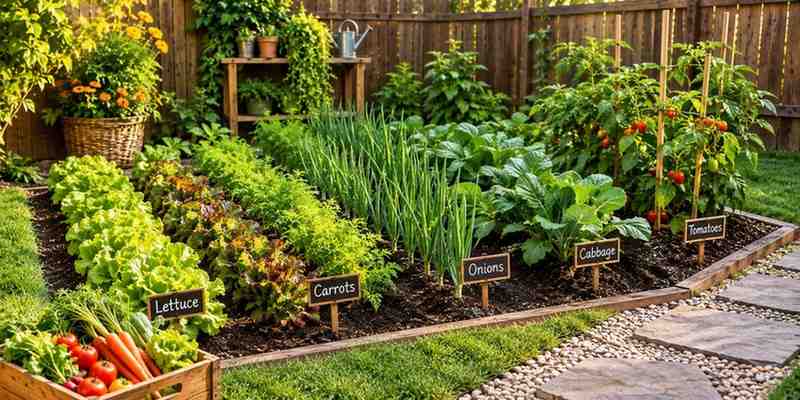
This is the layout most of us picture first, and for good reason it’s the cheapest, simplest way to start. Straight rows planted directly in the ground make it easy to manage spacing, rotate crops each season, and get a wheelbarrow or hose down the middle without a fight.
- Best for: larger yards, flat terrain, beginners who want low upfront cost
- Tip: run rows north to south so every plant gets even sun exposure through the day
2. Raised Bed Gardens
Raised beds solve two problems at once: poor native soil and a bad back. Building beds roughly 4–6 inches to a foot tall and 2–4 feet wide lets you fill them with exactly the soil mix your vegetables want, while keeping the whole bed narrow enough to reach the center from either side without stepping in it.
Here’s the thing: because no one walks on the soil, it stays loose and uncompacted all season, which usually means stronger roots and better yields than an equivalent in-ground bed.
3. Square-Foot Grid Gardening
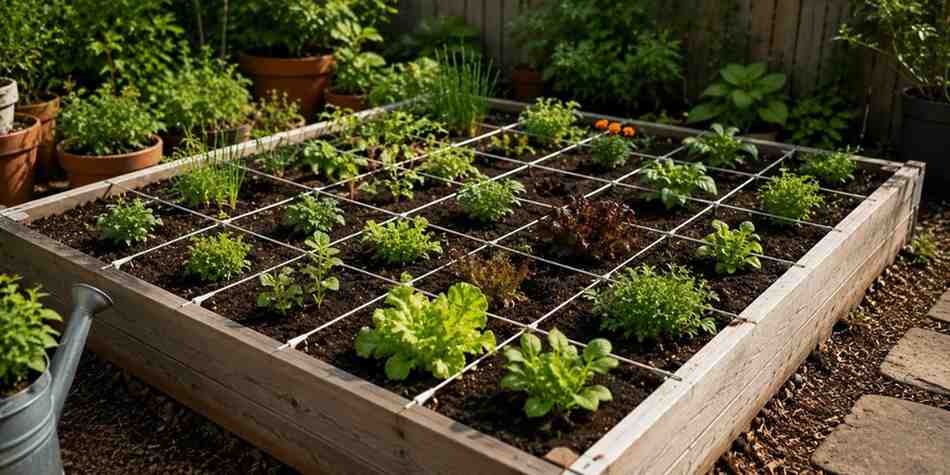
Square-foot gardening takes a raised bed and divides it into a grid of 1×1-foot squares, each planted with a different crop based on how much space that vegetable actually needs. Instead of long rows, you get dense, organized blocks which makes this one of the most efficient designs for small yards and urban lots.
Pinnable takeaway: Square-foot gardening replaces the guesswork of spacing with a grid you can literally see, which is exactly why it’s the layout most recommended for first-time gardeners.
Read More: 11+ Backyard Garden Ideas on a Budget (That Look Way More Expensive Than They Are)
4. Container Vegetable Gardens
No yard? No problem. A container garden arranges pots, grow bags, or large planters on a patio, balcony, or even a sunny stoop, and it works especially well for tomatoes, peppers, lettuce, and compact herb varieties.
- Best for: patios, balconies, renters, anyone without in-ground space
- Tip: bigger is almost always better a larger container holds moisture longer and needs less frequent watering
5. Vertical Wall & Trellis Gardens
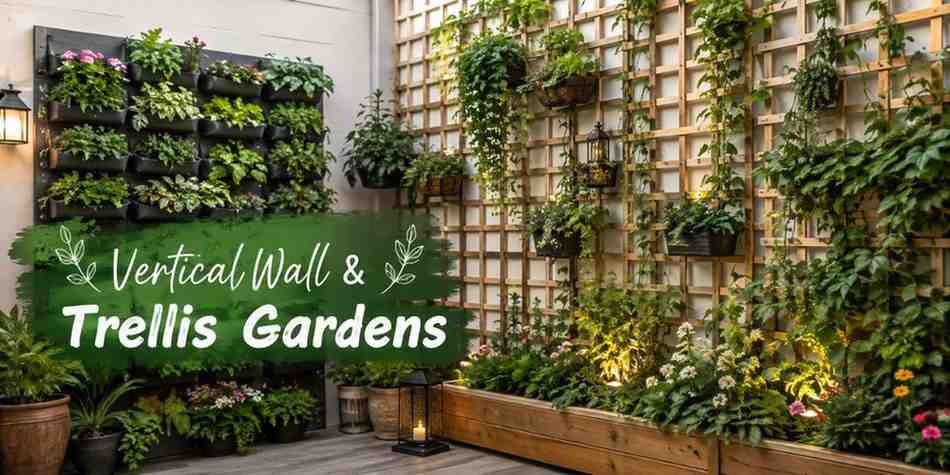
The vertical space along a fence or the side of your house is one of the most underused areas in most yards. Mount planters against a wall, or train climbing crops like cucumbers and beans up a trellis, and you free up ground space for everything else while adding real visual height to the garden.
So what does this mean for you? If your yard is narrow, growing up instead of out might double your usable planting area without adding a single square foot of ground.
6. Teepee & A-Frame Trellis Designs
For vining crops like beans, peas, and small melons, a teepee trellis (several stakes lashed together at the top) or a bamboo-and-mesh A-frame gives plants somewhere to climb while adding real architectural interest to the garden. It’s functional and it looks intentional a rare combination in vegetable gardening.
Bonus layering trick: plant shade-tolerant leafy greens underneath the A-frame. They’ll benefit from the dappled shade the climbing crop casts above them, so you’re effectively growing two harvests in one footprint.
7. Keyhole Gardens
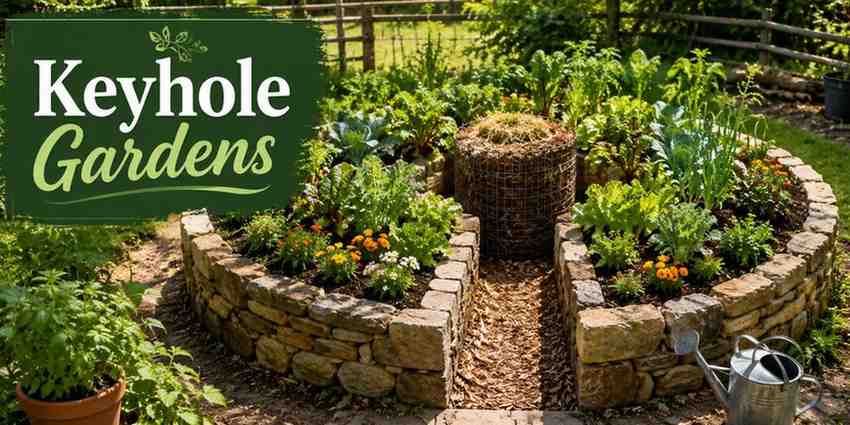
A keyhole garden is a circular raised bed with a wedge cut out of one side like a keyhole leading to a small composting basket right at the center. Kitchen scraps go into the basket, and as they break down, nutrients and moisture slowly radiate outward to feed the entire bed.
But there’s a catch that makes this one worth the extra setup: because the compost is built into the design itself, you’re feeding your soil constantly without ever hauling a separate compost bin across the yard.
- Best for: dry climates, gardeners who want built-in composting, circular/curved garden aesthetics
8. The Potager (Formal French Kitchen Garden)
A potager blends vegetables, herbs, and flowers into a single ornamental design often with symmetrical beds, gravel or brick paths, and a mix of edible and decorative plants growing side by side. It’s the layout for gardeners who want their vegetable garden to double as a genuine landscape feature, not just a food-producing back corner.
- Best for: front yards, formal landscapes, gardeners who want beauty and food in the same space
- Tip: use curved or geometric bed shapes rather than plain rectangles for the classic potager look
9. Spiral Herb & Vegetable Gardens
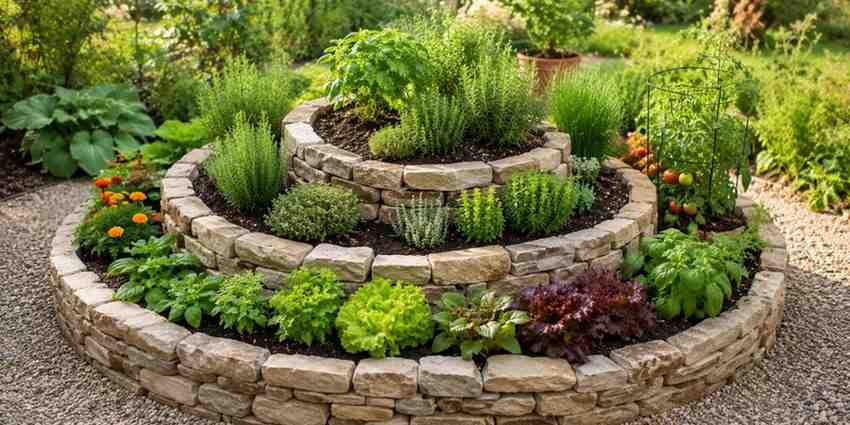
A spiral garden stacks soil into a rising, coiled mound, creating multiple microclimates in one small footprint dry and sunny at the top, cooler and moister toward the base. It’s a compact, sculptural way to grow a variety of herbs and small vegetables with very different water and sun needs, all within just a few square feet.
10. No-Dig / Mulch Gardens
Popularized by gardener Ruth Stout, the no-dig method skips tilling entirely. Instead, you build a thick layer of mulch (straw, leaves, compost) directly over the planting area, which suppresses weeds, retains moisture, and slowly enriches the soil as it breaks down.
- Best for: gardeners who want less physical labor and less watering
- Tip: replenish the mulch layer each season rather than digging it in
11. Hugelkultur Mound Beds
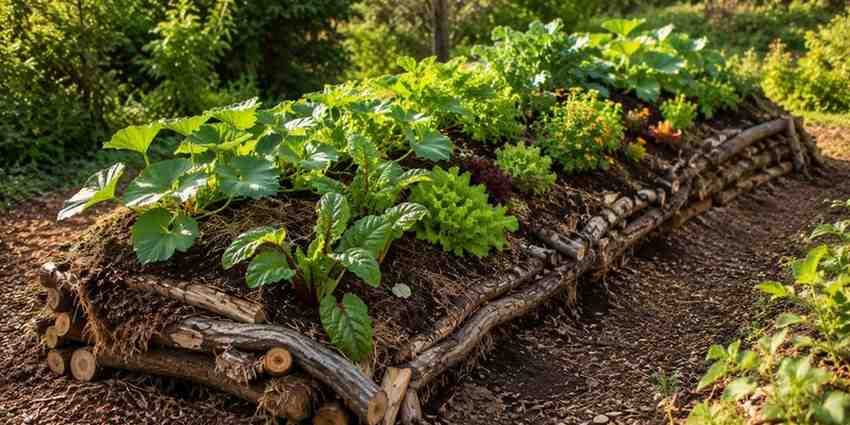
Hugel kultur beds are built by layering logs, branches, leaves, and compost, then covering the whole mound with soil. As the buried wood slowly decays, it releases a steady stream of nutrients and holds moisture like a sponge which means less watering for you over the life of the bed.
Pinnable takeaway: A hugelkultur mound essentially builds its own slow-release fertilizer and water reservoir right into the bed, using materials most yards already have lying around.
12. Food Forest Layered Design
A food forest arranges edible trees, shrubs, and perennials in layers that mimic a natural woodland tall fruit or nut trees on top, berry shrubs below, and low-growing edible perennials at ground level. It’s less about neat rows and more about designing a self-sustaining ecosystem that produces food with minimal ongoing input once established.
- Best for: larger properties, long-term gardeners willing to plan years ahead
- Tip: start with the tree layer first, since everything below it will be planned around the shade pattern it eventually creates
13. Straw Bale Gardens
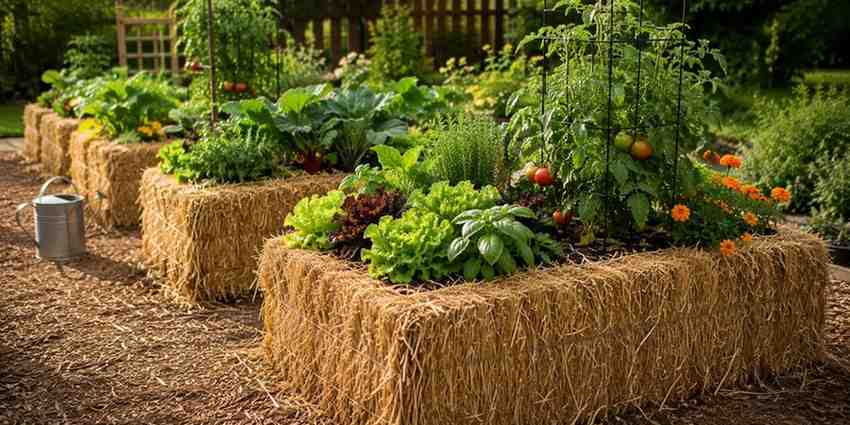
Straw bale gardening uses conditioned bales of straw as both the container and the growing medium. As the interior of the bale breaks down, it generates gentle heat and rich organic matter for the roots and because the bale sits above ground, there’s no soil prep, tilling, or weeding to speak of.
- Best for: poor or contaminated soil, temporary garden spots, renters who need a removable setup
14. Narrow Side-Yard Gardens
Even a strip as narrow as 8 feet wide can become a genuinely productive vegetable garden. The trick is running raised beds along the length of the space rather than trying to fit a traditional square layout, and leaning on vertical growing (trellises, wall planters) to make up for the lack of width.
Bucket brigade: so if your “yard” is really just a side alley between your house and the fence — that’s not a limitation, that’s just a design brief.
15. Companion Planting Block Layout
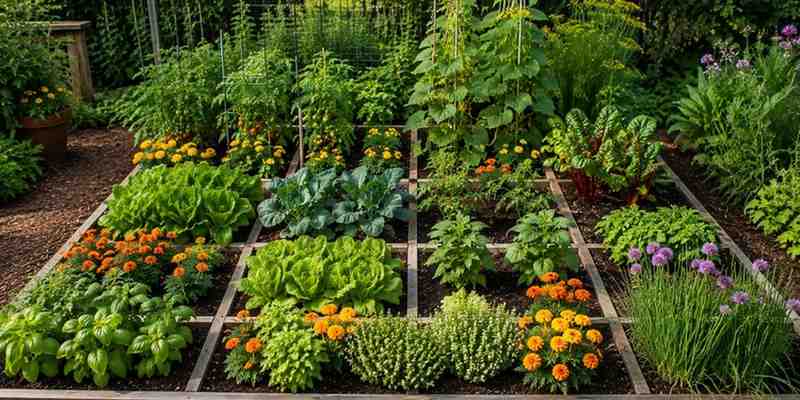
Rather than organizing by row, this design groups vegetables into blocks based on which plants benefit each other tomatoes with basil, carrots with onions, beans with corn. Perennial vegetables get their own dedicated block, separate from the annual crops that get replanted each season, so the bed’s long-term residents aren’t disturbed by yearly digging.
16. Rainbow / Color-Themed Gardens
For a design that’s as visually striking as it is productive, organize your beds by color instead of plant family: reds (tomatoes, red chard, red peppers), oranges (pumpkins, orange peppers, squash), and so on through the spectrum. It’s a fun layout for family gardens and a genuinely beautiful one for anyone who wants their vegetable patch to double as a garden feature.
Choosing the Right Layout for Your Space
Before committing to any single idea above, sketch your yard on paper (or a garden-planning app) and note two things: how much direct sun each area gets, and how you’ll actually move through the space with a hose, wheelbarrow, or watering can. Most vegetables need full sun, and wide paths matter more than people expect kneeling and maneuvering around a bed gets old fast if the paths are too tight.
A few practical rules that apply across almost every design on this list:
- Keep growing beds out of the fence-line shadow. Many gardeners default to placing beds around the edges of the yard, but the center of an open lawn is often sunnier and better ventilated.
- Plant your tallest crops on the north side of any bed so they don’t shade out shorter plants as the season progresses.
- Match the design to your time budget, not just your space. A food forest and a container garden can produce equally well they just ask very different amounts of ongoing effort from you.
FAQ: Vegetable Garden Design Ideas
What’s the easiest vegetable garden design for beginners?
Square-foot gardening (idea #3) or a simple raised bed (idea #2) are usually the most forgiving starting points, since the spacing is largely built into the design.
What’s the best vegetable garden layout for a small yard?
Vertical trellising, container gardens, and narrow side-yard raised beds (ideas #4, #5, and #14) make the most of limited square footage.
Do raised beds really produce better than in-ground rows?
Not automatically, but they typically require less weeding and give you full control over soil quality, which often translates to stronger, more consistent growth.
How much sun does a vegetable garden need?
Most vegetables need full sun, generally at least six hours of direct light a day, so sun exposure should be the first factor in choosing where any of these designs go.
Can I combine more than one of these design ideas?
Absolutely many productive gardens mix a few raised beds with a trellis for climbers and a couple of containers for herbs near the kitchen door. Treat this list as a menu, not a single choice.
Bringing It All Together
The best vegetable garden design isn’t the most elaborate one on this list it’s the one that fits how much space, sun, and time you actually have. Start with the layout that solves your biggest constraint, whether that’s a tiny side yard, poor soil, or simply wanting less physical work, and build outward from there once you see what thrives.