
Most people buy beautiful garden furniture and then push it against the nearest wall and wonder why the space still feels flat. The truth is, the pieces you own matter far less than how you arrange them. The right layout can make a small patio feel like an outdoor living room, turn an awkward L-shaped yard into your favorite spot in the house, and make guests want to linger long after dinner is over.
Whether you’re working with a sprawling backyard, a narrow balcony, or a modest garden corner, these 13 garden furniture arrangement ideas will help you design a space that’s as functional as it is beautiful.
Why Furniture Arrangement Matters More Than the Furniture Itself
Before jumping into the ideas, it helps to understand the three principles behind every layout that actually works:
- Zoning dividing your outdoor area into purpose-driven “rooms” (lounging, dining, relaxing)
- Focal points anchoring furniture around something that draws the eye, like a fire pit, a view, or a table
- Flow leaving enough clearance for people to move comfortably between areas
Keep these three ideas in mind as you go through the layouts below, and you’ll be able to adapt any of them to your own space.
13 Garden Furniture Arrangement Ideas
1. The Conversation Circle

Arrange four to six chairs in a loose circle or oval, angled slightly inward so everyone can make eye contact without craning their neck. This is the most timeless layout for garden furniture because it does one thing extremely well: it makes conversation effortless. A small round side table or two in the middle keeps drinks within reach without blocking anyone’s line of sight.
Best for: small gardens, patios, and courtyard spaces where the goal is intimacy over capacity.
2. The Classic L-Shaped Sectional Corner
An L-shaped sectional (or a sofa paired with a loveseat set at a right angle) is one of the most space-efficient garden furniture arrangement ideas for corners, since it hugs two walls or fence lines and frees up the rest of the yard. Anchor it with a coffee table in the center of the “L” and you instantly get a cozy, defined seating zone.
Best for: corner patios, rectangular gardens, and anyone who wants a sofa-style lounge area without eating up the whole yard.
Read More: 12 Cozy Outdoor Nook Ideas That Turn Any Forgotten Corner Into a Retreat
3. Face-to-Face Symmetry
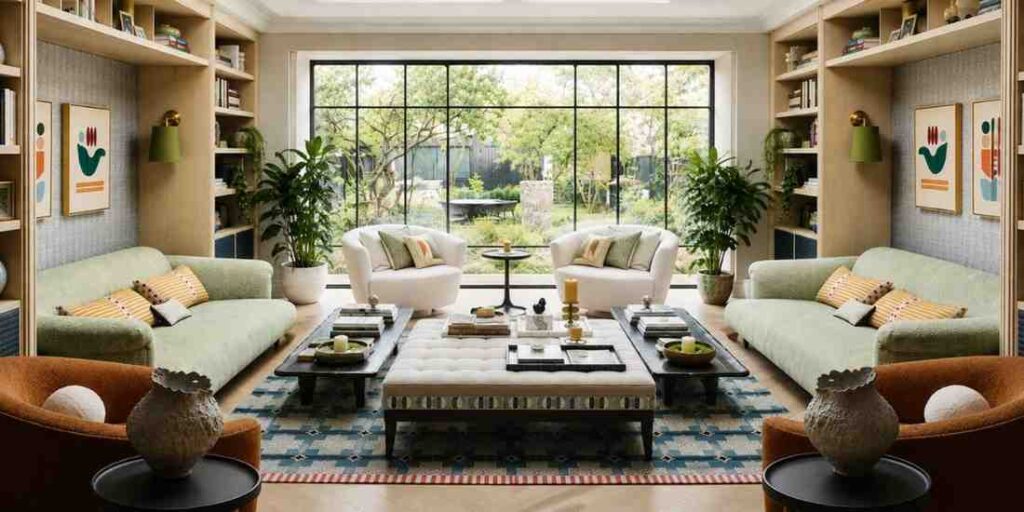
Place two matching sofas or four matching armchairs directly across from each other with a coffee table or low fire bowl in between. The symmetry here does a lot of visual work; it makes even a simple furniture set look intentional and high-end. This layout also naturally splits large groups into smaller, easier conversations.
Best for: medium to large patios where you want a polished, designer-style look.
4. The Fire Pit Focal Layout
Few garden furniture arrangements get more use across the seasons than one built around a fire pit. Arrange four to six chairs in a gentle circle around the flame, spaced so no one feels the heat directly but everyone stays part of the same conversation. Mix materials a couple of low lounge chairs with a bench or two to keep the layout from feeling too matchy.
Best for: yards that get cool evenings, or anyone who wants a three-season outdoor gathering spot.
5. The Dining-First Zone
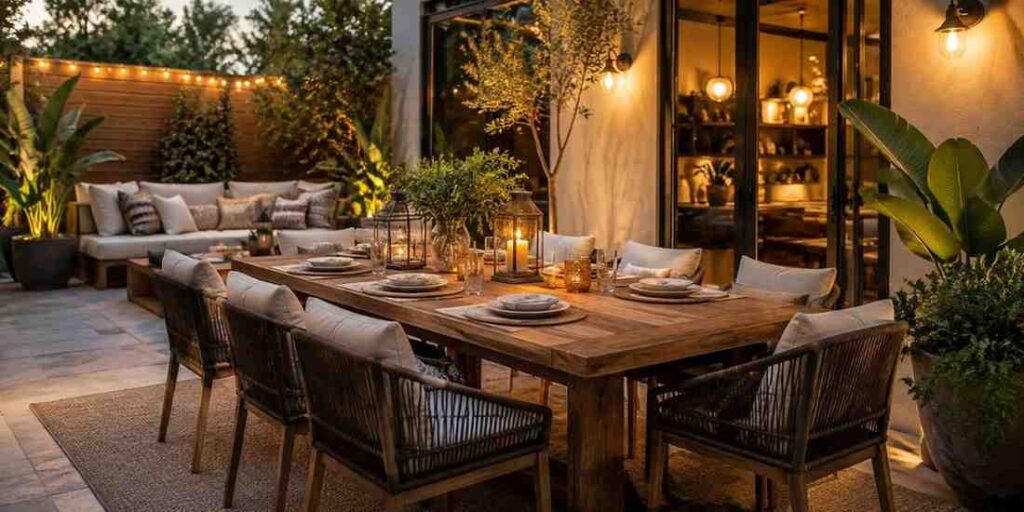
If entertaining and outdoor meals are your priority, build your layout around the table rather than the lounge seating. Center a dining set on the most level, shaded part of your patio, and leave at least 3 feet of clearance around the table for chairs to pull out comfortably. Add a bench on one side to free up floor space and add a more relaxed, farmhouse feel.
Best for: families who eat outdoors often, or anyone who hosts regular garden dinners.
6. The Multi-Zone “Outdoor Rooms” Layout
Larger gardens have room to do what small ones can’t: create several distinct zones. Think of it as designing separate “rooms” without walls a lounge zone near the house, a dining zone closer to the kitchen or grill, and a quiet reading nook tucked into a shaded corner. Use a change in flooring, a low hedge, or an outdoor rug to visually separate each zone rather than relying on distance alone.
Best for: large backyards, estate gardens, and multi-generational households that use the space differently throughout the day.
7. The Poolside Lounge Row
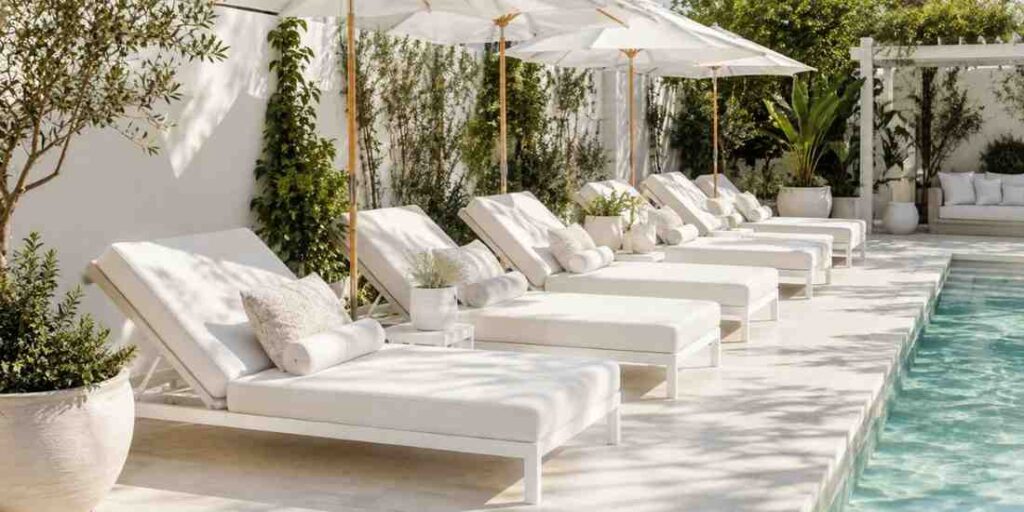
For gardens with a pool, line loungers in a straight row facing the water, then break up the row with a side table every second chair so drinks and towels have a landing spot. Angling the loungers slightly toward the sun’s path (rather than dead straight) makes the row feel less rigid and more resort-like.
Best for: pool decks and sun-drenched patios.
8. The Wraparound Porch Sofa & Chairs
A porch sofa flanked by two chairs, all facing the same direction toward the yard or street, is a classic for a reason it mirrors an indoor living room and instantly feels welcoming. If your porch is narrow, swap the sofa for a loveseat and keep a slim console table behind it against the railing.
Best for: front porches, covered decks, and narrow outdoor spaces.
9. The U-Shaped Gathering Nook
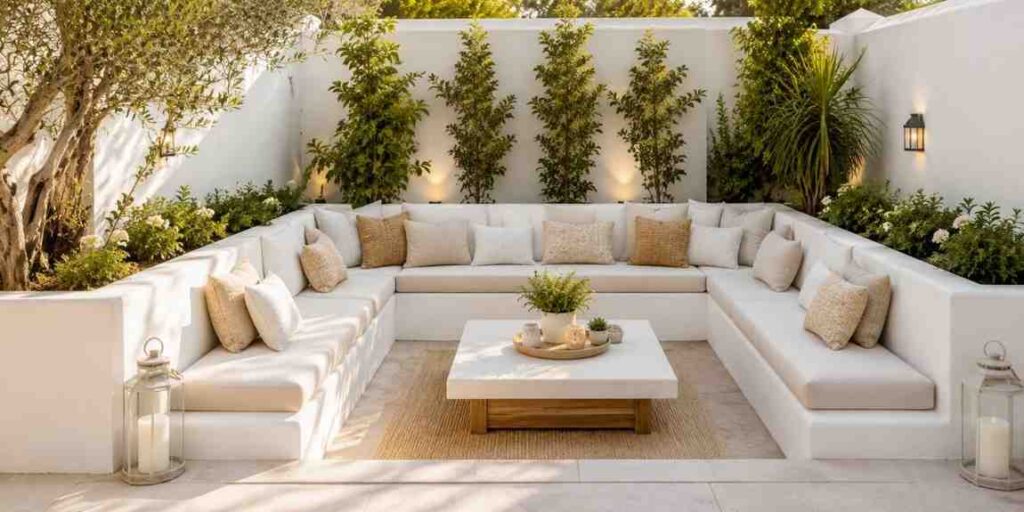
Combine a sofa with two armchairs positioned to form a “U” around a central coffee table or fire feature. This is one of the most versatile garden furniture arrangement ideas because it comfortably seats a crowd while still keeping the group tight enough for one shared conversation no shouting across the yard required.
Best for: medium-to-large patios that host frequent get-togethers.
10. The Small-Space Bistro Corner
For balconies, tiny patios, or garden corners under 60 square feet, a two-seat bistro set tucked against a wall or railing works harder than a full lounge set ever could. Choose foldable or stackable pieces so the space can be cleared for other uses when needed, and use a wall-mounted planter or trellis behind it to add greenery without eating up floor space.
Best for: apartment balconies, tight courtyards, and side-yard nooks.
11. The Modular Reconfigurable Layout
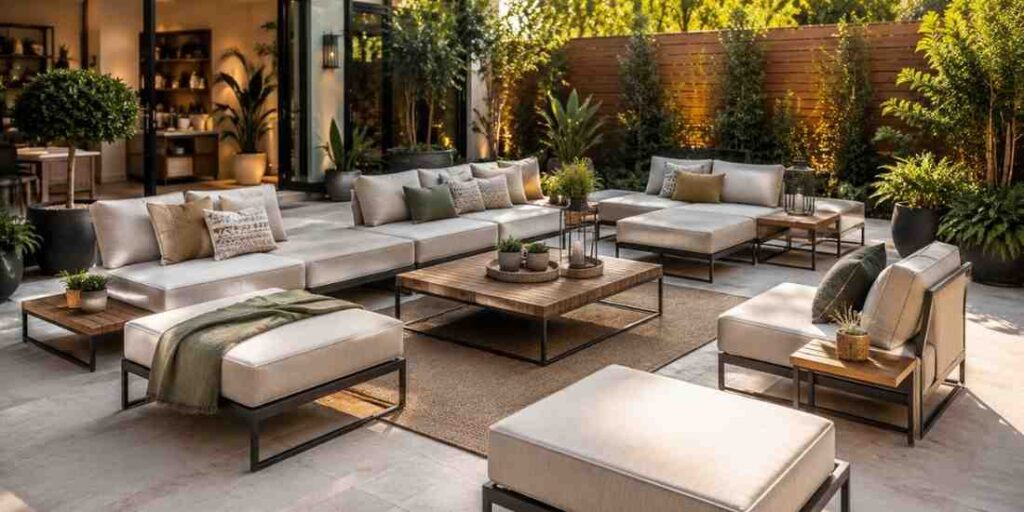
Modular seating individual sections that click together or stand alone is one of the most practical garden furniture arrangement ideas for anyone who entertains different group sizes. Push pieces into a large U-shape for a party, then split them into two smaller clusters for a quiet weekend. Look for sets with hidden storage underneath so cushions and covers can be tucked away between uses.
Best for: households that host often and want one furniture set to do double duty.
12. The View-Framing Layout
If your garden backs onto a view worth showing off a skyline, a lake, mature trees, or even a well-planted flower bed orient your main seating to face it rather than facing each other. A pair of lounge chairs or a single bench positioned toward the view creates a natural, low-key spot to unwind, even without a big group.
Best for: gardens with a scenic backdrop, elevated decks, and rooftop terraces.
13. The Layered Greenery & Furniture Blend
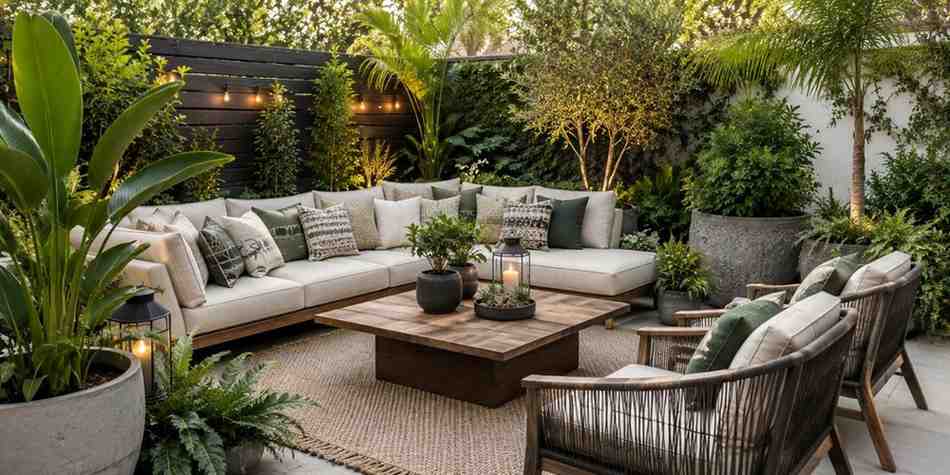
Rather than treating plants as an afterthought, weave them directly into your furniture arrangement. Frame a seating cluster with tall potted plants on two sides, add a low flowering border along the edge of a dining zone, or let a climbing vine grow up a trellis behind a bench. This layout softens hard furniture lines and makes even a brand-new patio set feel like it’s always belonged in the garden.
Best for: garden-forward spaces where plants are as much the focus as the furniture.
Quick Tips Before You Start Rearranging
A few practical basics will save you from redoing the work twice:
- Measure first. Note the dimensions of your space and any fixed features steps, doors, drainpipes before buying or moving furniture.
- Leave the walking room. Aim for at least 24–36 inches of clearance around each seating zone so people can move without squeezing past chairs.
- Anchor with a rug. An outdoor rug instantly defines a zone and makes an arrangement feel finished, even with mismatched pieces.
- Layer in lighting. String lights, lanterns, or solar stake lights extend how long a layout gets used after sunset.
- Choose weather-appropriate materials. Powder-coated aluminum, teak, and all-weather wicker hold up best against sun and rain, so your arrangement stays looking good season after season.
Frequently Asked Questions
How much space do I need for a garden furniture arrangement?
A cozy conversation set can work in as little as 8×8 feet, while a full lounge-plus-dining layout typically needs closer to 12×16 feet or more. The key is leaving clearance for movement, not just fitting furniture in.
What’s the best garden furniture arrangement for a small patio?
A bistro corner (idea #10) or a compact L-shaped sectional (idea #2) makes the most of limited square footage without feeling cramped.
Should furniture face each other or face a view?
Both work it depends on your priority. Face-to-face layouts (idea #3) are best for conversation-focused gatherings, while view-framing layouts (idea #12) are better if you want a quiet retreat to unwind.
How do I arrange furniture around a small backyard fire pit?
Keep four to six chairs in a loose circle, spaced roughly 3 feet from the fire’s edge, so everyone feels the warmth without sitting too close to the flame.
Final Thoughts
The best garden furniture arrangement isn’t the most expensive one, it’s the one that fits how you actually use your outdoor space. Start by identifying your main zone (lounging, dining, or both), pick the layout from this list that matches your square footage, and build outward from there. Small changes, like angling chairs inward or adding a single anchor piece, can transform a forgettable patio into the spot your whole household gravitates toward.