
Foot Gardening Ideas: You don’t need a sprawling backyard to grow more vegetables than you know what to do with. You need a 4×4 box, a grid, and a plan, and most beginners get the plan part wrong before they’ve even planted their first seed.
Square foot gardening isn’t just “gardening in a small space.” It’s a specific system, developed to eliminate the guesswork, wasted seed, and endless weeding that make traditional row gardens so intimidating. Once you understand the grid (idea #2 below is the one that changes everything), you’ll never look at a garden bed the same way again.
These 15 ideas will take you from a bare raised bed to a productive, easy-to-manage garden that produces far more food per square foot than a traditional row garden ever could.
1. Start With the Classic 4×4 Grid
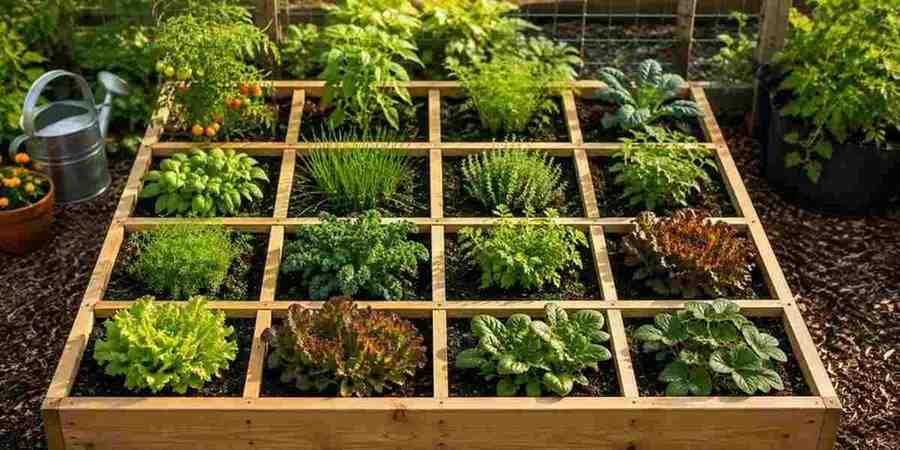
The foundation of square foot gardening is deceptively simple: build (or mark out) a raised bed no more than 4 feet wide, and divide it into a grid of 1-foot-by-1-foot squares, typically 16 squares in a 4×4 layout.n
Why 4 feet? Because it’s the widest bed you can comfortably reach into from either side without stepping on the soil. That one constraint is what makes the entire method work: no compaction, no wasted space on rows you have to walk between, and every square within easy reach.
Here’s the thing: you don’t need to be a carpenter to build this. Wood, bricks, or even string stretched across stakes can define your grid just as effectively as a fancy lattice.
2. Master the 1-4-9-16 Spacing Rule
This is the single idea that makes square foot gardening so much easier than traditional spacing charts. Instead of measuring inches between rows, you just decide how many plants of a given size fit in one square:
- 1 per square: large plants like tomatoes, peppers, or cabbage
- 4 per square: medium plants like lettuce or Swiss chard
- 9 per square: smaller plants like bush beans or spinach
- 16 per square: tiny plants like radishes or carrots
Save this rule once it clicks, you’ll never need a spacing chart or a measuring tape again. Just press a light grid into the soil with your fingers and plant.
3. Mix Your Own Raised-Bed Soil Blend
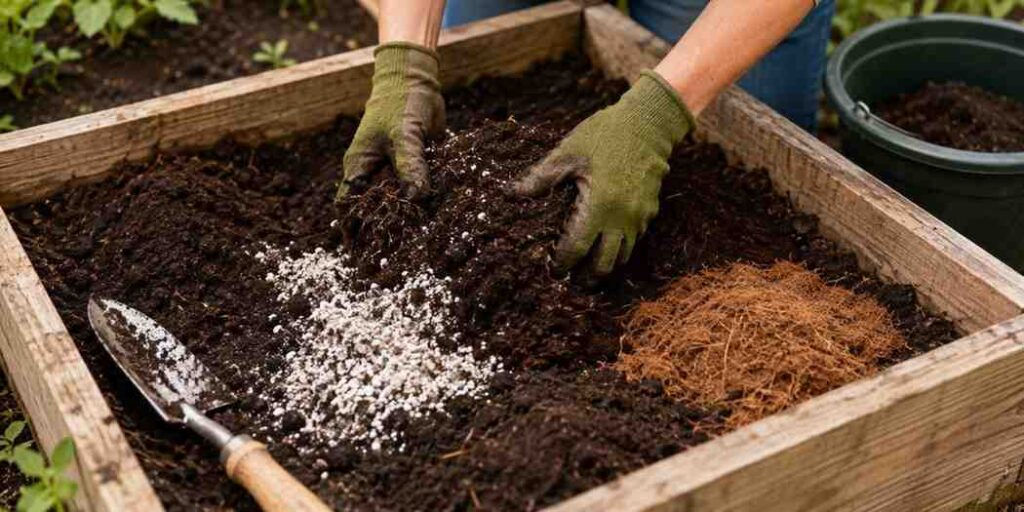
Square foot gardening’s dense planting only works because the soil is doing extra work. The classic mix (often called “Mel’s Mix,” after the method’s creator) blends roughly equal parts compost, peat moss or coconut coir, and coarse vermiculite.
This blend holds moisture without waterlogging, drains well, and stays loose enough for roots to spread even in a tightly packed square. Skip garden soil from the ground it compacts too easily for this style of intensive planting.
4. Build a Simple Grid With Lattice or Twine
A grid isn’t just decorative, it’s your planting map. Thin wood lattice, twine strung between small nails, or even a taped-off wooden frame all work to create visible 1-foot divisions across your bed.
5. Plant Tall Crops on the North Side
Before you start planting, think about the sun. Tall crops tomatoes, pole beans, trellised cucumbers should go on the north side of your bed (in the Northern Hemisphere) so they don’t cast shade over shorter, sun-loving plants like lettuce or peppers.
This one small planning decision prevents a common beginner mistake: a beautiful trellis of climbing beans that accidentally shades out an entire row of struggling seedlings by midsummer.
Read More: 14+ Vegetable Garden Trellis Ideas for a Bigger Harvest in Less Space
6. Add a Trellis to Go Vertical
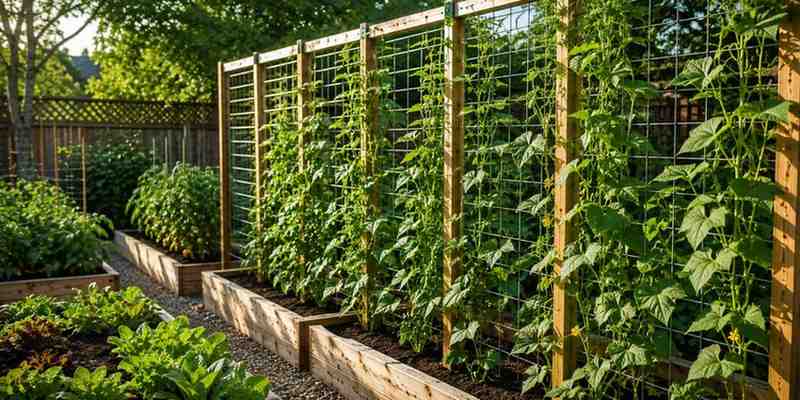
Square foot gardening and vertical growing are a natural pair. A simple trellis, cage, or arch anchored at the back of a square lets vining crops like cucumbers, pole beans, and even small melon varieties grow up instead of sprawling out, freeing up ground-level squares for other crops.
Bucket brigade: so instead of one sprawling squash plant eating four entire squares, a trellised variety can climb and produce in just one.
7. Mix and Match Within a Square
You’re not locked into planting the same crop in every square. A square rated for “4 plants” doesn’t have to be four lettuces; it could be two lettuce plants and two herb seedlings, giving you more variety without sacrificing structure.
This flexibility is part of what makes square foot gardening so satisfying for beginners: you can taste-test a wider variety of crops in a small footprint instead of committing an entire bed to one vegetable.
8. Plan a Themed Square: Salad Garden
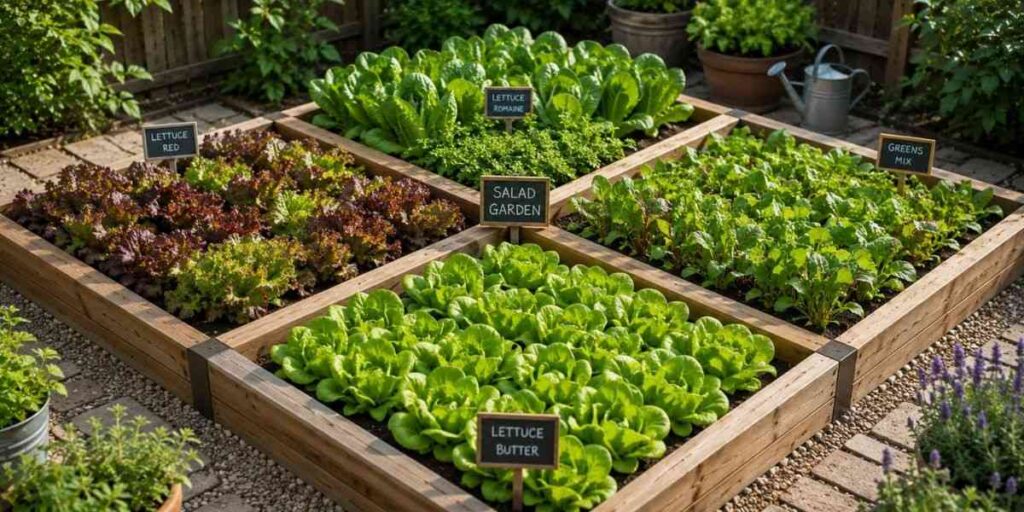
Dedicate a cluster of four to six squares entirely to salad crops lettuce, spinach, radishes, and a few herbs like chives or dill. Because these crops mature quickly and stay compact, a small salad-themed section can keep your kitchen stocked with fresh greens for months.
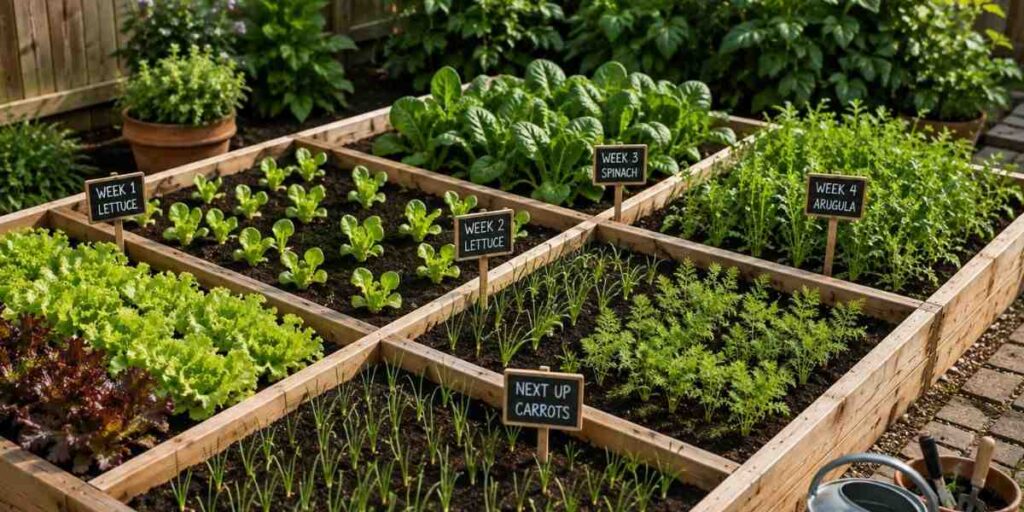
Save-worthy tip: succession-sow a new square of lettuce every couple of weeks so you’re never stuck with an “all at once” harvest that outpaces what you can eat.
9. Plan a Themed Square: Salsa Garden
Group tomatoes, peppers, onions, and cilantro together in adjoining squares, and you’ve got a self-contained salsa garden that doubles as a fun, goal-oriented layout for beginners (and kids).
Themed squares like this make garden planning feel less abstract instead of “what do I plant where,” you’re building toward a specific, satisfying outcome.
10. Practice Succession Planting Square by Square
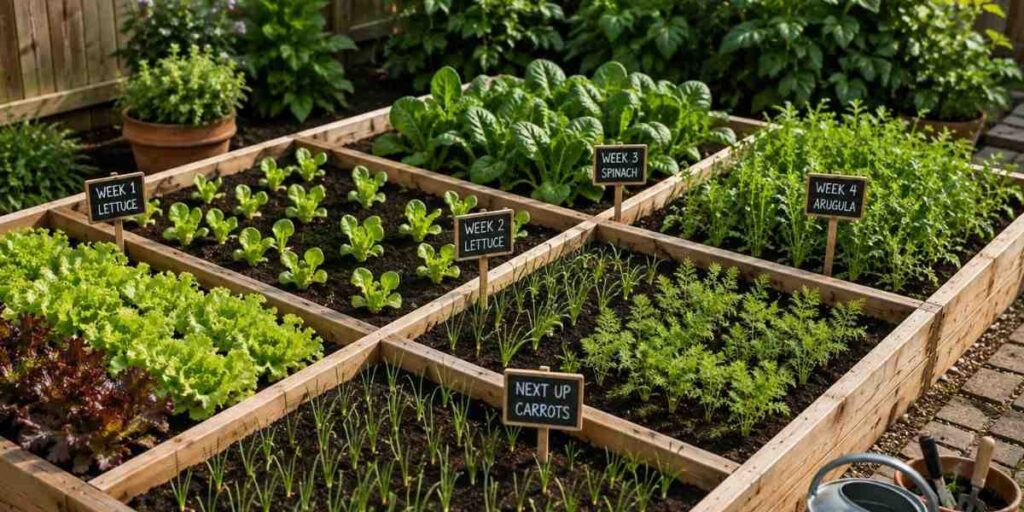
One of the biggest advantages of the grid system is how easy it makes succession planting. As soon as one square finishes producing (say, a square of spring radishes), you can immediately replant it with something else, no need to rework an entire bed.
This keeps your garden continuously productive from spring through fall, instead of one big harvest followed by empty soil.
11. Double-Crop Cool- and Warm-Season Vegetables
Plan ahead so a cool-season crop and a warm-season crop can share the same square across a single growing year. Spinach or peas in early spring, for example, can be pulled and replaced with beans or peppers once the weather warms, effectively doubling that square’s output for the season.
Save this idea: sketch out a rough calendar for each square before you plant your first seed, so you already know what’s coming next when the first crop finishes.
12. Pair Companion Plants in Neighboring Squares
Certain plant pairings help each other repel pests, improving flavor, or making better use of space. Classic combinations like tomatoes and basil, or carrots and onions, work well when planted in adjacent squares rather than mixed randomly throughout the bed.
Companion planting in a grid system is easier to plan than in a traditional row garden, since you’re deciding neighbor-by-neighbor instead of guessing across a long row.
13. Dedicate a Square (or Two) to Pollinator Flowers
It’s tempting to fill every square with edible crops, but a square or two of pollinator-friendly flowers, marigolds, nasturtiums, zinnias pays for itself by drawing in the bees and beneficial insects your vegetables need to fruit well.
Nasturtiums and marigolds also do double duty as natural pest deterrents for nearby vegetable squares.
14. Water Efficiently With Drip or Soaker Lines
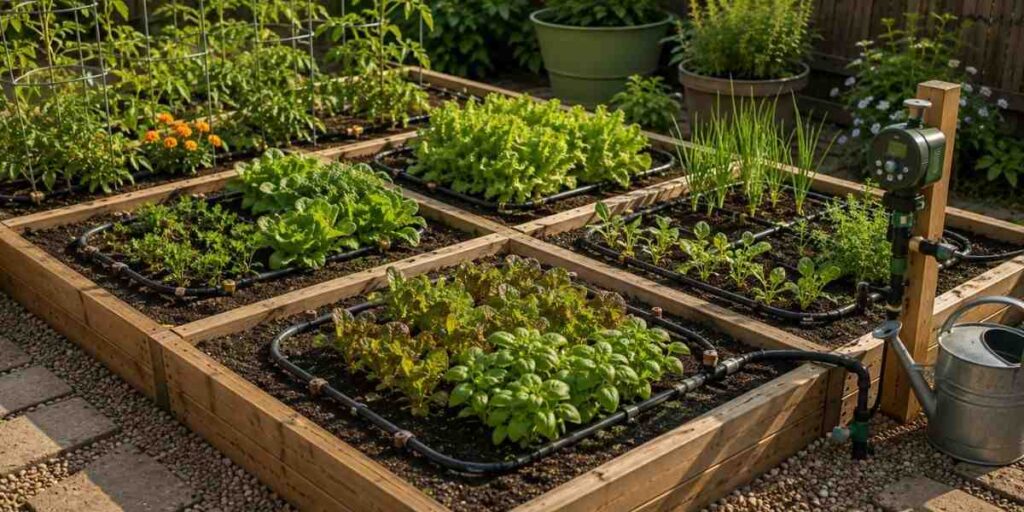
Because square foot gardens are planted so densely, consistent moisture matters more than it would in a spread-out row garden. A simple soaker hose or drip line woven through the bed delivers water directly to the root zone, reducing evaporation and keeping foliage dry (which helps prevent disease).
Hand watering works too, especially for smaller beds, just be consistent, since densely packed roots dry out faster than a sparse traditional garden.
15. Keep a Garden Journal or Planting Map
Sketch your grid on paper (or use a simple garden planning app) and note what you planted in each square, when, and how it performed. This single habit is what turns a good first season into an even better second one.
Save this idea: next year, you’ll know exactly which squares to rotate crops out of, which pairings worked, and which themed squares are worth repeating.
Frequently Asked Questions
How many plants can I fit in a square foot garden?
It depends on plant size: 1 large plant, 4 medium plants, 9 small plants, or 16 very small plants per square foot, following the standard spacing rule.
What’s the best soil for square foot gardening?
A blended mix of roughly equal parts compost, peat moss or coconut coir, and coarse vermiculite is the classic recommendation; it holds moisture and stays loose enough for dense planting.
How deep does a square foot garden bed need to be?
Most square foot gardens work well at 6 to 12 inches deep, though deeper beds give root vegetables like carrots more room to develop.
Can you do square foot gardening without a raised bed?
Yes, while raised beds are common, you can mark a grid directly into an in-ground bed using string or thin wood, as long as the soil is well-amended and not compacted.
Is square foot gardening good for beginners?
Very much so. The grid system removes the guesswork around spacing, reduces weeding and wasted seed, and makes it easy to plan succession planting one small square at a time.
Final Thoughts
Square foot gardening turns “I don’t have room to grow vegetables” into “I have sixteen little opportunities per bed.” Start with a single 4×4 grid, master the spacing rule, and let yourself experiment with themed squares and succession planting as you go. It’s one of the most forgiving ways for a beginner to get a genuinely productive kitchen garden up and running in a single season.