
Most backyards don’t fail because of bad plants or bad luck they fail because they were never actually designed. They just accumulated: a patio set here, a few shrubs there, a fire pit added on a whim two summers ago. The result is a yard that’s fine, but never quite feels finished.
A backyard garden design idea worth committing to does two things at once: it gives your space a clear personality, and it makes every element in it work together. Here are 14+ backyard garden design ideas from foundational planning to full style directions to help you build a yard that feels like a destination instead of an afterthought.
1. Start With Site Evaluation, Not Pinterest
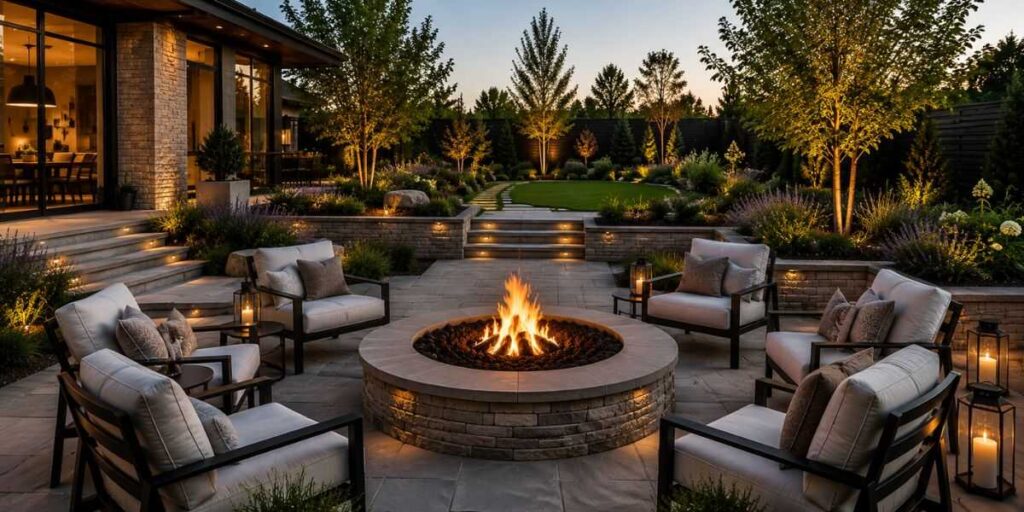
Backyard Garden Design Ideas Save this for later: the biggest design mistake isn’t picking the “wrong” style it’s picking a style before you understand your site.
Before choosing a look, walk your yard and answer a few honest questions: How does light move across the space through the day? Is the ground level, sloped, or irregular? What existing trees or structures are worth building around instead of removing? A design that ignores these basics will fight your yard instead of working with it, no matter how good it looks in a photo.
2. Map Function Before Style
Here’s the thing: a beautiful garden that doesn’t match how you actually live in it gets abandoned within a year. Before you touch plant lists or hardscape materials, decide what your backyard needs to do dining, quiet reading, kids’ play, vegetable growing, entertaining, or some mix of all four.
Quick tip: Rank your top three uses in order of priority. That ranking should drive every design decision that follows, from layout to plant choice.
3. Design a Cottage Garden for Romantic, Layered Charm
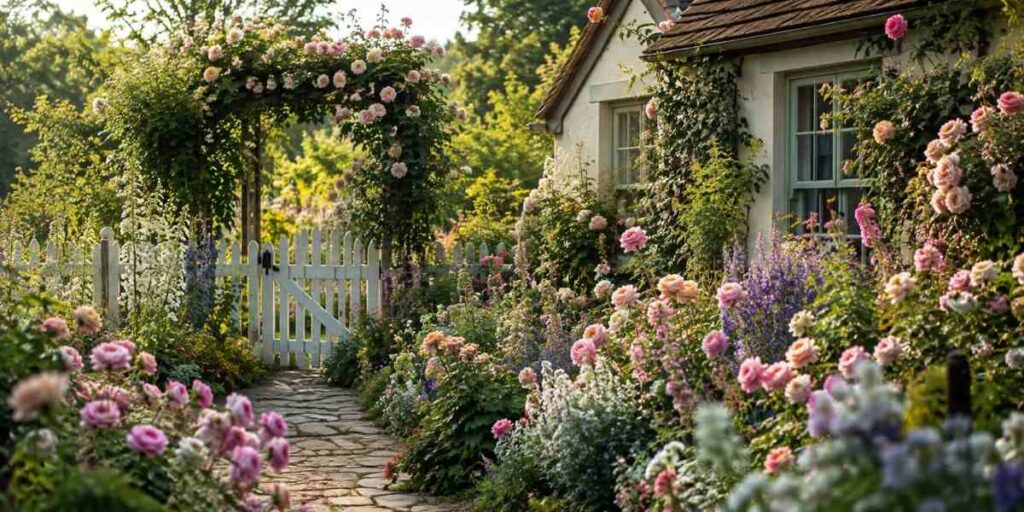
The cottage garden style is built on mixed, slightly wild-looking plantings climbing roses, flowering perennials, and herbs layered together in a way that looks casual but is actually carefully planned. Winding paths in brick, gravel, or steppingstones invite exploration rather than a straight walk from A to B.
This style rewards patience cottage gardens look better every year as plants fill in and self-seed, so resist the urge to over-plant everything at once in year one.
4. Try Modern Minimalist for Clean, Architectural Lines
If cottage gardens are about abundance, modern minimalist design is about restraint. This style prioritizes quality over quantity a small number of architectural plant varieties, repeated for rhythm, paired with clean hardscape materials like concrete, metal, or glass.
So what does this mean for you? Fewer plant varieties don’t mean less impact it means each one has to be chosen deliberately. Ornamental grasses, boxwood spheres, or a single striking specimen tree do most of the visual work here.
Read More: 5 Small Backyard Landscaping Ideas That Maximize Your Space
5. Create an Asian-Inspired Zen Garden for Calm
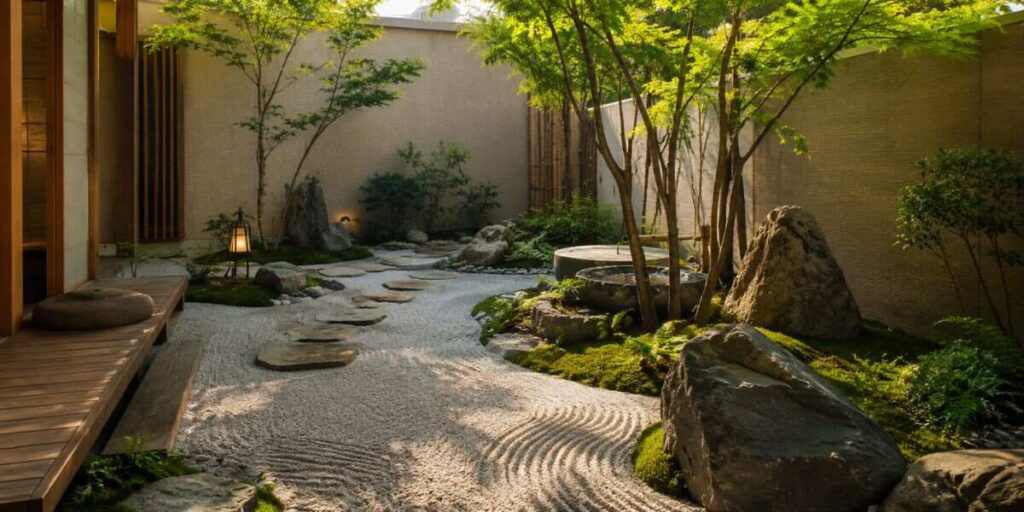
A Japanese-influenced garden style emphasizes harmony over abundance a careful composition of rock, water, and a restrained plant palette instead of a full, busy bed. Moss-covered stones, thoughtfully pruned maples, and a single well-placed lantern or basin can turn a small corner into a genuinely meditative space.
Bucket brigade: but there’s a catch this style depends entirely on restraint. Adding “just one more” decorative element is the fastest way to undercut the calm the whole design is built on.
6. Go Mediterranean With Warmth and Drought-Tolerant Texture
A Mediterranean-style backyard channels the sun-soaked hillsides of southern Europe: lavender, olive trees, and rosemary, paired with terracotta pots, natural stone, and wrought iron accents. Gravel often replaces thirsty lawn, both for water savings and for that relaxed, rustic texture.
- Terracotta and warm stone tones anchor the hardscape
- Drought-tolerant herbs and silvery foliage plants (lavender, santolina, olive) carry the planting
- A small tiled fountain or wall-mounted basin adds the sound of water without needing a full pond
7. Design for a Sloped Yard with Terraces
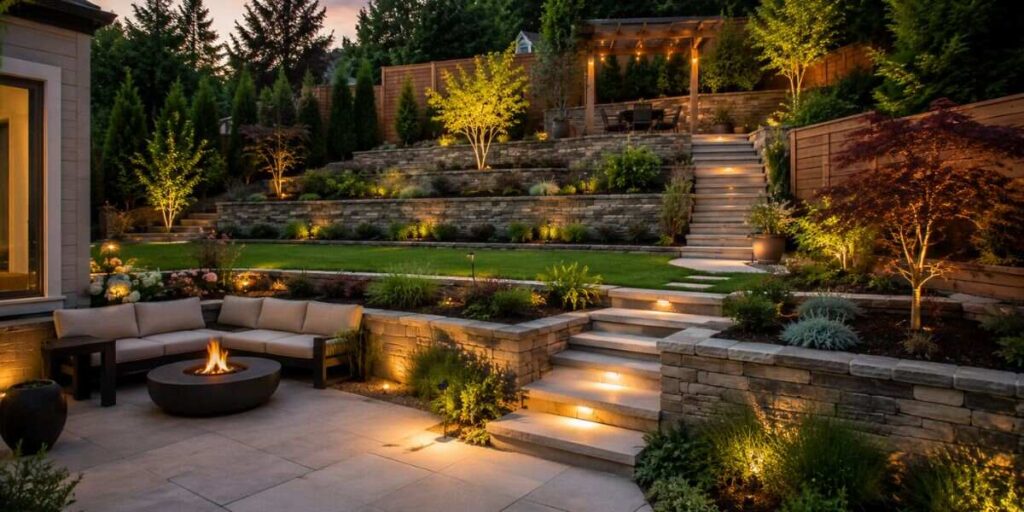
A slope isn’t a design problem it’s an opportunity most flat yards don’t get. Terracing a hillside into two or three level sections (connected by simple stone or wood steps) creates distinct “rooms” at each elevation: a dining terrace up top, a lounge level halfway down, a shaded seating nook at the bottom.
Quick tip: Pair terracing with drip irrigation. Sloped ground sheds water fast, and a targeted drip system keeps plantings from drying out between levels.
8. Build an Outdoor Living Room
Blurring the line between indoor and outdoor space is one of the highest-impact design moves available. Extend your interior flooring style onto an adjacent patio, add a rug and real seating furniture (not just a folding chair setup), and frame the space with planting the way you’d frame a room with furniture.
This design idea works with any style above cottage, modern, Mediterranean, or Zen it’s a layout principle, not a look.
9. Anchor the Design with a Water Feature
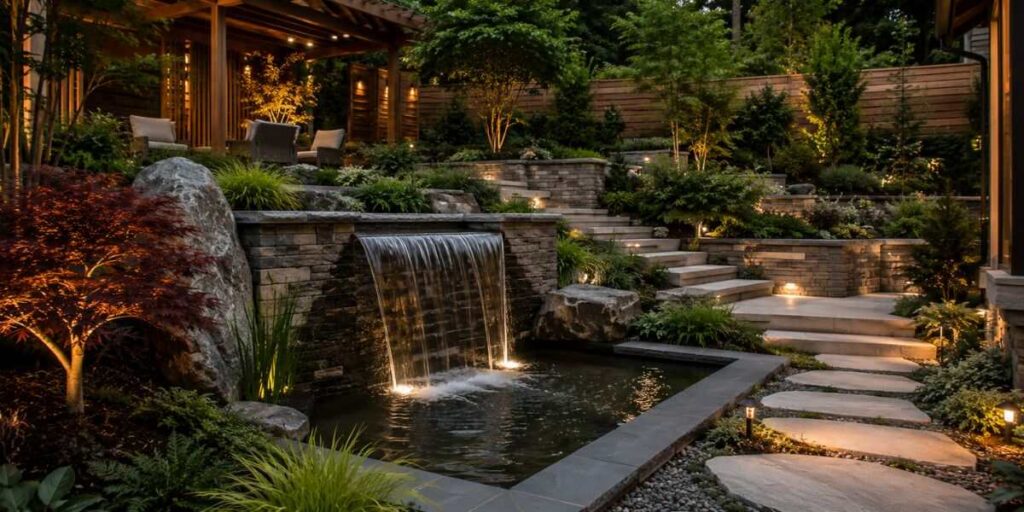
Almost every strong backyard garden design uses at least one water element as a focal point a fountain, a small pond, or even a simple recirculating basin. Water adds movement and sound to an otherwise static space, and it gives the eye (and the ear) something to settle on.
Pin this idea: a small wall-mounted or tabletop fountain delivers most of the same calming effect as a full pond, at a fraction of the installation complexity.
10. Design a Pollinator and Native Plant Garden
A design built around native and pollinator-friendly plants does double duty: it looks intentional and layered through multiple seasons, and it supports the bees, butterflies, and birds your yard depends on. Native grasses and wildflowers, arranged in drifts rather than straight rows, create a relaxed, low-maintenance look that only gets better with time.
This pairs especially well with a prairie or informal garden style curved borders, mixed heights, and minimal straight lines.
11. Layer Your Outdoor Lighting Design
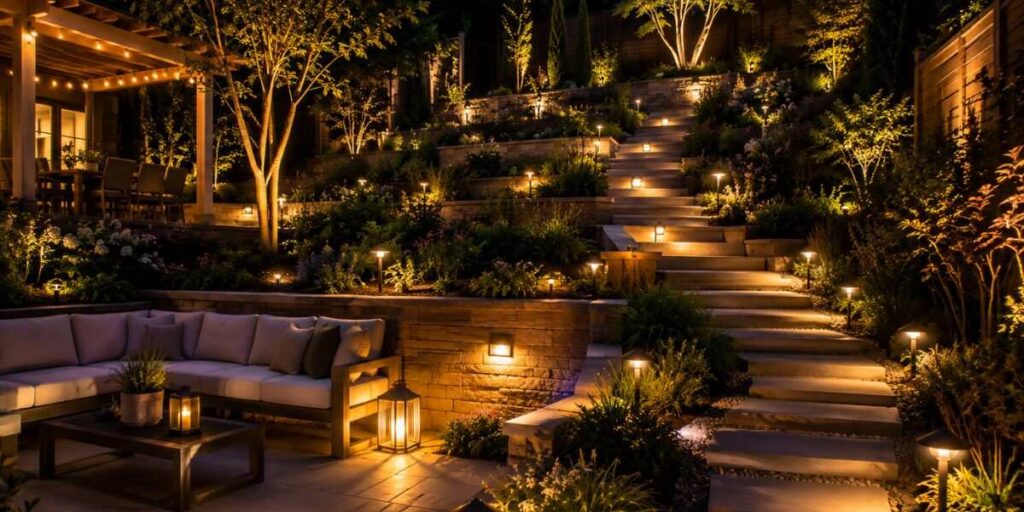
Lighting is the design element most backyards get wrong by treating it as an afterthought instead of a layer. A well-designed yard uses at least three lighting layers: ambient (string lights or lanterns for overall glow), task (lighting over a dining or cooking area), and accent (uplighting on a specimen tree or architectural plant).
Here’s the payoff: layered lighting is what makes a backyard design feel finished at 9 p.m., not just at 2 p.m. in photos.
12. Create a Dedicated Kitchen or Edible Garden Zone
Rather than tucking vegetables into a forgotten side bed, design a proper edible zone as its own “room” raised beds or a kitchen garden layout positioned near the patio, so herbs and produce are part of daily life instead of a separate chore. Mixing in ornamentals (marigolds, nasturtiums) keeps it visually part of the whole design rather than feeling purely functional.
13. Design Around a Fire Feature
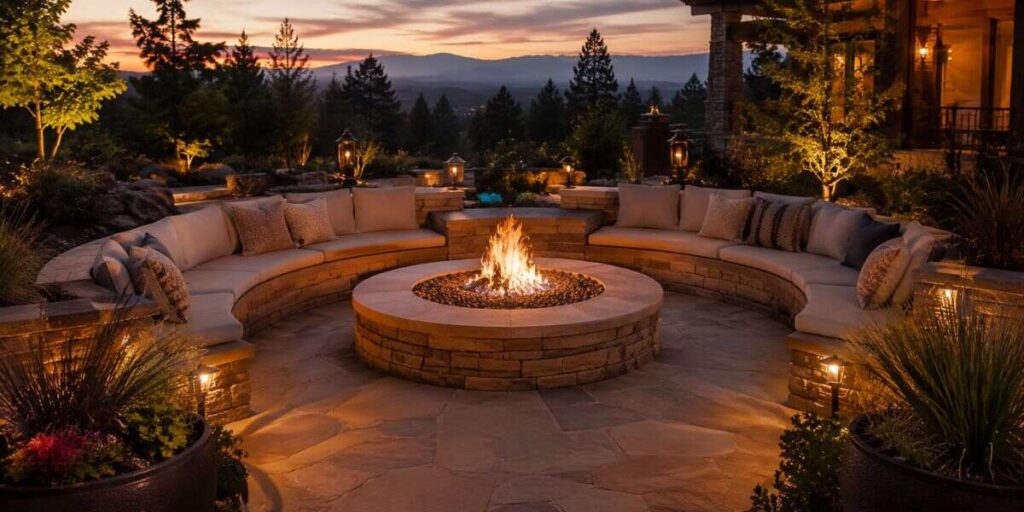
A fire pit or fireplace gives a backyard design a natural gathering point and extends usable time into cooler evenings. Position seating in a loose circle or arc around it and let your pathway design lead toward it as the yard’s visual destination the same way a living room is arranged around a focal wall.
14. Add a Dedicated Play or Pet Zone
If your backyard needs to work for kids or pets, design that zone deliberately rather than letting it sprawl into the rest of the yard. A defined play area mulch or turf-bordered, positioned where you can see it from the patio keeps the rest of the garden design intact instead of getting overrun.
Quick tip: Use planting or a low border (not a hard fence) to define the play zone’s edge it stays visually connected to the rest of the design instead of looking bolted on.
15. Use Moss or Shade Groundcover for Deep-Shade Corners
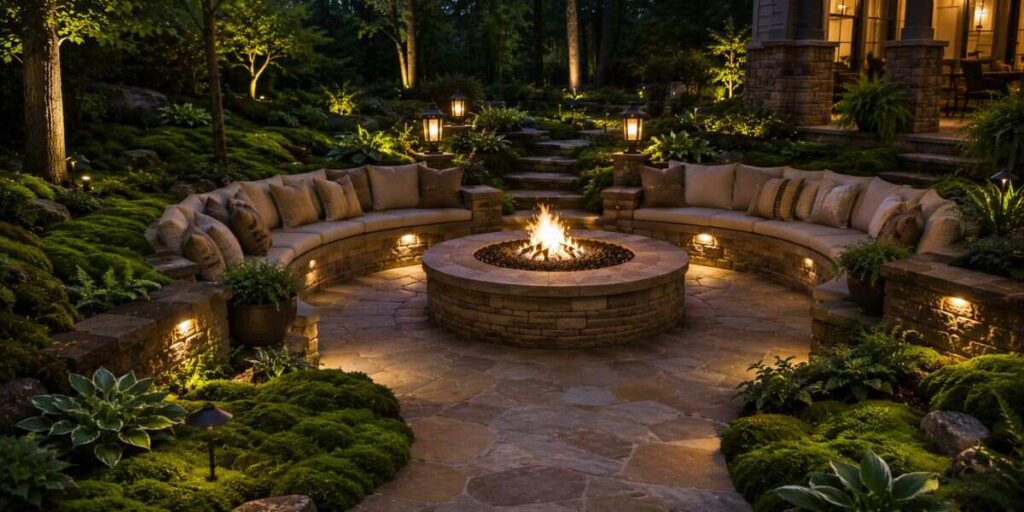
Every design eventually runs into a spot where grass and most flowering plants simply won’t grow deep shade under a mature tree, for instance. Rather than fighting it, design that corner around moss or shade-loving groundcover. It requires no mowing, stays green year-round in the right climate, and turns a “dead zone” into a quiet, textural feature.
Quick Recap: Backyard Garden Design Checklist
- Evaluate your site (light, slope, existing trees) before choosing a style
- Rank your top uses for the space before finalizing layout
- Pick one cohesive style cottage, modern minimalist, Mediterranean, or Zen rather than mixing several
- Anchor the design with one focal point: water, fire, or a specimen tree
- Layer your lighting design instead of treating it as an afterthought
- Design difficult zones (slopes, shade, play areas) on purpose instead of avoiding them
Frequently Asked Questions
How do I choose a backyard garden design style?
Start with your home’s existing architecture and your own aesthetic preferences, then evaluate your site conditions (light, climate, space). A style that fights your climate a lush cottage garden in a drought-prone region, for example will always require more maintenance than one that works with it.
What’s the most low-maintenance backyard design style?
Mediterranean and modern minimalist designs are generally the lowest-maintenance, since both rely on drought-tolerant or architectural plants in smaller quantities rather than dense, high-upkeep planting beds.
Do I need a professional to design my backyard garden?
Not necessarily. A clear site evaluation, a function map, and one committed style direction can take you most of the way. A professional becomes more valuable for structural work like grading, terracing a slope, or major hardscape installation.
Can I combine multiple garden design styles?
It’s possible, but riskier most successful backyards commit to one primary style with maybe one complementary influence (a Mediterranean garden with a Zen-inspired seating corner, for instance) rather than blending several unrelated looks throughout.
Final Thoughts
A backyard garden design idea only becomes a design once it accounts for your site, your actual daily use of the space, and a style you’re willing to commit to. Pick the direction that fits your home and climate, anchor it with one strong focal point, and layer in the details lighting, paths, planting from there. Do that, and your backyard stops being a collection of separate additions and starts being a place with a name and a personality of its own.