
Ask any raised bed gardener what they’d do differently on their first tomato season, and you’ll get the same answer almost every time: “I wish I’d known this before I planted.” Tomatoes are forgiving enough to survive a few mistakes, but a little planning turns a decent harvest into a genuinely overflowing one.
Below are 15 tomato garden ideas built specifically for raised beds, with the spacing, soil, support, and layout tricks that separate a so-so tomato patch from the kind neighbors ask about. An idea alone can be the difference between a leggy, wind-tossed plant and one that stands strong all season.
Why Raised Beds Are Ideal for Growing Tomatoes
Here’s the thing: tomatoes are heavy feeders with deep root systems, and raised beds give you total control over both. You choose the soil, you control the drainage, and the elevated height means warmer soil earlier in spring which means earlier planting and often an earlier harvest.
Raised beds also make it dramatically easier to manage the two things tomatoes care about most: consistent moisture and rich, well-draining soil. Let’s dig into exactly how to make the most of that setup.
1. Choose the Right Bed Depth (At Least 18–24 Inches)
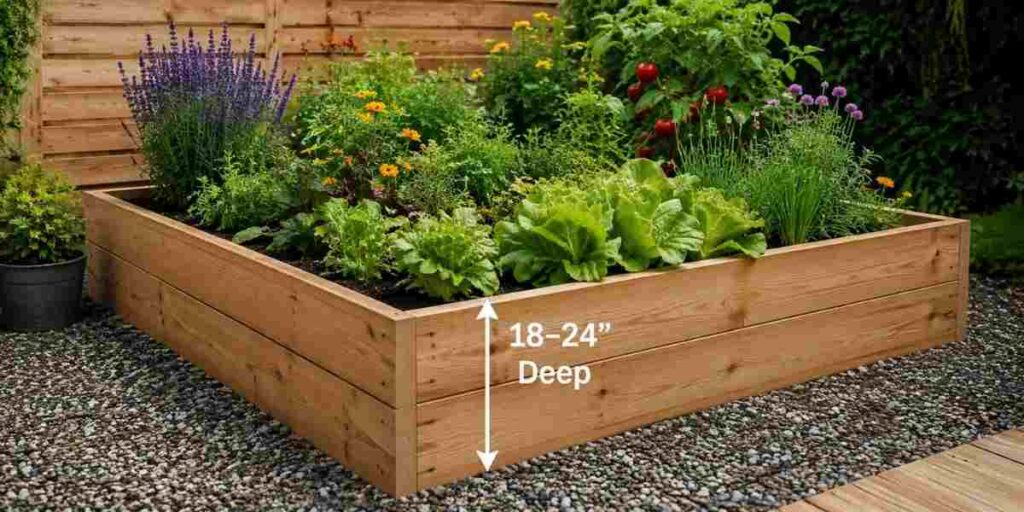
Tomatoes are deep-rooted plants, and shallow raised beds can leave them stressed and stunted by midsummer. Aim for a bed depth of at least 18 inches, and 24 inches if you can manage it the extra root room translates directly into a stronger, more drought-resistant plant.
Here’s why this matters more than people realize: a deeper bed holds more soil volume, which means it dries out more slowly between waterings. That buffer can be the difference between a healthy plant and one that’s stressed during a hot, dry stretch.
2. Companion Plant With Basil and Marigolds
Tomatoes have a few classic garden companions for good reason. Basil is a good companion plant for tomatoes, and it also perfumes the bed with its fragrance, while marigolds are widely planted alongside tomatoes to help discourage certain pests.
Tuck a basil plant or two between every two or three tomato plants, and edge the bed with marigolds for a border that’s as functional as it is pretty. Bonus: you’ll have fresh basil ready right when your tomatoes start ripening a caprese salad practically plants itself.
3. Use Corner Planting for a Compact 4×4 Bed
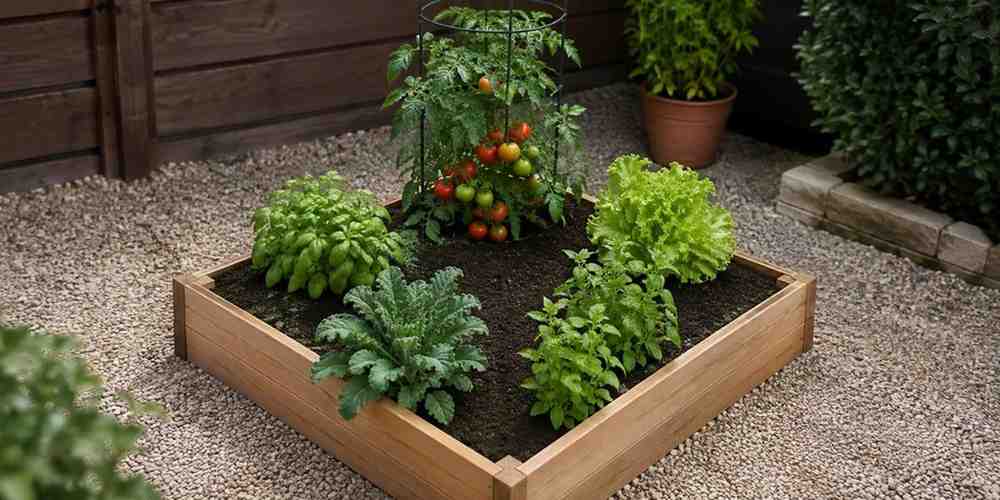
If you’re working with a single 4×4 raised bed, don’t line your tomatoes up in a straight row down the middle plant them near each corner instead. In a proven 4×4 heirloom tomato layout, four tomatoes are planted near each corner, with herbs planted along the center of each side.
This layout maximizes airflow between plants (crucial for disease prevention more on that in while still fitting four full-sized tomato plants and a ring of herbs into a genuinely small footprint.
4. Add a Trellis for Vertical Growing
Indeterminate tomato varieties (the kind that keep growing and producing all season) can easily reach 6 feet or taller, and a trellis is one of the best ways to manage that height inside a raised bed without the plant sprawling into your walkways.
A simple cattle-panel arch, a row of stakes with twine run between them, or a purpose-built A-frame trellis all work well. Training your tomatoes vertically also means better sun exposure on more of the plant, which often translates directly into a bigger harvest per square foot.
Read More: 13+ Fall Vegetable Garden Ideas for a Second Harvest You Didn’t Know Was Possible
5. Mix Determinate and Indeterminate Varieties
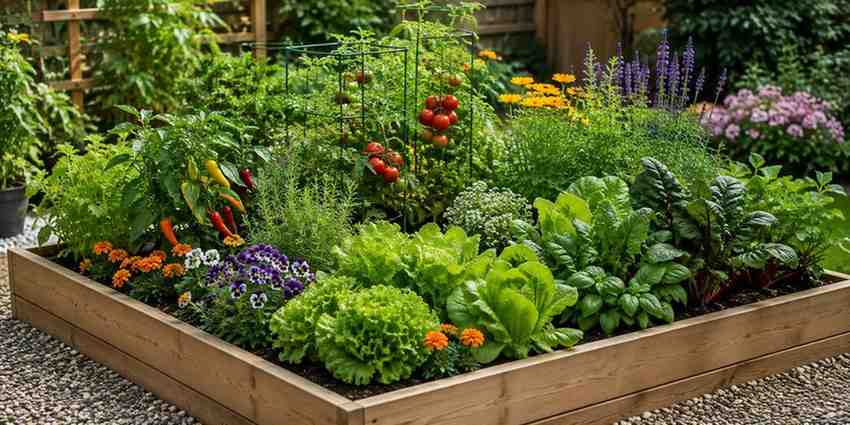
Determinate tomatoes (bush-type, like most Roma varieties) grow to a set size, produce their fruit over a shorter window, and stay relatively compact great for smaller beds or gardeners who want one big harvest for canning. Indeterminate varieties (like most cherry and heirloom types) keep growing and producing steadily until frost.
Bucket brigade moment: But here’s the real advantage planting a mix of both gives you a steady trickle of fresh tomatoes from an indeterminate plant AND a bigger single harvest window from a determinate one, rather than betting your whole season on one growth habit.
6. Install a Drip Irrigation or Self-Watering System
Consistent moisture is one of the single biggest factors in preventing common tomato problems like blossom end rot and cracked fruit, and hand-watering makes true consistency hard to achieve. A self-watering system can be a lifesaver in hot climates, keeping tomatoes hydrated with far less daily effort.
A basic drip irrigation kit on a timer, or a raised-bed watering grid, delivers water directly to the root zone at the same time every day which your tomatoes will reward with steadier, more even growth.
Save-worthy tip: Inconsistent watering dry one week, soaked the next is one of the top causes of split tomatoes and blossom-end rot. A drip system solves this almost automatically.
7. Set Up Cages or Stakes at Planting Time, Not Later
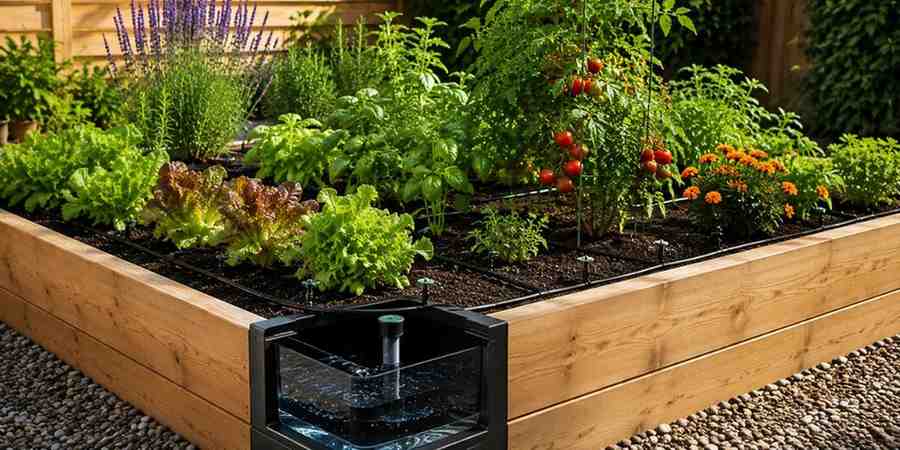
One of the most common raised bed tomato mistakes is waiting until the plant is already sprawling to add support. Install your cage, stake, or trellis clip at the same time you transplant before the roots have spread and before you risk damaging them by driving a stake in later.
Sturdy metal cages tend to outlast flimsy cone-shaped ones by several seasons, which makes them a better long-term investment for a raised bed you’ll replant year after year.
8. Amend With a Premium Raised Bed Soil Mix
Raised beds drain faster than in-ground plots, which means the soil you start with matters enormously. A premium raised bed soil mix gives tomatoes just the right weight and texture for raised bed growing, and pairing it with a slow-release, tomato-specific plant food ensures the heavy feeding these plants need throughout the season.
Refresh at least the top few inches of your bed with fresh compost each year tomatoes pull a lot of nutrients from the soil, and raised beds don’t replenish themselves the way native ground does.
9. Bury the Stem Deep When Transplanting

This is the trick most new gardeners have never heard, and it makes a real difference. Unlike most vegetables, tomatoes will grow new roots anywhere along a buried stem so plant your seedling deep, burying two-thirds of the stem (removing the lower leaves first) rather than just the root ball.
The payoff: a bigger, more extensive root system than a shallow-planted seedling would ever develop, which means better drought tolerance and a sturdier plant that’s less likely to topple in wind or heavy rain.
10. Mulch to Retain Moisture and Block Weeds
A 2–3 inch layer of straw, shredded leaves, or wood mulch around your tomato plants does triple duty: it locks in soil moisture between waterings, suppresses weeds that would otherwise compete for nutrients, and keeps soil-borne diseases from splashing up onto lower leaves during watering or rain.
Apply mulch once your seedlings are a few inches tall and the soil has warmed mulching too early can actually keep cold soil from warming up as quickly in spring.
11. Rotate Your Tomato Bed Each Season
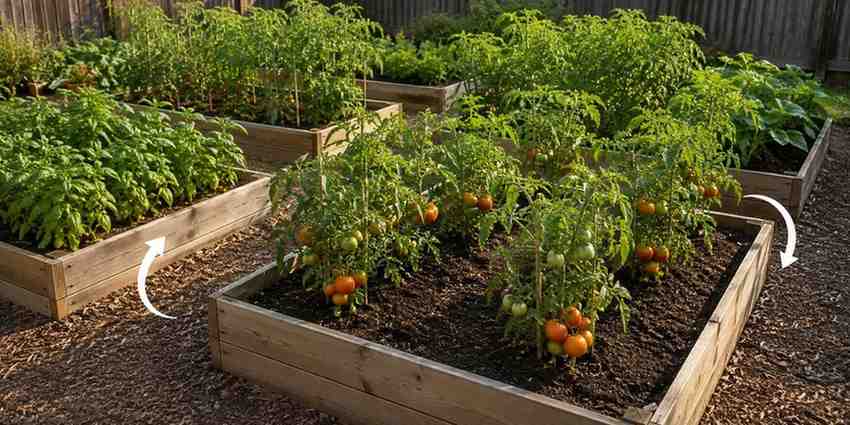
Planting tomatoes in the same spot year after year gives soil-borne diseases like blight a chance to build up over time. If you have multiple raised beds, having multiple beds makes crop rotation easier over time and gives larger plants the space they need to thrive.
Even in a single-bed setup, rotate tomatoes with a different plant family (like beans, lettuce, or root vegetables) every other year to help keep the soil healthier and disease pressure lower long-term.
12. Extend the Season With a Cold Frame or Row Cover
A cold frame protects tomatoes from unexpected frosts, extending the growing season on both ends letting you transplant a little earlier in spring and keep harvesting a little later into fall. A simple hinged cold frame or a floating row cover thrown over hoops on a cold night can buy you several extra weeks of tomatoes.
This is especially valuable for raised beds, since the elevated soil already warms faster in spring a cold frame just extends that natural head start even further.
13. Underplant With Low-Growing Herbs or Lettuce
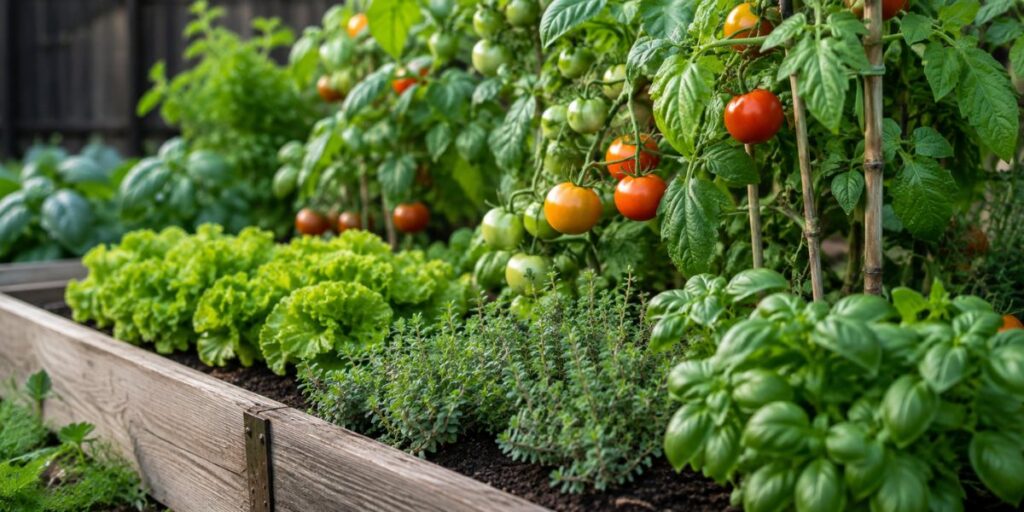
The space directly beneath a staked or trellised tomato plant often goes completely unused, which is a missed opportunity in a raised bed where every square foot counts. Tuck in low-growing lettuce, spinach, or a creeping herb like thyme underneath, and you’ll get a second harvest from the same footprint.
Just make sure the underplanting is shallow-rooted so it isn’t competing directly with your tomato’s root zone for water and nutrients.
14. Space Plants for Airflow to Prevent Disease
Crowded tomato plants trap humidity around their leaves, which is exactly the environment fungal diseases like early blight thrive in. Give each plant at least 18–24 inches of breathing room in every direction, even if that means fewer plants per bed than you originally hoped for.
Quick recap, because it’s worth repeating: Good airflow does more to prevent disease than any spray you could apply after the fact. Spacing generously up front saves you a fight against fungus later.
15. Try a Grid or Square-Foot Planting Layout
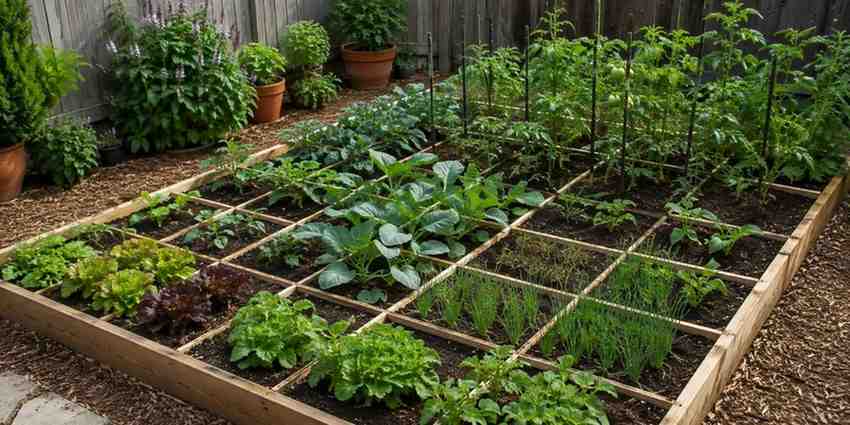
If you’re growing more than just tomatoes in your raised bed, a grid-based layout dedicating specific rows to onions, root vegetables, peppers, and a row with two tomato plants and a companion basil keeps your whole bed organized and easy to manage at a glance.
This approach makes it simple to see exactly what’s planted where, track what needs watering or harvesting, and plan next season’s crop rotation without guesswork.
Frequently Asked Questions
How many tomato plants fit in a 4×4 raised bed?
A 4×4 bed comfortably fits about four tomato plants, ideally spaced near the corners (#3) with companion herbs filling the center space between them. Crowding in more than that tends to reduce airflow and increase disease risk.
How deep does a raised bed need to be for tomatoes?
Aim for at least 18 inches of soil depth, with 24 inches being ideal (#1). Tomatoes are deep-rooted plants, and a shallower bed can leave them more vulnerable to drought stress and stunted growth during the hottest part of summer.
Do tomatoes need a trellis or cage in a raised bed?
Most tomato varieties benefit from some form of support, especially indeterminate types that can grow well past six feet tall. A cage, stake, or trellis keeps fruit off the soil, improves airflow, and makes harvesting significantly easier.
What should I plant with tomatoes in a raised bed?
Basil and marigolds are classic, well-loved companions, and low-growing herbs or lettuce can fill in the space beneath a trellised plant. Avoid planting tomatoes near members of the brassica family, like broccoli or cabbage, which tend to compete for similar nutrients.
Bring It All Together
A thriving raised bed tomato garden really comes down to a handful of decisions made early: enough soil depth, the right companions, consistent water, and support installed before it’s needed. Get those fundamentals right, and the rest of the season mostly takes care of itself.
Start with just one or two ideas from this list this season des. Thiep planting and a simple drip system are two of the highest-impact, lowest-effort changes you can make. Then build from there, bed by bed, until your raised bed is producing the kind of tomato harvest that has neighbors asking for your secret.