
Your tomatoes are sprawling across the walking path, your cucumbers are rotting where they touch the soil, and you’re out of the garden bed before you’re out of vegetables you want to grow. The fix isn’t more land, it’s height.
A trellis doesn’t just tidy up a vining plant. It changes how the plant grows: fruit lifted off the soil resists disease, leaves get better airflow, and produce sits at eye level instead of hiding under a tangle of vines. Below are 16 vegetable garden trellis ideas, from five-minute repurposed builds to sturdier structures worth a weekend plus which crops actually perform best on each one, a detail most trellis roundups skip entirely.
Why Trellising Changes Everything (Not Just the Look)
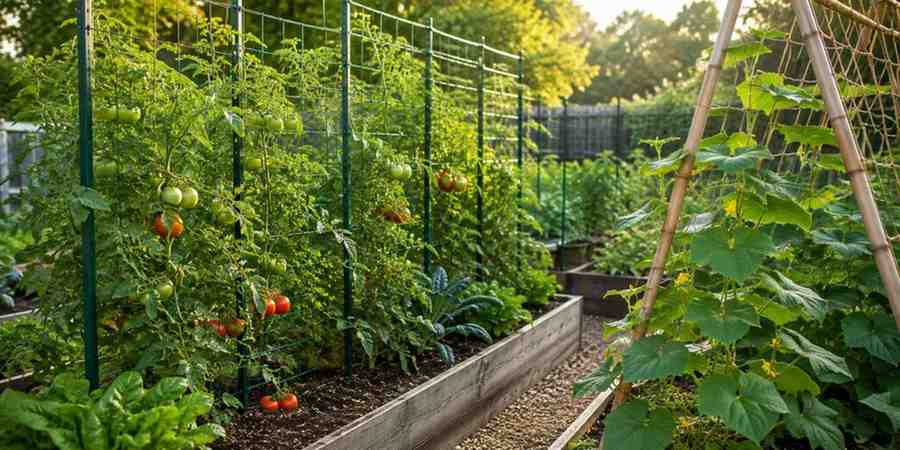
Vertical growing solves four problems at once: it frees up ground space for more crops, it lifts fruit away from soil-borne disease, it improves air circulation around leaves (which cuts down on fungal issues like powdery mildew), and it makes harvesting dramatically easier since produce hangs at eye level instead of buried under foliage. The trellis itself matters less than matching it to what you’re growing: a flimsy teepee will collapse under a loaded cucumber vine, while an overbuilt cattle panel arch is overkill for a row of peas.
Purpose-Built Trellis Structures
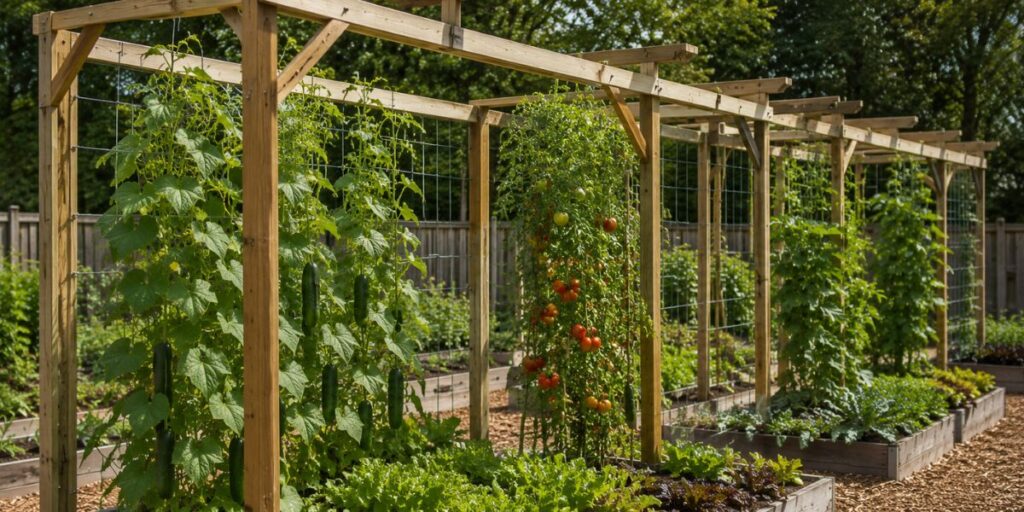
1. The Classic A-Frame Trellis
A simple wooden A-frame is one of the most reliable supports for vining vegetables, and it folds flat for off-season storage, a real advantage if your garden space doubles as a patio in winter. Tie twine between the slats to give small tendrils extra grip points.
Best for: cucumbers, pole beans, peas
2. Cattle Panel Arch (Tunnel Trellis)
Bend a cattle or hog panel into an arch between two rows of raised beds and you get one of the sturdiest, most productive trellis systems available strong enough for heavy squash and melons, and dramatic enough to become a walkable tunnel through the garden. Frame the base with simple 1×1 boards for stability.
Best for: squash, melons, heavy pole beans
3. Teepee Trellis
Three or more poles lashed together at the top into a cone shape create one of the fastest, cheapest trellises to build and premade folding versions run under $20. The wide surface area gives climbing plants plenty of spots to grab hold.
Best for: pole beans, peas, small cucumbers
4. Pyramid Tuteur
A four-sided, tapering wood or metal structure, the tuteur adds real architectural presence to a raised bed garden it’s as much a garden feature as a support system. Several placed among raised beds create a sense of structure even before anything climbs them.
Best for: sweet peas, morning glories grown alongside edibles, light climbing beans
Read More:15+ Herb Garden Ideas for an Outdoor Raised Bed That Actually Gets Used
5. Rust-Proof Steel Panel Trellis
A row of steel trellis panels with netting stretched across creates a super-sturdy, weatherproof support that will outlast wood by years. It’s a bigger upfront cost but effectively a one-time purchase.
Best for: heavier vining crops that return year after year in the same bed
6. V-Shaped T-Post Trellis
Two rows of leaning T-posts with twine strung between them, angled to meet in a V, create a genuinely decorative way to display cucumbers and melons; the fruit hangs on the outside of the V as it grows, almost like a produce display.
Best for: cucumbers, small melons
7. Folding Chicken-Wire Frame
Build two simple wood frames, staple chicken wire across each, then hinge them together at the top so the whole thing opens like an A-frame and folds flat for winter. This is one of the most budget-friendly builds on the list and stores in almost no space.
Best for: peas, shorter pole beans, climbing flowers grown alongside vegetables
8. Wire and Metal “Disappearing” Trellis
A thin wire-and-metal structure provides real support for surprisingly heavy plants like cucumbers, while visually disappearing into the bed ideal if you want the vegetables and flowers to be the visual focus, not the hardware holding them up.
Best for: cucumbers grown in ornamental or mixed beds
9. Simple Netting Trellis on a Raised Bed Frame
Attach inexpensive trellis netting to a basic wood frame mounted on the edge of a raised bed. It’s one of the cheapest true trellis solutions available and works well for lighter climbers that don’t need rigid support.
Best for: peas, cucumbers, light squash varieties
Repurposed & DIY Trellis Ideas (Free or Nearly Free)
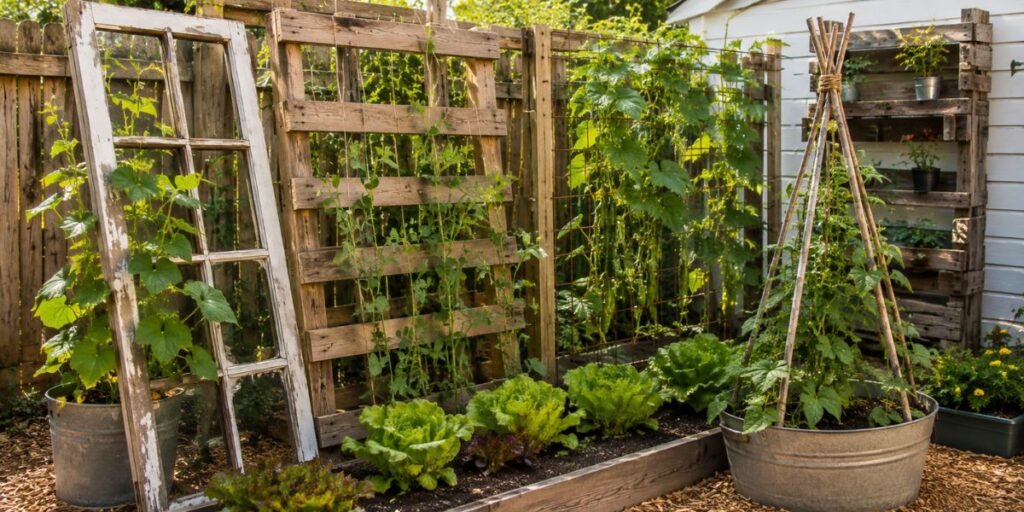
10. Old Ladder Trellis
A weathered wooden ladder, leaned against a wall or freestanding, becomes an instant, characterful trellis with zero building required. Each rung gives climbing plants a natural foothold.
Best for: peas, small cucumbers, climbing nasturtiums
11. Recycled Window Frame Trellis
An old window frame with the glass removed (or a frame with small panes intact) makes a genuinely charming vertical support plant weave through the mullions in a way that looks intentional almost immediately.
Best for: lighter vining flowers and beans in a cottage-style vegetable garden
12. Recycled Bike Wheel Trellis
Mount an old bicycle wheel on a post and you have a circular support with dozens of spokes for tendrils to grab an eye-catching, genuinely free option if you have a wheel sitting in the garage.
Best for: peas, sweet peas, light climbing annuals
13. Wood Pallet Trellis
Stand a wood pallet on end, secure it, and the existing slat gaps become an instant climbing structure with no additional building. This is one of the fastest zero-cost projects if you already have a pallet on hand.
Best for: beans, peas, cucumbers in a casual or rustic garden
14. PVC Pipe Trellis (Tomato Ladder Style)
PVC pipe is lightweight, cheap, and easy to cut to custom heights, making it ideal for a DIY “tomato ladder” trellis that grows in stages as the plant does; you can add height as needed rather than committing to one fixed size upfront.
Best for: indeterminate tomatoes
15. Bamboo Trellis
A bamboo trellis takes under two hours to build and costs very little, using either harvested stalks or purchased bamboo poles lashed together. It’s naturally rot-resistant outdoors and blends into the garden aesthetic more than metal or plastic options.
Best for: beans, peas, light cucumbers
16. Container Trellis for Patio Vegetable Gardens
For gardeners without in-ground space, a compact metal or wood support placed directly in a large container lets potted tomatoes and cucumbers climb right on a patio or balcony, adding vertical interest to a small-space setup.
Best for: dwarf or compact tomato and cucumber varieties in containers
Quick recap you can screenshot:
- A-frame 2. Cattle panel arch 3. Teepee 4. Pyramid tuteur 5. Steel panel + netting 6. V-shaped T-post 7. Folding chicken-wire frame 8. Wire “disappearing” trellis 9. Netting on raised bed frame 10. Old ladder 11. Window frame 12. Bike wheel 13. Wood pallet 14. PVC pipe ladder 15. Bamboo 16. Container trellis
Matching the Trellis to the Vegetable
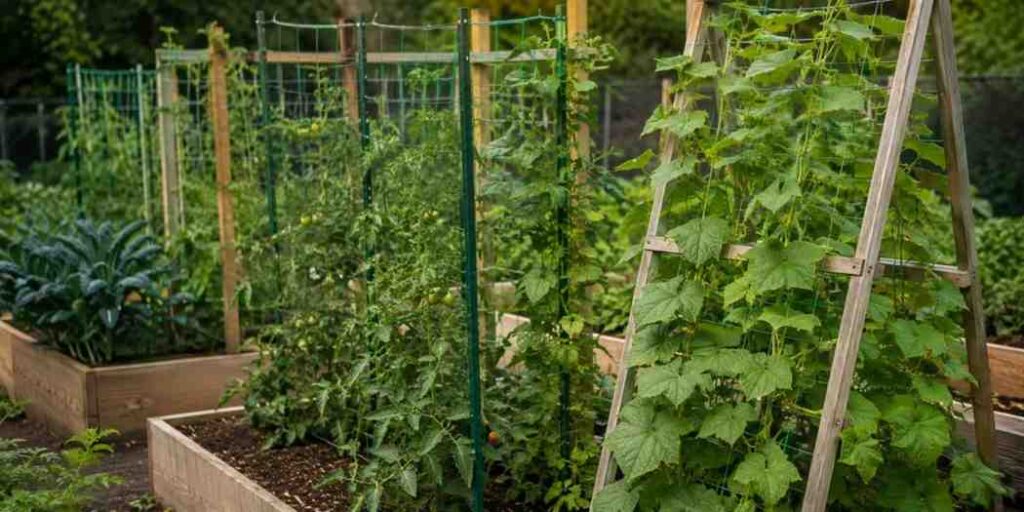
Choosing the right structure matters more than choosing the prettiest one; a heavy melon on a flimsy support will pull the whole thing down mid-season.
- Cucumbers: A-frame, V-shaped T-post, wire mesh, cattle panel plan for two plants per side with about 24 inches between them for adequate root space and airflow
- Tomatoes (indeterminate): PVC ladder trellis or steel panel, built tall enough to accommodate season-long growth
- Pole beans and peas: teepee, folding chicken-wire frame, bamboo, or repurposed ladder all light-duty options work fine
- Squash and melons: cattle panel arch or steel panel these need the sturdiest support on the list
- Small-space/patio growing: container trellis with compact varieties bred for vertical growing
Frequently Asked Questions
Do I really need a trellis for cucumbers?
Not strictly, but trellising keeps fruit off the soil (reducing rot and disease), improves airflow around the leaves, and makes harvesting significantly easier since cucumbers hang at eye level instead of hiding under sprawling vines.
What’s the cheapest vegetable garden trellis option?
Repurposed materials such as an old ladder, pallet, or bike wheel cost nothing beyond what you already have, followed closely by bamboo and folding chicken-wire frames.
How tall should a tomato trellis be?
Indeterminate tomatoes can reach 8 feet or more in a single season, so a PVC ladder-style trellis that lets you add height as the plant grows is often more practical than committing to one fixed size at planting time.
Can I use the same trellis every year?
Wood and repurposed trellises typically need replacing every few seasons due to weathering, while steel panel trellises and cattle panel arches are built to last many years with minimal upkeep.
Bringing It All Together
The best vegetable garden trellis isn’t the fanciest one it’s the one matched to what you’re actually growing. A teepee that’s perfect for peas will buckle under a squash vine, and a cattle panel arch built for melons is overkill for a short row of beans. Start by listing what you’re planting this season, match each crop to its category above, and build (or repurpose) accordingly. Your harvest and your garden pathways will thank you.