
The front door is the one spot in your entire landscape that every single visitor sees up close and most homeowners fill it with whatever leftover pot happened to be in the garage. That’s a missed opportunity.
A front door planter is the fastest, cheapest way to transform how your entryway feels, and you don’t need a green thumb or a big budget to get it right. Below are 14 front door planter ideas that work for every style, every light condition, and every skill level. Idea #10 is the one most homeowners never think to do and it’s the reason some entryways look magazine-ready in every single season.
Why Your Front Door Planter Matters More Than You Think
Here’s the thing: your front door planter is one of the first things a guest or a potential buyer, if you’re selling, actually gets close enough to notice in detail. A gorgeous front yard can still feel unfinished if the pots by the door are lopsided, half-dead, or mismatched.
The good news? Because it’s such a small, contained space, a front door planter is also one of the easiest landscaping elements to get exactly right. Let’s get into it.
1. Master the Thriller, Filler, Spiller Formula
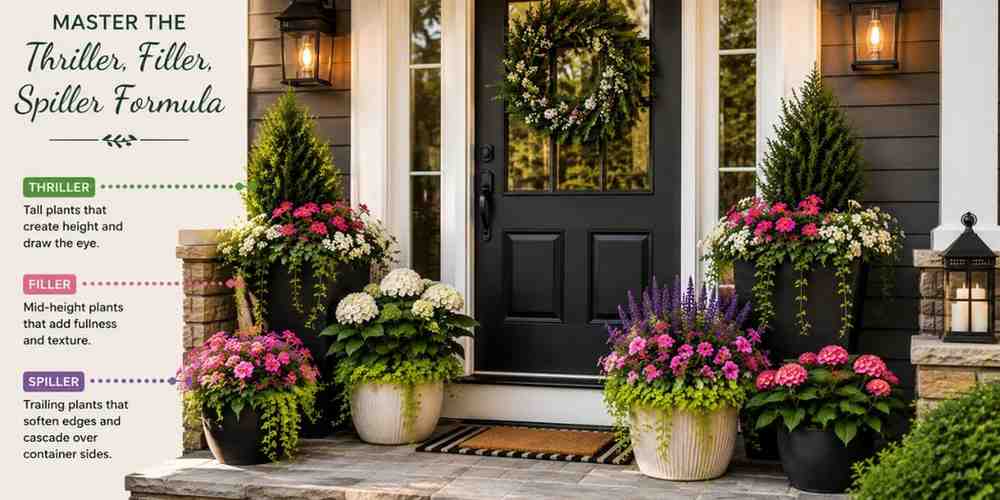
If you only take one tip from this entire list, make it this one. Professional container gardeners build almost every great planter around three roles:
- Thriller a tall, eye-catching plant that anchors the center or back of the pot
- Filler medium, bushy plants that fill out the middle
- Spiller trailing plants that cascade over the edge of the container
A classic combo might be a tall ornamental grass (thriller), compact petunias (filler), and trailing sweet potato vine (spiller). Follow this formula and it’s almost impossible to end up with a sparse, awkward-looking planter.
2. Flank the Door With a Matching Pair
Symmetry is the single fastest way to make an entryway feel polished. Two identical planters, same pot, same plants, same fill placed on either side of the door create an instant sense of order and formality, almost like columns framing the entrance.
Here’s the catch most people miss: check your light before you buy. If one side of your door gets more shade than the other, a truly matched pair may not thrive identically; you may need to choose a shade-tolerant plant that still visually matches the sun-loving one on the opposite side.
3. Cluster Planters at Staggered Heights
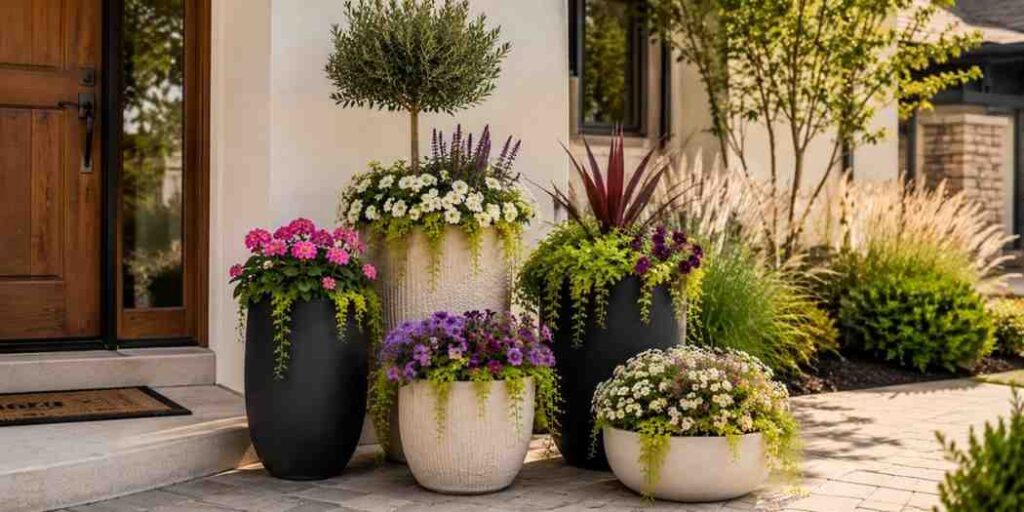
If a single matched pair feels too plain for your style, try grouping three or four planters at varying heights instead of a tall floor planter in back, a medium one beside it, and a low one in front. This creates a layered, lush look that reads as more designed than a single symmetrical pot ever could.
Stone-toned or matching-material pots keep the varied heights from looking chaotic. Add plant stands or upturned crates under smaller pots to build height without buying oversized planters.
Read More:15 Square Foot Gardening Ideas That Turn a Tiny Bed Into a Serious Harvest
4. Plant a Topiary for Vertical Elegance
A boxwood or holly topiary, trimmed into a simple cone, ball, or spiral, brings instant formality and structure to a front door and unlike flowering annuals, it looks great year-round with minimal upkeep.
Topiaries work beautifully as a matched pair (see #2) or as a single statement piece beside an off-center door. Because they’re evergreen, they’re also one of the lowest-maintenance options on this whole list. A light trim once or twice a year keeps the shape crisp.
5. Grow a Citrus Tree for a Show-Stopping Feature
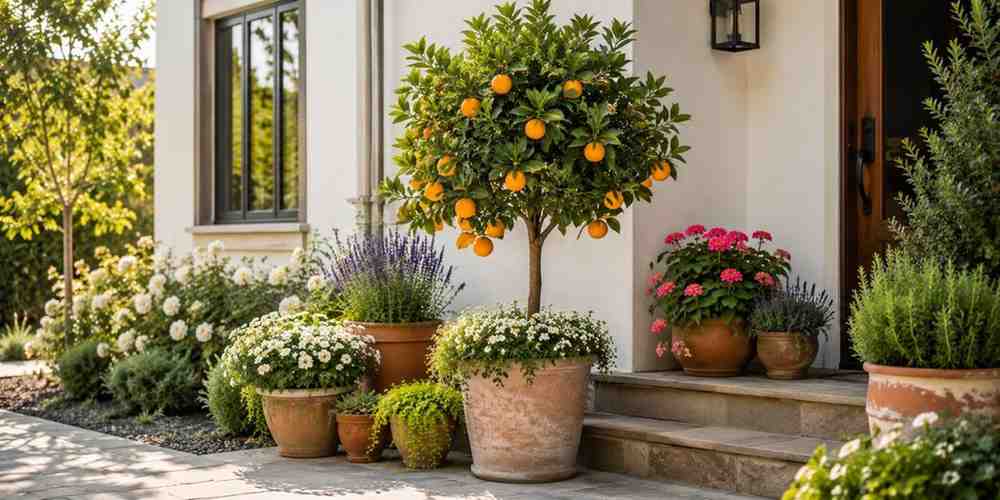
Skip flowers entirely and try something unexpected: a container-grown Meyer lemon or calamondin orange tree. A container-grown Meyer lemon or calamondin orange planted in a large terra cotta pot makes a striking front door feature, especially set against dark door and window trim.
Citrus trees need full sun and excellent drainage, and in colder climates they’ll need to come indoors before the first frost since most varieties aren’t cold-hardy. But the payoff is real: glossy green foliage, fragrant blooms, and actual fruit hanging by your front door.
Save-worthy tip: A single citrus tree by the door does double duty; it’s a design statement AND a harvest. Few front door planters can claim both.
6. Use a Monochromatic Color Palette
Pick one color family all white, all deep purple, all sunset orange and build your entire planter around it. A monochromatic planter reads as far more sophisticated than a rainbow mix, and it’s actually easier to execute well, since you don’t have to worry about clashing tones.
White planters in particular photograph beautifully against nearly any door color, which makes them a favorite for anyone hoping their entryway looks camera-ready.
7. Add a Hanging Planter Above the Door
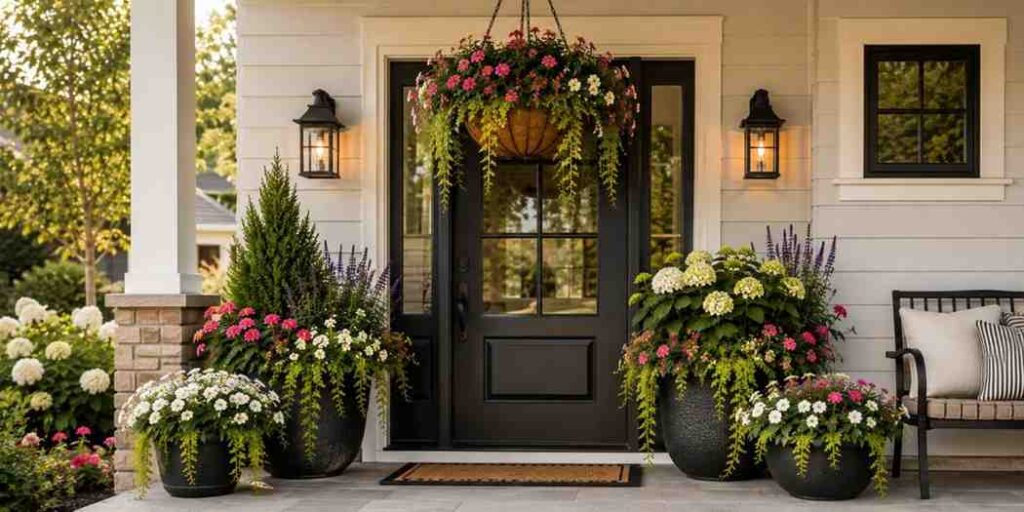
If your porch has any overhead coverage, an awning, a portico, exposed rafters, a hanging planter adds vertical greenery without taking up an inch of floor space. A trailing fern, ivy, or flowering annual hung at eye level draws the gaze upward and softens the hard architectural lines around most front doors.
Bucket brigade moment: So what does this mean for a small porch? It means you can have three layers of greenery, ground-level pots, a hanging basket overhead, and maybe a window box in between all without ever feeling cramped.
8. Plant an Herb Garden Planter
A front door herb planter is equal parts beautiful and practical. Rosemary, thyme, and lavender all have attractive, textured foliage that looks intentional even without a single bloom, and brushing past them on your way inside releases a genuinely lovely scent.
This is also one of the most functional front door planter ideas on the list you get a cooking-ready herb supply within arm’s reach of your kitchen, no separate garden bed required.
9. Choose Easy-Care Succulents for Low Maintenance
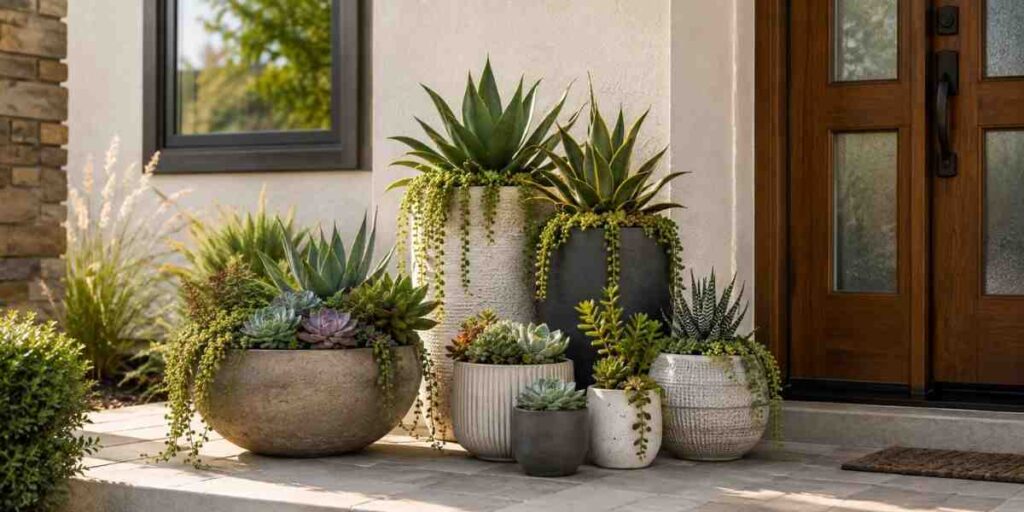
If you travel often or simply don’t want to think about watering, a succulent planter is close to foolproof. Echeveria, sedum, and hens-and-chicks all thrive on neglect, tolerate heat well, and hold their shape and color for months without deadheading or trimming.
Succulents also work beautifully in shallow, modern containers, which makes them a natural fit for minimalist or contemporary entryways.
10. Swap Seasonal Arrangements Throughout the Year
This is the idea that separates a “nice planter” from a truly magazine-ready entryway: rotating your front door planter with the seasons instead of planting once and forgetting it.
A simple seasonal rotation might look like:
- Spring: tulips, daffodils, or pansies
- Summer: petunias, geraniums, or a full thriller-filler-spiller mix
- Fall: mums, ornamental kale, and mini pumpkins tucked in
- Winter: evergreen boughs, red twig dogwood branches, and pinecones
Swapping your planter four times a year sounds like more work, but each individual refresh only takes about 20–30 minutes and the payoff is a front door that never looks tired or out of season.
11. Add a House Number Planter
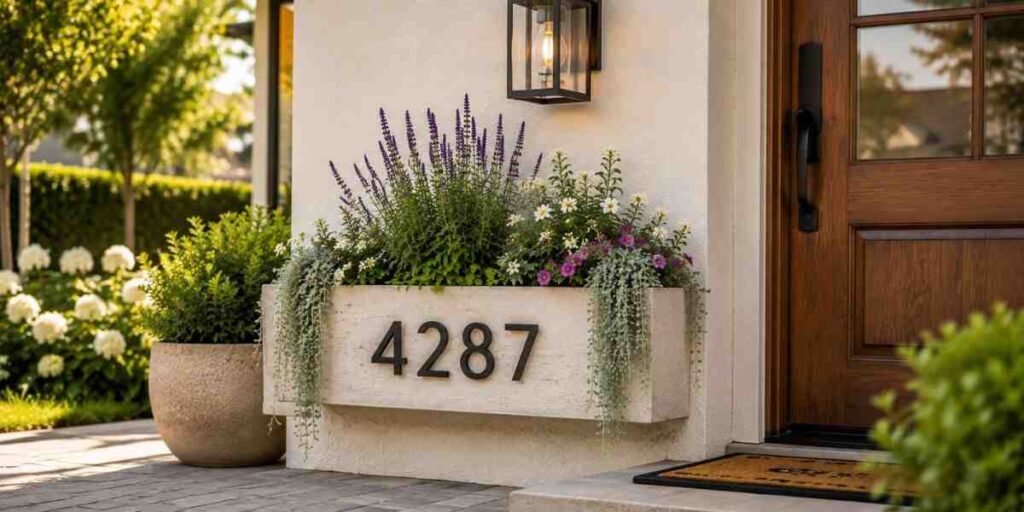
For a genuinely unique twist, incorporate your house numbers directly into a planter display either a dedicated planter box mounted below your address plaque, or a small potted arrangement positioned right beneath it. It brings the numbers up to eye level and gives an otherwise purely functional element a decorative purpose.
This idea works especially well for homes where the house numbers are mounted low or off to the side, since it draws the eye there naturally instead of leaving that spot looking bare.
12. Mix Textures With Ornamental Grasses
Not every front door planter needs flowers to look striking. Ornamental grasses like dwarf fountain grass or blue fescue add movement and texture, swaying gently in the breeze and catching afternoon light in a way that flat foliage can’t.
Pair a grass as your thriller with a spiller like creeping jenny for a planter that has real visual motion, even on a still day. Grasses also tend to be more heat- and drought-tolerant than flowering annuals, which makes them a smart pick for sun-blasted entries.
13. Go Bold With Color-Blocked Planters
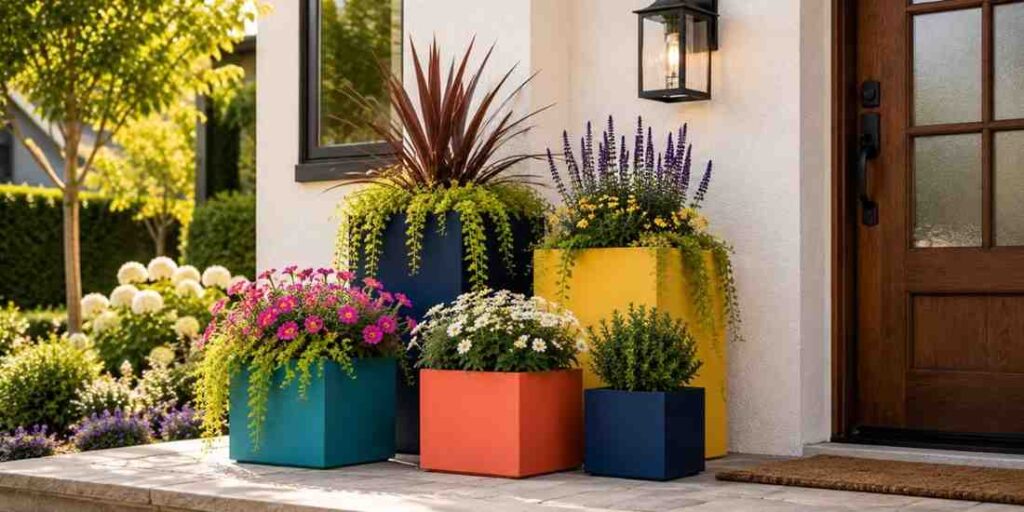
Instead of mixing several plant colors into one pot, try dedicating each planter in a cluster to a single, saturated color: one pot of all-red geraniums next to one pot of all-purple petunias, for example. The contrast between solid blocks of color reads as modern and confident, especially against a neutral-toned door and porch.
This approach pairs particularly well with idea #3 (staggered heights), since the varying pot levels give each color block its own moment to stand out.
14. Choose Self-Watering Planters for Busy Schedules
If keeping up with a watering schedule is the thing holding you back from a gorgeous front door display, self-watering planters solve that problem directly. These containers have a built-in reservoir that wicks water up to the roots as needed, which means your plants can go days longer between waterings without wilting.
They’re a smart pick for anyone who travels frequently, lives in a hot climate, or has simply killed one too many front door plants to trust themselves with a manual watering can (no judgment it happens to almost everyone at least once).
Frequently Asked Questions
How many planters should I have by my front door?
Two matching planters flanking the door is the classic, foolproof choice, but a cluster of three or four at staggered heights (#3) can create an even richer look if your entryway has the space. The right number really comes down to your porch size and the style you’re going for just to avoid overcrowding a narrow entry.
What plants are best for a front door planter in full sun?
Geraniums, petunias, ornamental grasses, and citrus trees (#5) all thrive in full sun and tend to bloom or grow more vigorously with more light. Succulents (#9) are another strong option if your entry bakes in direct afternoon sun for much of the day.
What plants work in a shady front door planter?
Ferns, begonias, and hostas are reliable performers in shade, along with trailing ivy for a spiller. If you’re pairing a shaded side with a sunny side for a matched-pair look (#2), choose plants with similar shapes and colors so the two sides still feel visually consistent.
How often should I change my front door planter?
Many homeowners refresh their front door planter with the seasons four times a year (#10) but even a twice-yearly swap between a warm-weather and cool-weather arrangement will keep your entryway looking current and cared for.
Bring It All Together
Your front door planter carries more visual weight than almost any other single element in your landscape. It’s the last thing people see before they knock, and the first thing they remember about your home. Whether you go with a classic symmetrical pair, a lush staggered cluster, or a bold citrus tree, the goal is the same: a display that feels intentional, not accidental.
Start with just one idea from this list: swap in a seasonal arrangement or finally match those mismatched pots and build from there. A great front door planter isn’t about spending more; it’s about choosing on purpose.