
8 winter vegetables to grow in containers can keep a small balcony productive long after summer ends. You do not need a garden bed, a greenhouse, or much space. A few sturdy pots, good soil, and the right cool-season choices are enough to start.
Many gardeners stop planting when the air turns cold. That is a missed chance, because leafy greens and roots often prefer cool weather. They grow more slowly than summer crops, yet they stay sweet and tender when the temperature drops.
A vegetable grown in a pot also gives you control. You can move it toward the sun, shield it from wind, and bring it closer to the door on a frosty night. Start with one or two pots if you are new to this, and add more once you see how your balcony behaves in winter.
Table of Contents
8 Winter Vegetables to Grow in Containers
The 8 winter vegetables to grow in containers in this guide are lettuce, spinach, kale, radish, carrots, Swiss chard, peas, and green onions. Each one suits a pot, a planter, or a trough on a balcony. Each one also has a different harvest time, so you can pick leaves and roots across the season.
Choose plants that match your light and your cooking. Leafy greens suit salads and quick meals, while roots suit roasting and soups. Peas and green onions add fresh flavour to everyday dishes.
Before you buy seeds, check your balcony for sun, wind, and frost. Most of these vegetables need at least four hours of direct sun. A sheltered corner near a wall often stays a little warmer than an open railing.
How to Choose a Winter Container Vegetable
Start with the size of your pot: shallow pots suit lettuce, spinach, and green onions. Deep pots suit carrots, radish, and Swiss chard. A container garden works best when the pot matches the roots below the soil.
Check the drainage holes before you plant. Water must leave the pot freely, or roots will sit wet and cold. Add a layer of coarse compost at the base only if the pot drains slowly.
Think about how often you will pick, because cut-and-come-again leaves among the 8 winter vegetables to grow in containers, such as lettuce and spinach, give repeated small harvests. Single-harvest roots, such as radish and carrots, need a second sowing if you want more. For more seasonal balcony ideas, see these winter balcony garden ideas.
1. Lettuce
Lettuce is one of the easiest of the 8 winter vegetables to grow in containers, and it suits a first winter pot. It grows fast, needs little depth, and gives leaves you can pick a few at a time. Loose-leaf types work better than large heads on a balcony.
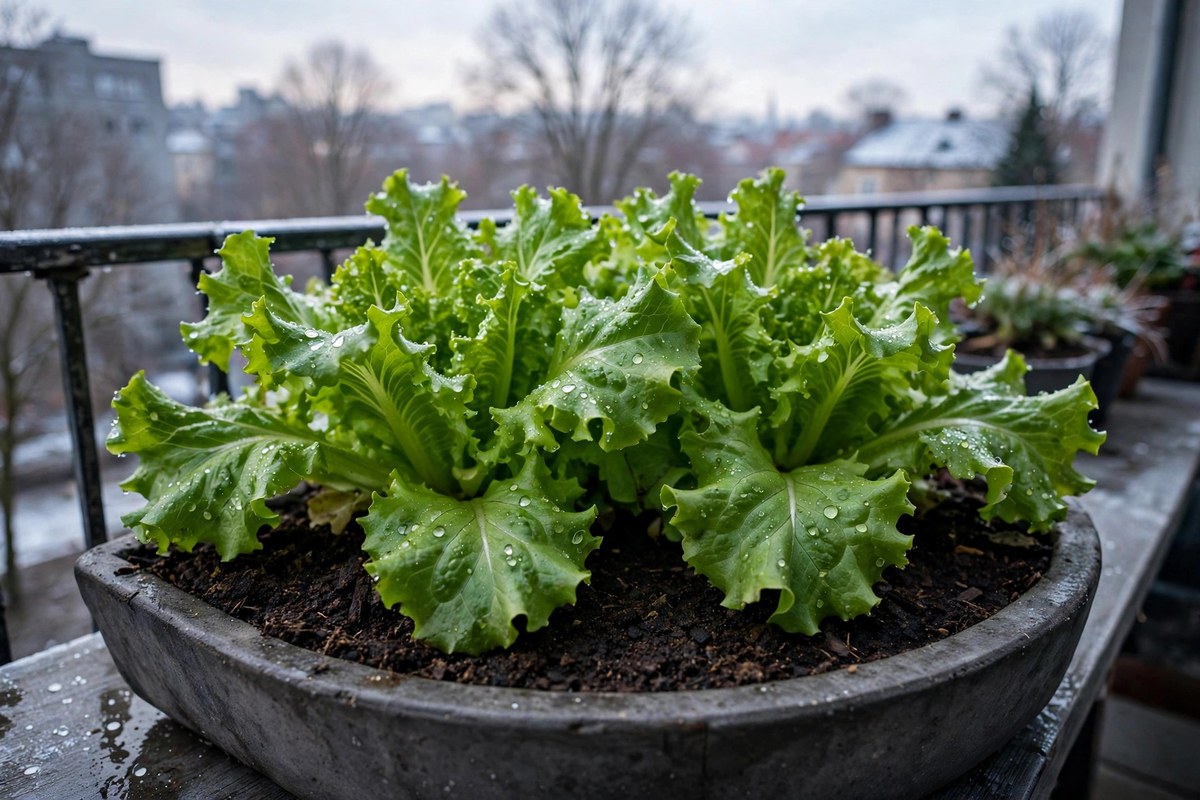
Sow seeds thinly in a wide pot filled with moist, rich compost. Keep the soil damp but not soaked, and place the pot where it gets morning sun. Thin seedlings to about 15 cm apart so air can move between the leaves.
Pro tip: Pick outer leaves first and leave the centre to keep growing. This gives you salads for weeks from the same plant.
Mistake to avoid: Do not let the pot dry out on a windy day. Dry soil makes lettuce bitter and slows new growth.
2. Spinach
Spinach is one of the 8 winter vegetables to grow in containers that likes cool, damp weather and grows well in a round pot or a trough. It suits cooks who want a steady supply of leaves for soups, pasta, and sautés. Baby leaves are ready sooner than full-size leaves.
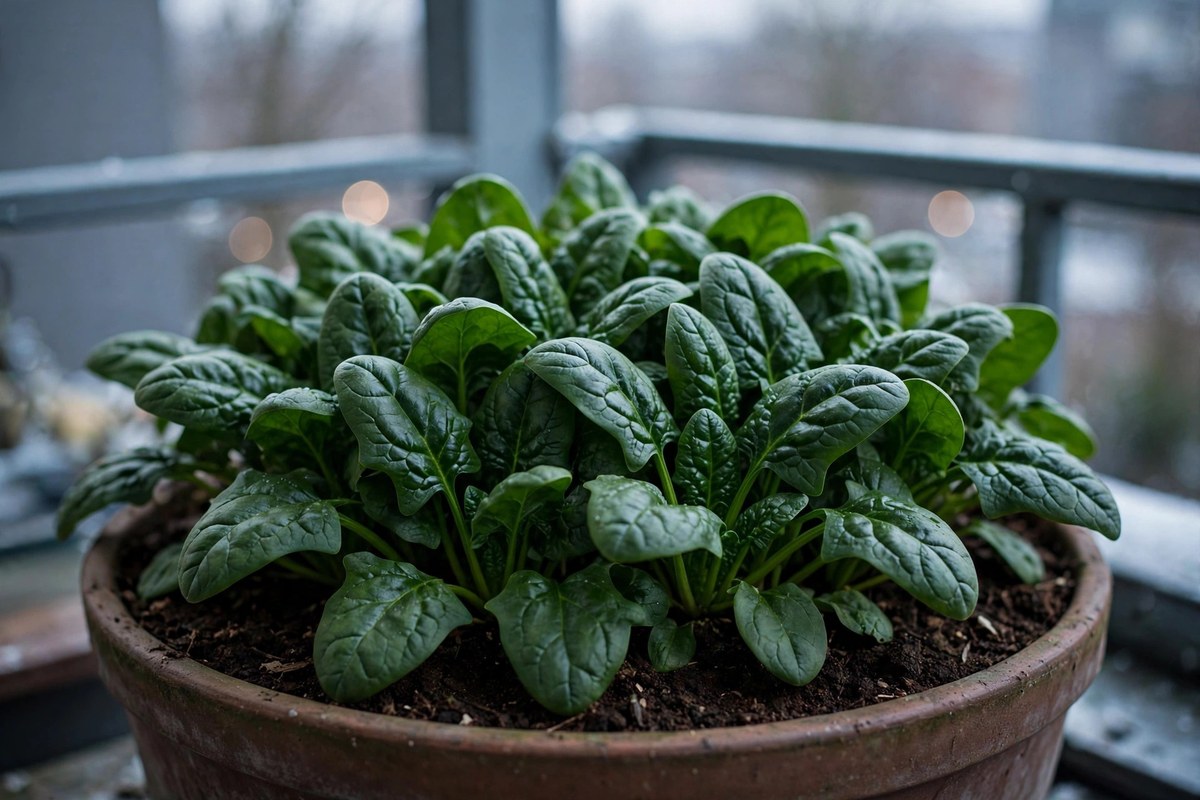
Sow seeds about 2 cm deep in rich, moisture-holding compost. Keep the pot in a spot with morning sun and some shade in the afternoon. Water when the top of the soil feels dry, and thin seedlings so each plant has room to spread.
Pro tip: Sow a small row every two weeks for a longer harvest. Fresh sowings replace older plants as they finish.
Mistake to avoid: Do not crowd spinach in a small pot. Crowded plants stay small and are more likely to bolt when the weather warms.
3. Kale
Kale is one of the hardiest of the 8 winter vegetables to grow in containers, and it suits a balcony that gets frost. Its leaves often taste sweeter after a cold night. Curly kale and flat-leaf types both grow well in pots.
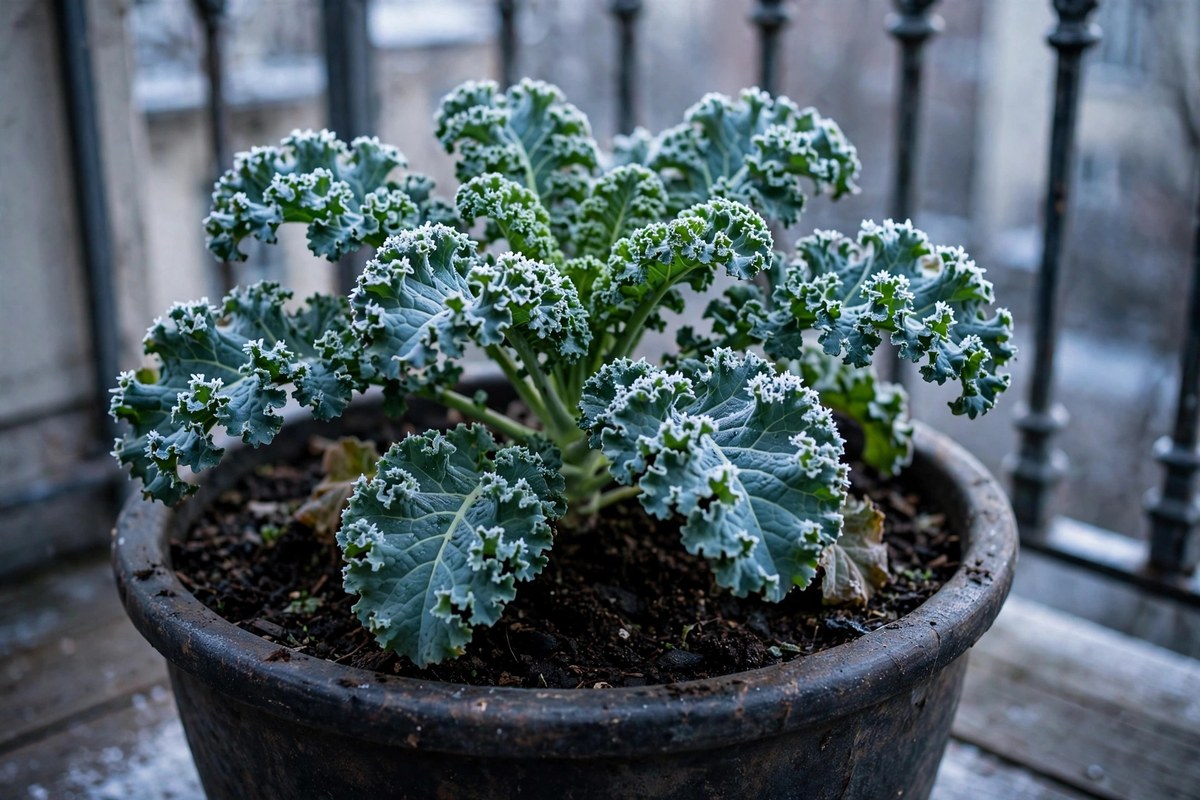
Use a large pot at least 30 cm deep, with rich compost and good drainage. Sow seeds or set out young plants, and give each plant room to grow wide. Water steadily and feed lightly with liquid seaweed feed once the plants are settled.
Pro tip: Pick lower leaves first and leave the top growing. The plant will keep making new leaves from the centre.
Mistake to avoid: Do not use a shallow pot for kale. A small pot dries fast and cannot support a large plant through winter.
4. Radish
Radish is the fastest crop among the 8 winter vegetables to grow in containers, and it suits impatient gardeners. Most types are ready in about four weeks. It also suits a shallow trough on a sunny railing.
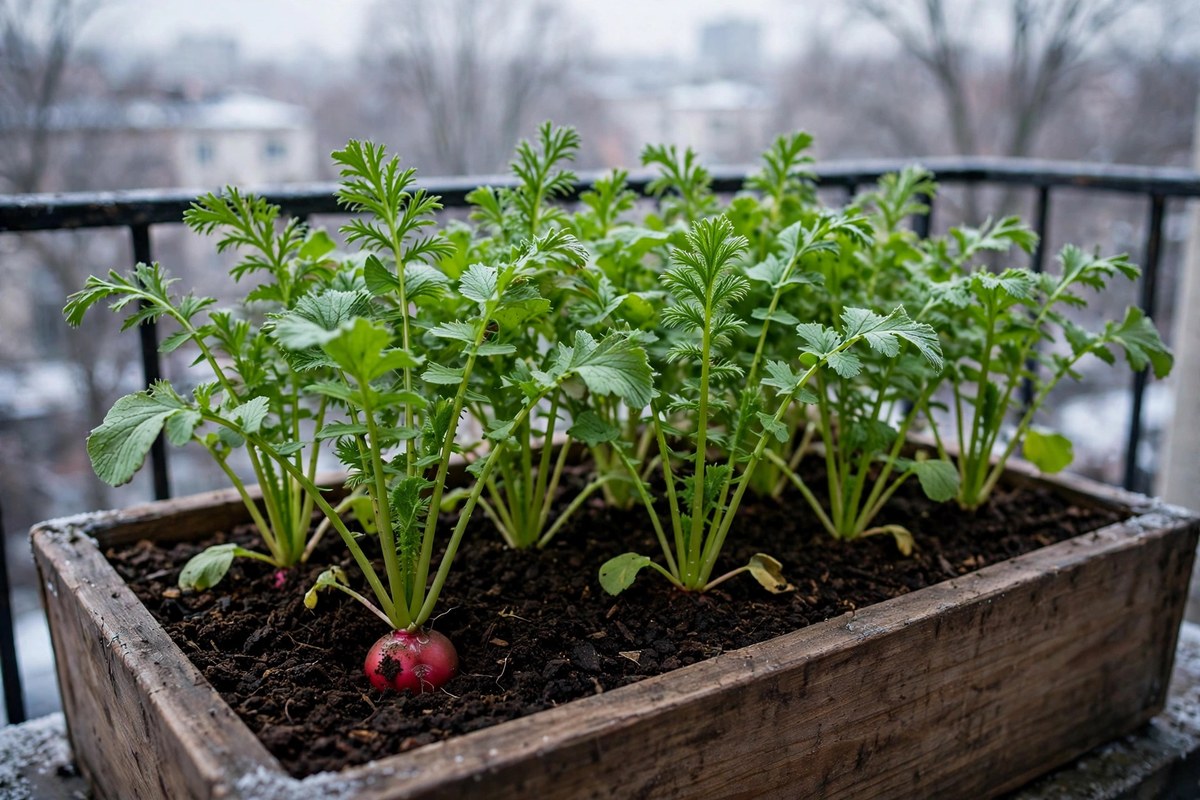
Sow seeds about 1 cm deep and 5 cm apart in loose, stone-free compost. Keep the soil evenly moist from sowing to harvest. Thin seedlings early, because crowded radishes form thin roots instead of round ones.
Pro tip: Sow a short row every ten days for a steady supply. Small, regular sowings beat one large sowing that all ripens at once.
Mistake to avoid: Do not let the soil dry out and then flood it. Uneven watering can split radishes and make them hot and woody.
5. Carrots
Carrots are among the 8 winter vegetables to grow in containers that suit a deep pot on a winter balcony, and they suit gardeners who can wait. Short and round types grow better in containers than long types. They need loose soil so the roots can grow straight down.
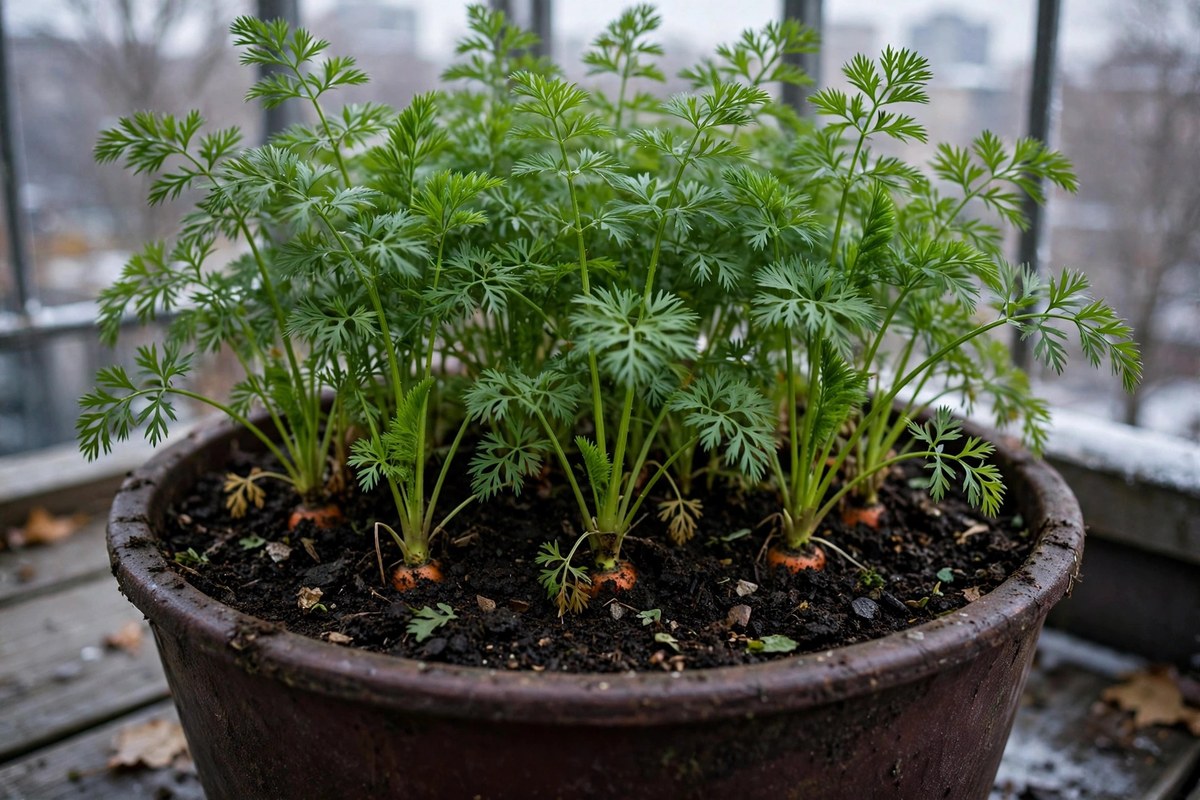
Fill a pot at least 30 cm deep with fine, stone-free compost. Sow seeds thinly on the surface and cover them with a thin layer of compost. Keep the soil damp until seedlings appear, then thin them to about 5 cm apart.
Pro tip: Mix carrot seed with a little sand before sowing. The sand helps you spread the tiny seeds more evenly.
Mistake to avoid: Do not use fresh manure or lumpy compost. It can fork the roots and give you short, branched carrots.
6. Swiss Chard
Swiss chard is a bright, reliable leaf among the 8 winter vegetables to grow in containers, and it suits a sunny balcony. Its stems come in white, yellow, and red, so it looks good as well as tasting good. It also keeps producing for a long time.
Use a pot at least 25 cm deep with rich, well-drained compost. Sow seeds or plant young seedlings, and space plants about 20 cm apart. Water when the soil dries, and pick outer leaves often to keep new growth coming.
Pro tip: Pick leaves when they are young and tender for salads. Older leaves are better cooked, in soups and stews.
Mistake to avoid: Do not leave old leaves on the plant. They shade new growth and can attract slugs in damp weather.
7. Peas
Peas are one of the 8 winter vegetables to grow in containers that suit a balcony with a railing or a small trellis, and they suit gardeners who want a climbing crop. They grow well in cool weather and give sweet pods in late winter and early spring. Dwarf types need less support than tall types.
Use a wide pot at least 25 cm deep, with rich compost and a small frame for the stems to climb. Sow seeds about 3 cm deep and 5 cm apart. Water steadily and tie stems loosely to the support as they grow.
Pro tip: Pick pods often once they start to fill. Regular picking tells the plant to make more flowers and pods.
Mistake to avoid: Do not let peas dry out while they are flowering. Dry soil at this stage can mean fewer pods and poor flavour.
8. Green Onions
Green onions are one of the simplest of the 8 winter vegetables to grow in containers, and they suit a narrow pot or a window box. They take little space, grow in cool weather, and are ready to snip for cooking. They also regrow after cutting.
Sow seeds thinly or plant sets in rich, well-drained compost. Keep the soil moist and place the pot in a sunny, sheltered spot. Thin seedlings to about 3 cm apart, and feed lightly once the plants are growing well.
Pro tip: Cut green onions about 3 cm above the soil. The base will often regrow, giving you a second cutting.
Mistake to avoid: Do not plant green onions in a pot without drainage holes. Wet, cold soil can rot the bases before they grow.
How to Care for 8 Winter Vegetables to Grow in Containers Through Cold Snaps
The 8 winter vegetables to grow in containers need steady care when a cold snap arrives. Water in the morning so leaves dry before night. Wet leaves freeze more easily than dry ones, and cold, wet soil harms roots.
Move pots close to a wall or under cover when frost is forecast. A wall holds a little daytime warmth, and a cover breaks the frost. You can also wrap a pot in hessian or bubble wrap to protect the roots.
Check soil moisture with your finger before you water. Winter pots dry more slowly than summer pots, so they need less water. If a hard frost is coming, you may want to bring the most tender pots indoors overnight, following sound winter indoor plant care tips.
Common Mistakes With Winter Container Vegetables
The most common mistake is planting summer vegetables in winter and hoping they will cope. Tomatoes, peppers, and basil need warmth, so they fail in cold pots. Choose the 8 winter vegetables to grow in containers instead, and your balcony will reward you.
Another mistake is feeding too much in cold weather. Plants grow slowly in winter, so they use less food. A light feed once a month is enough for most leafy crops, and roots need even less.
A third mistake is forgetting wind. Wind dries soil and chills leaves, even on a mild day. Place pots behind a screen or near a wall, and check the soil after windy days.
Harvesting and Using Your Winter Vegetables
Harvest leafy greens in the morning, when leaves are crisp and full of water. Pick only what you need for a meal, and leave the rest to keep growing. A sharp knife or scissors gives a clean cut and helps the plant heal.
Pull radishes and carrots when the tops look strong and the shoulders show at the soil surface. Do not leave roots in the pot too long, or they can turn woody. Wash roots well, and store any spare harvest in a cool place.
Use your harvest from the 8 winter vegetables to grow in containers fresh where you can, in salads, soups, and stir-fries. Fresh leaves lose flavour fast in the fridge, so pick them close to cooking time. If you like fresh flavour indoors too, try these indoor herb garden ideas for winter.
Frequently Asked Questions
Can I grow 8 winter vegetables to grow in containers on a shady balcony?
You can grow some of them, but leafy greens do best with at least four hours of sun. Lettuce, spinach, and Swiss chard cope with part shade better than peas and carrots. Move pots to the sunniest spot you have, and avoid deep shade.
How often should I water winter vegetables in containers?
Water when the top 2 cm of soil feels dry. Winter pots dry slowly, so most need water once or twice a week. Always water in the morning, and let excess water drain away.
Do winter container vegetables need frost protection?
Most of the 8 winter vegetables to grow in containers cope with light frost, and kale often tastes better after it. Cover tender leaves with fleece on frosty nights, and move small pots near a wall. Bring the most tender pots indoors if a hard frost is forecast.
When should I sow the 8 winter vegetables to grow in containers?
Sow most of them in late summer or early autumn, so plants are settled before the coldest weather. Radish and lettuce can also be sown in mild spells through winter. Check the seed packet for your local timing.
Can I grow winter vegetables in containers without a garden?
Yes — a balcony, a patio, or a sunny windowsill can hold enough pots for regular small harvests. Start with lettuce and green onions, which need little space. Add more pots as you learn what grows well in your spot.
Final Thoughts
The 8 winter vegetables to grow in containers in this guide prove that a balcony can stay productive in the cold months. Lettuce, spinach, kale, radish, carrots, Swiss chard, peas, and green onions each suit a pot, and each one rewards steady, simple care.
Start small, watch your light and wind, and sow a little at a time. Your first pot may teach you more than any guide can. The 8 winter vegetables to grow in containers are a good place to begin, and a fresh winter harvest is closer than you think.


