
Hammock Garden: There’s a specific kind of yard envy that happens when you scroll past a photo of a hammock strung between two trees, dappled sunlight, a cold drink balanced on a nearby stump. You don’t need a resort membership to have that. You need a sturdy anchor point, the right hammock style for your space, and a little planning around what surrounds it.
That last part is where most backyard hammocks fall short. A hammock plopped onto bare grass looks like an afterthought. A hammock designed into your garden framed by plants, shaded properly, styled with the right details becomes the actual centerpiece of your yard. Idea #6 below is the one that makes the biggest difference, and it costs almost nothing.
1. The Classic Between-Two-Trees Setup
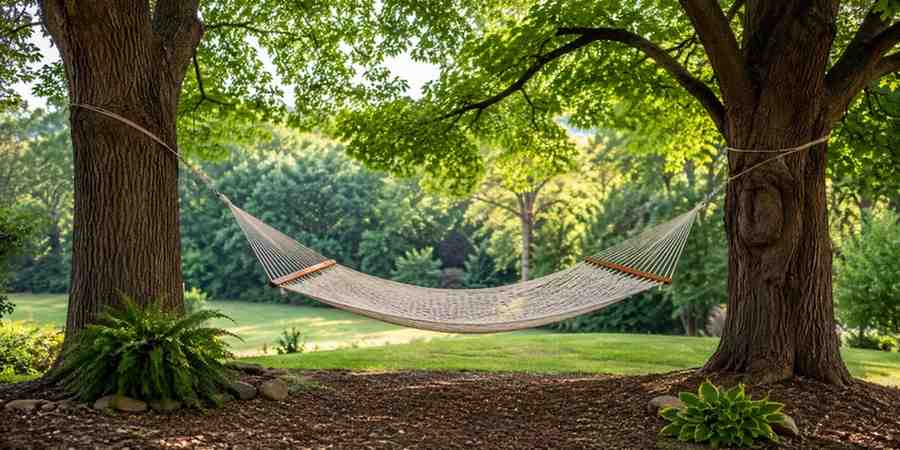
Nothing beats the original: a hammock strung between two sturdy, mature trees. You’ll want roughly 13–15 feet of space between trunks for most standard hammocks, and tree-friendly straps rather than rope, which can damage bark over time.
This setup gives you natural, shifting shade throughout the day and the gentle sway of branches overhead a look no manufactured stand quite replicates.
2. A Freestanding Stand for Yards Without Trees
No mature trees in the right spot? A freestanding hammock stand solves that instantly. Available in wood, metal, or bamboo, a stand lets you place your hammock anywhere in the yardand move it to chase shade or sun as the seasons change.
Here’s the thing: a stand also makes a hammock possible on patios, decks, or newer yards where trees haven’t had time to mature yet.
3. Hang It From an Existing Pergola
If you already have a pergola, you already have a hammock stand you just haven’t used it yet. Drill two anchor points roughly four feet up on opposite support posts, add eye bolts secured with washers and nuts, and hang your hammock with S-hooks.
Read More: 13+ Outdoor Seating Ideas for a Backyard You’ll Never Want to Leave
4. A Cozy Hammock Chair for Small Spaces

Not every yard has room for a full hanging hammock. A hammock chair suspended from a single sturdy branch, porch beam, or compact stand delivers that same floating, cocooned feeling in a fraction of the footprint.
Pair it with a small side table for a reading nook that fits even a modest patio or narrow side yard.
5. A Double Hammock Nook for Two
If you’ve got the space, hang two hammocks side by side, or choose one generously sized double hammock built for two. It’s an easy upgrade for couples, or for households with kids who’ll fight over a single hammock anyway.
Save-worthy tip: add a couple of garden chairs nearby so a whole group can gather around the hammock nook, even if only one or two people are swinging at a time.
6. Tuck It Into a Lush Garden Hideaway
This is the idea that changes everything: instead of placing your hammock on open lawn, nestle it among flourishing plants tall grasses, flowering shrubs, or a border of shrubs on either side.
A hammock surrounded by greenery reads as a destination within your yard, not just furniture sitting on grass. It’s also the single cheapest upgrade on this list if you already have established garden beds to work with you’re just choosing where to place the hammock relative to what’s already growing.
7. Add Shade With a Canopy or Tree Cover
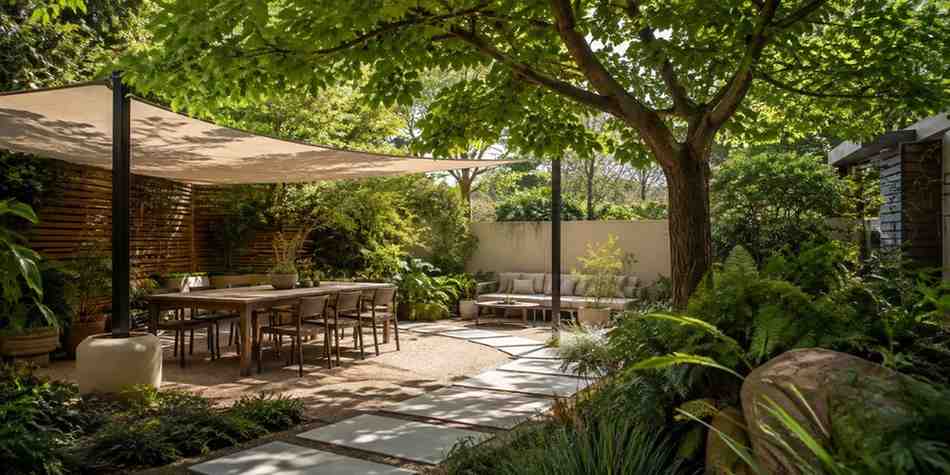
If your hammock spot doesn’t have natural tree cover, a simple canopy whether a built-in hammock canopy, a shade sail, or climbing vines trained over a frame makes the difference between a spot you use for twenty minutes and one you use all afternoon.
Fast-growing vines like clematis or jasmine can cover a simple frame in a single growing season, giving you natural shade that also smells incredible.
8. String Lights for Evening Ambiance
Don’t limit your hammock time to daylight hours. Bistro lights strung overhead, or a simple rechargeable LED strand woven through nearby branches, extend your hammock’s usable hours well into the evening.
9. Build a Zen Meditation Corner
For a hammock area designed around calm rather than entertaining, lean into a zen aesthetic: neutral, calming hammock colors (beige, white, gray), clean lines, and minimal pattern. Add natural materials a wood stand, stone accents, maybe a small water feature nearby.
10. Add a Side Table or Hammock Caddy
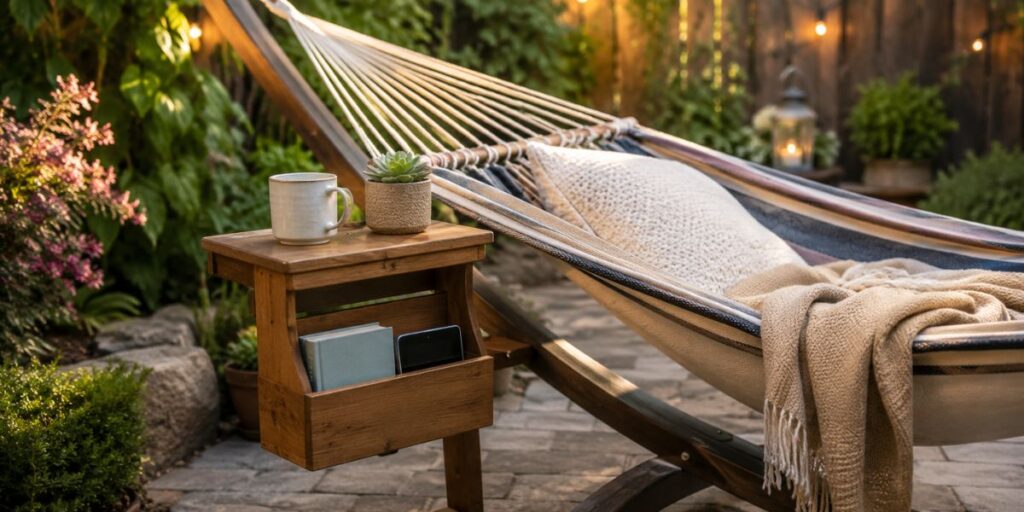
A hammock without somewhere to set your drink, book, or sunscreen is a hammock you’ll keep half-climbing out of. A small side table, tree stump, or a hanging hammock caddy with pockets keeps everything within arm’s reach.
This tiny addition is what turns “lying in a hammock” into “actually staying in a hammock for an hour.”
11. Position It Near a Water Feature
There’s a reason spas pipe in the sound of running water it’s genuinely relaxing. If your yard has (or could have) a small pond, fountain, or birdbath, positioning your hammock nearby adds a layer of ambient sound that a purely visual setup can’t match.
Bonus: water features tend to attract birds, so a hammock nearby doubles as a low-effort birdwatching spot.
12. Create Privacy With Tall Grasses or Trellised Vines
If your hammock spot feels exposed to neighboring yards or the street, you don’t need a fence to fix that. Tall ornamental grasses, flowering shrubs, or climbing vines trained on a trellis can form soft, natural walls around your hammock area.
Save this idea: privacy plantings do double duty they screen your view from neighbors while adding the same lush, garden-hideaway feeling as idea #6.
13. Add a Stone Path Leading to the Hammock
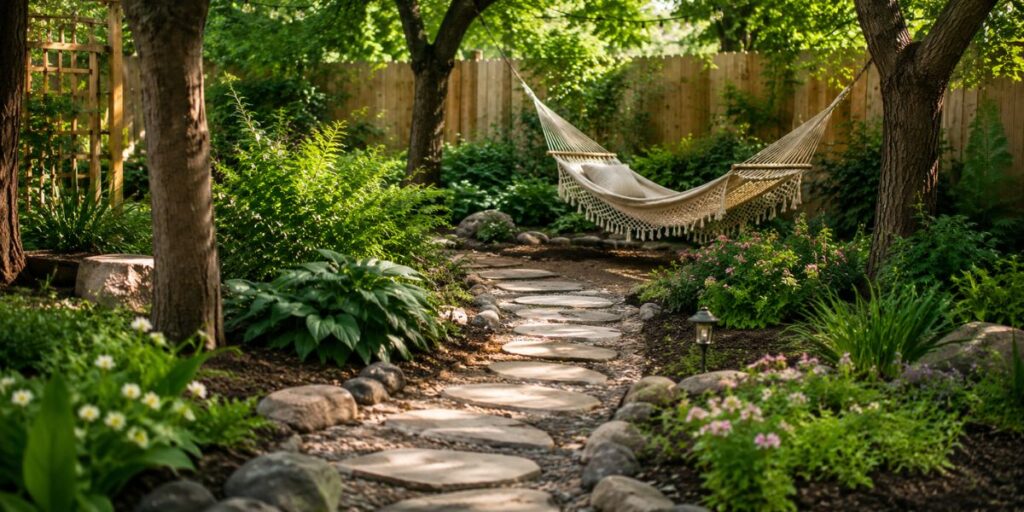
A simple stepping-stone or gravel path leading from your patio to your hammock spot elevates the whole area from “furniture in the yard” to a designed destination. It also keeps your feet (and any drinks you’re carrying) out of wet grass.
Pair the path material with whatever hardscaping already exists elsewhere in your yard for a cohesive, intentional look.
14. Hang It Over a Deck or Elevated Space
Got sturdy deck posts? Put them to work. Hanging a hammock from deck posts or railings uses otherwise wasted vertical space and gives you a fresh vantage point over your garden often with a view you don’t get from ground level.
Just confirm your deck posts are structurally rated to handle hammock weight and motion before hanging anything permanently.
15. Choose Weather-Resistant Fabric for Year-Round Use
If you want your hammock setup to look good for more than one season, material matters. Quick-dry, weather-resistant fabrics (like solution-dyed polyester or treated cotton blends) hold up far better against sun fading and rain than basic cotton rope styles.
Save-worthy tip: if you love the look of a classic rope hammock but live somewhere rainy, look for a UV- and mildew-resistant rope blend so it doesn’t need to come down every time it drizzles.
Frequently Asked Questions
How much space do I need for a backyard hammock?
For a standard hammock hung between two trees or posts, plan for roughly 13–15 feet of clearance. Freestanding stands typically need less overall footprint since the frame provides the spacing.
What’s the best type of hammock for small yards or patios?
A hammock chair or a compact freestanding stand works well in tighter spaces, since it doesn’t require the wide clearance of a full traditional hammock.
Do I need trees to hang a hammock?
Noa freestanding hammock stand lets you set up anywhere in your yard, including patios and decks, without relying on tree placement.
How do I protect my hammock from weather damage?
Choose weather- and UV-resistant fabric, store it indoors or in a weatherproof bag during heavy rain or off-season months, and treat wood or metal stands with a protective coating periodically.
Can I hang a hammock from my deck?
Yes, as long as your deck posts or railings are structurally rated to handle the weight and motion check with a contractor if you’re unsure before hanging anything permanently.
Final Thoughts
A hammock is easy to buy and easy to hang almost anywhere but a hammock that becomes your favorite spot in the yard takes a little more intention. Pick a setup that fits your space, then build the surrounding details shade, greenery, lighting, a place to set your coffee down that turn it from furniture into a genuine retreat.