
Garden Bench Ideas DIY There’s a specific kind of satisfaction in sitting down on a bench you built yourself coffee in hand, garden in front of you, knowing every board is exactly where you put it. And here’s the good news: you don’t need a fully stocked woodworking shop to get there.
Below are 14+ DIY garden bench ideas ranging from a true weekend-afternoon build to slightly more ambitious weekend projects, all doable with basic tools and lumber from any hardware store. Idea #6 is the one that costs almost nothing and takes the least skill of anything on this list perfect if this is your first build.
Why Build Your Own Garden Bench?
Here’s the thing: a store-bought garden bench runs anywhere from $150 to well over $500, and it’s rarely sized, styled, or finished exactly the way your space calls for. A DIY bench costs a fraction of that in materials, and you get to choose the dimensions, the wood, and the finish to match your garden precisely.
It’s also simply a good beginner woodworking project most of these builds use straightforward cuts and basic joints, which makes them a smart, low-risk way to build your DIY confidence before tackling something bigger.
1. Classic 2×4 Lumber Bench
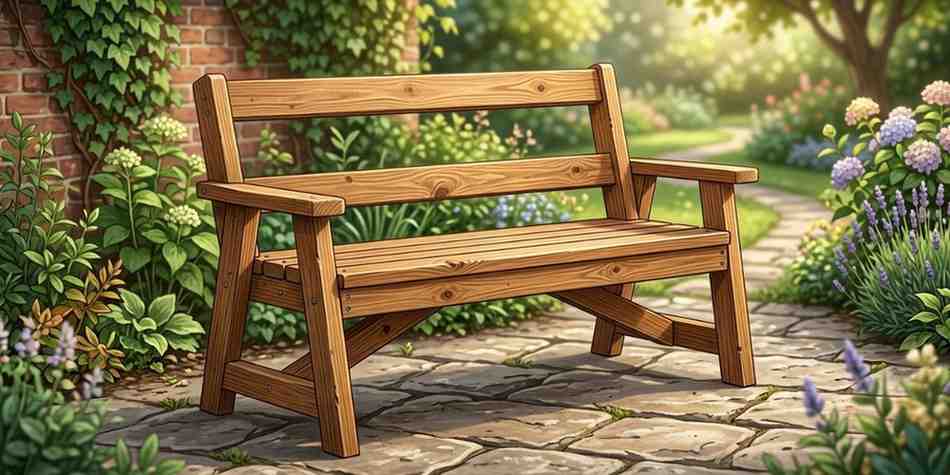
This is the bench to start with if you’ve never built outdoor furniture before. Built almost entirely from inexpensive, easy-to-work-with 2×4 studs, this style of bench is sturdy, simple to build, and comfortable enough to seat three or four people.
Using 4×4 posts for the legs (rather than thinner lumber) adds real tip-resistance, which matters if the bench will end up near a fire pit or in a spot where kids tend to climb.
Read also:16 Garden Swing Seat Ideas to Turn Your Yard Into a Retreat
2. Cinder Block and Wood Plank Bench
If you want a bench with genuinely zero carpentry skill required, this is it. Stack cinder blocks to your desired seat height, leave a gap between two stacks, and rest a sturdy wood plank or reclaimed beam across the top to form the seat.
Here’s why it works so well: there’s no cutting, no screws, and no joinery at all just stacking and placing. It’s the fastest bench on this entire list, and it has an industrial, modern look that fits surprisingly well in minimalist garden designs.
3. Repurposed Old Door Bench
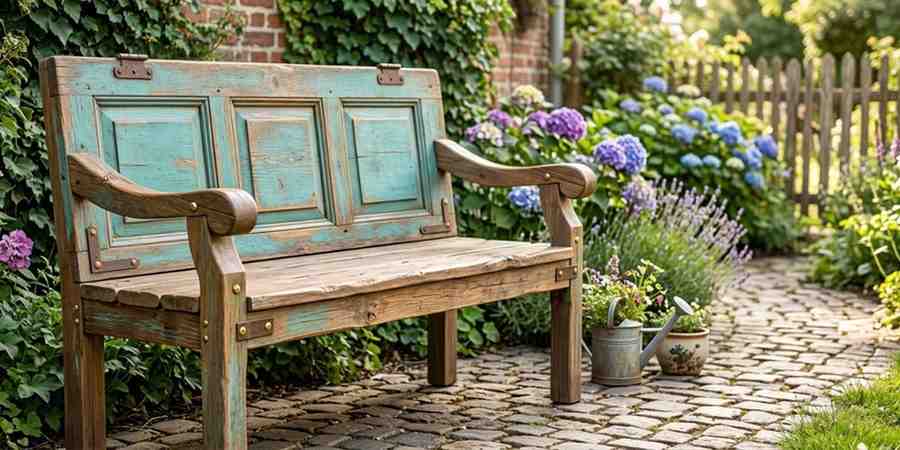
Got an old door sitting in the garage or shed? An old, worn-out door can be given a new purpose as outdoor garden seating instead of heading to the landfill. Lay the door flat across a simple base — two sawhorses, stacked crates, or a basic wood frame and you’ve got a bench with real character and history built right in.
This idea works especially well if the door still has its original hardware or peeling paint; that texture is exactly what makes it feel intentional rather than thrown-together.
4. Hexagonal Tree Bench
If you have a mature shade tree in your yard, a hexagonal bench built around its trunk turns unused ground space into one of the most inviting spots in the whole garden. Building a hexagonal bench around a tree can make the most of the space and add real visual appeal in a tree-filled yard, with plans typically sized around 70 inches in diameter.
The natural shade from the canopy overhead means this bench doubles as a cool retreat on hot afternoons no umbrella or pergola required.
5. Bench With Built-In Planter Boxes
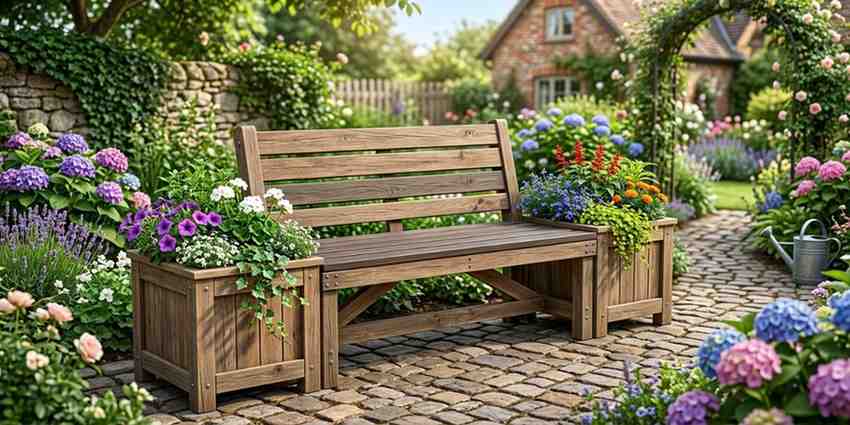
Why build a bench and a planter separately when you can combine them? A garden bench attached to planter boxes makes a great combination, putting flowers or herbs directly at seat height on either end (or along the back) of the bench.
This is a smart pick for small gardens where every piece of furniture needs to earn its space twice over — you get seating and a growing bed in a single footprint.
6. Reclaimed Stone Dry-Stacked Bench
For a bench that will genuinely outlast every other item on this list, consider a dry-stacked stone seat. A stone wall made from dry-laid stones with a built-in seating area can incorporate reclaimed granite, which is eco-friendly and adds real durability to the seat.
It won’t be the softest place to sit for a long afternoon, but for a quick garden-tending break or a striking focal point in a stone-heavy landscape, nothing beats its permanence or its zero-maintenance finish.
Save-worthy tip: A stone bench needs no stain, no sealant, and no annual upkeep. If low-maintenance is your top priority, this is the one build on this list you never have to think about again.
7. Rustic Log Bench
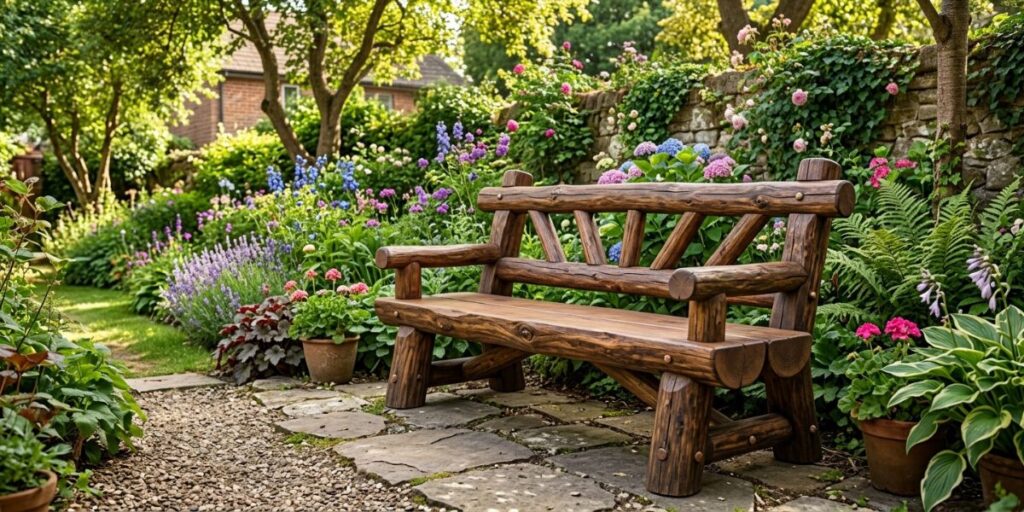
For a natural, woodland-inspired look, a log bench made from a few logs and vintage scrap wood has a genuinely natural feel that fits beautifully into picnic areas or rustic garden corners. Split a thick log lengthwise for the seat and use shorter log sections or sturdy branches as the legs.
This build leans heavily on the natural shape of your materials rather than precise measurements, which actually makes it more forgiving for a first-time builder small imperfections just add to the rustic charm.
8. Arbor-Covered Bench
A bench alone provides seating; an arbor-covered bench provides a destination. An arbour-covered bench provides shelter from harsh sun or drizzle, turning a simple seat into a shaded reading nook or quiet retreat tucked into a garden corner.
Train a climbing vine like clematis or a climbing rose up the arbor structure, and within a season or two you’ll have a naturally shaded, fragrant little hideaway.
9. Storage Bench With a Hidden Lid
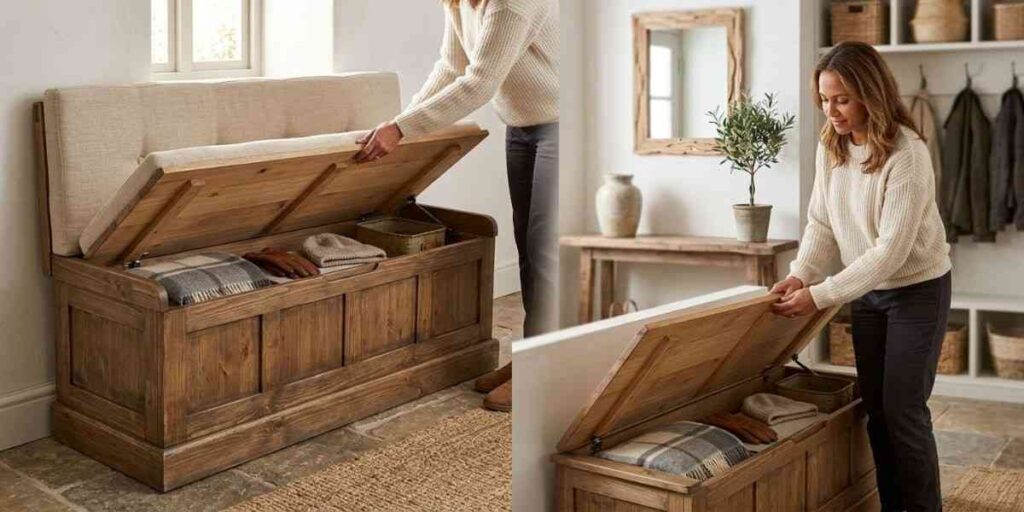
A bench built into a deck sitting area with built-in storage underneath solves two problems at once: extra seating and a place to stash cushions, tools, or garden gloves out of sight. Build the seat as a hinged lid over a simple box frame, and you’ve got hidden storage that never looks like storage.
This is one of the more functional builds on the list genuinely useful for anyone whose patio furniture cushions currently live in a pile by the back door.
10. Wine Barrel Bench
A large wine barrel, cut and converted into a seat, brings serious rustic charm with very little building required. A wine barrel converted into a seat adds a distinctive, rustic look to any garden space.
Reclaimed wine barrels are often available secondhand from local wineries or salvage yards at a reasonable price, making this one of the more visually striking options on this list relative to the actual effort involved.
11. Pallet Wood Bench
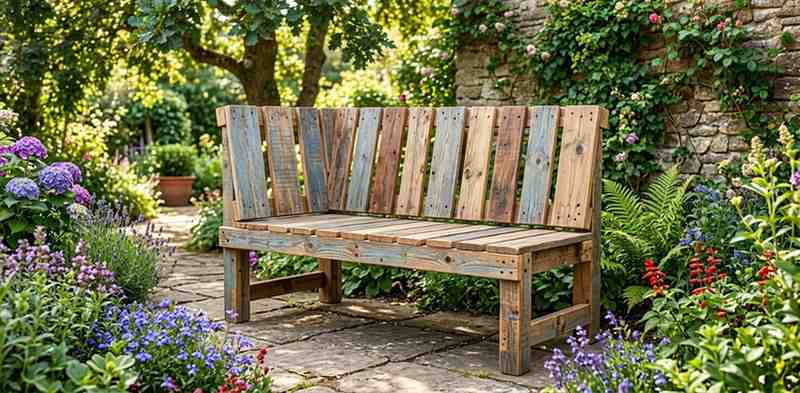
Wooden shipping pallets are one of the most budget-friendly raw materials available for DIY furniture, and a bench is one of the simplest projects to build from them. Disassemble a pallet (or two), sand the boards smooth, and reassemble into a basic bench frame with a back rest.
Because pallet wood varies so much in condition, this build is best suited to a slightly more relaxed, farmhouse-style garden rather than a polished, formal one but that rustic imperfection is exactly the appeal for a lot of gardeners.
12. Convertible Picnic Table Bench
For gatherings, a bench that transforms adds real versatility. A bench with a table in the middle connected to the chairs works great for a patio or porch setting, giving you a full picnic-style setup that can seat a small group comfortably.
Some convertible designs fold the table down flat when not in use, which is worth considering if the bench will spend most of its life as simple seating and only occasionally host a full table setup.
13. Adirondack-Style Bench
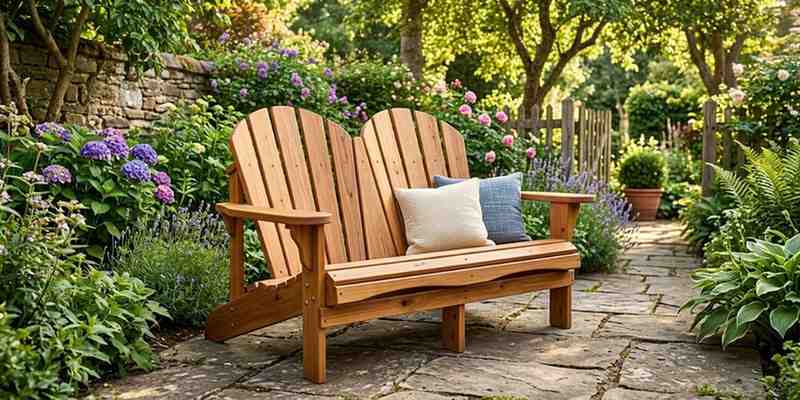
If you love the low, slanted-back comfort of an Adirondack chair but want seating for two or three, an Adirondack-style bench brings that same relaxed silhouette to a longer seat. Built using 1×4 and 1×6 lumber, this style comes together with clear drawings, measurements, and cutting details that make it manageable even for a first-time builder.
14. Scrap Wood Corner Bench
Don’t underestimate what a pile of leftover lumber can become. A scrap wood bench built from 2×4 boards cut to length for the tops and middle sections of each leg can come together in as little as twenty minutes and is a genuinely practical way to use up offcuts from other projects.
Paint it a bold color to tie it visually to other pieces in your garden, or leave it natural for a quick, functional seat exactly where you need one by the fire pit, at the end of a path, or tucked beside a planting bed.
Frequently Asked Questions
What is the easiest DIY garden bench to build?
A cinder block and plank bench (#2) requires no cutting or tools at all, making it the fastest and most beginner-friendly option on this list. A scrap wood corner bench (#14) is a close second if you already have leftover lumber on hand.
What wood is best for an outdoor DIY bench?
Pressure-treated lumber, cedar, and redwood all naturally resist rot and insect damage, which makes them popular, reliable choices for outdoor furniture. If you’re using reclaimed wood like an old door (#3) or pallets (#11) a good exterior sealant helps it hold up through the seasons.
How much does it cost to build a DIY garden bench?
A basic 2×4 lumber bench (#1) can often be built for well under $50 in materials, while builds using reclaimed materials like an old door or pallet wood can cost even less. More involved projects, like a stone bench (#6) or one with built-in planters (#5), will run higher depending on materials.
Do I need special tools to build a garden bench?
Most of the builds on this list only require basic tools: a saw (circular or hand), a drill, a tape measure, and clamps. A few like the stone dry-stack bench need no power tools at all.
Bring It All Together
A DIY garden bench doesn’t have to be complicated to be genuinely satisfying sometimes the simplest builds, like a stacked cinder block seat or a repurposed old door, end up being the most-used spot in the whole garden. Pick the build that matches your skill level and your space, and don’t be afraid to start with the easiest option on this list.