
Here’s a pattern almost every gardener runs into eventually: a beautiful raised bed goes in, a dozen herb starts get planted with real enthusiasm, and by August half of them are leggy, tangled, or simply gone. The bed wasn’t the problem. The layout was.
A raised bed herb garden that actually gets used all season isn’t just “some herbs in a box.” It’s a layout built around how you actually cook, how much sun your spot gets, and which herbs are trying to take over the whole bed the moment you turn your back.
Save this list idea below solves the single most common raised-bed herb garden mistake, and it’s easy to miss until it’s already a problem.
Here are 15+ herb garden ideas for an outdoor raised bed, organized from foundational layouts to themed designs and space-saving tricks.
Quick Answer: The Fastest Path to a Working Herb Bed
If you want one setup that works almost anywhere, build a single raised bed at least 12 inches deep, fill it with well-draining raised-bed soil, and group herbs by water need Mediterranean herbs (rosemary, thyme, oregano, sage) in the drier zone, and thirstier herbs (basil, parsley, chives) closer to the water source. That one grouping decision prevents more herb-garden failures than any other single choice.
Before You Plant: 3 Things to Check First
- Confirm your sun exposure. Most culinary herbs want 6+ hours of direct sun; basil and rosemary in particular sulk in shade.
- Pick a spot near the kitchen door. The herbs you’ll actually use are the ones you can reach in twenty seconds mid-recipe distance is the number one reason herb gardens go unharvested.
- Choose bed depth by root type. Shallow-rooted herbs like thyme and chives are fine in 8–10 inches of soil, but rosemary and larger perennials appreciate 12+ inches.
With the basics settled, here are 15+ ways to design the bed itself.
Raised Bed Layout & Structure Ideas
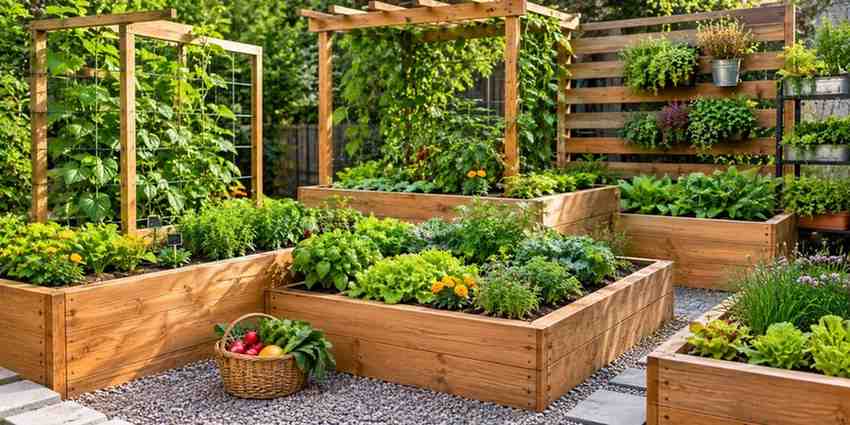
These four ideas shape the bed’s actual form the foundation every planting choice builds on.
1. The Classic Wooden Raised Bed
A simple wooden frame is the most accessible starting point for a first herb garden inexpensive, easy to build in a weekend, and flexible in size.
- A 4×4 or 4×8 foot footprint comfortably fits a full mix of culinary herbs without overcrowding.
- Line the bottom with landscape fabric if the bed sits over concrete or compacted soil, to protect the surface underneath and improve drainage.
- Fill with quality raised-bed soil rather than straight garden soil the improved drainage is one of the biggest advantages raised beds offer over in-ground planting.
2. The Herb Spiral
A herb spiral is a three-dimensional raised bed that winds upward in a coil, creating multiple microclimates in a single small footprint.
- The higher, drier sections near the top suit sun-loving Mediterranean herbs like rosemary and thyme; the lower, shadier base suits moisture-lovers like parsley and mint.
- Build the structure from stacked stone, brick, or reclaimed pavers, gradually narrowing the circle as it rises.
- This is a genuinely space-efficient design it packs the herb diversity of a much larger flat bed into a tight footprint, making it a favorite for small yards.
3. The Stone Rockery Bed
A rockery combines stacked or heaped stones with plants tucked into the gaps between them, creating natural pockets that many herbs actually prefer.
- Trailing herbs like thyme and oregano root happily into nooks and crannies between stones.
- The stone gaps also create habitat for beneficial insects, which can help with natural pest control across the wider garden.
- Use stone native to your region for a rockery that blends into the surrounding landscape rather than looking imported.
Read More: 13+ Vegetable Garden Layout Ideas That Actually Work (For Any Size Yard)
4. The Tiered or Terraced Bed
For sloped yards, a tiered raised bed turns an awkward grade into a design advantage instead of a drainage headache.
- Each tier can host herbs suited to a different sun and moisture level as the slope changes.
- Terracing also adds visual interest from the street or patio a flat single-level bed rarely reads as dramatically as a stepped one.
- Retaining materials like timber or stone give each tier a clean, defined edge.
Quick recap: wooden beds, spirals, rockeries, and tiers all solve the same underlying question how do you match your bed’s shape to your herbs’ very different needs?
Themed Herb Garden Ideas
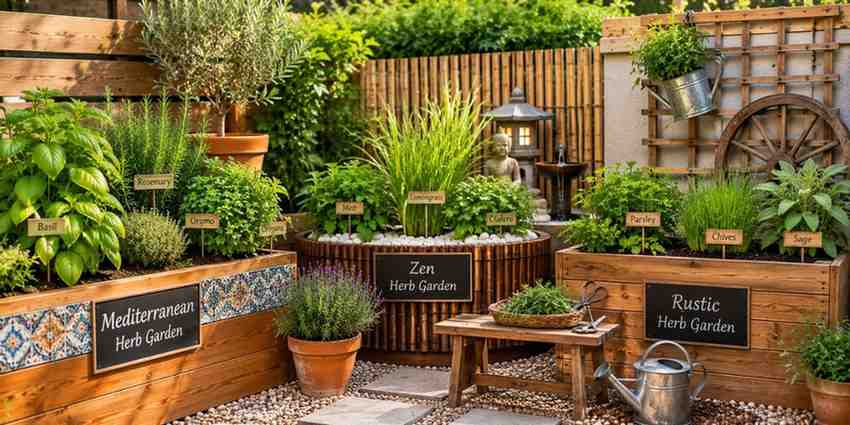
Here’s the thing: an herb garden built around a theme is far more likely to actually get cooked from, because it maps directly to what you make.
5. The Mediterranean Herb Bed
Rosemary, thyme, oregano, marjoram, and sage all share the same preference for dry soil and full sun, making them a natural, low-maintenance grouping.
- Because these herbs are drought-tolerant once established, this is one of the lowest-water raised bed options on the list.
- Plant rosemary and sage toward the back or center, since both grow into substantial woody shrubs over time.
- This grouping doubles as a genuinely elegant, silvery-green planting even before you’ve harvested a single sprig.
6. The Herbal Tea Garden
For anyone who drinks more tea than coffee, a bed built around chamomile, peppermint, lemon balm, and bee balm turns the garden into a personal tea blending station.
- Mint-family herbs (peppermint, lemon balm, bee balm) spread aggressively; see idea below before planting these together with anything else.
- Chamomile’s delicate white flowers make this one of the prettiest themed beds on the list, not just the most useful.
- Harvest and dry leaves in small batches through the season rather than all at once, for the freshest flavor when steeping.
7. The Contained Mint Bed
This is the idea most new gardeners skip, and it’s exactly why so many herb gardens end up with mint taking over everything else within a single season. Mint spreads through underground runners that ignore bed boundaries entirely.
- Plant mint varieties in their own dedicated section with a physical divider a buried edging strip or a bottomless pot sunk into the soil sunk several inches deep.
- Alternatively, grow mint in a separate container placed inside the raised bed rather than directly in the soil.
- This single precaution is the difference between a tidy multi-herb bed in year two and a bed that’s entirely mint.
8. The Pizza Garden
A circular bed divided into wedges each one growing a different pizza ingredient is a genuinely fun, function-driven layout, especially for anyone gardening with kids.
- Classic combinations include roma tomatoes, basil, oregano, chives, peppers, garlic, and onions, divided by small stone or twine borders between wedges.
- Give tomato and pepper plants extra room to spread while keeping herbs like basil and oregano in tighter, denser clusters.
- This layout makes harvesting intuitive everything for a batch of sauce or a fresh topping lives in adjacent wedges.
Companion & Layout Strategy Ideas
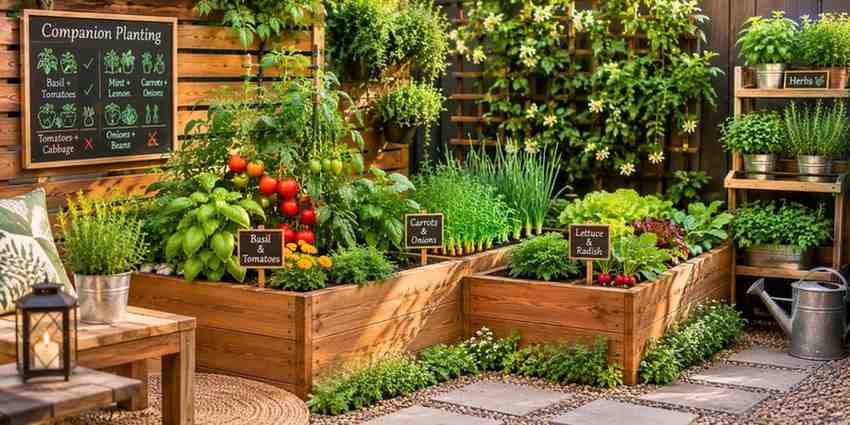
These four ideas focus on smart plant groupings and space-saving arrangements.
9. The Herb Border Around Vegetables
Herbs planted as a ring around the edge of a vegetable-focused raised bed do double duty they look intentional and can help deter pests from the vegetables in the center.
- Lavender is a particularly strong border choice, forming a uniform edge while helping repel some common garden pests.
- Keep border herbs slightly shorter than the vegetables they surround so sightlines into the bed stay open.
- This layout is a good option if you don’t want a dedicated herb-only bed but still want fresh herbs within reach.
10. The Square-Foot Herb Grid
Dividing a raised bed into a grid of small squares, one herb variety per square, keeps a mixed herb garden from turning into a tangled mess.
- This method works especially well for beginners, since it makes it obvious at a glance which herb is which and prevents overplanting any single variety.
- Taller herbs belong in back-row squares, low spreaders like thyme in the front row.
- A simple string grid laid across the bed surface at planting time keeps the divisions visually clear all season.
11. The Keyhole Garden Bed
A keyhole design a circular bed with a notch cut in toward the center, like a keyhole viewed from above lets you reach every plant without stepping into the bed at all.
- The center often includes a small compost basket that feeds the surrounding soil directly, a genuinely efficient permaculture touch.
- This layout maximizes growing space while keeping every plant within arm’s reach from the notch.
- Works particularly well for gardeners managing mobility limitations, since there’s no need to reach across a wide bed.
12. The Recipe-Themed Wedge Bed
Beyond pizza, circular or square beds divided by recipe theme a salsa garden, a salad garden, a pasta-sauce garden make harvesting feel purposeful rather than random.
- A salsa bed might combine tomatoes, cilantro, onions, and jalapeños; a salad bed might pair lettuce varieties with chives and dill.
- This approach is especially good for keeping a family engaged with the garden, since each bed maps to a meal they already enjoy.
- Rotate the theme yearly to keep the soil and your cooking repertoire both refreshed.
Style & Material Ideas
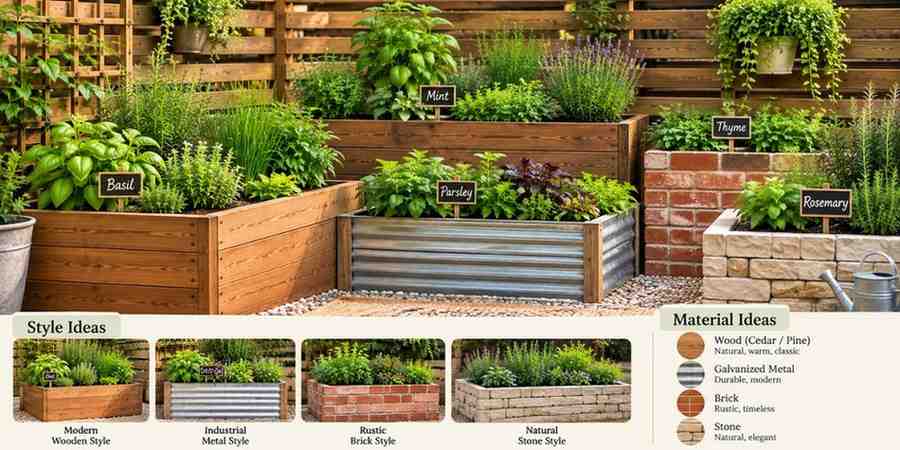
The last four ideas focus on the container and material choices that shape how the bed looks and functions.
13. The Metal Raised Bed
Galvanized metal raised beds have become a popular alternative to wood they resist rot entirely and hold up for years with minimal upkeep.
- Metal beds warm the soil slightly faster in spring than wood, which can give herbs a small head start on the growing season.
- Choose a bed at least 12 inches deep for herbs with more substantial root systems, like rosemary or sage.
- Available in compact sizes, making metal beds a solid option for patios or smaller side-yard spaces.
14. The Vintage Trough Planter
A repurposed vintage water trough or livestock feeder makes a wonderfully deep, characterful herb bed with genuine personality.
- The substantial depth of most troughs gives even larger perennial herbs plenty of room to establish real root systems.
- Placed beneath a window, a trough doubles as an oversized window box, visible from inside the house as well as the yard.
- This is a strong option if you’re drawn to a more rustic, lived-in garden aesthetic rather than a crisp modern build.
15. The Kitchen-Door Raised Bed
Positioning a compact raised bed directly beside the door you use most for cooking is less about style and more about the single factor that determines whether an herb garden gets used: proximity.
- Even a small 2×3 foot bed right by the door gets harvested far more often than a larger, more elaborate bed tucked at the back of the yard.
- Prioritize the herbs you cook with most basil, parsley, chives, thyme over ones you rarely reach for, regardless of how beautiful they are.
- Pair with a small overhead light or lantern if you cook after dark, so the bed stays usable year-round.
16. The Trellised Climbing Herb Bed
A raised bed built with a simple trellis or frame at the back accommodates climbing or sprawling herbs and companion plants that would otherwise take over flat growing space.
- Works well for herbs grown alongside climbing vegetables, like beans or cucumbers, sharing the same vertical support.
- A trellis also adds height and visual structure to an otherwise flat raised bed, especially useful in small gardens where every dimension counts.
- Position the trellis on the north side of the bed so it doesn’t shade shorter, sun-loving herbs planted in front of it.
Frequently Asked Questions
How deep should a raised bed be for herbs?
Most culinary herbs do well in 8–12 inches of soil, though larger perennials like rosemary and sage appreciate a deeper bed of 12 inches or more for stronger root development.
Can I mix all my herbs in one raised bed?
Yes, with one key precaution group herbs by water and sun needs (see idea #5), and always give mint-family herbs their own contained section (see idea #7) so they don’t overrun the rest of the bed.
What are the easiest herbs to start with in a raised bed?
Chives, thyme, oregano, and parsley are commonly considered beginner-friendly, since they’re forgiving of minor watering inconsistencies and don’t require much pruning to stay productive.
Do raised bed herb gardens need special soil?
Raised beds benefit from a quality raised-bed soil mix rather than straight garden soil, since the improved drainage and looser texture are a large part of why raised beds outperform in-ground planting for herbs.
How much sun does an herb garden raised bed need?
Most culinary herbs perform best with 6 or more hours of direct sunlight daily; basil and rosemary in particular struggle in shadier spots, so confirm your bed’s actual sun exposure before finalizing which herbs to plant where.
Bringing It All Together
These 15+ herb garden ideas for an outdoor raised bed can help you create a beautiful, practical, and productive garden. From simple layouts to creative herb combinations, choose an idea that fits your space and gardening style. With proper sunlight, healthy soil, and regular care, your raised bed can provide fresh herbs throughout the growing season.