
Kitchen Garden Ideas: You don’t need a backyard the size of a farm to grow your own dinner. If you’ve ever stood in your kitchen holding a recipe that calls for “a handful of fresh basil” while staring at a windowsill with nothing but dust on it, you already know the real problem it’s not space, it’s not knowing where to start.
That’s exactly what this guide fixes. Below are 15 real, doable kitchen garden ideas for small spaces, whether you’re working with a balcony railing, a sunny windowsill, a narrow side yard, or a single unused corner of a patio. No acreage required just a little planning and the right containers.
What Is a Kitchen Garden, Exactly?
A kitchen garden is a small, curated collection of herbs, greens, and compact vegetables grown close enough to your back door (or kitchen window) that you can step out mid-recipe and snip what you need. Unlike a traditional vegetable plot, it isn’t about rows and bulk harvests, it’s about convenience, flavor, and having fresh ingredients within arm’s reach.
The golden rule of kitchen gardens: proximity beats size. A garden you can see from your kitchen sink gets used every day. A garden at the far end of the yard gets forgotten by August.
Before You Plant: 3 Quick Decisions
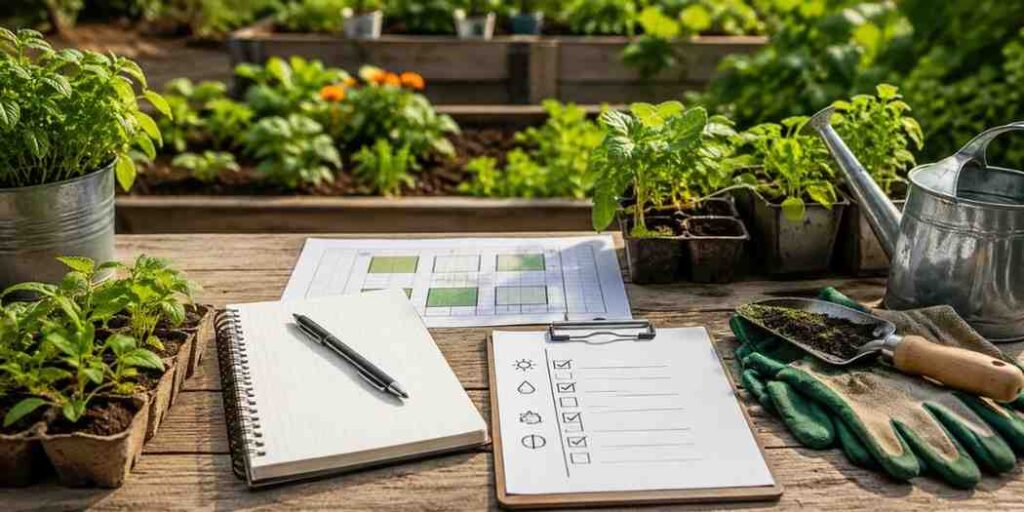
1. Pick your sunniest available spot
Most kitchen garden staples tomatoes, peppers, basil need at least 6 hours of direct sun. Herbs like mint, parsley, and chives tolerate a bit more shade. Walk your space at midday and note where the light actually falls before choosing containers.
2. Choose containers with real depth
Shallow pots are the #1 reason small-space gardens underperform. Leafy greens and herbs can get by with 6–8 inches of soil, but tomatoes and peppers need a container with at least 5 gallons of capacity to support their root systems.
3. Decide how you’ll water
Small containers dry out fast, especially on a hot balcony or patio. A simple drip system or even a daily 5-minute routine matters more in a small kitchen garden than in a full-sized backyard plot.
Now, here are 15 ideas to turn any small space into a working kitchen garden.
Windowsill & Countertop Ideas
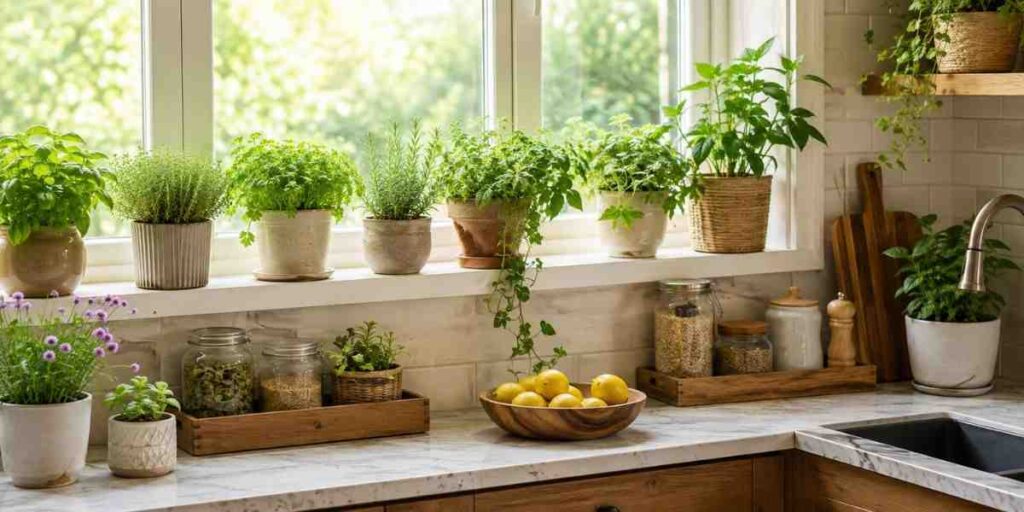
Perfect for renters, apartment dwellers, or anyone who wants herbs literally within reach while cooking.
1. A Sunny Windowsill Herb Row
Line a bright, south-facing windowsill with small pots of the herbs you actually cook with basil, thyme, chives, parsley. This is the simplest possible kitchen garden, and it’s often the one people use the most, precisely because it’s visible every single day.
2. A Mason Jar Sprout Garden
Sprouts need no soil, no sunlight requirement, and no outdoor space at all, just a mason jar, a mesh lid, and a few days of rinsing. It’s one of the fastest ways to add fresh, crunchy greens to sandwiches and salads from a countertop alone.
3. A Microgreens Tray by the Kitchen Window
Microgreens deliver an outsized amount of flavor and nutrition from a shallow tray of soil, and most varieties are ready to harvest in 7–14 days. Because they need so little depth, a single windowsill tray can keep you in fresh garnishes nearly year-round.
The smallest gardens are often the most-used ones. Don’t underestimate what a single windowsill can produce.
Read More: 14 Front Door Planter Ideas That Instantly Upgrade Your Entryway
Balcony & Patio Ideas
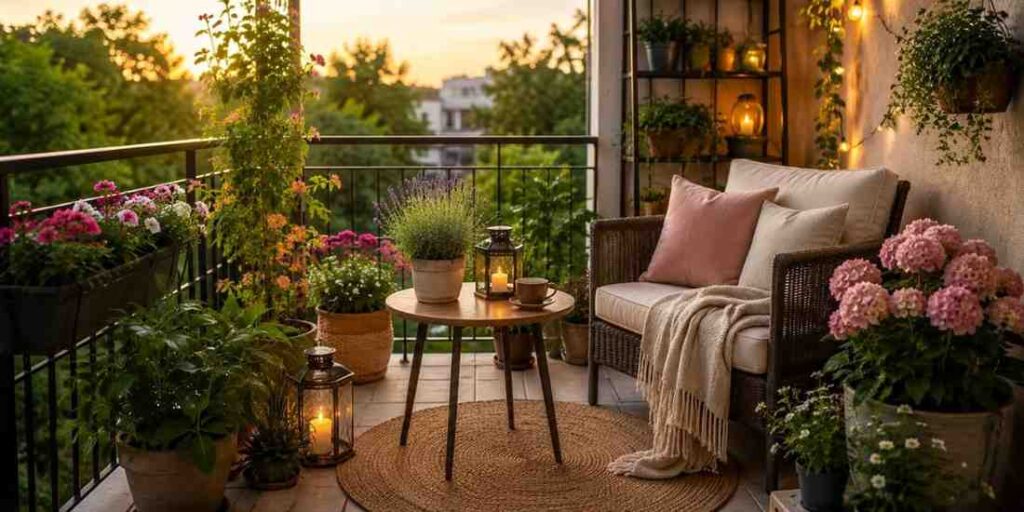
For apartments, condos, or any outdoor space with a hard surface instead of soil.
4. A Stacking Planter Herb Tower
Stacking planters let you grow 8–10 herb or salad plants in the footprint of a single pot by building upward instead of outward. They’re an ideal fit for narrow balconies where floor space is the real constraint.
5. A Rolling Cart “Meals on Wheels” Garden
Plant a mix of lettuce, cherry tomatoes, and herbs in a single large container set on a wheeled plant caddy. You can roll it to catch the best sun in the morning and tuck it against the wall by evening genuinely useful if your balcony’s light shifts throughout the day.
6. A Railing Planter Salad Bar
Railing-mount planter boxes turn unused balcony railings into growing space without taking up any floor area at all. Fill one with cut-and-come-again lettuce varieties, and you’ll be able to harvest a few leaves at a time while the plant keeps producing.
7. A Vertical Pocket Herb Wall
A fabric or felt pocket planter hung against a sunny wall or fence turns flat, unused vertical space into a dozen individual planting pockets. It’s especially useful for small patios where every inch of ground is already spoken for.
8. Deep Containers for Patio Tomatoes and Peppers
Set aside your largest containers at least 5 gallons for tomatoes and peppers specifically. Their extensive root systems need the depth, but in return they’re some of the most rewarding plants for a small space, producing steadily all season from just one or two containers.
Backyard Corner & Ground-Level Ideas
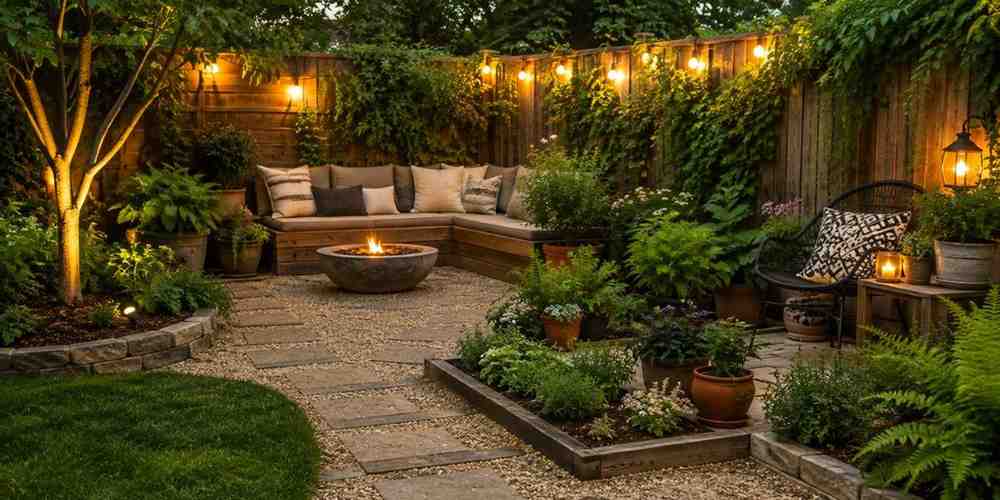
If you have even a small patch of ground, these ideas make the most of it.
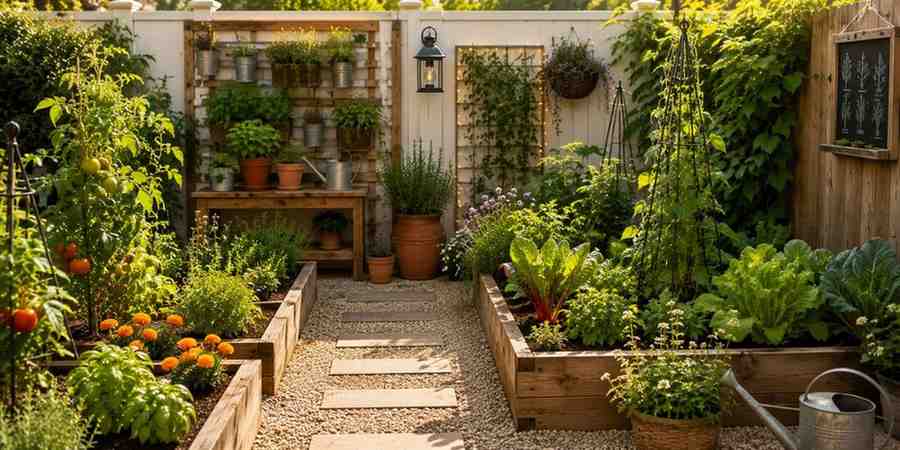
9. A Compact Four-Bed Potager
Borrow from the classic French kitchen garden layout, or “potager”: divide a small square of ground into four beds separated by narrow paths, with each bed assigned to a different plant group (herbs, salad greens, tomatoes, and a rotating seasonal crop). The structure keeps a small space looking intentional rather than cluttered.
10. A Raised Bed Against the House
Position a single raised bed directly along the wall nearest your kitchen door. This is “zone one” in permaculture terms, meaning it’s the spot you’ll actually visit daily without a second thought. Even one 4-by-4-foot raised bed can hold a genuinely productive mix of herbs, greens, and a couple of pepper plants.
11. A Dwarf and Container-Variety Herb Bed
Look specifically for dwarf or container-bred varieties of your favorite herbs and vegetables; many are compact by design and respond well to regular pruning, staying tidy in a fraction of the space a standard variety would need.
12. A Trellised Vertical Vegetable Corner
Pick one corner and go up instead of out: cucumbers, pole beans, and even some squash varieties can be trained onto a simple trellis, freeing up ground space for lower-growing herbs and greens underneath.
13. A Fruit Tree Espaliered Against a Fence
Especially training a fruit tree flat against a wall or fence lets you grow apples, pears, or even dwarf citrus in a space that would never fit a full-sized tree. It’s one of the more advanced ideas on this list, but it turns an otherwise wasted fence line into a genuine food source.
Design Touches That Make a Small Kitchen Garden Feel Intentional
14. Woven Wattle or Branch Edging
Instead of plastic or metal borders, weave thin branches or willow stems into simple wattle edging around your beds. It costs almost nothing, breaks down naturally over the years, and gives even a tiny plot a charming, cottage-garden character.
15. A Small Seating Spot Within View of the Beds
Tuck a single chair or small bench where you can see your kitchen garden while sitting outside. Kitchen gardens are meant to be lived with, not just harvested from a place to sit nearby, making it far more likely you’ll notice what needs watering, pruning, or picking before it’s too late.
Best Low-Space, High-Reward Plants to Start With
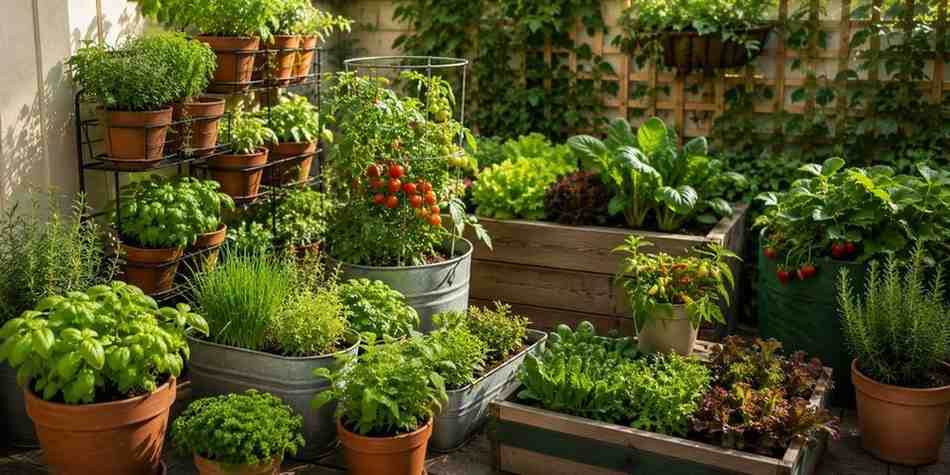
If you’re not sure what to actually plant in any of the setups above, these consistently perform well in small containers:
- Cherry tomatoes compact, prolific, and productive from a single container all summer
- Lettuce and leafy greens harvest a few leaves at a time while the plant keeps growing
- Basil, chives, and parsley the everyday trio most home cooks reach for
- Compact pepper varieties colorful, tidy, and productive in containers
- Cut-and-come-again herbs like mint forgiving for beginners, though best kept in its own pot since it spreads aggressively
Common Small-Space Kitchen Garden Mistakes to Avoid
- Planting too far from the kitchen. If it’s not visible or convenient, it won’t get used consistently.
- Choosing pots that are too shallow. Root-bound plants stop producing size up before you plant, not after.
- Skipping a watering plan. Small containers dry out fast, especially in summer heat.
- Overcrowding a single pot. Give plants room to mature, even in a tight space crowding invites disease and weak yields.
- Ignoring your actual sun pattern. A spot that looks sunny in spring can fall into shade once nearby trees leaf out.
Frequently Asked Questions About Small-Space Kitchen Gardens
How much sun does a small kitchen garden need?
Most fruiting vegetables like tomatoes and peppers need at least 6 hours of direct sun daily, while leafy herbs and greens can often manage with 4–5 hours or partial afternoon shade.
Can I grow a kitchen garden with no outdoor space at all?
Yes a sunny windowsill can support herbs, microgreens, and sprouts year-round, even without any balcony or yard access.
What’s the minimum container size for tomatoes?
Aim for at least a 5-gallon container for most tomato varieties, since their root systems need real depth and volume to produce a strong harvest.
How close should a kitchen garden be to the house?
As close as possible ideally within a few steps of your back door or kitchen window, since gardens that require a longer walk tend to get checked and harvested far less often.
Start Small, Then Let It Grow
The best kitchen garden isn’t the biggest one, it’s the one you’ll actually walk out to and use. Start with a single windowsill row of herbs or one deep container of cherry tomatoes, get comfortable with the rhythm of watering and harvesting, and expand from there. Within a season, that “unused corner” of your patio or balcony could be quietly feeding half your weeknight dinners.