
Vegetable Garden Layout You bought the seed packets. You picked the sunniest corner of the yard. And now you’re standing there wondering: where does everything actually go? If your first vegetable garden attempt turned into a tangled mess of overcrowded tomatoes and pathways you can’t remember planning, the problem usually isn’t your green thumb it’s the layout.
The right vegetable garden layout is the difference between a garden that overwhelms you by July and one that quietly feeds your family all season. Below are 13+ vegetable garden layout ideas for every space, from tiny patios to sprawling backyards, so you can pick the plan that actually fits how you live and grow. Save this guide before you start mapping out your beds you’ll want to come back to it.
Why Your Garden Layout Matters More Than What You Plant
It’s tempting to jump straight to seed varieties, but layout comes first for a reason:
- It determines how much you can actually grow in the space you have.
- It controls how much time you’ll spend weeding, watering, and walking back and forth.
- It protects your soil —the right layout minimizes compaction and erosion.
- It sets you up for crop rotation, which keeps pests and disease from building up year after year.
13+ Vegetable Garden Layout Ideas for Every Space
1. The Classic 4×8 Raised Bed Layout
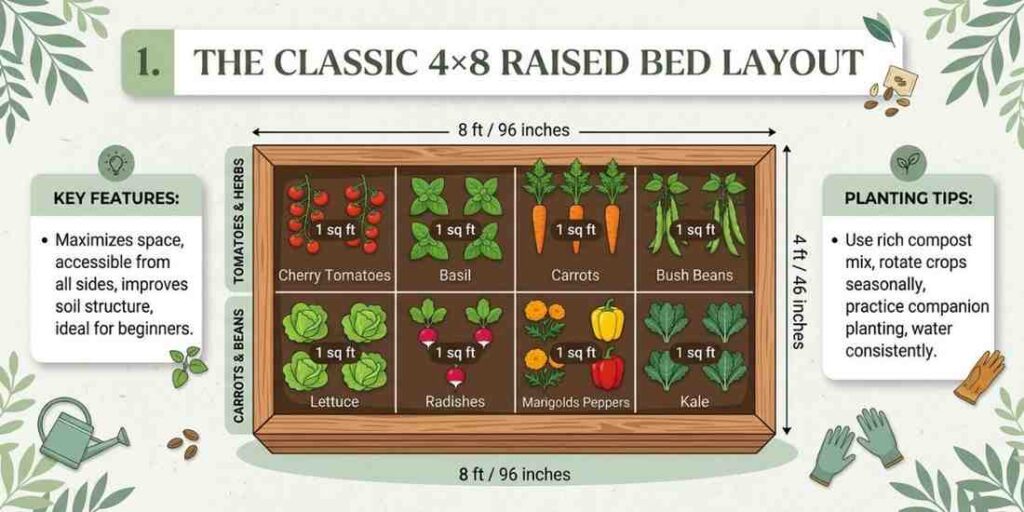
For beginners, a single 4×8-foot raised bed is one of the most forgiving layouts you can start with. The 4-foot width means you can reach the center from either side without stepping on the soil, which keeps it loose and aerated. Fill it with quality soil and compost, and you can grow a genuinely productive mix of vegetables in a footprint smaller than most parking spaces. This layout also solves poor native soil, since you control everything that goes into the bed.
2. Square-Foot Gardening Grid
Square-foot gardening divides a raised bed into a grid of 1×1-foot squares, with each square dedicated to a single crop based on its spacing needs. It’s an especially organized approach for anyone who likes structure, and it tends to produce very little wasted space compared to traditional spacing. A 4×4-foot grid (16 squares) is a popular starting size, and the visual grid makes it easy to rotate crops season to season.
3. Traditional In-Ground Row Garden
If you have a larger, open lot, traditional row planting is still one of the most efficient layouts for growing a lot of food. Long, straight rows with clear walking paths between them make planting, watering, and harvesting simple, especially with tools like a hoe or a garden cart. This layout works best with full sun and enough space that you’re not fighting for every square foot.
4. Four-Quadrant Crop Rotation Layout
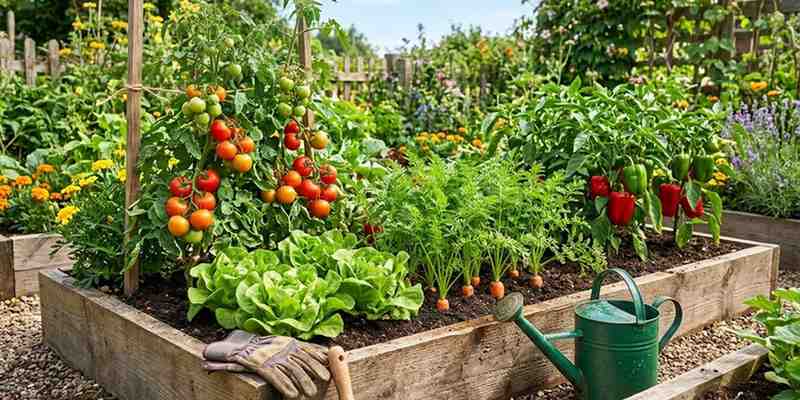
Divide your growing area into four equal beds, and assign each a plant family leafy greens, root vegetables, legumes, and fruiting crops like tomatoes and peppers. Each year, rotate the families one quadrant over. This single habit does more to prevent soil-borne disease and pest buildup than almost anything else you can do, and it works whether your quadrants are large in-ground plots or four raised beds side by side.
Read also:14+ Garden Bench Ideas DIY: Simple Builds Anyone Can Tackle
5. Keyhole Garden Layout
A keyhole garden is a circular raised bed with a wedge cut out of one side (like a keyhole) leading to a central compost basket. As you add kitchen scraps to the basket, nutrients slowly work outward into the surrounding soil, feeding the whole bed. This layout is especially popular in hot or dry climates because the central composting core also helps retain moisture. It’s compact, self-feeding, and strikingly beautiful as a garden centerpiece.
6. Vertical Vegetable Garden Layout
When ground space is limited, growing up instead of out changes everything. Trellises, cattle panels, and A-frame structures let you grow vining crops cucumbers, pole beans, small squash varieties — straight up, freeing the ground beneath for shorter crops like lettuce or herbs. This layout also improves airflow around plants, which can reduce fungal issues compared to letting the same vines sprawl across the ground.
7. No-Dig (Lasagna) Bed Layout
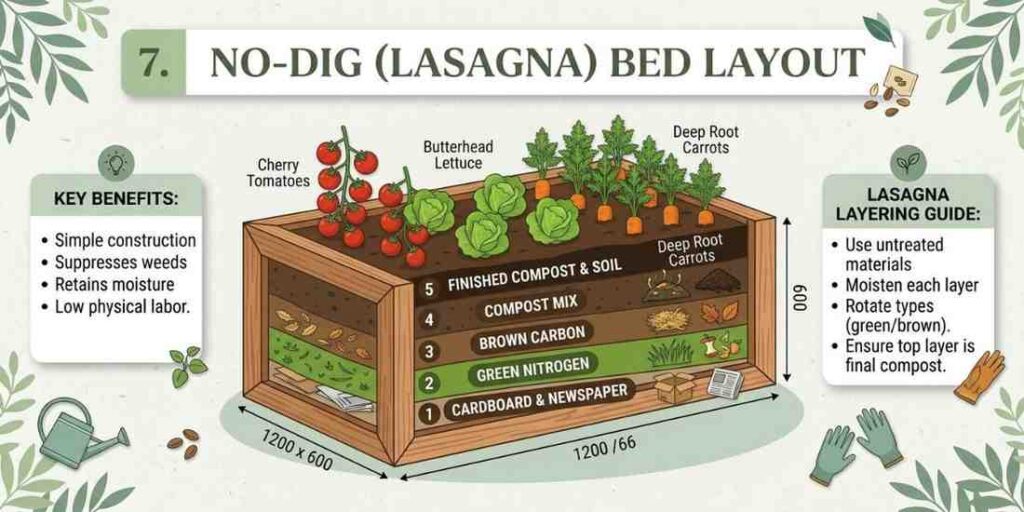
A no-dig or “lasagna” layout builds garden beds in cardboard-and-compost layers directly on top of existing grass or soil, skipping tilling altogether. Over a season, the layers break down into rich, loose soil while smothering weeds underneath. This is one of the best layouts for anyone starting a new garden area from scratch, since it requires no digging equipment and actually improves the soil as it goes.
8. Three Sisters Companion Planting Layout
This traditional layout plants corn, pole beans, and squash together in the same mound or block: corn provides a natural trellis for the beans, the beans fix nitrogen in the soil, and the sprawling squash leaves shade out weeds and retain soil moisture. It’s a compact, mutually supportive layout that produces three crops in roughly the space one might normally take. This is a genuinely save-worthy layout for anyone interested in companion planting done right.
9. L-Shaped Corner Garden Layout
Not every yard has a wide-open rectangle to work with. An L-shaped layout follows the natural corner of a fence line or property edge, making use of awkward space that would otherwise sit empty. Taller crops go along the back walls of the “L” where they won’t shade shorter plants, while the open corner in the middle can double as a small seating or tool-storage nook.
10. Spiral Herb and Vegetable Garden
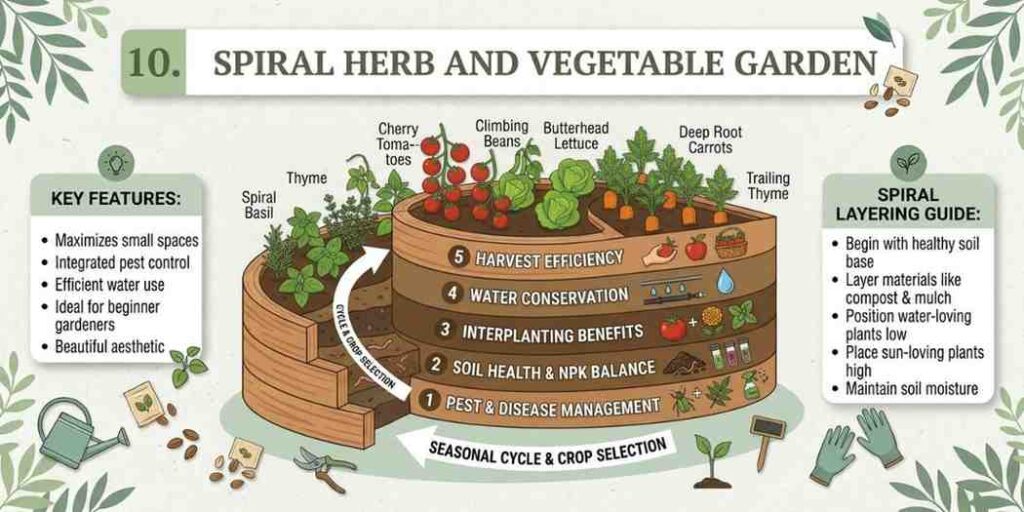
A spiral garden stacks soil and stone (or wood) into a rising spiral shape, creating multiple microclimates in a single small footprint — drier and sunnier near the top, cooler and moister near the base. It’s a favorite layout for herbs specifically, since different herbs thrive in different moisture and sun conditions, but it works just as well mixed with compact vegetables like lettuce and strawberries.
11. Trellis-Backed Raised Bed Layout
Place a raised bed directly in front of a trellis, fence, or wall-mounted grid, and you effectively double your growing layers in one footprint: low crops in the bed itself, climbing crops trained up the trellis behind. This layout is ideal for narrow side yards or fence lines, since the vertical growth adds very little horizontal footprint while significantly increasing your total harvest.
12. Container Garden Layout for Patios and Balconies
No yard? No problem. A container layout groups pots of varying sizes on a patio, balcony, or even a fire escape, with taller containers toward the back and trailing or low-growing crops toward the front — the same design logic as a flower border. Grouping containers together (rather than spacing them out) also makes watering and monitoring far more manageable.
13. Permaculture Guild / Polyculture Layout
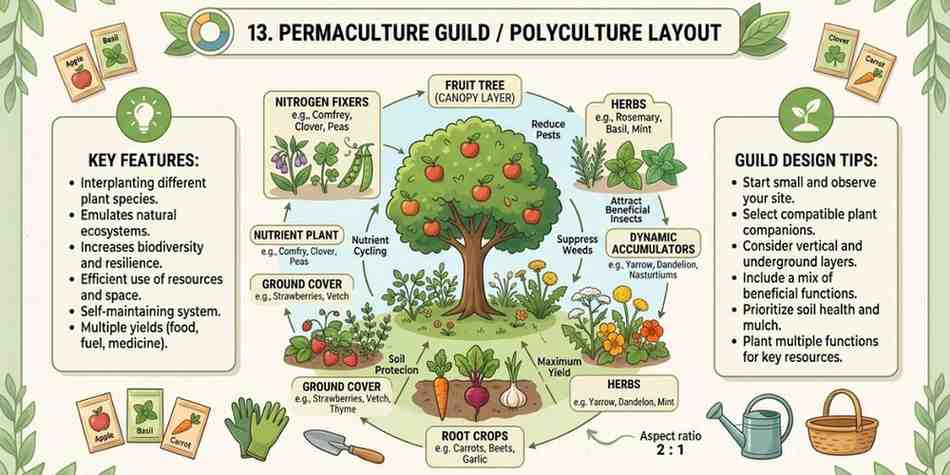
Instead of separating crops into tidy rows, a permaculture guild layout intentionally mixes vegetables, herbs, and flowers that support each other nitrogen-fixers next to heavy feeders, pest-repelling herbs woven between vegetables, and flowers to draw in pollinators. It looks more like a lush garden bed than a traditional vegetable patch, but it can dramatically reduce pest pressure and the need for fertilizer.
14. Front-Yard Edible Landscaping Layout
If your only sunny space is out front, an edible landscaping layout blends vegetables into an ornamental design — think rainbow chard as a border plant, purple basil mixed into flower beds, or a trellis of scarlet runner beans doubling as a privacy screen. This layout keeps a front yard looking intentional and attractive to neighbors while quietly producing real food.
15. Small-Space Succession Planting Layout
For tiny gardens, the real trick isn’t the shape of the bed it’s timing. A succession layout treats each section of a small bed as available for two or three plantings per season: quick spring greens, followed by summer tomatoes or peppers, followed by a fall crop of root vegetables. This keeps a small footprint in near-constant production rather than sitting empty after an early harvest.
How to Choose the Right Layout for Your Garden
Small yard or patio: Container gardens, square-foot grids, or vertical layouts maximize limited space.
- Poor or rocky soil: Raised beds, no-dig layers, or keyhole gardens let you control soil quality from day one.
- Large open lot: Traditional rows remain the most efficient for high-volume growing.
- Want lower maintenance long-term: Permaculture guilds and companion-planting layouts (like Three Sisters) reduce the need for constant intervention.
- New gardener: A simple 4×8 raised bed or square-foot grid keeps the learning curve manageable.
Common Layout Mistakes to Avoid
- Making pathways too wide. Every extra foot of path is a foot you’re not growing food in — keep paths just wide enough for a wheelbarrow or comfortable walking.
- Ignoring sun direction. Place taller crops on the north side of a bed so they don’t shade shorter plants.
- Skipping crop rotation. Even a simple two- or three-bed rotation dramatically reduces pest and disease buildup over time.
- Overplanting a small layout. It’s tempting to squeeze in “just one more” plant, but overcrowding reduces airflow and yields for everyone in the bed.
Frequently Asked Questions
What is the best vegetable garden layout for beginners?
A simple 4×8-foot raised bed or a small square-foot gardening grid is generally the easiest starting layout, since both are compact, easy to manage, and forgiving of small planning mistakes.
How much space does a vegetable garden layout need?
It depends entirely on the layout style container and vertical layouts can produce meaningful harvests in just a few square feet, while traditional row gardens typically need a larger, more open plot to be efficient.
Do I need to rotate my vegetable garden layout every year?
Rotating plant families (leafy greens, root vegetables, legumes, and fruiting crops) between beds or sections each year helps prevent soil-borne pests and diseases from building up, and it’s one of the simplest habits to build into any layout.
Can I combine more than one layout style in the same garden?
Yes many gardens successfully combine styles, such as raised beds for the main vegetable garden paired with a vertical trellis along a fence line or a few containers on a patio for herbs.
Final Thoughts
The best vegetable garden layout isn’t the most elaborate one it’s the one that matches your actual space, soil, and the amount of time you realistically want to spend maintaining it. Start with the layout that solves your biggest constraint, whether that’s limited space, poor soil, or simply wanting an easier first season, and let it grow more complex as your confidence does.